Data may be outdated
Last updated: 9 months ago — Click refresh to get the latest statistics.
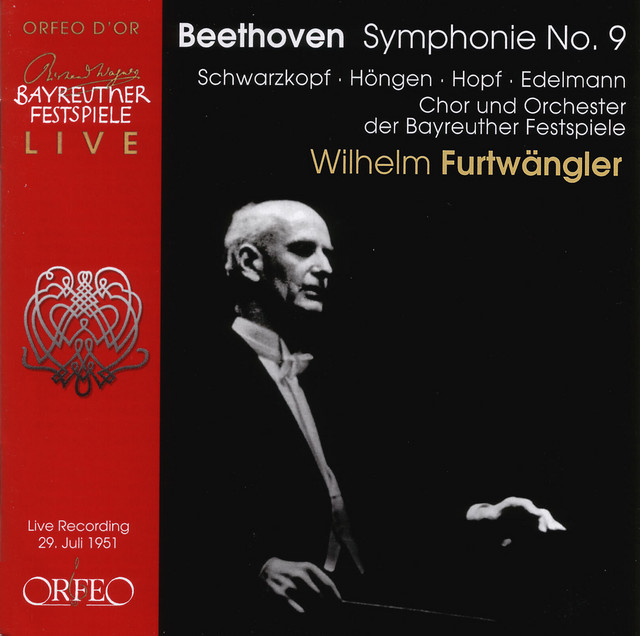
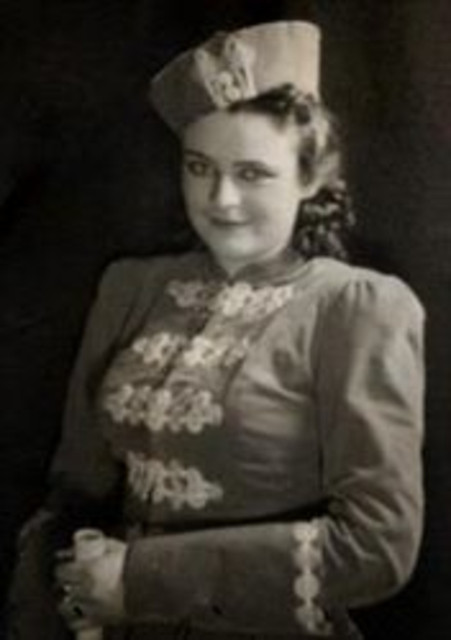
Regarded as a sensational Queen of the Night beginning in the late '40s, soprano Wilma Lipp won acclaim for that role in several major European venues. Studio recordings of Die Zauberflöte followed, with <a href="spotify:artist:5zCaQxjl110XTrm4LQ1CxY">Karajan</a> in 1950 and <a href="spotify:artist:3fyr5uksidSlLzsUjRIz5A">Böhm</a> in 1955. By the 1960s, however, much of the focus and steadiness earlier evident had departed from her voice and adventures into the lyric repertory were less successful. In Vienna, Lipp studied with two famous singers: dramatic soprano Anna Bahr-Mildenburg (who achieved legendary status under <a href="spotify:artist:2ANtgfhQkKpsW6EYSDqldz">Mahler</a>'s regime at the Vienna Staatsoper) and bass-baritone Alfred Jerger (a powerful singer/actor whose vocal production was decidedly unorthodox). Lipp made her debut in her native city as Rosina; two years later, at the tender age of 20, she was invited to join the Staatsoper at a time when the company was struggling to recover from wartime conditions. Her Queen of the Night in Vienna in 1948 was deemed spectacular. She performed it under <a href="spotify:artist:2ljDHW0zt90SrHDwjVIGXs">Klemperer</a> at La Scala and with <a href="spotify:artist:4tvRZdoY4H9Wgcf0w1rZqs">Furtwängler</a> at Salzburg with equal success. Covent Garden heard her for the first time in 1951 when her Gilda was found physically and vocally attractive but lightweight (she was one of five sopranos sharing the role); her Queen of the Night was regarded as more accomplished. Her Violetta in 1955 was less successful, lacking sufficient vocal substance for the third and fourth acts. Lipp sang Konstanze under Swiss conductor Paul Sacher at the 1957 Glyndebourne Festival, with <a href="spotify:artist:01Ti9tP1kNrsjr5qE1sNIS">Ernst Haefliger</a> as Tamino. Lipp's American stage debut took place at San Francisco in 1962 when she undertook four roles, only one of which was comfortably within her fach. Unfortunately, her Sophie to <a href="spotify:artist:0B94ekfBARqVS2gwrTnvJ6">Elisabeth Schwarzkopf</a>'s elegant Marschallin was wobbly in the higher reaches of the role. Alice in Falstaff (she had sung Nannetta in earlier years) proved only curious and both Nedda and Micaëla were unidiomatic interpretations that lacked the right vocal coloration. Among Lipp's recordings, the 1950 <a href="spotify:artist:5zCaQxjl110XTrm4LQ1CxY">Karajan</a> Die Zauberflöte captures her art and voice at their freshest. A live performance from Salzburg in 1951 with <a href="spotify:artist:4tvRZdoY4H9Wgcf0w1rZqs">Furtwängler</a> leading a similar cast is also memorable; by the time Lipp recorded the Queen with <a href="spotify:artist:3fyr5uksidSlLzsUjRIz5A">Böhm</a> in 1955, her performance was somewhat less secure. Lipp was awarded the title Kammersängerin in Vienna and taught for some years at the Salzburg Mozarteum.
Monthly Listeners
3,843
Monthly Listeners History
Track the evolution of monthly listeners over the last 28 days.
Followers
379
Followers History
Track the evolution of followers over the last 28 days.
Top Cities



Related Artists
Hilde Rössel Majdan
Werner Krenn

Wiesław Ochman
Sieglinde Wagner
Ettore Gracis
Wilhelm Keitel
Christof Fischesser
Andrea Rost

Serge Baudo
Simon Estes
Raili Kostia

Coro Gulbenkian

Elizabeth Bainbridge

Lisa della Casa
Erich Kleiber
Hildegard Hillebrecht

Heinz Wallberg
Rudolf Moralt
Chor der Staatsoper Dresden

Felicity Palmer