Data may be outdated
Last updated: 9 months ago — Click refresh to get the latest statistics.
Araiza's father was a tenor and also the chorus master of the Mexico Opera, so Araiza was exposed to opera at an early age. In 1966, he studied organ at the Escuela de Música in Mexico City, and, to fulfill a curricular requirement, he reluctantly joined the choir, though he was not particularly interested in vocal music. He actually began as a bass, but a teacher found that he had an exceptionally good upper register, with a natural high B flat. Under Irma Gonzalez, he developed his voice into a lyric tenor with a strong ring. He made his operatic debut in 1970 as the first prisoner in a concert version of Beethoven's Fidelio, sang his first major performance as a soloist in <a href="spotify:artist:656RXuyw7CE0dtjdPgjJV6">Haydn</a>'s Creation in 1973, and in the fall of 1974, competed in the ARD Singing Competition in Munich, Germany. While he won only the third prize, the jury recognized his potential as a <a href="spotify:artist:4NJhFmfw43RLBLjQvxDuRS">Mozart</a> singer, and he was given the chance to audition for the Karlsruhe Staatstheater <a href="spotify:artist:4NJhFmfw43RLBLjQvxDuRS">Mozart</a> project, a multi-year full <a href="spotify:artist:4NJhFmfw43RLBLjQvxDuRS">Mozart</a> cycle. He was offered a two-year contract with an option for the third year, but he had not studied <a href="spotify:artist:4NJhFmfw43RLBLjQvxDuRS">Mozart</a> before to any great extent, so <a href="spotify:artist:6mFZf0v0m9wSfTRokm5mAp">Anton Dermota</a> and Richard Holm (two of the three judges) both took him under their wing, training him in <a href="spotify:artist:4NJhFmfw43RLBLjQvxDuRS">Mozart</a> style. He enjoyed great success as Tamino and Ferrando.
In 1979, <a href="spotify:artist:5zCaQxjl110XTrm4LQ1CxY">Herbert von Karajan</a> took a special interest in Araiza's career, and chose him for Tamino in his new recording of Die Zauberflöte. In 1981 he made his U.S. debut, and in 1983, made his Met debut. During the mid-'80s, however, Araiza began to take on slightly heavier roles, but when he started to sing such spinto and dramatic roles as Alvaro in <a href="spotify:artist:1JOQXgYdQV2yfrhewqx96o">Verdi</a>'s La forza del destino, Cavaradossi in Tosca, and even Lohengrin, his voice lost much of its flexibility, becoming rather leathery in timbre as well by the 1990s. In 1996, he was scheduled to sing performances of <a href="spotify:artist:42Vmza0WYHdhsgxFmf9Tui">Gounod</a>'s Roméo et Juliette and <a href="spotify:artist:1JOQXgYdQV2yfrhewqx96o">Verdi</a>'s Un ballo in maschera at the Metropolitan, but his contract was bought out by mutual agreement. Araiza still performs those lighter roles in which he is comfortable, and also spends much of his time teaching.
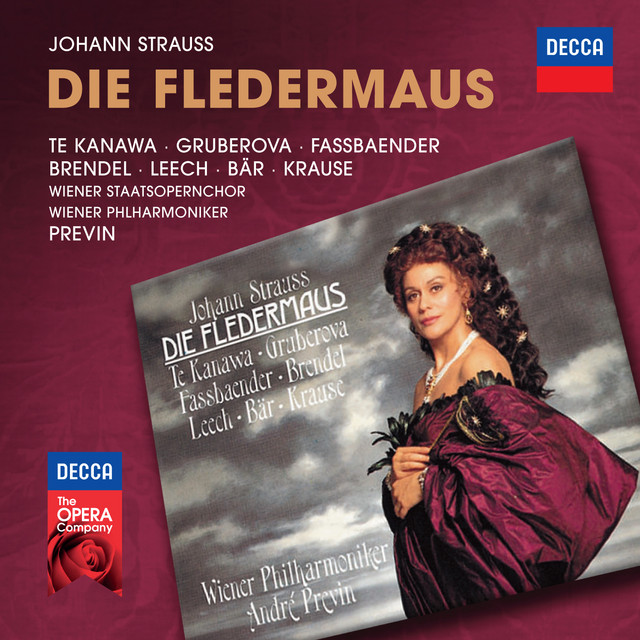
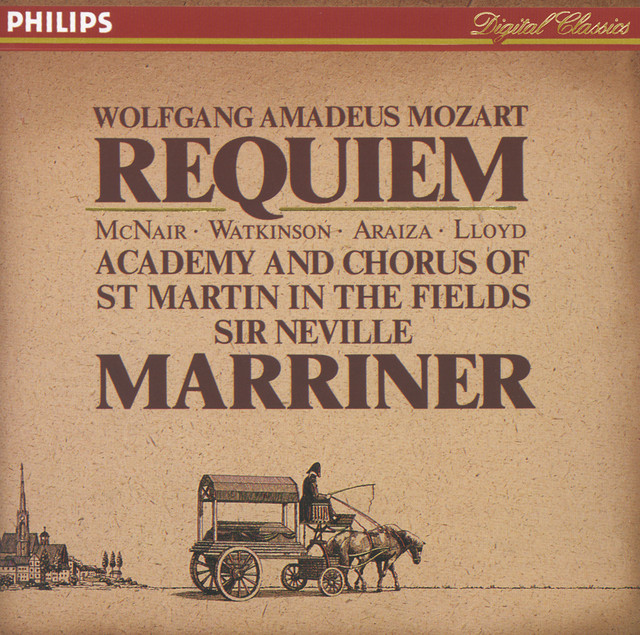
Some of his early recordings, the <a href="spotify:artist:4NJhFmfw43RLBLjQvxDuRS">Mozart</a> Così fan tutte under <a href="spotify:artist:6NUhQz7eAEsZvjEHTKHux9">Neville Marriner</a> (Philips) and the <a href="spotify:artist:0roWUeP7Ac4yK4VN6L2gF4">Rossini</a> Barbiere di Siviglia, also under Marriner (Philips), are still considered benchmarks for post-<a href="spotify:artist:3jp4zawfeVYVpSzO2Yujbv">Wunderlich</a> and Gedda tenors.
In 1979, <a href="spotify:artist:5zCaQxjl110XTrm4LQ1CxY">Herbert von Karajan</a> took a special interest in Araiza's career, and chose him for Tamino in his new recording of Die Zauberflöte. In 1981 he made his U.S. debut, and in 1983, made his Met debut. During the mid-'80s, however, Araiza began to take on slightly heavier roles, but when he started to sing such spinto and dramatic roles as Alvaro in <a href="spotify:artist:1JOQXgYdQV2yfrhewqx96o">Verdi</a>'s La forza del destino, Cavaradossi in Tosca, and even Lohengrin, his voice lost much of its flexibility, becoming rather leathery in timbre as well by the 1990s. In 1996, he was scheduled to sing performances of <a href="spotify:artist:42Vmza0WYHdhsgxFmf9Tui">Gounod</a>'s Roméo et Juliette and <a href="spotify:artist:1JOQXgYdQV2yfrhewqx96o">Verdi</a>'s Un ballo in maschera at the Metropolitan, but his contract was bought out by mutual agreement. Araiza still performs those lighter roles in which he is comfortable, and also spends much of his time teaching.
Some of his early recordings, the <a href="spotify:artist:4NJhFmfw43RLBLjQvxDuRS">Mozart</a> Così fan tutte under <a href="spotify:artist:6NUhQz7eAEsZvjEHTKHux9">Neville Marriner</a> (Philips) and the <a href="spotify:artist:0roWUeP7Ac4yK4VN6L2gF4">Rossini</a> Barbiere di Siviglia, also under Marriner (Philips), are still considered benchmarks for post-<a href="spotify:artist:3jp4zawfeVYVpSzO2Yujbv">Wunderlich</a> and Gedda tenors.
Monthly Listeners
20,243
Monthly Listeners History
Track the evolution of monthly listeners over the last 28 days.
Followers
3,024
Followers History
Track the evolution of followers over the last 28 days.
Top Cities
599 listeners

402 listeners

392 listeners

299 listeners

269 listeners
Related Artists




Lisa della Casa
Sena Jurinac



Stuart Burrows

Malcolm King

Werner Krenn
Gösta Winbergh


Sieglinde Wagner

Alberto Zedda

Nouvel Orchestre Philharmonique de Radio France
Chor der Bayerischen Staatsoper

Christof Fischesser
Monica Sinclair