Genre
ai
Top Ai Artists
Showing 25 of 27 artists










About Ai
AI music, or AI-generated music, is less a single style and more a movement where artificial intelligence acts as co-creator, composer, or sound designer. It sits at the crossroads of electronic, experimental, ambient, and neo-classical approaches, using algorithms to generate melodies, rhythms, textures, and entire scores. The result is often a fusion of machine-driven spontaneity and human curation, producing soundtracks that can feel both alien and intimately expressive.
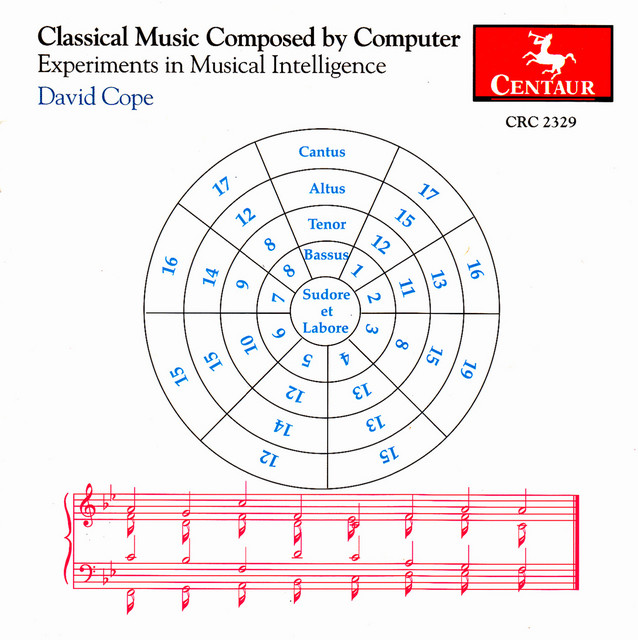
Origins and early milestones trace back to the birth of computer-generated music. In 1957, Lejaren Hiller and Leonard Isaacson created the Illiac Suite, one of the first large-scale works produced by a computer. This era established the idea of algorithmic composition: programs that could make music according to defined rules. Over the decades, researchers and composers refined methods, moving from rule-based syntax to probabilistic and neural approaches. The 1980s brought David Cope’s Experiments in Musical Intelligence (EMI), a landmark in which an AI system analyzed existing styles to generate new pieces in those guises, highlighting authorship questions and the potential for machines to imitate human musical lineage.
The modern AI music landscape really accelerated in the 2010s with machine learning and neural networks. Projects and companies around the world began to offer practical tools for artists to compose, arrange, and produce with AI. Sony CSL’s Flow Machines, for example, explored collaborative workflows that blended human ideas with AI-generated material to create tracks such as Daddy’s Car. Open-source and industry initiatives followed: Google’s Magenta project experimented with neural networks for melodies and instrumentation; OpenAI released MuseNet, a model capable of multi-instrument, multi-genre composition; and tools like NSynth and MusicVAE opened new horizons for transforming sounds and evolving musical ideas.
Key ambassadors of AI music include David Cope as an early visionary, and in contemporary scenes, artists and ensembles who openly embrace AI as a collaborator. AIVA (Artificial Intelligence Virtual Artist) rose to prominence as a commercial AI composer used for film, advertising, and game soundtracks. Taryn Southern released I Am AI (2017), an album created with AI tools, bringing wide attention to the practical potential of AI in popular music workflows. Holly Herndon’s PROTO (2019) pushed AI into vocal chemistry and live performance, using a neural network “voice” to augment her own. Flow Machines’ collaborators and platforms—along with ongoing work from Magenta and other research groups—continue to democratize AI-assisted composition for producers worldwide.
Geographically, AI music has found strong footholds in the United States, the United Kingdom, and continental Europe, with vibrant scenes in Japan and South Korea as well. Tech hubs, game and film industries, and forward-thinking independent labels all experiment with AI-informed workflows, from ambient soundscapes to complex modern-classical textures and pop structures.
For listeners, AI music offers a sense of frontier exploration: sounds that sometimes feel engineered and precise, other times intuitively organic, all while inviting us to question what artistry means when a machine contributes to the creative process. It remains an evolving field where artists, engineers, and ethicists negotiate new forms of collaboration, authorship, and heritage at the edge of contemporary music.
Origins and early milestones trace back to the birth of computer-generated music. In 1957, Lejaren Hiller and Leonard Isaacson created the Illiac Suite, one of the first large-scale works produced by a computer. This era established the idea of algorithmic composition: programs that could make music according to defined rules. Over the decades, researchers and composers refined methods, moving from rule-based syntax to probabilistic and neural approaches. The 1980s brought David Cope’s Experiments in Musical Intelligence (EMI), a landmark in which an AI system analyzed existing styles to generate new pieces in those guises, highlighting authorship questions and the potential for machines to imitate human musical lineage.
The modern AI music landscape really accelerated in the 2010s with machine learning and neural networks. Projects and companies around the world began to offer practical tools for artists to compose, arrange, and produce with AI. Sony CSL’s Flow Machines, for example, explored collaborative workflows that blended human ideas with AI-generated material to create tracks such as Daddy’s Car. Open-source and industry initiatives followed: Google’s Magenta project experimented with neural networks for melodies and instrumentation; OpenAI released MuseNet, a model capable of multi-instrument, multi-genre composition; and tools like NSynth and MusicVAE opened new horizons for transforming sounds and evolving musical ideas.
Key ambassadors of AI music include David Cope as an early visionary, and in contemporary scenes, artists and ensembles who openly embrace AI as a collaborator. AIVA (Artificial Intelligence Virtual Artist) rose to prominence as a commercial AI composer used for film, advertising, and game soundtracks. Taryn Southern released I Am AI (2017), an album created with AI tools, bringing wide attention to the practical potential of AI in popular music workflows. Holly Herndon’s PROTO (2019) pushed AI into vocal chemistry and live performance, using a neural network “voice” to augment her own. Flow Machines’ collaborators and platforms—along with ongoing work from Magenta and other research groups—continue to democratize AI-assisted composition for producers worldwide.
Geographically, AI music has found strong footholds in the United States, the United Kingdom, and continental Europe, with vibrant scenes in Japan and South Korea as well. Tech hubs, game and film industries, and forward-thinking independent labels all experiment with AI-informed workflows, from ambient soundscapes to complex modern-classical textures and pop structures.
For listeners, AI music offers a sense of frontier exploration: sounds that sometimes feel engineered and precise, other times intuitively organic, all while inviting us to question what artistry means when a machine contributes to the creative process. It remains an evolving field where artists, engineers, and ethicists negotiate new forms of collaboration, authorship, and heritage at the edge of contemporary music.