Genre
barockinterpreten
Top Barockinterpreten Artists
Showing 25 of 25 artists




About Barockinterpreten
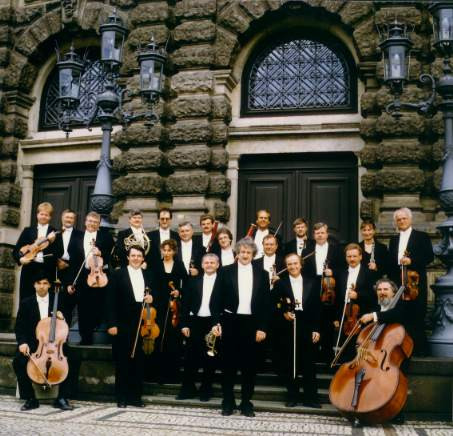
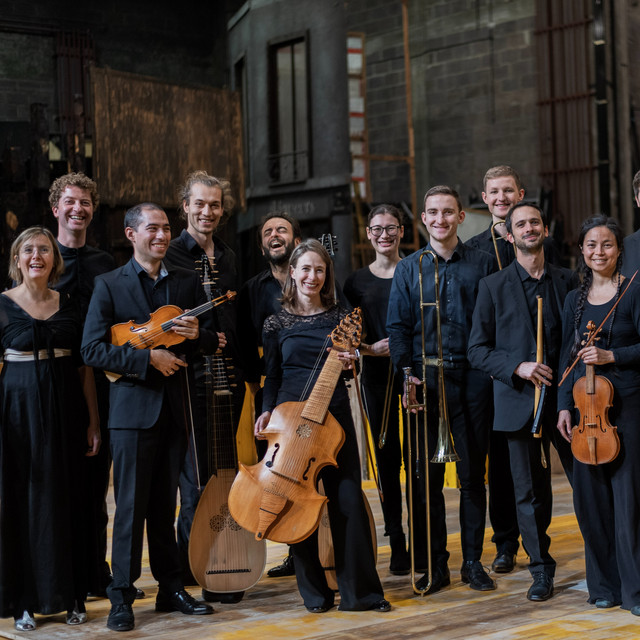
Barockinterpreten is best understood as the community of musicians and ensembles dedicated to performing Baroque music (roughly 1600–1750) with historically informed practices. Born from the mid-20th‑century early-music revival, this approach seeks to recreate, as closely as possible, the sound world in which composers like Bach, Vivaldi, Handel, Corelli, and Rameau wrote and first heard their works. Rather than a single sound, Barockinterpreten embodies a set of performance choices: a preference for period instruments or faithful replicas (harpsichord, clavichord, theorbo, baroque violin with gut strings and lighter bows, recorders, baroque oboes and bassoons), natural or period-accurate brass, and a tuning and temperament that mirror the era rather than modern concert hall norms. They attend to ornamentation, phrasing, tempo relationships, and the rhetorical architecture of dances, arias, and fugues that structure Baroque pieces.
The movement crystallized in the 1950s–1960s when scholars-musicians like Nikolaus Harnoncourt and his Concentus Musicus Wien began performing from basso continuo and figured bass, using period instruments and a historically informed approach. This challenged romanticized, modern-instrument interpretations and opened new listening possibilities. Parallel currents in Europe—Gustav Leonhardt’s keyboard-focused scholarship, the Dutch and British research schools, and later ensembles dedicated to authentic performance—fed a broader shift from aimless virtuosity to text-centered interpretation. Over the decades, Barockinterpreten expanded beyond a few specialists into a vibrant, widely encountered field that includes concert halls, festivals, and recording studios.
Key ambassadors of the genre include a diverse roster of leaders and ensembles. Nikolaus Harnoncourt and the Concentus Musicus Wien helped anchor the HIP ethos in the public imagination. Gustav Leonhardt’s keyboard projects and Bach cycles set a bar for scholarly fidelity. John Eliot Gardiner and the English Baroque Soloists popularized Bach and Monteverdi with large-scale, transparent textures. Sigiswald Kuijken and La Petite Bande became renowned for Bach, Vivaldi, and Handel with a distinct, clean string sound. Jordi Savall, with Hespèrion XX, and later Le Concert des Nations, broadened the reach of Baroque repertoire through historical strings and a global touring presence. William Christie and Les Arts Florissants revitalized French Baroque opera and sacred music with a dramatic historical sensibility. Ton Koopman, with his Amsterdam Baroque Orchestra and Choir, offered comprehensive Bach cycles and a pan‑Baroque repertoire that influenced countless performers. Together, these artists helped turn Barockinterpreten from a scholarly niche into a global listening phenomenon.
Geographically, the movement has strong roots in Germany, Austria, the Netherlands, and France, with deep audiences also in the United Kingdom, Spain, and increasingly the United States. It has a global footprint today, including specialists in Japan and other parts of Asia, reflecting a universal appeal: a clarity of texture, a sense of historical context, and an appeal to listeners who crave transparent counterpoint, expressive ornamentation, and the tactile immediacy of period instruments.
In essence, Barockinterpreten offers more than historical recreation; it invites listeners to hear Baroque music as a living conversation across centuries—where craft, scholarship, and artistry converge to illuminate the music’s architecture, drama, and radiant clarity.
The movement crystallized in the 1950s–1960s when scholars-musicians like Nikolaus Harnoncourt and his Concentus Musicus Wien began performing from basso continuo and figured bass, using period instruments and a historically informed approach. This challenged romanticized, modern-instrument interpretations and opened new listening possibilities. Parallel currents in Europe—Gustav Leonhardt’s keyboard-focused scholarship, the Dutch and British research schools, and later ensembles dedicated to authentic performance—fed a broader shift from aimless virtuosity to text-centered interpretation. Over the decades, Barockinterpreten expanded beyond a few specialists into a vibrant, widely encountered field that includes concert halls, festivals, and recording studios.
Key ambassadors of the genre include a diverse roster of leaders and ensembles. Nikolaus Harnoncourt and the Concentus Musicus Wien helped anchor the HIP ethos in the public imagination. Gustav Leonhardt’s keyboard projects and Bach cycles set a bar for scholarly fidelity. John Eliot Gardiner and the English Baroque Soloists popularized Bach and Monteverdi with large-scale, transparent textures. Sigiswald Kuijken and La Petite Bande became renowned for Bach, Vivaldi, and Handel with a distinct, clean string sound. Jordi Savall, with Hespèrion XX, and later Le Concert des Nations, broadened the reach of Baroque repertoire through historical strings and a global touring presence. William Christie and Les Arts Florissants revitalized French Baroque opera and sacred music with a dramatic historical sensibility. Ton Koopman, with his Amsterdam Baroque Orchestra and Choir, offered comprehensive Bach cycles and a pan‑Baroque repertoire that influenced countless performers. Together, these artists helped turn Barockinterpreten from a scholarly niche into a global listening phenomenon.
Geographically, the movement has strong roots in Germany, Austria, the Netherlands, and France, with deep audiences also in the United Kingdom, Spain, and increasingly the United States. It has a global footprint today, including specialists in Japan and other parts of Asia, reflecting a universal appeal: a clarity of texture, a sense of historical context, and an appeal to listeners who crave transparent counterpoint, expressive ornamentation, and the tactile immediacy of period instruments.
In essence, Barockinterpreten offers more than historical recreation; it invites listeners to hear Baroque music as a living conversation across centuries—where craft, scholarship, and artistry converge to illuminate the music’s architecture, drama, and radiant clarity.