Genre
c64
Top C64 Artists
Showing 25 of 47 artists














About C64
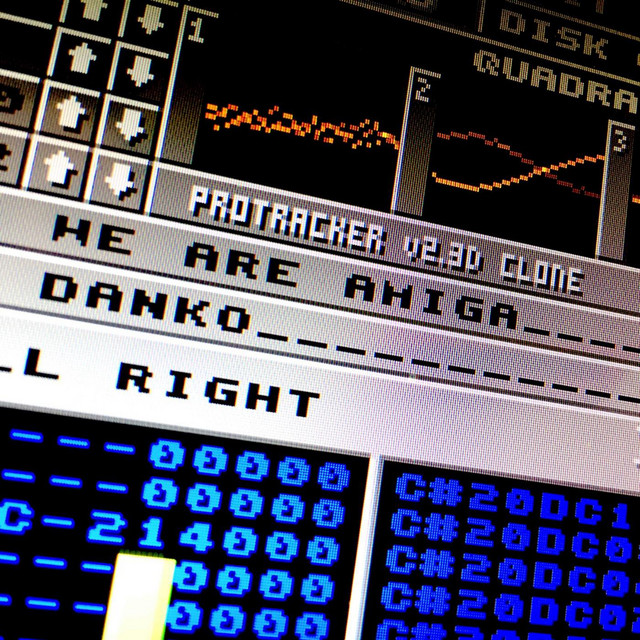
C64, short for Commodore 64 SID-driven music, is a distinctive branch of chip music rooted in the early 1980s home computer scene. It centers on the sound produced by the MOS Technology SID chip (6581/8580) inside the Commodore 64. The genre isn’t simply “video game music”: it’s an entire culture of composers, demoscene artists, and programmers who treated the SID as a playground for expressive, rule-breaking sound design. The result is a warm, punchy, sometimes wiry timbre characterized by lush arpeggios, robotic basslines, and shimmering lead tones that still sound iconic decades later.
Born from the Commodore 64’s hardware in 1982, c64 music emerged at a moment when personal computers started to democratize music production. Early SID composers and game studios exploited the chip’s three independent audio channels and programmable envelope and filter to craft melodies, counterpoints, and evolving textures within tight memory limits. By the mid-to-late 1980s, SID-driven tunes populated not only games but also the then-nascent demoscene, where programmers and musicians showcased real-time audio synthesis as part of short audiovisual demonstrations. The result was a kinetic, highly technical art form: music that rode the edge of what was possible on consumer hardware.
In practice, c64 music blends compositional craft with hardware-improv. Players hear fast-paced arpeggios that imply chords across three channels, gritty basslines that pulse with the chip’s distinctive harmonics, and filter sweeps that morph melodies from one timbre to another. The genre also thrives on contrast—airy, delicate leads against chunky, saturated bass; synthetic percussion that sits in the background while a melodic line flashes to the foreground. This sonic palette gave c64 music a signature identity that many enthusiasts immediately recognize, even when the tracks exist in a larger game or demo.
Among the ambassadors and key figures of c64 music are several names that helped define its sound and reach. Rob Hubbard, Martin Galway, and David Whittaker were among the early British pioneers whose SID compositions set benchmarks for depth, sophistication, and energy. In Germany, Chris Huelsbeck became a towering figure with influential soundtracks for the Turrican series, while the Dutch composer Jeroen Tel helped push the boundaries of SID programming within the demoscene. These artists, and many collaborators across the UK, Netherlands, Germany, and beyond, bridged the gap between commercial game music and the purely experimental works that circulated in demos and gatherings.
The genre has enjoyed enduring popularity in Europe, where the demoscene flourishes and retro-computing communities remain robust in the UK, the Netherlands, Germany, Sweden, Finland, and Poland, among others. Today, enthusiasts celebrate c64 music through live performances, modern emulation, and software tools that emulate or reinterpret SID channels. New generations approach the SID with curiosity, remix culture, and preservationist zeal, ensuring that the three-voice charm of the Commodore 64 continues to resonate.
For music lovers, c64 offers a compelling blend of nostalgia, technical ingenuity, and raw musical personality. It’s a reminder that constraints can drive creativity: with only a handful of voices and a tiny chromatic palette, the SID managed to carve out a lasting, expressive soundscape that still invites new listeners and creators to explore its possibilities.
Born from the Commodore 64’s hardware in 1982, c64 music emerged at a moment when personal computers started to democratize music production. Early SID composers and game studios exploited the chip’s three independent audio channels and programmable envelope and filter to craft melodies, counterpoints, and evolving textures within tight memory limits. By the mid-to-late 1980s, SID-driven tunes populated not only games but also the then-nascent demoscene, where programmers and musicians showcased real-time audio synthesis as part of short audiovisual demonstrations. The result was a kinetic, highly technical art form: music that rode the edge of what was possible on consumer hardware.
In practice, c64 music blends compositional craft with hardware-improv. Players hear fast-paced arpeggios that imply chords across three channels, gritty basslines that pulse with the chip’s distinctive harmonics, and filter sweeps that morph melodies from one timbre to another. The genre also thrives on contrast—airy, delicate leads against chunky, saturated bass; synthetic percussion that sits in the background while a melodic line flashes to the foreground. This sonic palette gave c64 music a signature identity that many enthusiasts immediately recognize, even when the tracks exist in a larger game or demo.
Among the ambassadors and key figures of c64 music are several names that helped define its sound and reach. Rob Hubbard, Martin Galway, and David Whittaker were among the early British pioneers whose SID compositions set benchmarks for depth, sophistication, and energy. In Germany, Chris Huelsbeck became a towering figure with influential soundtracks for the Turrican series, while the Dutch composer Jeroen Tel helped push the boundaries of SID programming within the demoscene. These artists, and many collaborators across the UK, Netherlands, Germany, and beyond, bridged the gap between commercial game music and the purely experimental works that circulated in demos and gatherings.
The genre has enjoyed enduring popularity in Europe, where the demoscene flourishes and retro-computing communities remain robust in the UK, the Netherlands, Germany, Sweden, Finland, and Poland, among others. Today, enthusiasts celebrate c64 music through live performances, modern emulation, and software tools that emulate or reinterpret SID channels. New generations approach the SID with curiosity, remix culture, and preservationist zeal, ensuring that the three-voice charm of the Commodore 64 continues to resonate.
For music lovers, c64 offers a compelling blend of nostalgia, technical ingenuity, and raw musical personality. It’s a reminder that constraints can drive creativity: with only a handful of voices and a tiny chromatic palette, the SID managed to carve out a lasting, expressive soundscape that still invites new listeners and creators to explore its possibilities.