Genre
deconstructed club
Top Deconstructed club Artists
Showing 25 of 30 artists




















About Deconstructed club
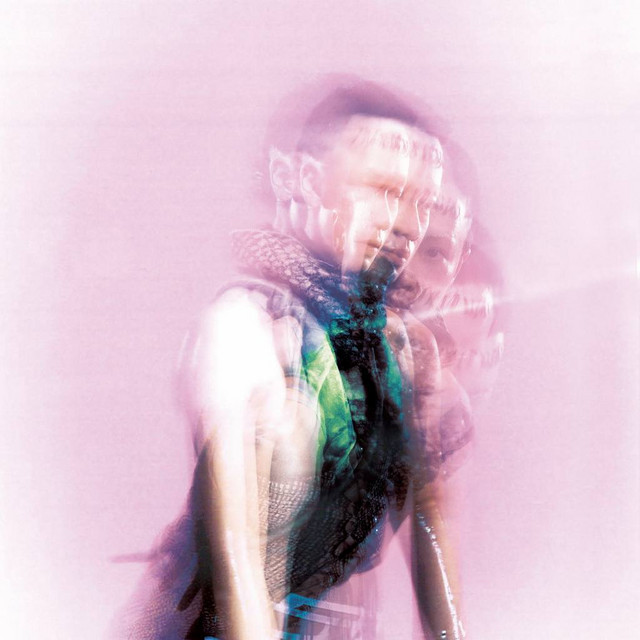
Deconstructed club is not simply a new subgenre; it’s a philosophy of club music that treats rhythm as variable, texture as weapon, and the dancefloor as a site of ongoing experiment. Born from the audacious cross-pollination of industrial techno, noise, grime, bass music, and avant-garde electronics, it proceeds by tearing familiar club forms apart and reassembling them into disorienting, ecstatic mazes. The result is music that can feel brutal and hypnotic at once: basslines that shake walls, percussion that mutates mid-flight, and textures that flicker between ritual, psychonautic, and nightclub-ready.
The scene crystallized in the mid-2010s, largely in Europe but with a growing North American presence. Critics and dancers began naming a specific approach to sound and presentation rather than a single template. Berlin’s nightlife, with its open-ended club culture and experimental programming, proved especially fertile. Nights curated by collectives like Creamcake helped codify a sonic vocabulary—dense textures, abrupt tempo shifts, and performances that emphasize atmosphere as much as beat. The music travels through dense environments where sub-bass rumbles like an earthquake and percussive patterns refuse to stay in one meter, inviting improvisation as a central element of the live experience.
Sonic traits that define deconstructed club include jagged, glitchy percussion, industrial textures, and samples that arrive in surprising places—sometimes pitched-down voices, field recordings, or metallic clangs that feel as much sculptural as rhythmic. Tracks frequently defy conventional buildup and drop sequences, favoring sudden changes, extended introspection, or non-linear evolutions. The approach often foregrounds experimentation over polish, valuing risk, texture, and the choreography of a night as a whole. In performance, DJs and live acts may join modular rigs, live processing, and visual art, creating immersive events that feel less like a set and more like a cathartic experience.
Among the artists and ambassadors commonly associated with the sound, Dis Fig stands out as a key figure in the U.S. scene, noted for a robust, fearless approach to sound design that pushes club acoustics to their limits. European voices, especially those linked to Berlin’s Creamcake roster, helped propel the aesthetic into the broader consciousness, highlighting a community ethos that blends experimentation with a shared love of the dancefloor. In addition, newer voices from global scenes—artists who bridge grime, techno, and experimental electronics—have expanded the genre’s geography, bringing deconstructed club’s forward momentum to places that previously heard only conventional club forms. The movement thus lives in clubs, labels, and collectives worldwide, not as a fixed style but as a living practice.
Geographically, deconstructed club thrives in Germany, the United Kingdom, and the United States, where club culture supports risk-taking and cross-genre collaboration. It has also found audiences in Japan, parts of Scandinavia, and various European capitals, where promoters curate nights that emphasize atmosphere, subversion, and communal listening as much as dancing. The genre’s popularity correlates with a broader appetite for experimental electronic music that still operates within the club’s social frame—where listening, feeling, and moving are inseparable.
For enthusiasts, deconstructed club offers a way to hear the club as a laboratory: spaces where sound is dissected, reassembled, and pushed toward the edge of what a dancefloor can be. It remains an evolving conversation—a chorus of crews, collectives, and individuals testing new textures while inviting the crowd to participate in the becoming of a scene that refuses to be neatly categorized. If you crave music that challenges the ear while moving the body, this is one of the most exciting frontiers in contemporary electronic sound.
The scene crystallized in the mid-2010s, largely in Europe but with a growing North American presence. Critics and dancers began naming a specific approach to sound and presentation rather than a single template. Berlin’s nightlife, with its open-ended club culture and experimental programming, proved especially fertile. Nights curated by collectives like Creamcake helped codify a sonic vocabulary—dense textures, abrupt tempo shifts, and performances that emphasize atmosphere as much as beat. The music travels through dense environments where sub-bass rumbles like an earthquake and percussive patterns refuse to stay in one meter, inviting improvisation as a central element of the live experience.
Sonic traits that define deconstructed club include jagged, glitchy percussion, industrial textures, and samples that arrive in surprising places—sometimes pitched-down voices, field recordings, or metallic clangs that feel as much sculptural as rhythmic. Tracks frequently defy conventional buildup and drop sequences, favoring sudden changes, extended introspection, or non-linear evolutions. The approach often foregrounds experimentation over polish, valuing risk, texture, and the choreography of a night as a whole. In performance, DJs and live acts may join modular rigs, live processing, and visual art, creating immersive events that feel less like a set and more like a cathartic experience.
Among the artists and ambassadors commonly associated with the sound, Dis Fig stands out as a key figure in the U.S. scene, noted for a robust, fearless approach to sound design that pushes club acoustics to their limits. European voices, especially those linked to Berlin’s Creamcake roster, helped propel the aesthetic into the broader consciousness, highlighting a community ethos that blends experimentation with a shared love of the dancefloor. In addition, newer voices from global scenes—artists who bridge grime, techno, and experimental electronics—have expanded the genre’s geography, bringing deconstructed club’s forward momentum to places that previously heard only conventional club forms. The movement thus lives in clubs, labels, and collectives worldwide, not as a fixed style but as a living practice.
Geographically, deconstructed club thrives in Germany, the United Kingdom, and the United States, where club culture supports risk-taking and cross-genre collaboration. It has also found audiences in Japan, parts of Scandinavia, and various European capitals, where promoters curate nights that emphasize atmosphere, subversion, and communal listening as much as dancing. The genre’s popularity correlates with a broader appetite for experimental electronic music that still operates within the club’s social frame—where listening, feeling, and moving are inseparable.
For enthusiasts, deconstructed club offers a way to hear the club as a laboratory: spaces where sound is dissected, reassembled, and pushed toward the edge of what a dancefloor can be. It remains an evolving conversation—a chorus of crews, collectives, and individuals testing new textures while inviting the crowd to participate in the becoming of a scene that refuses to be neatly categorized. If you crave music that challenges the ear while moving the body, this is one of the most exciting frontiers in contemporary electronic sound.