Genre
palestinian alternative
Top Palestinian alternative Artists
Showing 25 of 26 artists







About Palestinian alternative
Palestinian alternative is a contemporary music current that sits at the crossroads of Arab musical memory and Western indie, electronic, and hip‑hop textures. Born out of late 1990s and early 2000s experimentation within Palestinian cities and the broader diaspora, it grew as artists renegotiated identity, memory, exile, and resistance. It isn’t a single sound but a family of approaches: moody, guitar‑driven songs with Arabic poetry; hypnotic electronic textures layered with oud or qanun; percussion that blends traditional rhythms with club‑friendly grooves; and hip‑hop that speaks to everyday life under occupation, borders, and displacement. The result is intimate, urgent, and cinematic, often populated by voices that address both personal longing and collective memory.
Historically, Palestinian alternative emerged from the rubble of political conflict and the globalized circulation of music. Artists found ways to fuse Western indie sensibilities with Arabic scales, call‑and‑response patterns, and folk melodies, producing a sound that feels both familiar and startlingly new. It developed in parallel with the broader Arabic alternative scene, but its geographic anchors—cities in present‑day Israel and the Palestinian territories, and the sprawling diasporas in Europe and the Americas—gave it a unique mix of grit, romance, and political clarity. The scene has benefited from cross‑border collaborations, independent labels, and festival platforms that rank music by its honesty and risk rather than by national flags.
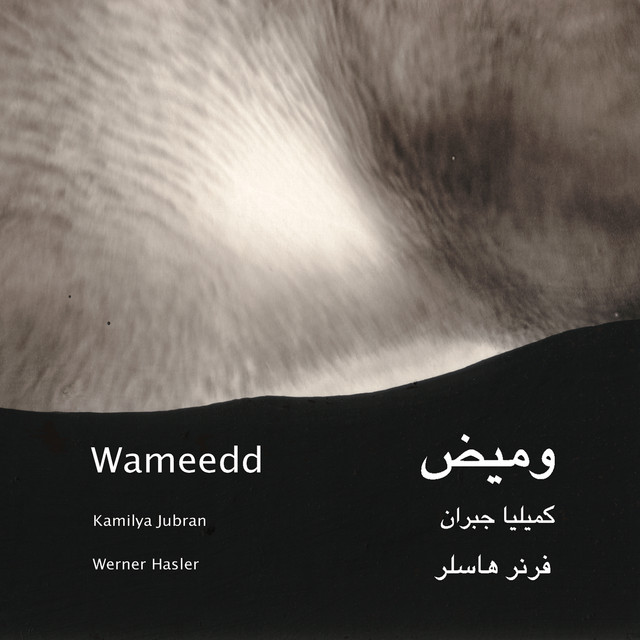
Key artists and ambassadors often cited in discussions of Palestinian alternative include DAM, a pioneering Palestinian hip‑hop collective formed in the late 1990s in Lod. They helped prove that Palestinian voices could travel internationally without losing their node of origin, using rhythm, rhyme, and spoken word to illuminate everyday life under difficult conditions. On a related track, 47Soul has become a touchstone for the electro‑Arab fusion strand: a diaspora‑driven group that blends electronic groove with shaabi and rock energy, turning club-anchored tracks into anthems that tour across the Arab world and Europe. In simultaneous contrast, Le Trio Joubran—three brothers from Nazareth—reimagine the oud within a modern, nearly chamber‑like framework, showing another facet of Palestinian innovation: intimate, instrumentally driven music that speaks across cultures. Artists like Kamilya Jubran have also pushed the scene toward experimentation, blending improvisation, spoken word, and non‑Western textures to widen the palette of what Palestinian music can be.
Popular country footprints for Palestinian alternative are strongest in the home region—Israel, the Palestinian territories, Jordan, and Lebanon—where artists often perform for multilingual audiences. The diaspora in Europe (the United Kingdom, Germany, Sweden, the Netherlands) and in North America (the United States, Canada) hosts thriving listening communities, academic circles, and festival stages that welcome hybrid sounds. Across these geographies, the music travels with stories of migration, shelter, and longing, yet remains anchored in a stubborn sense of place.
In essence, Palestinian alternative is less a box to check than a living conversation: about belonging and refusal, about the tension between memory and invention, and about making new forms from old sounds. It invites curious listeners to hear a soundscape where maqam and distortion, street poetry and studio polish, can coexist, reminding us that identity can be both rooted and experimental.
Historically, Palestinian alternative emerged from the rubble of political conflict and the globalized circulation of music. Artists found ways to fuse Western indie sensibilities with Arabic scales, call‑and‑response patterns, and folk melodies, producing a sound that feels both familiar and startlingly new. It developed in parallel with the broader Arabic alternative scene, but its geographic anchors—cities in present‑day Israel and the Palestinian territories, and the sprawling diasporas in Europe and the Americas—gave it a unique mix of grit, romance, and political clarity. The scene has benefited from cross‑border collaborations, independent labels, and festival platforms that rank music by its honesty and risk rather than by national flags.
Key artists and ambassadors often cited in discussions of Palestinian alternative include DAM, a pioneering Palestinian hip‑hop collective formed in the late 1990s in Lod. They helped prove that Palestinian voices could travel internationally without losing their node of origin, using rhythm, rhyme, and spoken word to illuminate everyday life under difficult conditions. On a related track, 47Soul has become a touchstone for the electro‑Arab fusion strand: a diaspora‑driven group that blends electronic groove with shaabi and rock energy, turning club-anchored tracks into anthems that tour across the Arab world and Europe. In simultaneous contrast, Le Trio Joubran—three brothers from Nazareth—reimagine the oud within a modern, nearly chamber‑like framework, showing another facet of Palestinian innovation: intimate, instrumentally driven music that speaks across cultures. Artists like Kamilya Jubran have also pushed the scene toward experimentation, blending improvisation, spoken word, and non‑Western textures to widen the palette of what Palestinian music can be.
Popular country footprints for Palestinian alternative are strongest in the home region—Israel, the Palestinian territories, Jordan, and Lebanon—where artists often perform for multilingual audiences. The diaspora in Europe (the United Kingdom, Germany, Sweden, the Netherlands) and in North America (the United States, Canada) hosts thriving listening communities, academic circles, and festival stages that welcome hybrid sounds. Across these geographies, the music travels with stories of migration, shelter, and longing, yet remains anchored in a stubborn sense of place.
In essence, Palestinian alternative is less a box to check than a living conversation: about belonging and refusal, about the tension between memory and invention, and about making new forms from old sounds. It invites curious listeners to hear a soundscape where maqam and distortion, street poetry and studio polish, can coexist, reminding us that identity can be both rooted and experimental.