Genre
uk post-punk revival
Top Uk post-punk revival Artists
Showing 20 of 20 artists








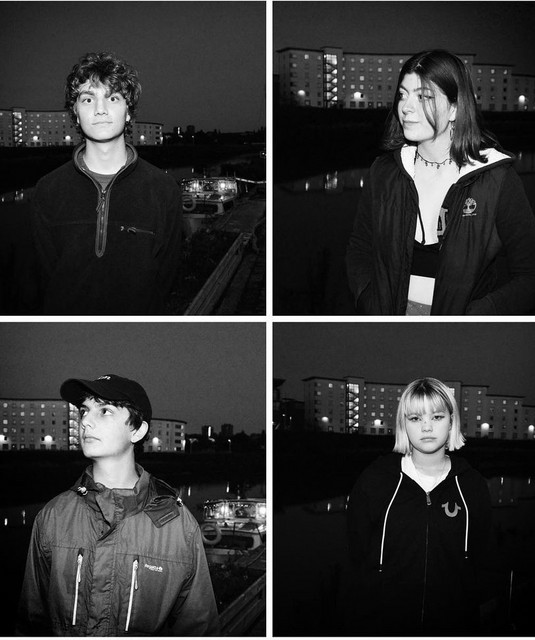


About Uk post-punk revival
UK post-punk revival is the British chapter of a broader global reclaiming of post-punk energy, a movement that sought to recapture the brisk, angular fire of late-70s and early-80s bands while grafting it onto 21st‑century indie swagger. It crystallized in the United Kingdom in the early to mid-2000s, a period when guitar-based bands began emphasizing punchy rhythms, taut basslines, and a sense of danceable urgency as much as atmosphere. The result sounded both nostalgic and forward-looking, a collision of clap-along rock energy with the cool, literate sensibility that had grown from the UK indie scenes of the previous decade.
Musically, the UK post-punk revival leans on tight, economical arrangements. Guitars bite with punk precision, but with a tendency toward angular riffs and offbeat cadences rather than glossy solos. The rhythm section favors brisk, propulsive grooves—sometimes almost dance-punk in stance—creating songs that feel both urgent and almost contagious in their propulsion. Vocals range from dry, laconic baritone to witty, swaggering delivery, often wrapped in lyric lines that are observational, a touch sardonic, and classically British in their wry mooding. The voice and the guitar textures both nod to the original post-punk era, while production and stagecraft push the energy toward the modern club and festival circuit.
The scene’s ambassadors quickly became recognizable names. Franz Ferdinand, with their razor-sharp hooks and the iconic single Take Me Out, fired the starting pistol for a wave of UK acts. Bloc Party followed with a debut that fused urgent guitar work with pointed, sometimes political lyrics. The Libertines brought a raw, garage-inflected approach that fused indie charisma with rebellious street poetry. The Rakes offered brisk, infectious sass that felt tailor-made for packed venues. Editors, Kaiser Chiefs, and Maxïmo Park joined the fray, each contributing a distinct UK flavor—glossy yet earnest, witty yet darkly dramatic. Taken together, these bands defined a mood: music that felt urgent enough for the club but intelligent enough for the listener’s headphones.
Geographically, the movement was most influential in the United Kingdom, with particularly strong scenes in Scotland (Franz Ferdinand’s Glasgow lineage helped seed a broader revival) and across major English cities such as London, Leeds, and Manchester. Ireland, continental Europe (notably Germany and France), and, to a lesser extent, North America, absorbed the sound as touring schedules and international radio exposure broadened the audience. The UK post-punk revival also fed into a larger turn-of-the-2000s indie ecosystem that valued clarity of purpose, concise songcraft, and a back-to-basics approach that contrasted with the maximalist trends of earlier 2000s rock.
For enthusiasts, the era offers a compact, high-energy catalog: singalong choruses, clever wordplay, and a kinship with the broader legacy of Joy Division, Gang of Four, and others, while staking a claim for a distinctly 21st‑century UK voice. If you crave brisk tempo, gritty guitar textures, and melodies that lodge in your memory as easily as they jab at your ears, the UK post-punk revival remains a vibrant touchstone—an archival snapshot and a living, kicking sound at the same time.
Musically, the UK post-punk revival leans on tight, economical arrangements. Guitars bite with punk precision, but with a tendency toward angular riffs and offbeat cadences rather than glossy solos. The rhythm section favors brisk, propulsive grooves—sometimes almost dance-punk in stance—creating songs that feel both urgent and almost contagious in their propulsion. Vocals range from dry, laconic baritone to witty, swaggering delivery, often wrapped in lyric lines that are observational, a touch sardonic, and classically British in their wry mooding. The voice and the guitar textures both nod to the original post-punk era, while production and stagecraft push the energy toward the modern club and festival circuit.
The scene’s ambassadors quickly became recognizable names. Franz Ferdinand, with their razor-sharp hooks and the iconic single Take Me Out, fired the starting pistol for a wave of UK acts. Bloc Party followed with a debut that fused urgent guitar work with pointed, sometimes political lyrics. The Libertines brought a raw, garage-inflected approach that fused indie charisma with rebellious street poetry. The Rakes offered brisk, infectious sass that felt tailor-made for packed venues. Editors, Kaiser Chiefs, and Maxïmo Park joined the fray, each contributing a distinct UK flavor—glossy yet earnest, witty yet darkly dramatic. Taken together, these bands defined a mood: music that felt urgent enough for the club but intelligent enough for the listener’s headphones.
Geographically, the movement was most influential in the United Kingdom, with particularly strong scenes in Scotland (Franz Ferdinand’s Glasgow lineage helped seed a broader revival) and across major English cities such as London, Leeds, and Manchester. Ireland, continental Europe (notably Germany and France), and, to a lesser extent, North America, absorbed the sound as touring schedules and international radio exposure broadened the audience. The UK post-punk revival also fed into a larger turn-of-the-2000s indie ecosystem that valued clarity of purpose, concise songcraft, and a back-to-basics approach that contrasted with the maximalist trends of earlier 2000s rock.
For enthusiasts, the era offers a compact, high-energy catalog: singalong choruses, clever wordplay, and a kinship with the broader legacy of Joy Division, Gang of Four, and others, while staking a claim for a distinctly 21st‑century UK voice. If you crave brisk tempo, gritty guitar textures, and melodies that lodge in your memory as easily as they jab at your ears, the UK post-punk revival remains a vibrant touchstone—an archival snapshot and a living, kicking sound at the same time.