Genre
world fusion
Top World fusion Artists
Showing 25 of 53 artists




About World fusion
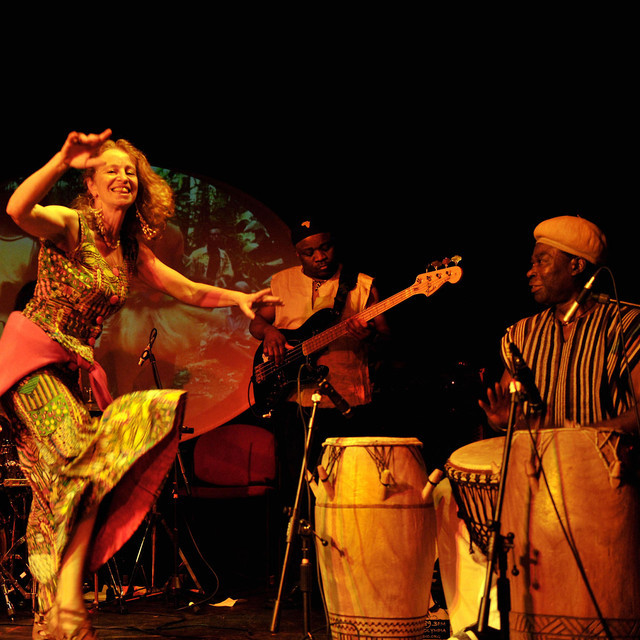
World fusion is the musical dialogue that happens when traditional melodies and rhythms from around the globe meet contemporary Western styles—jazz, electronic, hip-hop, rock, and experimental sound design. It’s not a single sound so much as a spectrum, rooted in collaboration, curiosity, and the willingness to let different musical grammars breathe in the same space.
Origins and evolution: The seeds were sown long before the term existed. In the 1960s and 1970s, cross-cultural encounters—Ravi Shankar’s collaborations with Western artists, George Harrison’s fascination with Indian music, Shakti’s electrified synthesis with John McLaughlin—showed how non-Western traditions could converse with Western improvisation and technology. By the late 1980s and into the 1990s, the world music market and a new generation of producers and labels—Peter Gabriel’s Real World Records among them—helped codify blending disparate sounds. The result was world fusion: artists weaving electronics, looped grooves, field recordings, and classical timbres with indigenous instruments such as the sitar, kora, duduk, mbira, or daf.
Core characteristics: World fusion thrives on openness—rhythmic polyrhythms, modal scales, and tonal color from diverse instruments. It embraces studio technology without surrendering folk authenticity. It invites improvisation and collaboration across cultures, often featuring guest vocalists and multi-ethnic ensembles. Its sonic palette ranges from clean pop-ready textures to raw, hypnotic field recordings and trance-inducing drones. The goal is not fusion for fusion’s sake but a meaningful conversation between traditions, where a listener can hear both lineage and invention.
Ambassadors and key artists: The movement has many figures who served as ambassadors. Ravi Shankar and, later, Anoushka Shankar helped bring Indian classical music into new contexts. Peter Gabriel championed global artists on Real World Records and through the WOMAD festival. Nitin Sawhney fused East–West influences on albums like Beyond Skin. Toumani Diabaté’s kora playing threaded Malian heritage with jazz and Western film scores. Ali Farka Touré’s muddy blues-influenced guitar paired with Ry Cooder on Talking Timbuktu. Youssou N’Dour’s griot tradition met pop and electronic textures. Kronos Quartet’s collaborations with artists across Asia, Africa, and the Americas broadened the string quartet’s language. Tinariwen’s desert blues bridged Tuareg melodies with Western rock rhythms. Yo-Yo Ma’s Silk Road ensembles brought together musicians from a broad belt of Eurasia. These figures, among many others, became touchstones for listeners exploring the world beyond borders.
Global reach and reception: World fusion has found vibrant scenes across Europe—especially the UK, France, and Germany—where multicultural cities and strong world-music markets exist. It has enjoyed popularity in North America, with audiences in major cities such as New York, Montreal, Los Angeles, and Toronto. Africa, the Middle East, South Asia, and Latin America contribute enduring energy and new voices, while Japan has long hosted receptive audiences for fusion of traditional and contemporary forms.
Whether you’re chasing hypnotic rhythms, spiritual drones, or virtuosic instrumental dialogue, world fusion offers a map of cross-cultural exchange—an evolving, democratic music that invites listening as discovery.
Origins and evolution: The seeds were sown long before the term existed. In the 1960s and 1970s, cross-cultural encounters—Ravi Shankar’s collaborations with Western artists, George Harrison’s fascination with Indian music, Shakti’s electrified synthesis with John McLaughlin—showed how non-Western traditions could converse with Western improvisation and technology. By the late 1980s and into the 1990s, the world music market and a new generation of producers and labels—Peter Gabriel’s Real World Records among them—helped codify blending disparate sounds. The result was world fusion: artists weaving electronics, looped grooves, field recordings, and classical timbres with indigenous instruments such as the sitar, kora, duduk, mbira, or daf.
Core characteristics: World fusion thrives on openness—rhythmic polyrhythms, modal scales, and tonal color from diverse instruments. It embraces studio technology without surrendering folk authenticity. It invites improvisation and collaboration across cultures, often featuring guest vocalists and multi-ethnic ensembles. Its sonic palette ranges from clean pop-ready textures to raw, hypnotic field recordings and trance-inducing drones. The goal is not fusion for fusion’s sake but a meaningful conversation between traditions, where a listener can hear both lineage and invention.
Ambassadors and key artists: The movement has many figures who served as ambassadors. Ravi Shankar and, later, Anoushka Shankar helped bring Indian classical music into new contexts. Peter Gabriel championed global artists on Real World Records and through the WOMAD festival. Nitin Sawhney fused East–West influences on albums like Beyond Skin. Toumani Diabaté’s kora playing threaded Malian heritage with jazz and Western film scores. Ali Farka Touré’s muddy blues-influenced guitar paired with Ry Cooder on Talking Timbuktu. Youssou N’Dour’s griot tradition met pop and electronic textures. Kronos Quartet’s collaborations with artists across Asia, Africa, and the Americas broadened the string quartet’s language. Tinariwen’s desert blues bridged Tuareg melodies with Western rock rhythms. Yo-Yo Ma’s Silk Road ensembles brought together musicians from a broad belt of Eurasia. These figures, among many others, became touchstones for listeners exploring the world beyond borders.
Global reach and reception: World fusion has found vibrant scenes across Europe—especially the UK, France, and Germany—where multicultural cities and strong world-music markets exist. It has enjoyed popularity in North America, with audiences in major cities such as New York, Montreal, Los Angeles, and Toronto. Africa, the Middle East, South Asia, and Latin America contribute enduring energy and new voices, while Japan has long hosted receptive audiences for fusion of traditional and contemporary forms.
Whether you’re chasing hypnotic rhythms, spiritual drones, or virtuosic instrumental dialogue, world fusion offers a map of cross-cultural exchange—an evolving, democratic music that invites listening as discovery.