Data may be outdated
Last updated: 9 months ago — Click refresh to get the latest statistics.
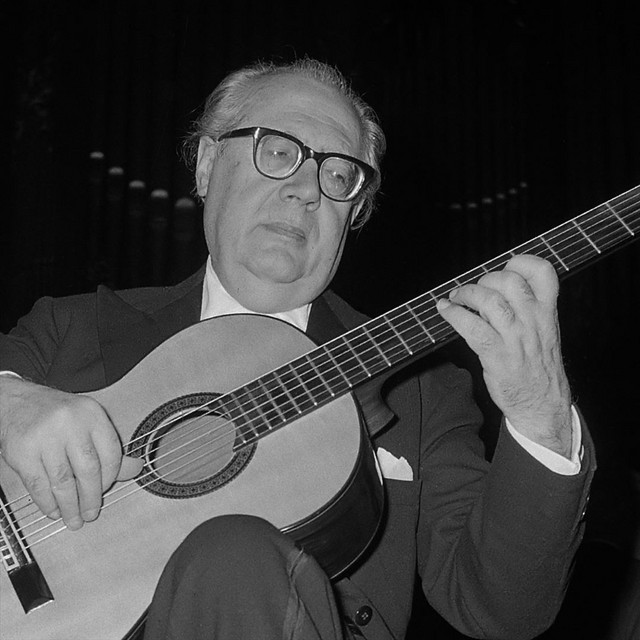
Guitarist Andrés Segovia did much to develop the classical guitar as it exists today, and he was almost unique among the great virtuosos of classical music in being self-taught. He commissioned a great deal of music that expanded the guitar repertory, transcribed music for the guitar, and was an influential educator to whom many of today's classical guitarists can trace their musical lineages.
Segovia was born on February 21, 1893, in Linares, in southern Spain's Andalucía region. He was raised by an aunt and uncle who recognized his talent and signed him up for violin lessons. Segovia clashed with his teacher, and these lessons were discontinued, but he was fascinated by the guitar and set about teaching himself the instrument, developing an unusual style that, in some respects, improved on the usual methods. Although he grew up in the heartland of flamenco music, Segovia disliked the form and gravitated more toward classical guitar works by <a href="spotify:artist:4KAvqco7JE80QdRlEjvyrd">Fernando Sor</a>, <a href="spotify:artist:3cYz1jb3gzmFv2R0Dj3U2t">Francisco Tárrega</a>, and other composers. In 1909, he gave a concert in Granada; <a href="spotify:artist:3cYz1jb3gzmFv2R0Dj3U2t">Tárrega</a> was impressed and agreed to give the youngster some lessons, but he died before they could begin. Despite criticism from some of <a href="spotify:artist:3cYz1jb3gzmFv2R0Dj3U2t">Tárrega</a>'s students, Segovia continued with his self-education. He gave concerts in Madrid in 1912, at the Paris Conservatory in 1915, and in Barcelona in 1916. By the end of the 1910s decade, Segovia decided he was ready for an international career and launched a tour of South America. He followed in the footsteps of guitarist <a href="spotify:artist:0Ag2rHCb9q0jmQ6Jaj1GUT">Miguel Llobet</a>, who had sought to establish a place on classical concert stages for the guitar.
In the 1920s, Segovia began to extend his range of acquaintances among composers, and these efforts resulted in the commissioning of new guitar works that have become central to the guitar repertory today. He met <a href="spotify:artist:07qMnUOUaZr6mRZitsANgW">Alexandre Tansman</a>, traveled to Argentina and met <a href="spotify:artist:5cOuSl6E1SSG9oPcOYRZQR">Agustín Barrios</a>, and impressed <a href="spotify:artist:3sam97auWZppQpYU1HWNxK">Manuel Ponce</a> during a concert in Mexico City. All of these encounters resulted in new music. Segovia made his U.S. debut in 1928 after violinist <a href="spotify:artist:0HdNDZaNm7xLt18v9aWDfe">Fritz Kreisler</a>, who also played the guitar, persuaded bookers to present a Segovia tour. During that tour, composer <a href="spotify:artist:01UzgUtDa2NqWuvUjrrl3p">Heitor Villa-Lobos</a> was exposed to Segovia's playing and dedicated his 12 Etudes for guitar to Segovia. Composer <a href="spotify:artist:28c3Va3dnSLY1av3ym8XT2">Mario Castelnuovo-Tedesco</a> dedicated his Guitar Concerto, Op. 99, to Segovia; it was the first guitar concerto written in the 20th century. Recordings by Segovia stretched back into the 78 rpm era; a large group of recordings that he made in London in 1949 was reissued in 1994 by the <a href="spotify:search:label%3A%22Testament%22">Testament</a> label under the title Andrés Segovia: The Complete 1949 London Recordings.
Segovia's guitar technique, using only the nails of his right hand to pluck the strings, was innovative in several respects. The degree to which he expanded the guitar repertory, commissioning new works and making transcriptions of music from <a href="spotify:artist:5aIqB5nVVvmFsvSdExz408">Bach</a> to the 20th century (he avoided modernist styles, though) was of great importance. Perhaps the most significant aspect of Segovia's career as a whole, however, was simply that he established the guitar as a serious instrument and became its first major star. In 1956, he appeared on U.S. television on The Ed Sullivan Show. Segovia was an influential teacher who numbered among his students such future stars of the guitar as <a href="spotify:artist:6vjF8XdNoqVRj5G021FBM6">Julian Bream</a>, <a href="spotify:artist:33lm6MIpEXiHzv06MUIUBu">Liona Boyd</a>, <a href="spotify:artist:2e3OImB8yCNVk1SppFne96">Christopher Parkening</a>, and <a href="spotify:artist:6mBYeMZZUhJKEvRXagJYzY">John Williams</a>. His students attested to the power of his example but sometimes complained of his domineering style. After World War II, Segovia was unquestionably the world's most popular guitarist and one of the world's top concert attractions on any instrument.
By the 1960s and '70s, Segovia had the satisfaction of seeing his students rival him in fame as not only solo guitarists but guitar quartets and quintets achieved popularity. Segovia remained active in concert and in the recording studio almost until his death in Madrid on June 2, 1987. That barely dented what had become a consistent stream of Segovia albums and reissues. A great variety of labels issued almost every scrap of music Segovia had recorded; one of the most reliable compilations was a four-volume set that appeared on the <a href="spotify:search:label%3A%22Deutsche+Grammophon%22">Deutsche Grammophon</a> label in 2003. New reissues continued to appear into the era of streaming audio; in 2021, the <a href="spotify:search:label%3A%22Artemisia%22">Artemisia</a> label issued an album containing live and studio Segovia recordings of the <a href="spotify:artist:28c3Va3dnSLY1av3ym8XT2">Castelnuovo-Tedesco</a> concerto. ~ James Manheim, Rovi
Segovia was born on February 21, 1893, in Linares, in southern Spain's Andalucía region. He was raised by an aunt and uncle who recognized his talent and signed him up for violin lessons. Segovia clashed with his teacher, and these lessons were discontinued, but he was fascinated by the guitar and set about teaching himself the instrument, developing an unusual style that, in some respects, improved on the usual methods. Although he grew up in the heartland of flamenco music, Segovia disliked the form and gravitated more toward classical guitar works by <a href="spotify:artist:4KAvqco7JE80QdRlEjvyrd">Fernando Sor</a>, <a href="spotify:artist:3cYz1jb3gzmFv2R0Dj3U2t">Francisco Tárrega</a>, and other composers. In 1909, he gave a concert in Granada; <a href="spotify:artist:3cYz1jb3gzmFv2R0Dj3U2t">Tárrega</a> was impressed and agreed to give the youngster some lessons, but he died before they could begin. Despite criticism from some of <a href="spotify:artist:3cYz1jb3gzmFv2R0Dj3U2t">Tárrega</a>'s students, Segovia continued with his self-education. He gave concerts in Madrid in 1912, at the Paris Conservatory in 1915, and in Barcelona in 1916. By the end of the 1910s decade, Segovia decided he was ready for an international career and launched a tour of South America. He followed in the footsteps of guitarist <a href="spotify:artist:0Ag2rHCb9q0jmQ6Jaj1GUT">Miguel Llobet</a>, who had sought to establish a place on classical concert stages for the guitar.
In the 1920s, Segovia began to extend his range of acquaintances among composers, and these efforts resulted in the commissioning of new guitar works that have become central to the guitar repertory today. He met <a href="spotify:artist:07qMnUOUaZr6mRZitsANgW">Alexandre Tansman</a>, traveled to Argentina and met <a href="spotify:artist:5cOuSl6E1SSG9oPcOYRZQR">Agustín Barrios</a>, and impressed <a href="spotify:artist:3sam97auWZppQpYU1HWNxK">Manuel Ponce</a> during a concert in Mexico City. All of these encounters resulted in new music. Segovia made his U.S. debut in 1928 after violinist <a href="spotify:artist:0HdNDZaNm7xLt18v9aWDfe">Fritz Kreisler</a>, who also played the guitar, persuaded bookers to present a Segovia tour. During that tour, composer <a href="spotify:artist:01UzgUtDa2NqWuvUjrrl3p">Heitor Villa-Lobos</a> was exposed to Segovia's playing and dedicated his 12 Etudes for guitar to Segovia. Composer <a href="spotify:artist:28c3Va3dnSLY1av3ym8XT2">Mario Castelnuovo-Tedesco</a> dedicated his Guitar Concerto, Op. 99, to Segovia; it was the first guitar concerto written in the 20th century. Recordings by Segovia stretched back into the 78 rpm era; a large group of recordings that he made in London in 1949 was reissued in 1994 by the <a href="spotify:search:label%3A%22Testament%22">Testament</a> label under the title Andrés Segovia: The Complete 1949 London Recordings.
Segovia's guitar technique, using only the nails of his right hand to pluck the strings, was innovative in several respects. The degree to which he expanded the guitar repertory, commissioning new works and making transcriptions of music from <a href="spotify:artist:5aIqB5nVVvmFsvSdExz408">Bach</a> to the 20th century (he avoided modernist styles, though) was of great importance. Perhaps the most significant aspect of Segovia's career as a whole, however, was simply that he established the guitar as a serious instrument and became its first major star. In 1956, he appeared on U.S. television on The Ed Sullivan Show. Segovia was an influential teacher who numbered among his students such future stars of the guitar as <a href="spotify:artist:6vjF8XdNoqVRj5G021FBM6">Julian Bream</a>, <a href="spotify:artist:33lm6MIpEXiHzv06MUIUBu">Liona Boyd</a>, <a href="spotify:artist:2e3OImB8yCNVk1SppFne96">Christopher Parkening</a>, and <a href="spotify:artist:6mBYeMZZUhJKEvRXagJYzY">John Williams</a>. His students attested to the power of his example but sometimes complained of his domineering style. After World War II, Segovia was unquestionably the world's most popular guitarist and one of the world's top concert attractions on any instrument.
By the 1960s and '70s, Segovia had the satisfaction of seeing his students rival him in fame as not only solo guitarists but guitar quartets and quintets achieved popularity. Segovia remained active in concert and in the recording studio almost until his death in Madrid on June 2, 1987. That barely dented what had become a consistent stream of Segovia albums and reissues. A great variety of labels issued almost every scrap of music Segovia had recorded; one of the most reliable compilations was a four-volume set that appeared on the <a href="spotify:search:label%3A%22Deutsche+Grammophon%22">Deutsche Grammophon</a> label in 2003. New reissues continued to appear into the era of streaming audio; in 2021, the <a href="spotify:search:label%3A%22Artemisia%22">Artemisia</a> label issued an album containing live and studio Segovia recordings of the <a href="spotify:artist:28c3Va3dnSLY1av3ym8XT2">Castelnuovo-Tedesco</a> concerto. ~ James Manheim, Rovi
Monthly Listeners
77,224
Monthly Listeners History
Track the evolution of monthly listeners over the last 28 days.
Followers
91,391
Followers History
Track the evolution of followers over the last 28 days.
Top Cities
1,207 listeners
1,182 listeners

1,176 listeners
856 listeners

789 listeners

Related Artists
Federico Moreno Torroba


Celedonio Romero



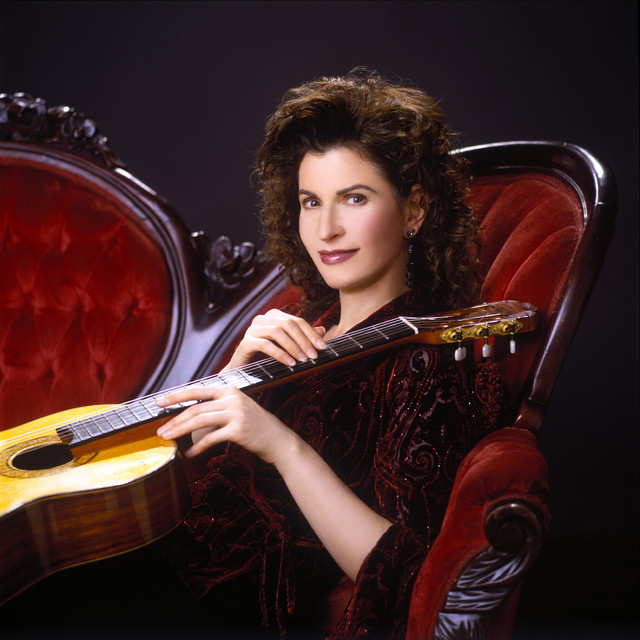
Ana Vidović

Lucio Matarazzo
Franz Halász


Celil Refik Kaya
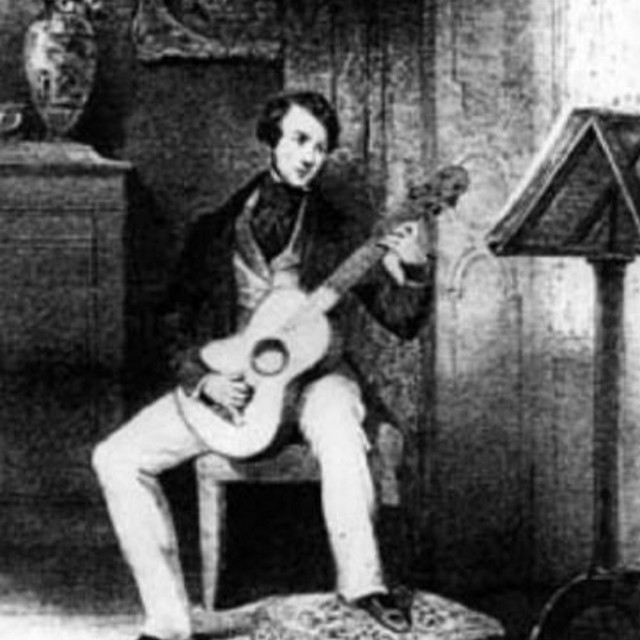
Matteo Carcassi




Nicholas Goluses