Data may be outdated
Last updated: 9 months ago — Click refresh to get the latest statistics.
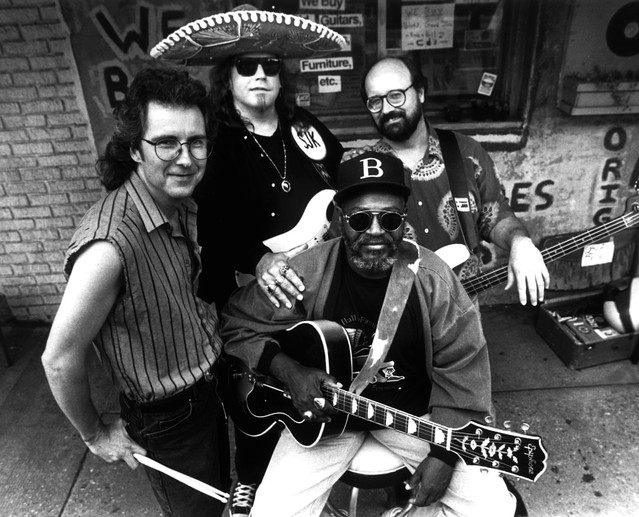
Dallas-based guitarist Anson Funderburgh took his band <a href="spotify:artist:1dEI1Wxo9jEp99reXnQY6Z">the Rockets</a> out of the clubs and onto festival stages in the early 2000s with his critically acclaimed recordings for the <a href="spotify:search:label%3A%22Black+Top%22">Black Top</a> label out of New Orleans. With Jackson, Mississippi native <a href="spotify:artist:0YYCVTvvo9y11vKo54ZN3z">Sam Myers</a> delivering the vocals and harmonica treatments, this band mixes up a powerful gumbo of Texas jump blues and Delta blues that can't be found anywhere else. <a href="spotify:artist:1dEI1Wxo9jEp99reXnQY6Z">Funderburgh & His Rockets</a> are a particularly hard-working band, performing across the U.S. and Europe nearly 300 nights a year.
Funderburgh was born November 15, 1954 and got hooked on the blues when he got his first guitar at age seven or eight. His first musical experiences came in clubs in Dallas. He developed his team approach to blues music while learning from the likes of <a href="spotify:artist:5dCuFngSPyOOnTAvrC7v2s">Freddie King</a>, <a href="spotify:artist:41ZMMuFFLPTVPkUsSI5KlV">Jimmy Reed</a>, and <a href="spotify:artist:1uFixbBAduJkFAeRKznkvW">Albert Collins</a> when these great bluesmen were passing through the area, but Funderburgh had already taught himself guitar mostly from listening to classic blues records. He never had the chance to see <a href="spotify:artist:4y6J8jwRAwO4dssiSmN91R">Muddy Waters</a>, but he did get to play with <a href="spotify:artist:6EZzVXM2uDRPmnHWq9yPDE">Lightnin' Hopkins</a> in the late '70s. Funderburgh formed <a href="spotify:artist:1dEI1Wxo9jEp99reXnQY6Z">the Rockets</a> in 1978 but didn't meet <a href="spotify:artist:0YYCVTvvo9y11vKo54ZN3z">Sam Myers</a> until 1982.
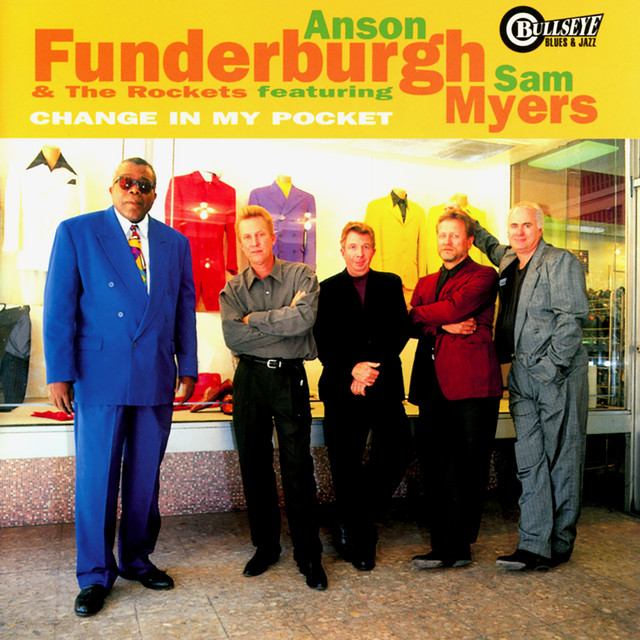
Funderburgh recorded with <a href="spotify:artist:6zmLTiN3NBNCDECRbbJKkT">the Fabulous Thunderbirds</a> on their Butt Rockin' album and went solo in 1981, when the New Orleans-based <a href="spotify:search:label%3A%22Black+Top%22">Black Top</a> label released Talk to You by Hand, the label's first release. Funderburgh added <a href="spotify:artist:0YYCVTvvo9y11vKo54ZN3z">Myers</a> on harmonica and lead vocals in 1986. <a href="spotify:artist:0YYCVTvvo9y11vKo54ZN3z">Myers</a> had traveled for years on the chitlin circuit, where he had the chance to accompany people like <a href="spotify:artist:0q9kpdDkEA3H17gcRMjgVS">Elmore James</a> and <a href="spotify:artist:5hId7yMy0kbGP6IiKWVDql">Robert Junior Lockwood</a>. Funderburgh admits that adding <a href="spotify:artist:0YYCVTvvo9y11vKo54ZN3z">Myers</a> on vocals and harmonica was a turning point for <a href="spotify:artist:1dEI1Wxo9jEp99reXnQY6Z">the Rockets</a>, partly because of the image they project from the stage, a big towering Black man and three white guys backing him up. Funderburgh continued his association in the '90s, with <a href="spotify:search:label%3A%22Black+Top%22">Black Top</a> releasing Tell Me What I Want to Hear (1991), Live at Grand Emporium (1995), and That's What They Want (1997). After releasing nine albums on <a href="spotify:search:label%3A%22Black+Top%22">Black Top</a>, Funderburgh changed record labels in 1999 with the release of Change in My Pocket for <a href="spotify:search:label%3A%22Bullseye+Blues%22">Bullseye Blues</a>. At the beginning of the new millennium, Funderburgh came into his prime with his of his songwriting talents. ~ Richard Skelly & Al Campbell, Rovi
Funderburgh was born November 15, 1954 and got hooked on the blues when he got his first guitar at age seven or eight. His first musical experiences came in clubs in Dallas. He developed his team approach to blues music while learning from the likes of <a href="spotify:artist:5dCuFngSPyOOnTAvrC7v2s">Freddie King</a>, <a href="spotify:artist:41ZMMuFFLPTVPkUsSI5KlV">Jimmy Reed</a>, and <a href="spotify:artist:1uFixbBAduJkFAeRKznkvW">Albert Collins</a> when these great bluesmen were passing through the area, but Funderburgh had already taught himself guitar mostly from listening to classic blues records. He never had the chance to see <a href="spotify:artist:4y6J8jwRAwO4dssiSmN91R">Muddy Waters</a>, but he did get to play with <a href="spotify:artist:6EZzVXM2uDRPmnHWq9yPDE">Lightnin' Hopkins</a> in the late '70s. Funderburgh formed <a href="spotify:artist:1dEI1Wxo9jEp99reXnQY6Z">the Rockets</a> in 1978 but didn't meet <a href="spotify:artist:0YYCVTvvo9y11vKo54ZN3z">Sam Myers</a> until 1982.
Funderburgh recorded with <a href="spotify:artist:6zmLTiN3NBNCDECRbbJKkT">the Fabulous Thunderbirds</a> on their Butt Rockin' album and went solo in 1981, when the New Orleans-based <a href="spotify:search:label%3A%22Black+Top%22">Black Top</a> label released Talk to You by Hand, the label's first release. Funderburgh added <a href="spotify:artist:0YYCVTvvo9y11vKo54ZN3z">Myers</a> on harmonica and lead vocals in 1986. <a href="spotify:artist:0YYCVTvvo9y11vKo54ZN3z">Myers</a> had traveled for years on the chitlin circuit, where he had the chance to accompany people like <a href="spotify:artist:0q9kpdDkEA3H17gcRMjgVS">Elmore James</a> and <a href="spotify:artist:5hId7yMy0kbGP6IiKWVDql">Robert Junior Lockwood</a>. Funderburgh admits that adding <a href="spotify:artist:0YYCVTvvo9y11vKo54ZN3z">Myers</a> on vocals and harmonica was a turning point for <a href="spotify:artist:1dEI1Wxo9jEp99reXnQY6Z">the Rockets</a>, partly because of the image they project from the stage, a big towering Black man and three white guys backing him up. Funderburgh continued his association in the '90s, with <a href="spotify:search:label%3A%22Black+Top%22">Black Top</a> releasing Tell Me What I Want to Hear (1991), Live at Grand Emporium (1995), and That's What They Want (1997). After releasing nine albums on <a href="spotify:search:label%3A%22Black+Top%22">Black Top</a>, Funderburgh changed record labels in 1999 with the release of Change in My Pocket for <a href="spotify:search:label%3A%22Bullseye+Blues%22">Bullseye Blues</a>. At the beginning of the new millennium, Funderburgh came into his prime with his of his songwriting talents. ~ Richard Skelly & Al Campbell, Rovi
Monthly Listeners
1,633
Monthly Listeners History
Track the evolution of monthly listeners over the last 28 days.
Followers
1,479
Followers History
Track the evolution of followers over the last 28 days.
Top Cities

Related Artists



Michael Hill's Blues Mob



Mike Morgan




Wentus Blues Band
Shawn Holt

Lew Jetton & 61 South


Darrell Nulisch


John Campbell John Trio