Data may be outdated
Last updated: 3 weeks ago — Click refresh to get the latest statistics.
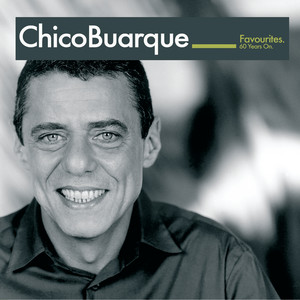
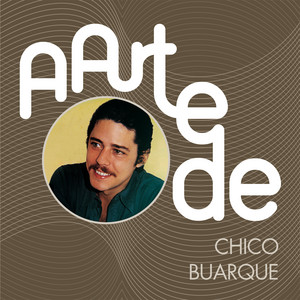
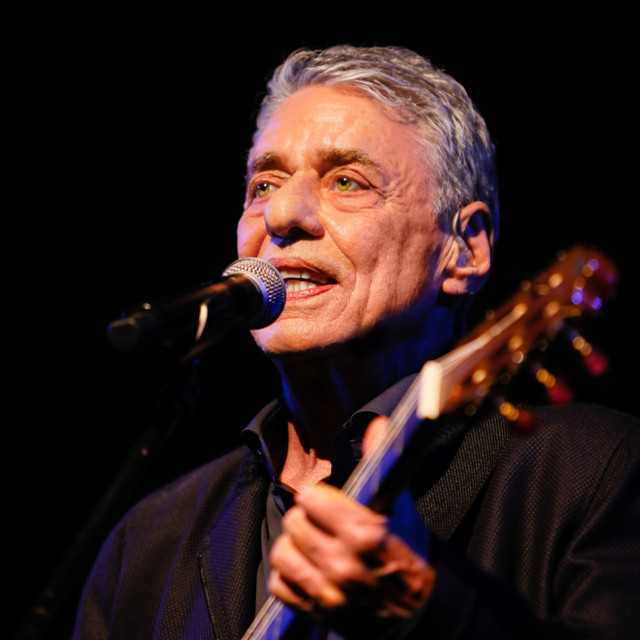
Buarque was born Francisco Buarque de Hollanda in Rio De Janeiro into a privileged and intellectual family. His father was historian, sociologist, and journalist Sergio Buarque de Hollanda, and his mother, Maria Amélia Cesário Alvim, was a pianist and celebrated painter. Buarque's sisters <a href="spotify:artist:24ZP6P1JgCo65CEJsk2OQ2">Miúcha</a> and <a href="spotify:artist:0VuTQAZXAEAjmYvZLw6Csq">Cristina</a> became professional singers. Sister <a href="spotify:artist:0ASIUvh4KqF1ke2i3cwWRI">Ana de Hollanda</a> was a singer, too, before being appointed Brazil's Minister of Culture.
Buarque was a studious child. The family moved around during his childhood, living in Rio de Janeiro, São Paulo, Rome, and elsewhere. He wrote and studied literature as a child and discovered his love for music in the emergent late-1950s bossa nova compositions of Tom Jobim, <a href="spotify:artist:5HlnN6xF2MD87KhGRmCRTd">Vinícius de Moraes</a>, and <a href="spotify:artist:77ZUbcdoU5KCPHNUl8bgQy">João Gilberto</a>.
In the early 1960s, Buarque began singing and playing guitar (<a href="spotify:artist:77ZUbcdoU5KCPHNUl8bgQy">Gilberto</a>'s and <a href="spotify:artist:0VSgciOd32tP2Yna1w4vDr">Baden Powell</a>'s styles obsessed him) but was also studying architecture at university. By 1964, he'd abandoned his studies to become a musician and play gigs anywhere he could. His first single, "Pedro Pedreiro"/"Sonho de um Carnaval,'' appeared to general acclaim in 1965 when he signed with Rio's <a href="spotify:search:label%3A%22RGE%22">RGE</a> label -- just after <a href="spotify:artist:64KVQ4YupSZYrGNLduVtj3">Nara Leao</a> recorded three of his songs. His debut album, titled simply Chico Buarque de Hollanda, appeared in 1966 and placed three singles on the charts. That same year, he married Brazilian actress Marieta Severo. Two more eponymous, numbered volumes appeared in 1967 and 1968. Interestingly, both <a href="spotify:artist:7HGNYPmbDrMkylWqeFCOIQ">Caetano Veloso</a> and <a href="spotify:artist:7oEkUINVIj1Nr3Wnj8tzqr">Gilberto Gil</a>, two of his closest compatriots in the Tropicalia movement, criticized these early recordings as too conservative. It didn't stop them from recruiting him to join their revolutionary art movement, however.
In addition to music, Buarque also got involved in drama in 1966, writing musical settings for a stage version of João Cabral de Melo Neto's verse play Morte e Vida Severina (Death and Life of Severina). In 1968, Buarque's own play Roda Viva was performed publicly and deemed subversive by Brazil's ruling military junta. He earned a jail term for it and went into exile in Italy in 1969. There, he released Chico Buarque de Hollanda na Italia with guitarist <a href="spotify:artist:7rPqFVgJYARiFsLDlN6W6y">Toquinho</a> as musical director.
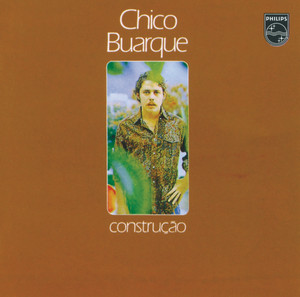
Buarque returned to Brazil in late 1970. He'd written dozens of songs while in Italy and was able to perform at festivals on his own and with other exiled Brazilians, <a href="spotify:artist:7HGNYPmbDrMkylWqeFCOIQ">Veloso</a> and <a href="spotify:artist:7oEkUINVIj1Nr3Wnj8tzqr">Gil</a> among them. He signed to <a href="spotify:search:label%3A%22Phillips%22">Phillips</a> and released 1971's now-classic Construção as "Chico Buarque"; the album consisted almost entirely of songs written in Italy. In 1972, Buarque co-wrote and co-starred in the musical film Quando o Carnaval Chegar alongside singers Maria <a href="spotify:artist:3f5VCwd57gZsqMad28jyLV">Bethania</a> and <a href="spotify:artist:64KVQ4YupSZYrGNLduVtj3">Leao</a>. He wrote most of the film's score and songs no matter who sang them. While it didn't set any sales records, it did help to further establish its three principal actors. It also established a long-ongoing friendship and collaboration between <a href="spotify:artist:3f5VCwd57gZsqMad28jyLV">Bethania</a> and Buarque. The live Caetano e Chico: Juntos e ao Vivo appeared in 1972 with <a href="spotify:artist:7HGNYPmbDrMkylWqeFCOIQ">Veloso</a>. In 1973 , he released Calabar, o Elogio da Traição, the music to accompany a play he wrote with Ruy Guerra. Due to the dictatorship's censorship policy, the original copies of the album were recalled immediately after release. It was reissued as Chico Canta in a plain white sleeve with only the artist's name and the company logo on its front. 1974's Sinal Fechado was a showcase for Buarque the singer: for the first time, all of the songs were composed by other writers, <a href="spotify:artist:7HGNYPmbDrMkylWqeFCOIQ">Veloso</a>, <a href="spotify:artist:7oEkUINVIj1Nr3Wnj8tzqr">Gil</a>, and <a href="spotify:artist:7rPqFVgJYARiFsLDlN6W6y">Toquinho</a> among them.
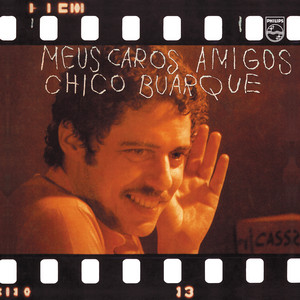
In 1976, following a live album with <a href="spotify:artist:3f5VCwd57gZsqMad28jyLV">Bethania</a>, Buarque issued two of his most enduring studio recordings back to back. Meus Caros Amigos captured the tension, emotion, and chaos of the politically troubled era exceptionally well as it charted the transition between dictatorship and the rule of law. It was the last of Buarque's albums to require clearance from a government censor. <a href="spotify:artist:3Bnq7jiU506HcPjRgQ43TM">Milton Nascimento</a> guested on the charting opening single, "O Que Será (A Flor da Terra)." He also recorded it for one of his own albums. 1978's Chico Buarque (or, Samambaia, as it is sometimes referred to in Brazil) has long been regarded as one of the songwriter's truly classic recordings. Opening track "Cálice," a protest duet co-written with <a href="spotify:artist:7oEkUINVIj1Nr3Wnj8tzqr">Gil</a>, starred <a href="spotify:artist:3Bnq7jiU506HcPjRgQ43TM">Nascimento</a> as his singing partner. Its mildly rock-oriented sound wasn't really representative of the album per se, as it relied on samba primarily. Another duet, "O Meu Amor," was sung by the female duo of Severo and <a href="spotify:artist:4ph6Bt1mkDlmf32PSvRa8A">Elba Ramalho</a>. The following year, Buarque released the score for Opera da Malandro, the first theatrical collaboration with songwriter <a href="spotify:artist:6u5P4S3NSj4EDNegDlOevO">Edu Lobo</a>.
1980's Vida included poetic songs, among them the title track about the lost lives of women to misogynist men; "Mar e Lua," describing a love affair between the sea and the moon; and "Bastidores," describing the mental and emotional state of an artist after completing a performance. 1981's Almanaque may not be one of his best-known albums, but it did contain "As Vitrines," "Ela é Dançarina," and "O Meu Guri," three of his best songs. The set also included "Moto Contínuo," co-composed with <a href="spotify:artist:6u5P4S3NSj4EDNegDlOevO">Lobo</a>. 1987's Francisco, an example of Buarque's mature work, drew some criticism for its complex harmonic structures, but listeners soon adapted. 1989's Chico Barque offered tropical flavors and an abundance of new rhythms and harmonies. Among its highlights were the tracks "Baticum," written and performed with <a href="spotify:artist:7oEkUINVIj1Nr3Wnj8tzqr">Gil</a>, and "A Pertmutya Dos Santos," and "A Mias Bonita," both featuring <a href="spotify:artist:6gk4ierjjSVPoZep27VfZz">Bebel Gilberto</a> as his duet partner. 1993's Paratodos rocketed Buarque back up the charts, thanks in no small part to his wonderfully self-deprecating autobiographical songs as well as the duets "Biscate," with <a href="spotify:artist:1b8kpp4DUwt1hWaxTiWQhD">Gal Costa</a>, and "Piano Na Mangueira," featuring the last recorded vocal performance of Tom Jobim. 1995's Uma Palavra included three covers by Jobim ("Eu Te Amo''), <a href="spotify:artist:6u5P4S3NSj4EDNegDlOevO">Lobo</a> ("Valsa Brasileira"), and <a href="spotify:artist:0fSXB6V1mhguJCAN7pLzu6">Francis Hime</a>'s "Amor Barato." Further, he recorded his own "Samba e Amor'' that had been written for and previously recorded by <a href="spotify:artist:7HGNYPmbDrMkylWqeFCOIQ">Veloso</a>. 1998's As Cicades was Buarque's final studio album of the 20th century. To mark the occasion, he wrote or co-wrote every song on the album. Its rich urban imagery and city landscapes were vehicles for his irony and wry humor. Listeners and critics alike were quite surprised by the album's complete lack of political material. In 1999, Buarque and Severo divorced after 33 years together.
In 2000, <a href="spotify:search:label%3A%22RCA%22">RCA</a> reissued Per un Pugno di Samba and Sonho de um Carnaval, two albums Buarque cut with composer <a href="spotify:artist:1nIUhcKHnK6iyumRyoV68C">Ennio Morricone</a> and an orchestra in 1970, on which he sang only in Italian. While neither album scored much attention when they were originally released in Italy, they were exceptionally well received upon reissue in Brazil and Europe. <a href="spotify:artist:6u5P4S3NSj4EDNegDlOevO">Lobo</a> and Buarque re-teamed to score a film/theatrical work titled Cambaio, which melded not only samba but hip-hop, rock, and new wave. Composer/pianist <a href="spotify:artist:4YLBdrR3DVSMncm785NH6C">Lenine</a> also contributed to the sessions; the album met with very mixed reviews.
Buarque didn't release another album for five years. In 2009, he published the novel Leite Derramad (Spilt Milk); it was shortlisted for the São Paulo Prize for Literature in 2010 as book of the year. Carioca and its accompanying concert documentary, Desconstrução, appeared in 2006 and showcased the artist in the middle of another reinvention, as a storyteller, commentator, journalist, and cultural critic. Also for the first time, he left political polemic out of his songs. 2011's Chico offered a collection of mostly sparse "chamber sambas." While his accompaniment did showcase some orchestral instrumentation, it was used sparingly and tastefully across nine originals and <a href="spotify:artist:3DF0ClNOUuvS3gh8V8sRJH">Joao Bosco</a>'s "Sinha," which featured the composer in a guest duet. The double live offering Na Carreira appeared in 2012. Recorded during the support tour for Chico, the set included a performance of that entire album plus material from across his 47-year career to that point. In 2013, as the novel Leche Derramada was translated into Spanish and other languages, it won the Casa de las Américas Prize in the narrative fiction category. The following year, he published the widely acclaimed follow-up novel, O Irmão Alemão.
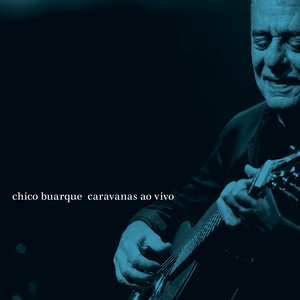
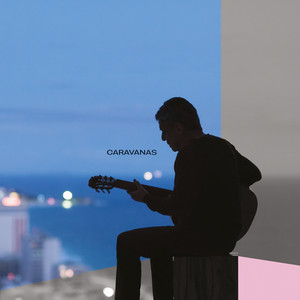
2017's Caravanas surprised even Buarque's most ardent fans. Grafting jazz, blues, classical, and pop on top of remarkably innovative sambas, the artist, at 73, had once more reinvented the samba genre in his own image. He followed it with the live Caravanas ao Vivo in 2018. He published the novel Essa Gente in 2019, the same year he won the Camões Prize, the most important literature prize in the Portuguese language. Unfortunately, disgraced former president Jair Bolsonaro held up the award for four years. Buarque's tenth novel, Anos de Chumbo, saw publication in 2021. In April 2023, Buarque finally received his Camões Prize. ~ Thom Jurek, Rovi
Monthly Listeners
2.8 million
Monthly Listeners History
Track the evolution of monthly listeners over the last 28 days.
Followers
2.0 million
Followers History
Track the evolution of followers over the last 28 days.
Total Streams
1.6 billion
Total Streams History
Track the evolution of total streams over the last 28 days. This data is calculated from all tracks listed in the artist's discography.
Top Cities

Related Artists

MPB4
Djavan
Ney Matogrosso
Secos & Molhados
Quarteto Em Cy
Gilberto Gil
Gonzaguinha
Erasmo Carlos