Data may be outdated
Last updated: 1 month ago — Click refresh to get the latest statistics.
avant-garde composer <a href="spotify:artist:7DnLQaXsqcYkgm0nyDrB3r">Terry Riley</a>'s A Rainbow in Curved Air, a touchstone that would inform much of their early work.
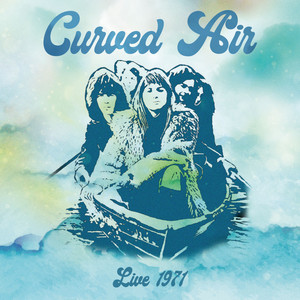
The quartet originally came together to provide accompaniment for producer Galt McDermott's musical Who the Murderer Was; it was McDermott who suggested, once the stage show closed, that they add vocalist <a href="spotify:artist:6vl7a7WifJu5SzSlhD4TYK">Sonja Kristina</a>, with whom he had worked in the U.K. production of Hair. In this form, the band launched a well-received U.K. tour and, that summer, they signed with Warner Bros. -- the first British band on the company's roster.
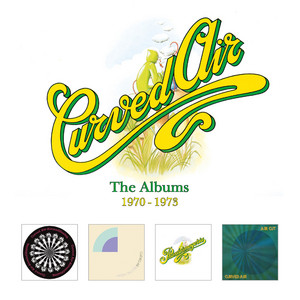
Curved Air's first album, Air Conditioning, was released in November 1970, a monumental recording that was flamboyantly issued as rock & roll's first-ever picture disc. Divided neatly between ambitious hard rockers and deeply classically influenced pieces, the album reached number eight in the U.K. chart and, while an accompanying single, "It Happened Today," did little, still Curved Air entered 1971 on the very edge of superstardom.
With Ian Eyre replacing bassist Martin, the band crossed that precipice the following summer, when the incandescent "Back Street Love" rocketed to number four, ahead of the prosaically named Second Album. Disappointingly, the album emerged a somewhat lesser achievement than its predecessor, and climbed no higher than number 11, while a non-LP followup single, the lovely "Sarah's Concern," went by unnoticed.
Curved Air bounced back in spring 1972 with their masterpiece, Phantasmagoria, home to the spectacular "Marie Antoinette" and <a href="spotify:artist:7fohRql3Gq4DU8YAPPdmhO">Monkman</a>'s side-long "Phantasmagoria" suite. Once again, however, sales were low and, with the album bottoming out at number 20, Curved Air split up, victims of inter-band disputes that had already seen the two sides of Phantasmagoria pointedly divided between <a href="spotify:artist:6vl7a7WifJu5SzSlhD4TYK">Kristina</a>/<a href="spotify:artist:1XryK9fTt11YEFKqxMSDru">Way</a>'s rock-tinged instincts and <a href="spotify:artist:7fohRql3Gq4DU8YAPPdmhO">Monkman</a>'s more portentous contributions. <a href="spotify:artist:1XryK9fTt11YEFKqxMSDru">Way</a> formed a new band, Wolf, Pilkington-Miksa joined <a href="spotify:artist:4vjGlQWexbru6aOUCLTVir">Kiki Dee</a>'s band, and <a href="spotify:artist:7fohRql3Gq4DU8YAPPdmhO">Monkman</a> moved into session work.
Retaining the band name, <a href="spotify:artist:6vl7a7WifJu5SzSlhD4TYK">Kristina</a> and bassist Mike Wedgwood (who replaced Eyre for Phantasmagoria) brought in an entire new lineup -- Jim Russell (drums), Kirby Gregory (guitar), and <a href="spotify:artist:6bbB8ZZoLmeyKJS4XlMs1e">Eddie Jobson</a> (violin, synths). In this form, the band released spring 1973's Air Cut album, but it was very much a last gasp. Although the group did record a second album, Love Child was shelved when Curved Air broke up that summer. (The album was finally released in 1990.) <a href="spotify:artist:6bbB8ZZoLmeyKJS4XlMs1e">Jobson</a> swiftly resurfaced as <a href="spotify:artist:7MSUfLeTdDEoZiJPDSBXgi">Eno</a>'s replacement in <a href="spotify:artist:3fhOTtm0LBJ3Ojn4hIljLo">Roxy Music</a>; Wedgwood joined <a href="spotify:artist:5kwbFaRKf9HCFGrJPacZ7s">Caravan</a>.
<a href="spotify:artist:6vl7a7WifJu5SzSlhD4TYK">Kristina</a> initially intended to launch a solo career. In fall 1974, however, Curved Air's original core quartet of <a href="spotify:artist:6vl7a7WifJu5SzSlhD4TYK">Kristina</a>, <a href="spotify:artist:1XryK9fTt11YEFKqxMSDru">Way</a>, <a href="spotify:artist:7fohRql3Gq4DU8YAPPdmhO">Monkman</a>, and Pilkington-Miksa reunited for a one-off British tour. With the lineup completed by bassist Phil Kohn, the band rekindled all of the past's most precious memories, captured for posterity on the blockbusting Curved Air Live album. The rejuvenation could not, however, heal the breaches that had destroyed the lineup the first time around and, when Curved Air resurfaced in fall 1975, <a href="spotify:artist:6vl7a7WifJu5SzSlhD4TYK">Kristina</a> and <a href="spotify:artist:1XryK9fTt11YEFKqxMSDru">Way</a> alone remained, alongside guitarist Mick Jacques, bassist <a href="spotify:artist:0bn8bDKUpS581TddwPb6cy">John Perry</a>, keyboardist Pete Woods, and drummer <a href="spotify:artist:4XVxeuUkJRiCYJYdqRpwab">Stewart Copeland</a>. (<a href="spotify:artist:0bn8bDKUpS581TddwPb6cy">Perry</a> would be replaced by <a href="spotify:artist:4POFwgsibhA3uhQo08kUEw">Greenslade</a>'s Tony Reeves during 1976.)
Two albums released over the next year, however, did nothing to reverse the band's fortunes -- neither Midnight Wire nor Airborne offered much more than fleeting glances of the group's original, pioneering brilliance, with even the naturally effervescent <a href="spotify:artist:6vl7a7WifJu5SzSlhD4TYK">Kristina</a> appearing overpowered by the anonymity of her surroundings.
<a href="spotify:artist:1XryK9fTt11YEFKqxMSDru">Way</a> was the first to depart, following one final unsuccessful single, a contrarily vibrant version of "Baby Please Don't Go"; he was replaced by Alex Richman, but the group lasted only a few more months before splitting in early 1977. <a href="spotify:artist:4XVxeuUkJRiCYJYdqRpwab">Copeland</a> promptly joined <a href="spotify:artist:5NGO30tJxFlKixkPSgXcFE">the Police</a>, Reeves re-formed <a href="spotify:artist:4POFwgsibhA3uhQo08kUEw">Greenslade</a>, and <a href="spotify:artist:6vl7a7WifJu5SzSlhD4TYK">Kristina</a> finally launched that long-delayed solo career.
Occasional reunions with <a href="spotify:artist:1XryK9fTt11YEFKqxMSDru">Darryl Way</a> have brought the Curved Air name back to life -- 1984's "Renegade" single was followed by a short tour in 1988; 1990 then brought a fresh reunion by the original <a href="spotify:artist:6vl7a7WifJu5SzSlhD4TYK">Kristina</a>/<a href="spotify:artist:1XryK9fTt11YEFKqxMSDru">Way</a>/<a href="spotify:artist:7fohRql3Gq4DU8YAPPdmhO">Monkman</a>/Pilkington-Miksa quartet for a show at London's Town & Country 2. Featuring one new song, the appropriately themed opener "20 Years On," the performance was captured on the Alive 1990 album.
Since that time, Curved Air has been best recalled by the Collector's Choice label's reissues of their first three albums and the excellent BBC Sessions collection, home to <a href="spotify:artist:1XryK9fTt11YEFKqxMSDru">Way</a>'s otherwise unavailable showcase "Thinking on the Floor" alongside recordings dating from 1970, 1971, and 1976. ~ Dave Thompson, Rovi
Monthly Listeners
40,756
Monthly Listeners History
Track the evolution of monthly listeners over the last 28 days.
Followers
49,559
Followers History
Track the evolution of followers over the last 28 days.
Total Streams
15.4 million
Total Streams History
Track the evolution of total streams over the last 28 days. This data is calculated from all tracks listed in the artist's discography.
Top Cities


Related Artists

Fruupp

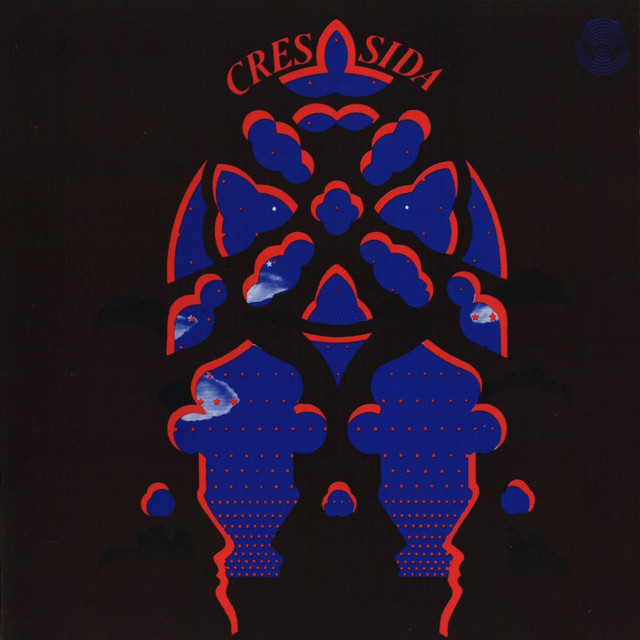
Cressida
Quatermass

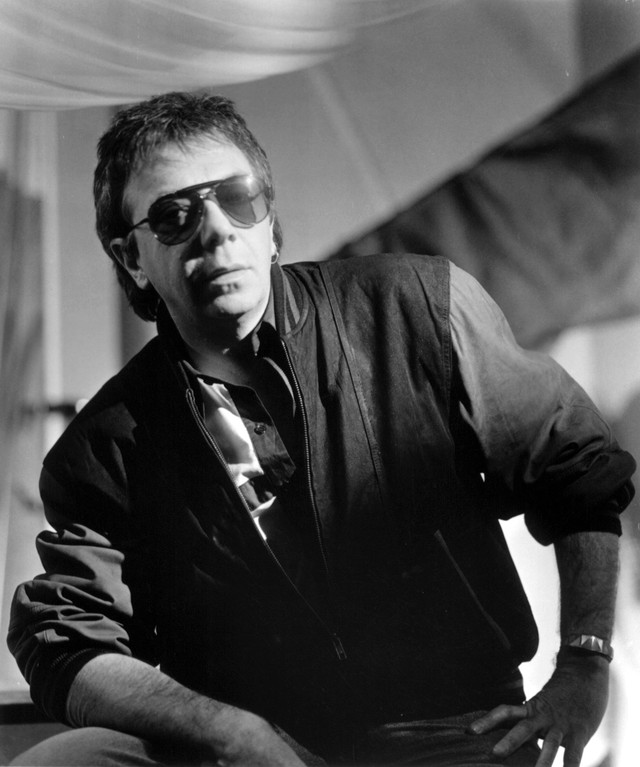
Peter Bardens
Trace

Druid
Gnidrolog