Data may be outdated
Last updated: 8 months ago — Click refresh to get the latest statistics.
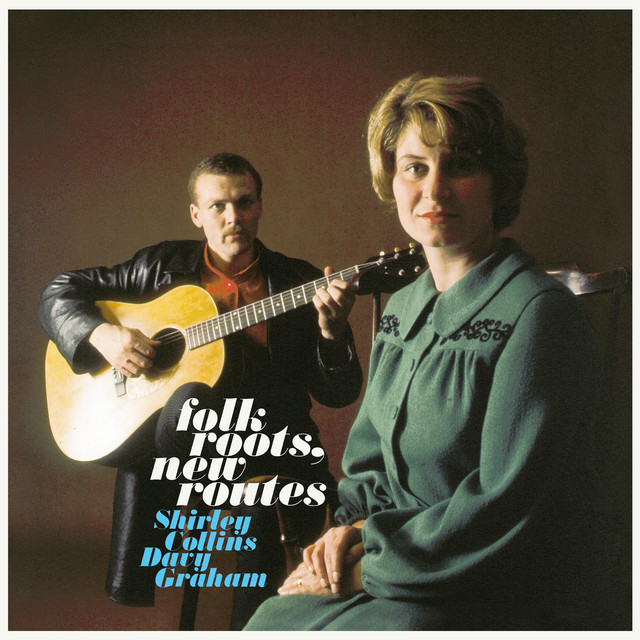
Davy Graham was one of the most eclectic guitarists of the 1960s, and his mixture of folk, blues, jazz, Middle Eastern sounds, and Indian ragas was an important catalyst of the British folk scene. Like <a href="spotify:artist:5VAsNbws6j873uHN1VKEmZ">Sandy Bull</a> and <a href="spotify:artist:4js8BDiQwnHLlDmT1shPH7">John Fahey</a> -- two folk-based guitarists with a similar taste for genre-bending experimentation -- Graham shared an eagerness to stretch out and incorporate unpredictable influences into his music. His 1962 instrumental "Anji" quickly became a staple among the folk guitarists that followed, with more famous versions being recorded by <a href="spotify:artist:1FqG6mhiJbhbMg43ohCT6D">Bert Jansch</a> and <a href="spotify:artist:70cRZdQywnSFp9pnc2WTCE">Simon & Garfunkel</a>. Likewise, Graham pioneered the guitar tuning DADGAD, which has since become one of the most commonly used alternate tunings in folk and world music. He recorded widely throughout the '60s, delivering influential albums like Folk, Blues and Beyond and Folk Roots, New Routes, the latter a collaboration with singer <a href="spotify:artist:5rilpZJIb2NWJZVGtCdg6u">Shirley Collins</a>. Graham himself sang on occasion, but was largely known for his inventive fingerstyle guitar work. His production faded in subsequent decades, though his influence persisted. Prior to his death in 2008, he was celebrated in a BBC radio documentary and returned to the studio one last time to record his final album, 2007's Broken Biscuits.
Born in Hinckley, Leicestershire, Graham grew up in London's Notting Hill Gate neighborhood where he taught himself to play piano and harmonica as a child. He picked up the guitar in his teenage years and was drawn both to blues players like <a href="spotify:artist:6HwigzRpuWoCZDqMOQc5eu">Big Bill Broonzy</a> and <a href="spotify:artist:3Ovf2lytXSXWFM2cwsJACC">Lead Belly</a> as well as British guitarist <a href="spotify:artist:6Xpw9wqUYyryCdwTvghNyG">Steve Benbow</a>. Like <a href="spotify:artist:6Xpw9wqUYyryCdwTvghNyG">Benbow</a>, Graham was interested in music from other cultures including Indian and Middle Eastern. Graham's own travels in North Africa led him to develop the open guitar tuning known as DADGAD. His first taste of national exposure came on BBC TV's Monitor program where he performed an acoustic instrumental version of the American torch song "Cry Me a River." Three years later, he released his debut EP, 3/4 AD, which contained his most famous song, "Anji." An evocative minor-key instrumental piece, "Anji" proved to be influential among other guitarists in the folk scene and was subsequently recorded by several of them, including fellow Brits <a href="spotify:artist:1FqG6mhiJbhbMg43ohCT6D">Bert Jansch</a> and <a href="spotify:artist:4XXKzQCGcb2otkzMyxzeQ4">John Renbourn</a>, as well as <a href="spotify:artist:2CvCyf1gEVhI0mX6aFXmVI">Paul Simon</a>, who had been living in London during Graham's ascent. His first full-length, The Guitar Player, appeared on <a href="spotify:search:label%3A%22Pye%22">Pye</a>'s budget label <a href="spotify:search:label%3A%22Golden+Guinea%22">Golden Guinea</a> in 1963, but it was his next two albums that had a much greater impact. In 1964 he paired up with <a href="spotify:artist:5rilpZJIb2NWJZVGtCdg6u">Shirley Collins</a> to record Folk Roots, New Routes, a collection of traditional folk songs that sowed the seeds of the future U.K. folk-rock boom. The following year Graham's next solo album, Folk, Blues and Beyond, was another seminal work that contained his raga-inspired version of the British traditional song "She Moved Through the Fair," utilizing his DADGAD tuning. Along with "Anji," these two albums are often cited as monumental works that inspired artists ranging from <a href="spotify:artist:5w75MoT8FfcGOMgjgrj1cz">Richard Thompson</a> and <a href="spotify:artist:4jfwVcXoNnfnU8xQBlSWn0">Martin Carthy</a> to <a href="spotify:artist:55bGuHb50r5c0PeqqMeNBV">Jimmy Page</a> and <a href="spotify:artist:6spXkXEP6teMn2cu9sWbBR">Ray Davies</a>.
Graham released three more solo outings on <a href="spotify:search:label%3A%22Decca%22">Decca</a> in the late '60s: 1966's Midnight Man, 1968's Large as Life and Twice as Natural, and 1969's Hat. By 1970 he had married an American folk singer named Holly Gwinn, who joined him on a pair of records, Holly Kaleidoscope and Godington Boundary, both released that same year. When Gwinn had to return to the U.S., a marijuana conviction prevented Graham from following her. Inspired by many of his American jazz heroes, Graham had also developed a heroin habit and his career suffered for it. He remained in England, teaching guitar and involving himself in charity work, though he wouldn't record again until 1976's self-released All That Moody. A minor renaissance yielded two more records, 1978's The Complete Guitarist and 1980's Dance for Two People, both on the small <a href="spotify:search:label%3A%22Kicking+Mule%22">Kicking Mule</a> folk label.
In the decades that followed, he performed occasionally, though largely lived his life outside of public view. In 2005, the BBC produced a radio documentary titled Whatever Happened to Davy Graham? and a year later he was also featured in Folk Britannia, a documentary on BBC Four. At the behest of guitarist <a href="spotify:artist:5RvHDTwBx5HN4a1ZRNW9ap">Mark Pavey</a>, Graham was coaxed out of retirement to play a handful of concerts with friends and fellow guitar greats <a href="spotify:artist:4jfwVcXoNnfnU8xQBlSWn0">Martin Carthy</a>, <a href="spotify:artist:2oVhsV35hDtKbbwS8FL6KC">Duck Baker</a>, and <a href="spotify:artist:1FqG6mhiJbhbMg43ohCT6D">Bert Jansch</a>. <a href="spotify:artist:5RvHDTwBx5HN4a1ZRNW9ap">Pavey</a> also helped Graham record a final album, 2007's Broken Biscuits, which appeared on <a href="spotify:artist:5RvHDTwBx5HN4a1ZRNW9ap">Pavey</a>'s newly launched <a href="spotify:search:label%3A%22Les+Cousins%22">Les Cousins</a> label. Davy Graham died of lung cancer on December 15, 2008, at the age of 68. His influence as a guitarist, particularly in British folk music and the development of world music, cannot be overstated, even if many of his followers are better known. Since his death, <a href="spotify:artist:5RvHDTwBx5HN4a1ZRNW9ap">Pavey</a>'s <a href="spotify:search:label%3A%22Les+Cousins%22">Les Cousins</a> label has reissued many of Graham's albums and in 2024, the <a href="spotify:search:label%3A%22Cherry+Tree%22">Cherry Tree</a> label released He Moved Through the Fair, a lavish eight-disc box set devoted to his '60s output. ~ Timothy Monger & Richie Unterberger, Rovi
Born in Hinckley, Leicestershire, Graham grew up in London's Notting Hill Gate neighborhood where he taught himself to play piano and harmonica as a child. He picked up the guitar in his teenage years and was drawn both to blues players like <a href="spotify:artist:6HwigzRpuWoCZDqMOQc5eu">Big Bill Broonzy</a> and <a href="spotify:artist:3Ovf2lytXSXWFM2cwsJACC">Lead Belly</a> as well as British guitarist <a href="spotify:artist:6Xpw9wqUYyryCdwTvghNyG">Steve Benbow</a>. Like <a href="spotify:artist:6Xpw9wqUYyryCdwTvghNyG">Benbow</a>, Graham was interested in music from other cultures including Indian and Middle Eastern. Graham's own travels in North Africa led him to develop the open guitar tuning known as DADGAD. His first taste of national exposure came on BBC TV's Monitor program where he performed an acoustic instrumental version of the American torch song "Cry Me a River." Three years later, he released his debut EP, 3/4 AD, which contained his most famous song, "Anji." An evocative minor-key instrumental piece, "Anji" proved to be influential among other guitarists in the folk scene and was subsequently recorded by several of them, including fellow Brits <a href="spotify:artist:1FqG6mhiJbhbMg43ohCT6D">Bert Jansch</a> and <a href="spotify:artist:4XXKzQCGcb2otkzMyxzeQ4">John Renbourn</a>, as well as <a href="spotify:artist:2CvCyf1gEVhI0mX6aFXmVI">Paul Simon</a>, who had been living in London during Graham's ascent. His first full-length, The Guitar Player, appeared on <a href="spotify:search:label%3A%22Pye%22">Pye</a>'s budget label <a href="spotify:search:label%3A%22Golden+Guinea%22">Golden Guinea</a> in 1963, but it was his next two albums that had a much greater impact. In 1964 he paired up with <a href="spotify:artist:5rilpZJIb2NWJZVGtCdg6u">Shirley Collins</a> to record Folk Roots, New Routes, a collection of traditional folk songs that sowed the seeds of the future U.K. folk-rock boom. The following year Graham's next solo album, Folk, Blues and Beyond, was another seminal work that contained his raga-inspired version of the British traditional song "She Moved Through the Fair," utilizing his DADGAD tuning. Along with "Anji," these two albums are often cited as monumental works that inspired artists ranging from <a href="spotify:artist:5w75MoT8FfcGOMgjgrj1cz">Richard Thompson</a> and <a href="spotify:artist:4jfwVcXoNnfnU8xQBlSWn0">Martin Carthy</a> to <a href="spotify:artist:55bGuHb50r5c0PeqqMeNBV">Jimmy Page</a> and <a href="spotify:artist:6spXkXEP6teMn2cu9sWbBR">Ray Davies</a>.
Graham released three more solo outings on <a href="spotify:search:label%3A%22Decca%22">Decca</a> in the late '60s: 1966's Midnight Man, 1968's Large as Life and Twice as Natural, and 1969's Hat. By 1970 he had married an American folk singer named Holly Gwinn, who joined him on a pair of records, Holly Kaleidoscope and Godington Boundary, both released that same year. When Gwinn had to return to the U.S., a marijuana conviction prevented Graham from following her. Inspired by many of his American jazz heroes, Graham had also developed a heroin habit and his career suffered for it. He remained in England, teaching guitar and involving himself in charity work, though he wouldn't record again until 1976's self-released All That Moody. A minor renaissance yielded two more records, 1978's The Complete Guitarist and 1980's Dance for Two People, both on the small <a href="spotify:search:label%3A%22Kicking+Mule%22">Kicking Mule</a> folk label.
In the decades that followed, he performed occasionally, though largely lived his life outside of public view. In 2005, the BBC produced a radio documentary titled Whatever Happened to Davy Graham? and a year later he was also featured in Folk Britannia, a documentary on BBC Four. At the behest of guitarist <a href="spotify:artist:5RvHDTwBx5HN4a1ZRNW9ap">Mark Pavey</a>, Graham was coaxed out of retirement to play a handful of concerts with friends and fellow guitar greats <a href="spotify:artist:4jfwVcXoNnfnU8xQBlSWn0">Martin Carthy</a>, <a href="spotify:artist:2oVhsV35hDtKbbwS8FL6KC">Duck Baker</a>, and <a href="spotify:artist:1FqG6mhiJbhbMg43ohCT6D">Bert Jansch</a>. <a href="spotify:artist:5RvHDTwBx5HN4a1ZRNW9ap">Pavey</a> also helped Graham record a final album, 2007's Broken Biscuits, which appeared on <a href="spotify:artist:5RvHDTwBx5HN4a1ZRNW9ap">Pavey</a>'s newly launched <a href="spotify:search:label%3A%22Les+Cousins%22">Les Cousins</a> label. Davy Graham died of lung cancer on December 15, 2008, at the age of 68. His influence as a guitarist, particularly in British folk music and the development of world music, cannot be overstated, even if many of his followers are better known. Since his death, <a href="spotify:artist:5RvHDTwBx5HN4a1ZRNW9ap">Pavey</a>'s <a href="spotify:search:label%3A%22Les+Cousins%22">Les Cousins</a> label has reissued many of Graham's albums and in 2024, the <a href="spotify:search:label%3A%22Cherry+Tree%22">Cherry Tree</a> label released He Moved Through the Fair, a lavish eight-disc box set devoted to his '60s output. ~ Timothy Monger & Richie Unterberger, Rovi
Monthly Listeners
58,273
Monthly Listeners History
Track the evolution of monthly listeners over the last 28 days.
Followers
19,009
Followers History
Track the evolution of followers over the last 28 days.
Top Cities
3,361 listeners

734 listeners
669 listeners
663 listeners
637 listeners

Related Artists
Dave Evans
Fairport Convention

Lal Waterson
Jackson C. Frank