Data may be outdated
Last updated: 9 months ago — Click refresh to get the latest statistics.
Musicologists do not often get to tell of seventeenth- and eighteenth-century European composers who traveled across the Atlantic to the New World and began their careers afresh in North or South America. Certainly there were many Europeans from all walks of life -- musicians included -- who for one reason or another moved to the Americas; but, frankly, virtually none of the composers who did so were any good at their craft, and so musicologists do not tell of them. The composer Domenico Zipoli, who was born in Italy in 1688 and moved to Argentina with a Jesuit missionary in 1717, was a notable exception.
Born in the town of Prato, Zipoli moved around a great deal as a youth. First, supported by a grant from the local duke, he went to Florence for intensive training as an organist; then he was off to Naples to work under the famous <a href="spotify:artist:5HGksnSVY91s4g1SOHHACw">Alessandro Scarlatti</a>; and then, in 1709, he found himself taking lessons in Bologna. Finally, in 1710, Zipoli went to Rome to apply as a pupil of <a href="spotify:artist:7jzikcFG90FsgmjxokrfPP">Bernardo Pasquini</a>. He remained in Rome for six years, working as organist to Rome's Jesuit Church during his last two years in the city. He officially joined the Jesuit Order in 1716, and soon he was on a boat bound for South America.
Zipoli played organ at the cathedral in Córdoba, Argentina, until his death in 1726. In addition, he studied to become a priest, but died before he could attain that goal. At the time of his death, Zipoli was the most famous organist, and very possibly the most famous musician of any kind, in European-ruled South America.
Zipoli composed three oratorios before moving to the New World; all, however, are lost, save for the libretti. A sizeable volume of his keyboard music, issued in 1715, just months before he left Rome, has survived. About half of the clever, skillfully crafted pieces in it are for organ; the other half are for harpsichord. Representing Zipoli's South American career is a mass for soprano, alto, and tenor, and instrumental ensemble, that was often performed for many decades after his death.
Born in the town of Prato, Zipoli moved around a great deal as a youth. First, supported by a grant from the local duke, he went to Florence for intensive training as an organist; then he was off to Naples to work under the famous <a href="spotify:artist:5HGksnSVY91s4g1SOHHACw">Alessandro Scarlatti</a>; and then, in 1709, he found himself taking lessons in Bologna. Finally, in 1710, Zipoli went to Rome to apply as a pupil of <a href="spotify:artist:7jzikcFG90FsgmjxokrfPP">Bernardo Pasquini</a>. He remained in Rome for six years, working as organist to Rome's Jesuit Church during his last two years in the city. He officially joined the Jesuit Order in 1716, and soon he was on a boat bound for South America.
Zipoli played organ at the cathedral in Córdoba, Argentina, until his death in 1726. In addition, he studied to become a priest, but died before he could attain that goal. At the time of his death, Zipoli was the most famous organist, and very possibly the most famous musician of any kind, in European-ruled South America.
Zipoli composed three oratorios before moving to the New World; all, however, are lost, save for the libretti. A sizeable volume of his keyboard music, issued in 1715, just months before he left Rome, has survived. About half of the clever, skillfully crafted pieces in it are for organ; the other half are for harpsichord. Representing Zipoli's South American career is a mass for soprano, alto, and tenor, and instrumental ensemble, that was often performed for many decades after his death.
Monthly Listeners
13,959
Monthly Listeners History
Track the evolution of monthly listeners over the last 28 days.
Followers
2,000
Followers History
Track the evolution of followers over the last 28 days.
Top Cities



Related Artists

Marek Stryncl
Jean-François Dandrieu
Claude Balbastre
Johann Heinrich Schmelzer
Matthias Maute

Allan Rasmussen
Taverner Players

Simon Lindley
Vincent Boucher
Pierre Bardon
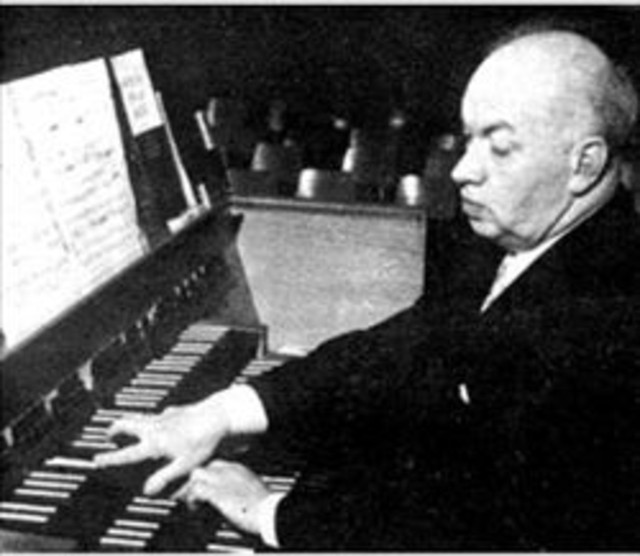
Anton Heiller
Johannes Stecher
Nicolas Lebègue
Liuwe Tamminga


Kateřina Englichová
Leo Van Doeselaar
Nicolaus Bruhns
Heinrich Scheidemann
Gaetano Maria Schiassi

Mara Galassi

Joris Verdin
Robin Milford
Olivier Vernet
Hanneke van Proosdij
Tarquinio Merula

Claudio Astronio
Johann Bernhard Bach
Gottfried Finger
Johann Joseph Fux
Jared Hauser
Johann Mattheson