Data may be outdated
Last updated: 1 month ago — Click refresh to get the latest statistics.
Born Farrokh Bulsara on September 5, 1946, in Zanzibar to parents from the Parsi community in India (his father worked as a high court cashier for the British government), young Mercury was nicknamed Freddie by fellow classmates while attending an English boarding school, and embraced the moniker. He soon discovered his love for art and music, both subjects that he explored voraciously (he began taking piano lessons around this time), putting his newly found piano talent to use as he played in rock & roll bands with friends. Due to political upheaval in Zanzibar, Mercury and his family fled Zanzibar for England in 1964. There, he enrolled in the Ealing College of Art and fell under the spell of guitar wizard <a href="spotify:artist:776Uo845nYHJpNaStv1Ds4">Jimi Hendrix</a>. It was while attending Ealing that he befriended a fellow aspiring musician, bassist <a href="spotify:artist:6EtRaGeodP9stdGz92vPtB">Tim Staffell</a>, who was a member of a local band called Smile. Mercury soon began attending Smile's rehearsals and struck up a friendship with the group's other members, guitarist <a href="spotify:artist:2NcbLU1bW55eahD0UgD7U3">Brian May</a> and drummer <a href="spotify:artist:2PZEd7yktruWruOqORRChA">Roger Taylor</a>. Inspired by his new friends, he began playing in bands himself (such as Ibex, Wreckage, and Sour Milk Sea, among others), but instead of just playing piano as he did back in Zanzibar, he began singing. To pay the bills, he opened up a stall on Piccadilly Circus with <a href="spotify:artist:4X3dUbGsTpVH6EbxtWnj6T">Taylor</a>, selling clothing geared toward fellow rock musicians. By 1970, he had become frustrated that his music career had yet to blossom, and when he heard that <a href="spotify:artist:6EtRaGeodP9stdGz92vPtB">Staffell</a> had left Smile, he promptly took his place, finally uniting musically with <a href="spotify:artist:45Z2ShPqr2p9ZgfkYhZUgq">May</a> and <a href="spotify:artist:4X3dUbGsTpVH6EbxtWnj6T">Taylor</a>.
Inspired by the heavy rock of <a href="spotify:artist:36QJpDe2go2KgaRleHCDTp">Led Zeppelin</a>/<a href="spotify:artist:776Uo845nYHJpNaStv1Ds4">Hendrix</a> as well as the vocal harmonies of <a href="spotify:artist:3WrFJ7ztbogyGnTHbHJFl2">the Beatles</a> and the over the top look of the burgeoning glam rock movement (<a href="spotify:artist:0oSGxfWSnnOXhD2fKuz2Gy">David Bowie</a> and <a href="spotify:artist:3dBVyJ7JuOMt4GE9607Qin">T. Rex</a>), the new group decided to mix up all these influences in one big melting pot, resulting in the formation of <a href="spotify:artist:1dfeR4HaWDbWqFHLkxsg1d">Queen</a>. Sensing that it was only natural that a soon-to-be rock star should have an equally grand name, Bulsara adopted a new last name, becoming Freddie Mercury. The new band honed their sound throughout the early '70s (ultimately signing with <a href="spotify:search:label%3A%22EMI%22">EMI</a> in England and <a href="spotify:search:label%3A%22Elektra%22">Elektra</a> in the U.S.), and after going through a succession of bassists, finally found a permanent member, <a href="spotify:artist:6KrRVxAW7yvCYrO1ALqPG5">John Deacon</a>, just prior to the recording of their first album. But just before the release of <a href="spotify:artist:1dfeR4HaWDbWqFHLkxsg1d">Queen</a>'s self-titled debut in 1973, Mercury issued the solo single "I Can Hear Music"/"Going Back" (with his <a href="spotify:artist:1dfeR4HaWDbWqFHLkxsg1d">Queen</a> bandmates backing him) under the pseudonym Larry Lurex. The single sank from view shortly after release, while <a href="spotify:artist:1dfeR4HaWDbWqFHLkxsg1d">Queen</a>'s debut fared little better. It was during an early <a href="spotify:artist:1dfeR4HaWDbWqFHLkxsg1d">Queen</a> show that Mercury's microphone stand accidentally snapped in half, and instead of replacing it, he carried on with the damaged stand, which ultimately became an on-stage trademark for the singer. Dressed in outrageous Zandra Rhodes-designed threads, dolled up in makeup and eyeliner, and wearing black nail polish on his right hand, he instantly stood out from the rest of the then-current rock pack. Although there was speculation about his sexuality throughout his career, Mercury refused to confirm or deny that he was bisexual during his lifetime.
Slowly but surely, <a href="spotify:artist:1dfeR4HaWDbWqFHLkxsg1d">Queen</a> built up an enormous and dedicated worldwide following due to their bombastic stage show and such hit releases as 1974's Queen II and Sheer Heart Attack, but it was the Mercury-penned "Bohemian Rhapsody" off 1975's breakthrough A Night at the Opera that solidified <a href="spotify:artist:1dfeR4HaWDbWqFHLkxsg1d">Queen</a> as one of rock's top bands. Further hit albums followed: 1976's A Day at the Races, 1977's News of the World, 1978's Jazz, and 1979's Live Killers, during which Mercury penned such hit songs (and eventual rock radio staples) as "Killer Queen," "Somebody to Love," "We Are the Champions," "Don't Stop Me Now," and "Crazy Little Thing Called Love." By the late '70s, he had become one of rock's leading frontmen as his image changed from his early glam rock look to one that was met with some consternation from fans: he cut his hair short and grew a mustache. In addition to his work with <a href="spotify:artist:1dfeR4HaWDbWqFHLkxsg1d">Queen</a>, Mercury fulfilled a longtime dream by performing with the Royal Ballet in October of 1979.
The '80s would prove to be puzzling time for <a href="spotify:artist:1dfeR4HaWDbWqFHLkxsg1d">Queen</a>, as they kicked off the new decade with their biggest album yet, The Game -- scoring one of 1980's biggest hits, the dancefloor anthem "Another One Bites the Dust" -- and most successful tour. But instead of treating the successful musical experiment as a brief detour, <a href="spotify:artist:1dfeR4HaWDbWqFHLkxsg1d">Queen</a> decided to explore dance music more thoroughly on their follow-up, Hot Space, resulting in their worst-selling release since Queen II. While <a href="spotify:artist:1dfeR4HaWDbWqFHLkxsg1d">Queen</a> were quickly able to recapture their following everywhere in the world on the strength of such solid releases as 1984's The Works and 1986's A Kind of Magic (and a show-stopping performance at the mammoth Live Aid benefit concert in 1985), the band's popularity in the U.S. dwindled considerably.
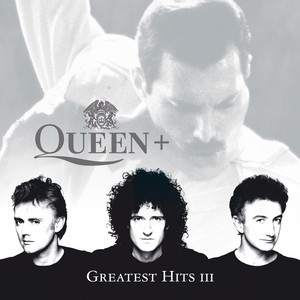
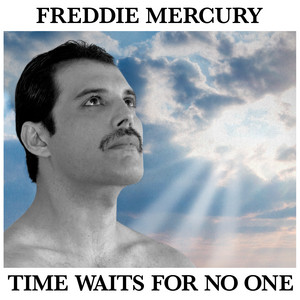
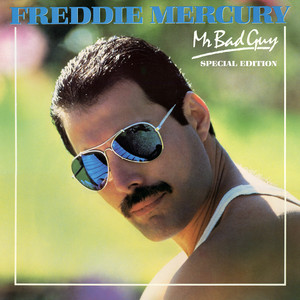
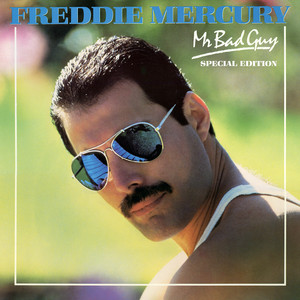
It was while on hiatus from <a href="spotify:artist:1dfeR4HaWDbWqFHLkxsg1d">Queen</a> that Mercury issued his first solo album in 1985, Mr. Bad Guy, a more pop-oriented album than his previous work, it featured the driving synth anthem "I Was Born to Love You" and the ballad "Made in Heaven;" both of which were later reworked by <a href="spotify:artist:1dfeR4HaWDbWqFHLkxsg1d">Queen</a>. By the late '80s, Mercury had also been diagnosed with AIDS, but decided to keep his condition under wraps as he focused on recording further albums with <a href="spotify:artist:1dfeR4HaWDbWqFHLkxsg1d">Queen</a> (1989's The Miracle and 1991's Innuendo), as well as issuing sporadic solo singles ("The Great Pretender," "Time") and an opera-meets-pop album with <a href="spotify:artist:6oGu0NZWy8gJ18wggybFqH">Montserrat Caballé</a> entitled Barcelona. But by 1991, Mercury's battle with AIDS had taken a turn for the worse, and on November 24, 1991 (just one day after deciding to go public with his ailment), Mercury died at his home in London. On April 20, 1992, the surviving members of <a href="spotify:artist:1dfeR4HaWDbWqFHLkxsg1d">Queen</a> organized a star-studded tribute concert for Mercury at Wembley Stadium (with all proceeds going to the newly founded AIDS benefit group The Mercury Phoenix Trust) featuring such <a href="spotify:artist:1dfeR4HaWDbWqFHLkxsg1d">Queen</a>/Mercury admirers as <a href="spotify:artist:3PhoLpVuITZKcymswpck5b">Elton John</a>, <a href="spotify:artist:3qm84nBOXUEQ2vnTfUTTFC">Guns N' Roses</a>, <a href="spotify:artist:5GtMEZEeFFsuHY8ad4kOxv">Seal</a>, <a href="spotify:artist:2ye2Wgw4gimLv2eAKyk1NB">Metallica</a>, <a href="spotify:artist:0oSGxfWSnnOXhD2fKuz2Gy">David Bowie</a>, <a href="spotify:artist:1OwarW4LEHnoep20ixRA0y">Robert Plant</a>, <a href="spotify:artist:5odf7hjI7hyvAw66tmxhGF">Roger Daltrey</a>, <a href="spotify:artist:19ra5tSw0tWufvUp8GotLo">George Michael</a>, and <a href="spotify:artist:3lQpSzdPxoF1FYk7ilbe37">Liza Minnelli</a>, among others. Shortly thereafter, <a href="spotify:artist:1dfeR4HaWDbWqFHLkxsg1d">Queen</a> regained their footing in the U.S. when <a href="spotify:search:label%3A%22Hollywood+Records%22">Hollywood Records</a> reissued their entire catalog and "Bohemian Rhapsody" (and two compilations: Classic Queen and Greatest Hits) rocketed up the charts due to the song's inclusion in the movie Wayne's World. Up until his death, Mercury continued to write music with <a href="spotify:artist:1dfeR4HaWDbWqFHLkxsg1d">Queen</a>, and surviving bandmembers completed several unfinished tracks for the 1995 posthumous release Made in Heaven. The '90s also saw the arrival of a few Mercury solo compilations: in 1992 the U.K. received The Freddie Mercury Album while the U.S. got The Great Pretender (both included mostly similar track listings) and a year later, the six-track Remixes was issued in Europe only.
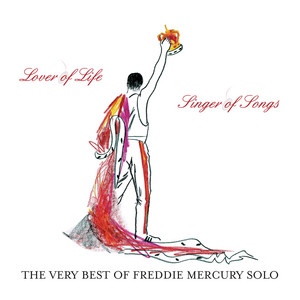
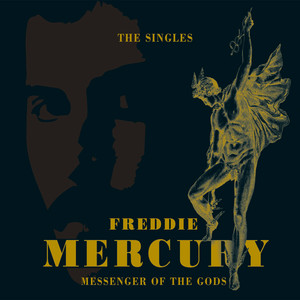
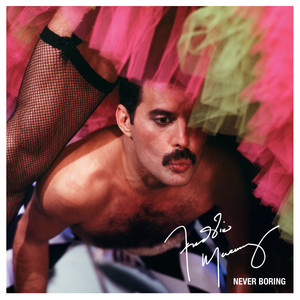
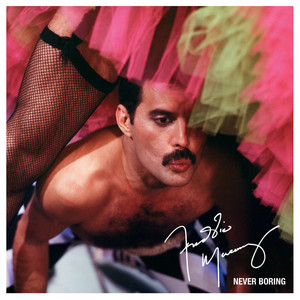
In 2000, a mammoth ten-CD/two-DVD box set was unveiled, titled The Solo Collection, collecting all of his solo tracks and promotional videos as well as rarities. Also released at the same time was the three-CD box set Freddie Mercury Solo and the DVD Video Collection, which included highlights from the bigger set. The more economical single-disc collection Very Best of Freddie Mercury Solo: Lover of Life, Singer of Songs appeared in 2006. In 2016, the double-disc collection Messenger of the Gods: The Singles brought together all of Mercury's solo A- and B-side singles. In 2018, actor Rami Malek portrayed Mercury in the <a href="spotify:artist:1dfeR4HaWDbWqFHLkxsg1d">Queen</a> biopic Bohemian Rhapsody. In the wake of the film's success (it took home four Academy Awards), <a href="spotify:search:label%3A%22Virgin%2FEMI%22">Virgin/EMI</a> and <a href="spotify:search:label%3A%22Hollywood+Records%22">Hollywood Records</a> compiled the singer's solo work on the 2019 box set Never Boring. ~ Greg Prato, Rovi
Monthly Listeners
2.6 million
Monthly Listeners History
Track the evolution of monthly listeners over the last 28 days.
Followers
7.1 million
Followers History
Track the evolution of followers over the last 28 days.
Total Streams
876.8 million
Total Streams History
Track the evolution of total streams over the last 28 days. This data is calculated from all tracks listed in the artist's discography.
Top Cities

Related Artists
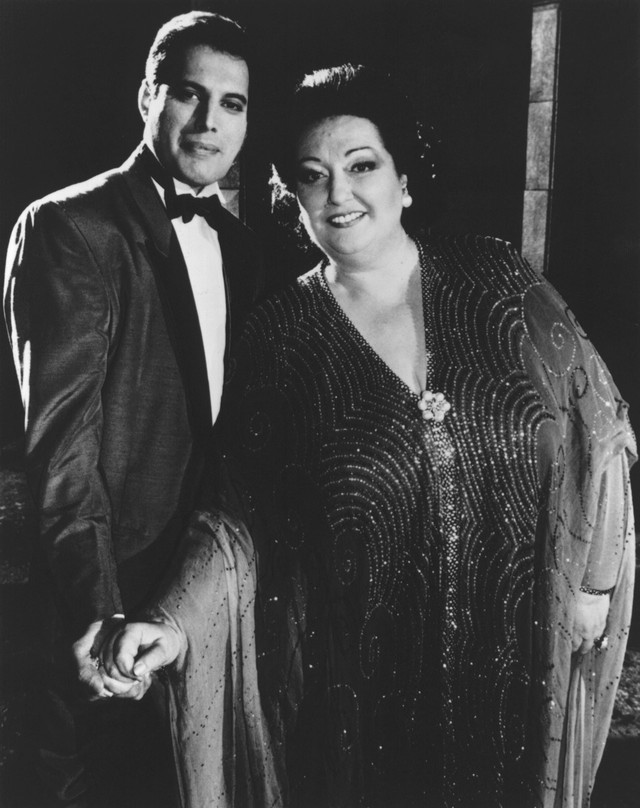
Montserrat Caballé
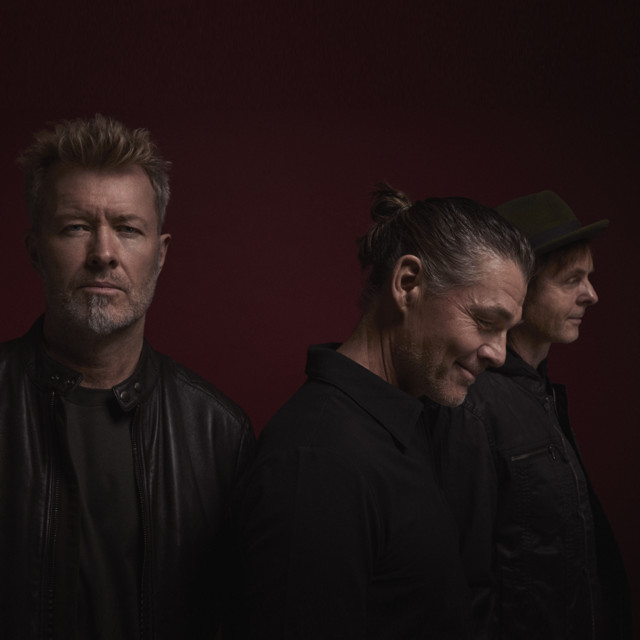
a-ha
Irene Cara
Baccara