Data may be outdated
Last updated: 9 months ago — Click refresh to get the latest statistics.
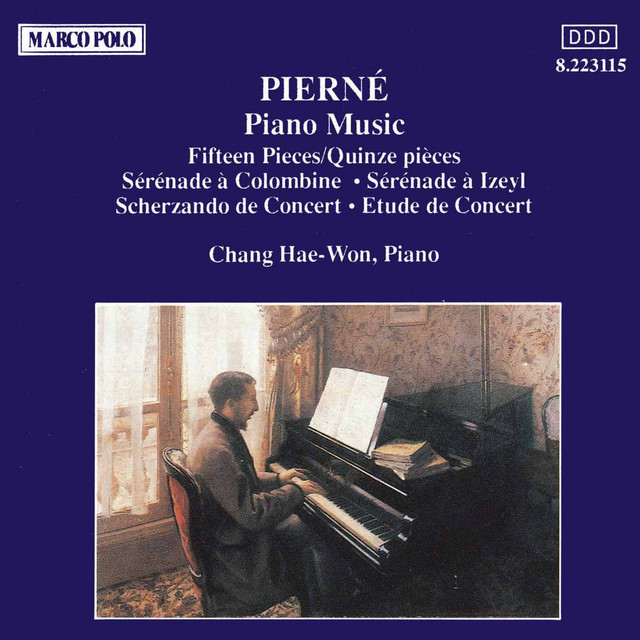
Gabriel Pierné has been called the most complete French musician of the late Romantic/early twentieth century era. In his own music Pierné blended a seriousness of purpose (acquired in part through his studies with <a href="spotify:artist:1C3sffOOvQNUwg4YIsvKqy">Cesar Franck</a>) with a lighter, more popular flavor reminiscent of <a href="spotify:artist:1AoIc5YFH0aSFc4mKqBEeB">Jules Massenet</a> (with whom Pierné also studied); his dedication to the music of his contemporary French composers earned him a reputation as a conductor of deep integrity.
Pierné was born in 1863 in the town of Metz. He displayed great musical promise as a child, and by 1871 he had entered the Paris Conservatoire to study composition with <a href="spotify:artist:1AoIc5YFH0aSFc4mKqBEeB">Massenet</a> and organ with Franck (Franck's organ class, however, often focusing more on composing than on playing). At age 11 Pierné earned a medal for his solfège skills, and he later went on to win top prizes in organ, composition, and piano, as well as (in 1882) the coveted Prix de Rome (for the cantata Edith).
In 1890 Pierné succeeded his teacher, Franck, as organist at St. Clotilde cathedral, a distinct honor for a young man of 27. In the late 1890s he abandoned his career as an organist and in 1903 made his debut as assistant conductor of the Concerts Colonne (of which he served as principal conductor from 1910 to 1934, devoting a great deal of rehearsal time to the preparation of new works). In addition to his activities on the podium, Pierné served on the administration of the Paris Conservatoire and composed for the Ballet Russes (three successful ballets produced between 1923 and 1934). In the years prior to his death in 1937 he was elected to the Académie des Beaux Arts and made a Chevalier of the Légion d'honneur.
Pierné's output as a composer, while by no means as vast as some of his Parisian colleagues (one thinks in particular of Saint-Saëns), includes entries in most of the standard genres; in typically French style, he avoided symphonic form in favor of orchestral poems and character pieces. While Pierné's large-scale works, such as the 1897 oratorio L'an mil and the opera Vendée from the same year, showcase a solid grasp of musical architecture, the smaller chamber works (sonatas for both violin and cello and a String Quintet, among other pieces), are more indicative of his exceptional facility.
Pierné was born in 1863 in the town of Metz. He displayed great musical promise as a child, and by 1871 he had entered the Paris Conservatoire to study composition with <a href="spotify:artist:1AoIc5YFH0aSFc4mKqBEeB">Massenet</a> and organ with Franck (Franck's organ class, however, often focusing more on composing than on playing). At age 11 Pierné earned a medal for his solfège skills, and he later went on to win top prizes in organ, composition, and piano, as well as (in 1882) the coveted Prix de Rome (for the cantata Edith).
In 1890 Pierné succeeded his teacher, Franck, as organist at St. Clotilde cathedral, a distinct honor for a young man of 27. In the late 1890s he abandoned his career as an organist and in 1903 made his debut as assistant conductor of the Concerts Colonne (of which he served as principal conductor from 1910 to 1934, devoting a great deal of rehearsal time to the preparation of new works). In addition to his activities on the podium, Pierné served on the administration of the Paris Conservatoire and composed for the Ballet Russes (three successful ballets produced between 1923 and 1934). In the years prior to his death in 1937 he was elected to the Académie des Beaux Arts and made a Chevalier of the Légion d'honneur.
Pierné's output as a composer, while by no means as vast as some of his Parisian colleagues (one thinks in particular of Saint-Saëns), includes entries in most of the standard genres; in typically French style, he avoided symphonic form in favor of orchestral poems and character pieces. While Pierné's large-scale works, such as the 1897 oratorio L'an mil and the opera Vendée from the same year, showcase a solid grasp of musical architecture, the smaller chamber works (sonatas for both violin and cello and a String Quintet, among other pieces), are more indicative of his exceptional facility.
Monthly Listeners
24,550
Monthly Listeners History
Track the evolution of monthly listeners over the last 28 days.
Followers
2,051
Followers History
Track the evolution of followers over the last 28 days.
Top Cities
707 listeners

303 listeners

293 listeners
251 listeners
241 listeners

Related Artists


Robert Fuchs
Simon Callaghan


Agathe Backer Grøndahl

Carl Reinecke
Joachim Raff

Jeanell Carrigan
Raphaël Sévère

Alliage Quintett
Sergio Gallo
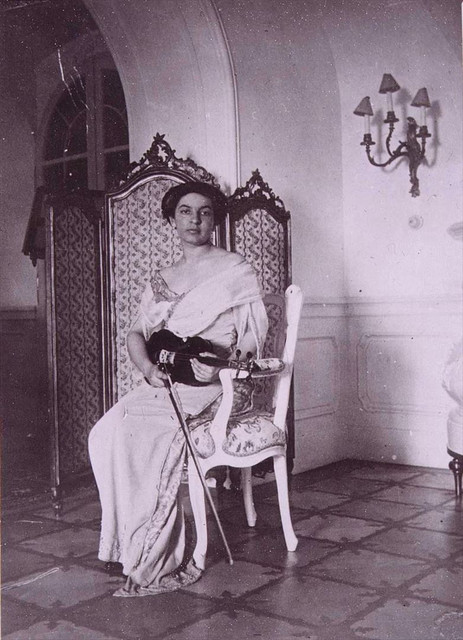
Dora Pejačević
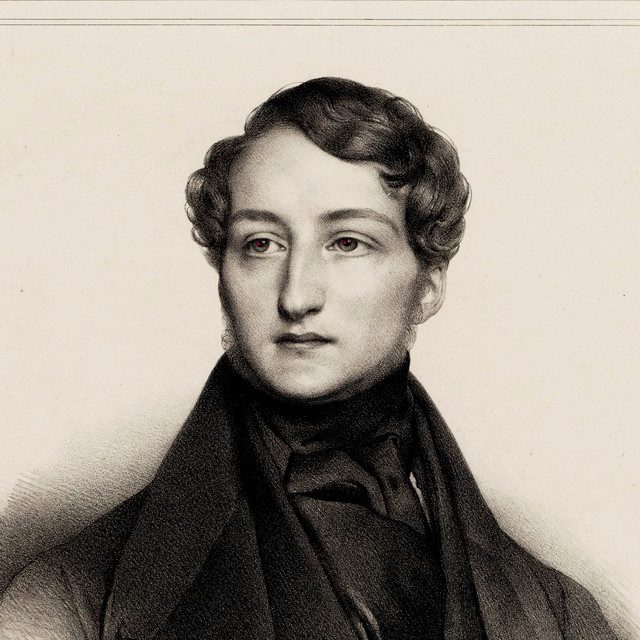
Sigismond Thalberg
Adam Laloum
Gottlieb Wallisch
Matthew Schellhorn
Paolo Giacometti

Adam Carse
Elfrida Andrée