Data may be outdated
Last updated: 9 months ago — Click refresh to get the latest statistics.
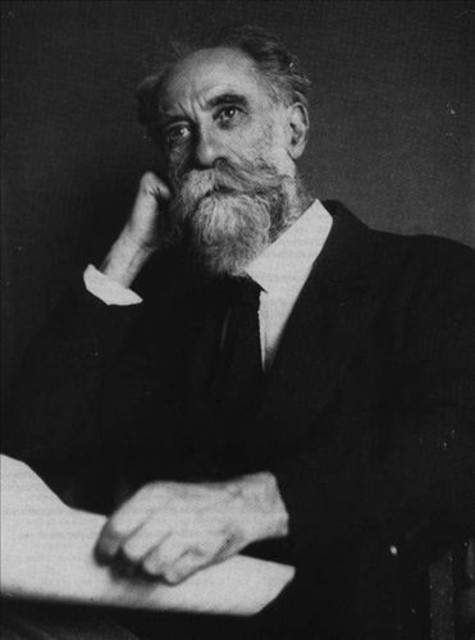
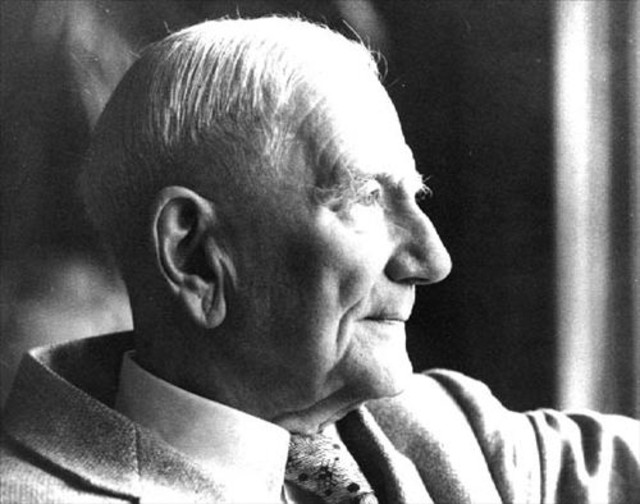
Though his reputation as a composer has remained rather isolated in the decades since his death, Charles Koechlin enjoyed a prominent place in the French music scene in the first half of the twentieth century. Born in Paris on November 27, 1867, Koechlin began formal musical studies at the Paris Conservatory in 1890. His teachers there included <a href="spotify:artist:1AoIc5YFH0aSFc4mKqBEeB">Massenet</a> and <a href="spotify:artist:2gClsBep1tt1rv1CN210SO">Fauré</a>; the latter ultimately proved the greatest influence upon Koechlin's uncomplicated but colorful, mildly Impressionistic style. In 1918, <a href="spotify:artist:459INk8vcC0ebEef82WjIK">Satie</a> welcomed him into Les nouveaux jeunes, a short-lived collective of young French composers (including Roussel and <a href="spotify:artist:6bwXuNL4AuC7w3AxspKXn6">Milhaud</a>) that ultimately metamorphosed into Les Six.
In his lifetime, Koechlin was more widely known for his work as a theorist and teacher than for his own music. His writings include a multi-volume treatise on orchestration, one of the most extensive of its kind. Among his students were two members of Les Six, <a href="spotify:artist:6BPFsvVekatEQbA8l07afM">Germaine Tailleferre</a> and <a href="spotify:artist:4IAWVxo2fpTBPn6k7GZ3eY">Francis Poulenc</a>, as well as film and television composer <a href="spotify:artist:39iHRO9MH9To3gjW7wqaW1">Lalo Schifrin</a>. Koechlin's skill and reputation as an orchestrator were considerable. <a href="spotify:artist:436sYg6CZhNefQJogaXeK0">Saint-Saëns</a>, <a href="spotify:artist:2gClsBep1tt1rv1CN210SO">Fauré</a>, and <a href="spotify:artist:1Uff91EOsvd99rtAupatMP">Debussy</a> entrusted to him the orchestration of a number of their own works, including most of <a href="spotify:artist:1Uff91EOsvd99rtAupatMP">Debussy</a>'s first ballet, Khamma (1911-1912). Koechlin traveled widely as a lecturer on music, including three tours in the United States. After a career that encompassed every aspect of French musical life, he died in Le Canadel, France, on New Year's Eve 1950.
While Koechlin's music is not as distinctive in its dramatic, structural, or formal profile as that of contemporaries like <a href="spotify:artist:1Uff91EOsvd99rtAupatMP">Debussy</a> or <a href="spotify:artist:17hR0sYHpx7VYTMRfFUOmY">Ravel</a>, it nonetheless bears the stamp of an unusual personality. Many of his works are conspicuously sectional and almost improvisatory in the manner in which they unfold; his melodies in particular tend toward unrestricted, continual motion. Harmony and instrumental color are generally at the fore in Koechlin's music, which is perhaps most effective in the way it creates exquisitely shaded atmospheres. The composer wrote prolifically and for nearly every medium -- except, tellingly, for the operatic stage -- but carved out a quirky compositional niche that remains unique. Prefiguring multi-work "literary" cycles like American composer <a href="spotify:artist:2uSpHGRqp30nn4B7oRny5s">David Del Tredici</a>'s Alice in Wonderland series, Koechlin produced seven interrelated works based on <a href="spotify:artist:5uNTrZ1JlKsnpTeFyKWPYO">Kipling</a>'s The Jungle Book. Perhaps unexpectedly, given his sober, messianic appearance, he also harbored a virtual mania for the cinema, which he translated into a number of works inspired by various silver-screen personalities. He celebrated the icons of Hollywood's Golden Age in works like Five Dances for Ginger [Rogers] (1937) and Epitaphe de Jean Harlow (1937), but his most stimulating muse was apparently English-German actress Lilian Harvey (1906-1968). Initially flattered by Koechlin's hommages, which included more than a hundred works, including two "Lilian Albums," Harvey eventually grew uneasy with his seeming obsession. She also enjoys a place of honor in what is likely the most famous (if not generally familiar) of Koechlin's works, the Seven Stars Symphony (1933). Neither astrological nor astronomical in inspiration, the symphony is instead a suite of tone poems, each an evocative portrait of a leading screen figure of the day: Douglas Fairbanks, Harvey, Greta Garbo, Clara Bow, <a href="spotify:artist:3UuPzfQMdGK40O8Rj9jqVM">Marlene Dietrich</a>, Emil Jannings, and <a href="spotify:artist:6AmG7SNdlV9boPZ7dFVnLY">Charlie Chaplin</a>.
In his lifetime, Koechlin was more widely known for his work as a theorist and teacher than for his own music. His writings include a multi-volume treatise on orchestration, one of the most extensive of its kind. Among his students were two members of Les Six, <a href="spotify:artist:6BPFsvVekatEQbA8l07afM">Germaine Tailleferre</a> and <a href="spotify:artist:4IAWVxo2fpTBPn6k7GZ3eY">Francis Poulenc</a>, as well as film and television composer <a href="spotify:artist:39iHRO9MH9To3gjW7wqaW1">Lalo Schifrin</a>. Koechlin's skill and reputation as an orchestrator were considerable. <a href="spotify:artist:436sYg6CZhNefQJogaXeK0">Saint-Saëns</a>, <a href="spotify:artist:2gClsBep1tt1rv1CN210SO">Fauré</a>, and <a href="spotify:artist:1Uff91EOsvd99rtAupatMP">Debussy</a> entrusted to him the orchestration of a number of their own works, including most of <a href="spotify:artist:1Uff91EOsvd99rtAupatMP">Debussy</a>'s first ballet, Khamma (1911-1912). Koechlin traveled widely as a lecturer on music, including three tours in the United States. After a career that encompassed every aspect of French musical life, he died in Le Canadel, France, on New Year's Eve 1950.
While Koechlin's music is not as distinctive in its dramatic, structural, or formal profile as that of contemporaries like <a href="spotify:artist:1Uff91EOsvd99rtAupatMP">Debussy</a> or <a href="spotify:artist:17hR0sYHpx7VYTMRfFUOmY">Ravel</a>, it nonetheless bears the stamp of an unusual personality. Many of his works are conspicuously sectional and almost improvisatory in the manner in which they unfold; his melodies in particular tend toward unrestricted, continual motion. Harmony and instrumental color are generally at the fore in Koechlin's music, which is perhaps most effective in the way it creates exquisitely shaded atmospheres. The composer wrote prolifically and for nearly every medium -- except, tellingly, for the operatic stage -- but carved out a quirky compositional niche that remains unique. Prefiguring multi-work "literary" cycles like American composer <a href="spotify:artist:2uSpHGRqp30nn4B7oRny5s">David Del Tredici</a>'s Alice in Wonderland series, Koechlin produced seven interrelated works based on <a href="spotify:artist:5uNTrZ1JlKsnpTeFyKWPYO">Kipling</a>'s The Jungle Book. Perhaps unexpectedly, given his sober, messianic appearance, he also harbored a virtual mania for the cinema, which he translated into a number of works inspired by various silver-screen personalities. He celebrated the icons of Hollywood's Golden Age in works like Five Dances for Ginger [Rogers] (1937) and Epitaphe de Jean Harlow (1937), but his most stimulating muse was apparently English-German actress Lilian Harvey (1906-1968). Initially flattered by Koechlin's hommages, which included more than a hundred works, including two "Lilian Albums," Harvey eventually grew uneasy with his seeming obsession. She also enjoys a place of honor in what is likely the most famous (if not generally familiar) of Koechlin's works, the Seven Stars Symphony (1933). Neither astrological nor astronomical in inspiration, the symphony is instead a suite of tone poems, each an evocative portrait of a leading screen figure of the day: Douglas Fairbanks, Harvey, Greta Garbo, Clara Bow, <a href="spotify:artist:3UuPzfQMdGK40O8Rj9jqVM">Marlene Dietrich</a>, Emil Jannings, and <a href="spotify:artist:6AmG7SNdlV9boPZ7dFVnLY">Charlie Chaplin</a>.
Monthly Listeners
12,745
Monthly Listeners History
Track the evolution of monthly listeners over the last 28 days.
Followers
3,594
Followers History
Track the evolution of followers over the last 28 days.
Top Cities
198 listeners

156 listeners

126 listeners

119 listeners

117 listeners

Related Artists
Simon Callaghan


Joseph Jongen


York Bowen




Mobius
Raphaël Sévère
Carl Reinecke


Maria Herz
Fernando Lopes-Graça

James Campbell


Jeanell Carrigan
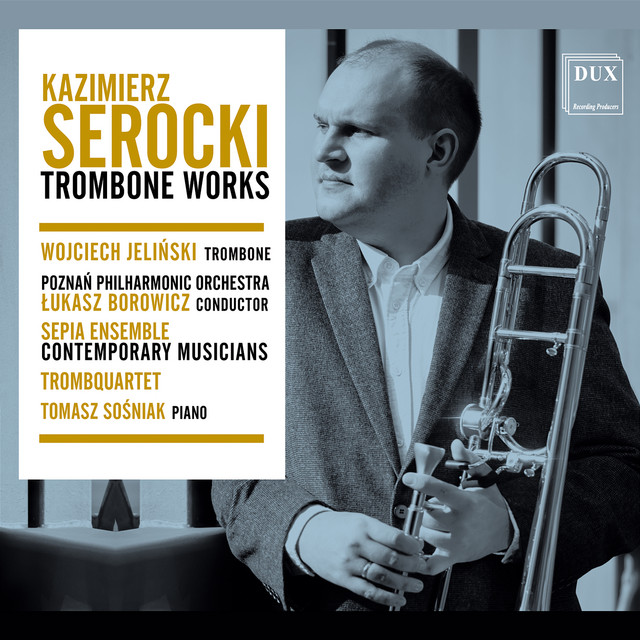
Kazimierz Serocki



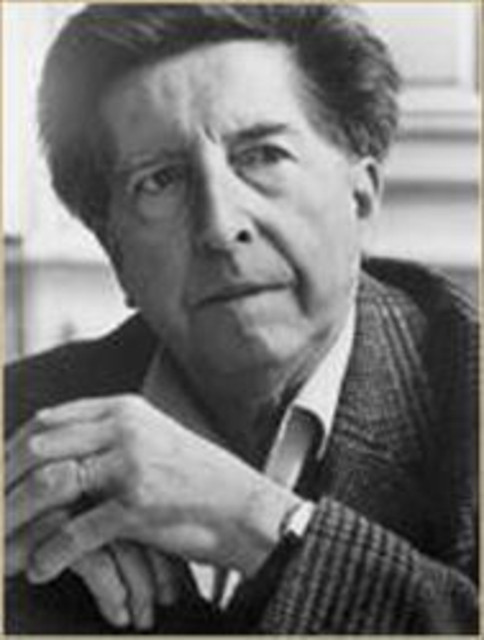
Henri Dutilleux