Data may be outdated
Last updated: 8 months ago — Click refresh to get the latest statistics.
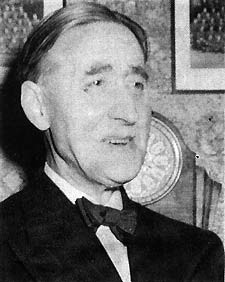
As a composer, George Dyson was almost too talented for his own good. He was sufficiently gifted to write music in a unique style that was also accessible, uplifting, and memorable; but he was also a teacher and administrator, an author, and he devoted much of his time to those activities. Dyson was born in Halifax in 1883 to a working-class family. He was a natural musician with a special affinity for the keyboard and was playing the organ at his church at 13; he became a Fellow of the Royal College of Organists three years later. Dyson entered the Royal College of Music at age 16 and in 1904, he won the Mendelssohn Scholarship and spent the next four years studying in Italy, Austria, and Germany. Dyson's early life and training were rooted in the late Romantic era and his early compositions strongly reflected the influence of <a href="spotify:artist:6pAwHPeExeUbMd5w7Iny6D">Richard Strauss</a>, <a href="spotify:artist:6QuJ4aZSRMebqwDXiJ3SuA">Joseph Joachim</a>, and other turn-of-the century composers. His symphonic poem Siena (now lost) was very <a href="spotify:artist:4WMHJgeJCssiGW3ssUT7eb">Straussian</a> and was performed under the baton of <a href="spotify:artist:1SEdrsOzJuBFO4guNtHqOu">Arthur Nikisch</a>. After returning to England, he devoted much of his attention to teaching, first at the Royal Naval College at Osborne and then at Marlborough College before joining the Army at the outbreak of World War I. During his Army service, Dyson authored a manual on the use of the hand grenade that became standard issue. He was appointed a professor at the Royal College of Music in 1921 and began teaching at Winchester College three years later. It was during this period that Dyson separated himself from the mainstream of English music; a passionate believer in the notion that music had to move forward, he felt that the <a href="spotify:artist:5wTAi7QkpP6kp8a54lmTOq">Brahms</a>-influenced music of <a href="spotify:artist:430byzy0c5bPn5opiu0SRd">Sir Edward Elgar</a>, the folk song-inspired works of <a href="spotify:artist:7wNkISK49lKeXuRaZcQVFe">Ralph Vaughan Williams</a>, and the Celtic romanticism of <a href="spotify:artist:3qu7PRI4DKHhf9vo4rXXxn">Sir Arnold Bax</a> were all remnants of an era that had passed. Dyson abandoned his early compositions -- almost none of which survive -- and pursued teaching and writing during the early '20s. In 1928, Dyson emerged as a significant composer with In Honour of the City, a work for chorus and orchestra built on a series of verses attributed to William Dunbar, dating from the year 1500. The piece displayed a majesty reminiscent of <a href="spotify:artist:430byzy0c5bPn5opiu0SRd">Elgar</a> and <a href="spotify:artist:4DAmH51BfQpej5UEP0dZ3u">Sir Charles Hubert Parry</a> and found immediate public and critical favor; but it was also written in a leaner, more modernistic style than would ever have come from either of those two composers. That piece led him directly to the work that is usually regarded as his crowning achievement, The Canterbury Pilgrims (1931), constructed around the work of Chaucer. Dyson was principally associated with choral music over the next decade, but his Symphony in G (1937) and his violin concerto (1941) gave him considerable credibility as an author of orchestral music, finding favor with audiences and critics. In 1938, Dyson assumed the job of director of the Royal College of Music; a knighthood followed in 1942 and he remained at the RCM for another decade. He continued composing new music in that curious style, modern yet tonal and melodic, right into the early '60s, though by that time even The Canterbury Pilgrims -- his most popular work -- had fallen out of the repertory of England's choral societies. In the mid-'90s, amid the growing interest in English music beyond the orbits of <a href="spotify:artist:430byzy0c5bPn5opiu0SRd">Elgar</a> and <a href="spotify:artist:7wNkISK49lKeXuRaZcQVFe">Vaughan Williams</a>, Dyson's work was rediscovered. A dozen of his major choral and orchestral works have been recorded by Chandos and other labels specializing in English and church music.
Monthly Listeners
11,162
Monthly Listeners History
Track the evolution of monthly listeners over the last 28 days.
Followers
503
Followers History
Track the evolution of followers over the last 28 days.
Top Cities
520 listeners

122 listeners

119 listeners
91 listeners

72 listeners
Related Artists
Imogen Holst
Virgil Thomson
Joseph Jongen

Penelope Thwaites
William Smith

Alec Rowley
Iain Farrington

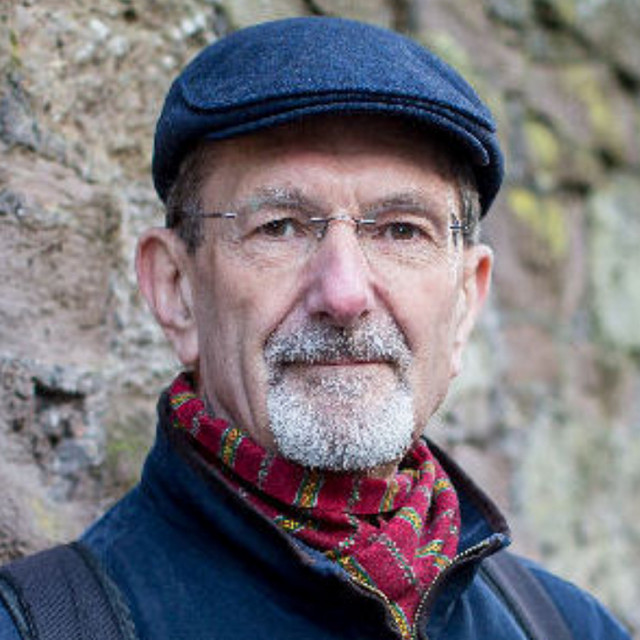
Alec Roth
Granville Bantock

Charles Peebles
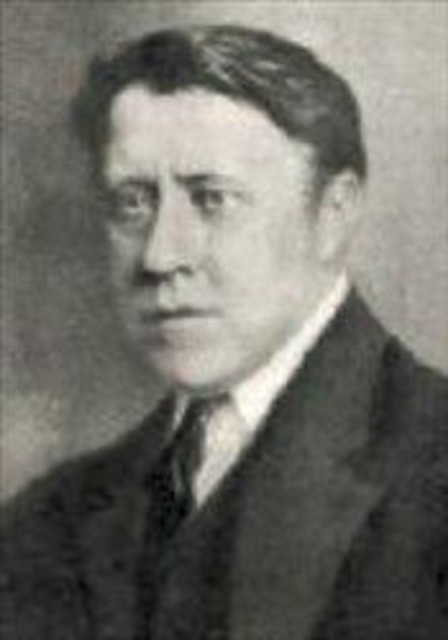
Hans Koessler
David Curtis
Jurgen Bruns
Desire-Emile Inghelbrecht
Percy Fletcher
Matthew Coleridge
Ron Spigelman

Erkki Melartin
Keith Swallow

Karl Weigl

Einar Englund

John Carmichael
Alun Hoddinott
Henri Rabaud
David Lyon

Percy Whitlock
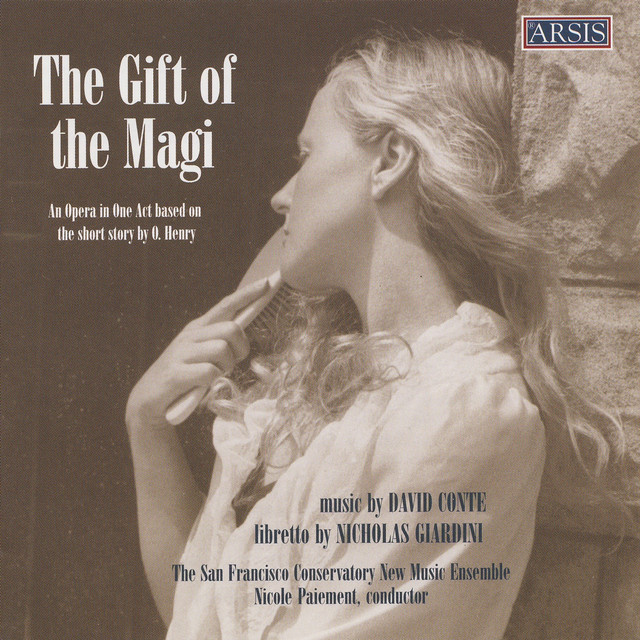
David Conte
