Data may be outdated
Last updated: 9 months ago — Click refresh to get the latest statistics.
Although she gained recognition very slowly, Giulietta Simionato came to be regarded as the leading Italian mezzo-soprano from the 1950s until the time of her retirement in 1966. Five to seven years younger than her great predecessor, <a href="spotify:artist:0YiB0zNBpkCU9DpftYfosy">Ebe Stignani</a> (depending on whose information is used for <a href="spotify:artist:0YiB0zNBpkCU9DpftYfosy">Stignani</a>'s birth date) and 12 years older than <a href="spotify:artist:6WtDtkBoFeI5F8k3efObLj">Fedora Barbieri</a> (who conceived an intense dislike for her), Simionato proved hard to categorize. While she was supreme in the large dramatic mezzo roles of <a href="spotify:artist:1JOQXgYdQV2yfrhewqx96o">Verdi</a>, she also sparkled in the florid fields of bel canto, employing her spirited personality to breathe life into <a href="spotify:artist:0roWUeP7Ac4yK4VN6L2gF4">Rossini</a>'s Isabella, Rosina, and Cenerentola. Her coloratura may not have been as precise as that flaunted by such later, lighter-voiced mezzos as <a href="spotify:artist:6myXAUJ8cAp5oSXId946SJ">Teresa Berganza</a>, <a href="spotify:artist:2X1SZFqImVgl59tWagfjcl">Marilyn Horne</a>, Cecilia Bartoli, and <a href="spotify:artist:0eK6nGl7gP0FKLqGUoDF2B">Jennifer Larmore</a>, but her sense of fun was unequalled and her trim, petite figure and fluid stage movement made for the perfect embodiment of Italian comic opera.
Simionato made her debut in Montagnana at age 18 as Lola in Cavalleria rusticana. She had studied initially with a local bandmaster in Rovigo, a knowledgeable man who helped her develop her understanding of an already naturally placed instrument. Later, she studied with Guido Palumbo in Padua. In 1933, she entered a voice competition sponsored by the Maggio Musicale Fiorentino, juried by an imposing team led by conductor <a href="spotify:artist:3UYZxxxrntUxxEeRycqHvq">Tullio Serafin</a>, tenors Alessandro Bonci and Amadeo Bassi, and legendary sopranos Rosina Storchio and Salomea Krusceniski. While Simionato won over the 384 other contestants, little happened. In 1936, she was given a contract by La Scala for a wearying succession of small roles, being assigned nothing important until Hänsel in 1942. Even her considerable acclaim for those performances produced nothing further.
Seeing little on the La Scala horizon, Simionato prevailed upon management to allow her enough time off to accept an offer from soprano Marisa Morel who was organizing several opera productions in Switzerland. Notices of Simionato's triumphs there followed her back to Italy and in 1947 she was finally offered Dorabella at La Scala. A Mignon in Genoa shortly thereafter led to her being given the role in Milan -- and she found herself heralded as a star. Almost immediately thereafter, Simionato was engaged for major roles throughout Italy and, subsequently, throughout the world.
When Simionato's easily produced top register led to consideration of the soprano repertory, conductor <a href="spotify:artist:1cJYZCqOPzIhYf3VekKtGW">Antonino Votto</a> encouraged her to concentrate on the mezzo repertory where she could reign unchallenged. Simionato defined her repertory as belonging to four parallel, but distinct categories. First, there were the coloratura roles extending from <a href="spotify:artist:0roWUeP7Ac4yK4VN6L2gF4">Rossini</a> and <a href="spotify:artist:6AphpMkKDU4I3Z6XaGu1UV">Bellini</a> to <a href="spotify:artist:1JOQXgYdQV2yfrhewqx96o">Verdi</a>'s Preziosilla in La forza del destino. Next, were the heavy dramatic roles, embracing the big <a href="spotify:artist:1JOQXgYdQV2yfrhewqx96o">Verdi</a> roles and ranging to the Princess Bouillon in Adriana Lecouvreur. Lyric parts, including Mignon, Adalgisa, and her <a href="spotify:artist:4NJhFmfw43RLBLjQvxDuRS">Mozart</a> and Strauss roles formed yet another category. Finally, there were the verismo roles: Carmen, Fedora, and Santuzza among them.
Simionato was not merely versatile; she was superior in all areas. In dramatic roles, she could be commanding or imperious notwithstanding her small stature. From her powerful chest register to her gleaming, thrusting top, she was a singer of enormous magnetism. Chicago in 1960 was witness to the way she defined the <a href="spotify:artist:1JOQXgYdQV2yfrhewqx96o">Verdi</a> mezzo repertory in her own time. Her Amneris, sensuous in pleading and ferocious in defeat, and her blazing Eboli in Don Carlo roused audiences to volcanic applause.
Simionato retired at 56 still in excellent voice.
Simionato made her debut in Montagnana at age 18 as Lola in Cavalleria rusticana. She had studied initially with a local bandmaster in Rovigo, a knowledgeable man who helped her develop her understanding of an already naturally placed instrument. Later, she studied with Guido Palumbo in Padua. In 1933, she entered a voice competition sponsored by the Maggio Musicale Fiorentino, juried by an imposing team led by conductor <a href="spotify:artist:3UYZxxxrntUxxEeRycqHvq">Tullio Serafin</a>, tenors Alessandro Bonci and Amadeo Bassi, and legendary sopranos Rosina Storchio and Salomea Krusceniski. While Simionato won over the 384 other contestants, little happened. In 1936, she was given a contract by La Scala for a wearying succession of small roles, being assigned nothing important until Hänsel in 1942. Even her considerable acclaim for those performances produced nothing further.
Seeing little on the La Scala horizon, Simionato prevailed upon management to allow her enough time off to accept an offer from soprano Marisa Morel who was organizing several opera productions in Switzerland. Notices of Simionato's triumphs there followed her back to Italy and in 1947 she was finally offered Dorabella at La Scala. A Mignon in Genoa shortly thereafter led to her being given the role in Milan -- and she found herself heralded as a star. Almost immediately thereafter, Simionato was engaged for major roles throughout Italy and, subsequently, throughout the world.
When Simionato's easily produced top register led to consideration of the soprano repertory, conductor <a href="spotify:artist:1cJYZCqOPzIhYf3VekKtGW">Antonino Votto</a> encouraged her to concentrate on the mezzo repertory where she could reign unchallenged. Simionato defined her repertory as belonging to four parallel, but distinct categories. First, there were the coloratura roles extending from <a href="spotify:artist:0roWUeP7Ac4yK4VN6L2gF4">Rossini</a> and <a href="spotify:artist:6AphpMkKDU4I3Z6XaGu1UV">Bellini</a> to <a href="spotify:artist:1JOQXgYdQV2yfrhewqx96o">Verdi</a>'s Preziosilla in La forza del destino. Next, were the heavy dramatic roles, embracing the big <a href="spotify:artist:1JOQXgYdQV2yfrhewqx96o">Verdi</a> roles and ranging to the Princess Bouillon in Adriana Lecouvreur. Lyric parts, including Mignon, Adalgisa, and her <a href="spotify:artist:4NJhFmfw43RLBLjQvxDuRS">Mozart</a> and Strauss roles formed yet another category. Finally, there were the verismo roles: Carmen, Fedora, and Santuzza among them.
Simionato was not merely versatile; she was superior in all areas. In dramatic roles, she could be commanding or imperious notwithstanding her small stature. From her powerful chest register to her gleaming, thrusting top, she was a singer of enormous magnetism. Chicago in 1960 was witness to the way she defined the <a href="spotify:artist:1JOQXgYdQV2yfrhewqx96o">Verdi</a> mezzo repertory in her own time. Her Amneris, sensuous in pleading and ferocious in defeat, and her blazing Eboli in Don Carlo roused audiences to volcanic applause.
Simionato retired at 56 still in excellent voice.
Monthly Listeners
5,472
Monthly Listeners History
Track the evolution of monthly listeners over the last 28 days.
Followers
3,180
Followers History
Track the evolution of followers over the last 28 days.
Top Cities
127 listeners

81 listeners

73 listeners

67 listeners
66 listeners

Related Artists
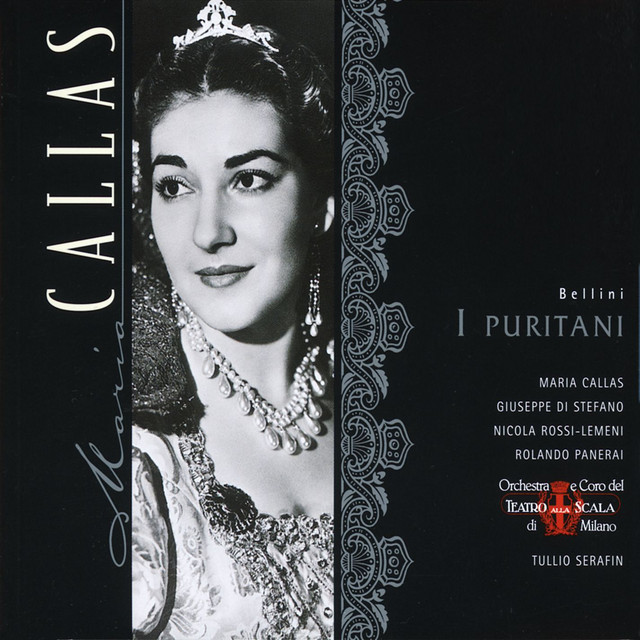
Nicola Rossi-Lemeni
Anna Di Stasio
Franco Capuana

Francesco Meli

Cornell MacNeil

Fedora Barbieri
Gabriella Carturan

Gianni Raimondi
Agostino Ferrin
Giuseppe Morresi
Ugo Benelli

Virgilio Carbonari
Giuseppe Modesti

Gabriel Bacquier
Guido Mazzini

Alfredo Simonetto
Giulio Fioravanti
Bonaldo Giaiotti
Enrico Fissore


Ugo Savarese