Data may be outdated
Last updated: 9 months ago — Click refresh to get the latest statistics.
Gregorian Chant, or plainchant, is the great body of monophonic song developed by the early Christian church for use in worship. Most chant texts are drawn from the Latin Vulgate, which is the Holy Bible as translated and edited by the Roman Catholic Church. Since the Middle Ages, chants have been collected and published in various groupings. In the standard 1903 Editio Vaticana, chants are divided by liturgical type. masses are compiled in a volume known as the Gradual. The second volume is known as the Breviary and contains the Offices or "Hours," psalm settings, chants for Saints' or Feast Days, hymns, sequences, and other occasional pieces. Strict regulations dictate when these works are to be performed.
Prior to about 800 A.D., music and liturgy varied widely across the Holy Roman Empire. Nowhere was this more problematic than in Gaul, where churches and monasteries displayed a chaotic variety of practices nearly unique to each house of worship. Reforms instituted in Gaul under King Pippin III in 754, with encouragement from Rome and the support of Pippin's successor, Charlemagne, led to the creation of a standard body of chant. Regional churches were forced to conform to this standard, although Milan was spared. The notion identifying Gregory the Great (d. 604) as the divinely inspired composer of the chant (hence the term "Gregorian chant") is unsupportable historically. Nevertheless, the standardization process to which the story indirectly points was a crucially important development. For standardization called forth notation, a process that changed the course of European music.
Early chant notation utilized a wide variety of "neumes," which we might informally call squiggles that indicate the rise and fall of the voice. Over several centuries, simple clefs were devised and a single staff line employed. When eleventh century French theorist Guido of Arezzo introduced a staff of four lines, the result was a chant notation still comprehensible today -- at least in the realm of melody.
Chants were and are classified according to various other parameters besides liturgical function. Eighth and ninth century monastic theorists of chant adopted a system of eight standard modes adapted from ancient Greek writings; each mode was associated with a reciting tone used for large stretches of text. Chants are also referred to as syllabic (having one note per syllable), neumatic (mostly with several notes for each syllable), or melismatic (having many notes for each syllable). The towering melismatic chants of the Mass Proper (the parts of the mass that change over the liturgical year) are perhaps the most satisfying for modern listeners; some think that these very florid chants are among the oldest preserved in the repertory.
The chant repertory was not static; monks continued to create new chants even after the rise of polyphony. In the fourteenth and fifteenth centuries there was an unprecedented increase in the number of sequences, hymns, tropes, and other incidental pieces added to the liturgy. These were not necessarily limited to the Vulgate; many are based on sacred poems and reflect the influence of popular taste. The Council of Trent in 1508 barred the tropes from sacred practice, limiting the number of acceptable sequences to three and allowing only a few hymns to remain in use.
In the nineteenth century, Benedictine monks at the Abbey of Solesmes undertook an exhaustive review of old plainchant sources; the Editio Vaticana that resulted remains a standard source of the liturgical chant used in Roman Catholic Churches throughout the world until the 1960s. The Liber Usualis, a standard-use chant book, is a compilation of frequently sung chants selected from among the many that exist for every part of the liturgy.
Prior to about 800 A.D., music and liturgy varied widely across the Holy Roman Empire. Nowhere was this more problematic than in Gaul, where churches and monasteries displayed a chaotic variety of practices nearly unique to each house of worship. Reforms instituted in Gaul under King Pippin III in 754, with encouragement from Rome and the support of Pippin's successor, Charlemagne, led to the creation of a standard body of chant. Regional churches were forced to conform to this standard, although Milan was spared. The notion identifying Gregory the Great (d. 604) as the divinely inspired composer of the chant (hence the term "Gregorian chant") is unsupportable historically. Nevertheless, the standardization process to which the story indirectly points was a crucially important development. For standardization called forth notation, a process that changed the course of European music.
Early chant notation utilized a wide variety of "neumes," which we might informally call squiggles that indicate the rise and fall of the voice. Over several centuries, simple clefs were devised and a single staff line employed. When eleventh century French theorist Guido of Arezzo introduced a staff of four lines, the result was a chant notation still comprehensible today -- at least in the realm of melody.
Chants were and are classified according to various other parameters besides liturgical function. Eighth and ninth century monastic theorists of chant adopted a system of eight standard modes adapted from ancient Greek writings; each mode was associated with a reciting tone used for large stretches of text. Chants are also referred to as syllabic (having one note per syllable), neumatic (mostly with several notes for each syllable), or melismatic (having many notes for each syllable). The towering melismatic chants of the Mass Proper (the parts of the mass that change over the liturgical year) are perhaps the most satisfying for modern listeners; some think that these very florid chants are among the oldest preserved in the repertory.
The chant repertory was not static; monks continued to create new chants even after the rise of polyphony. In the fourteenth and fifteenth centuries there was an unprecedented increase in the number of sequences, hymns, tropes, and other incidental pieces added to the liturgy. These were not necessarily limited to the Vulgate; many are based on sacred poems and reflect the influence of popular taste. The Council of Trent in 1508 barred the tropes from sacred practice, limiting the number of acceptable sequences to three and allowing only a few hymns to remain in use.
In the nineteenth century, Benedictine monks at the Abbey of Solesmes undertook an exhaustive review of old plainchant sources; the Editio Vaticana that resulted remains a standard source of the liturgical chant used in Roman Catholic Churches throughout the world until the 1960s. The Liber Usualis, a standard-use chant book, is a compilation of frequently sung chants selected from among the many that exist for every part of the liturgy.
Monthly Listeners
46,653
Monthly Listeners History
Track the evolution of monthly listeners over the last 28 days.
Followers
38,269
Followers History
Track the evolution of followers over the last 28 days.
Top Cities
716 listeners

454 listeners

416 listeners

403 listeners

388 listeners

Related Artists
Gregorian Chants
Choeur des moines de l'abbaye Notre Dame de Fontgombault
Karel Frana
Cantarte Regensburg


Choeur des Bénédictins de l'Abbaye Sainte-Anne de Kergonan

Chants From the Holyland- Graz Gregorian Chants School of Austri
Chœur des Moines de l'Abbaye Saint-Pierre de Solesmes

Gregorian Monk

Marek Klein

Dom Le Feuvre

Anonymous
The Monks of Pluscarden Abbey
Christian Chants
Institute of Christ the King Sovereign Priest

Canonici Regolari Di Sant'Antimo
Chœur des Moines de l'Abbaye Saint-Pierre de Solesmes


Gregorian Chant Schola of Saint Meinrad Archabbey

Monks of St. Anthony's Greek Orthodox Monastery

The Benedictine Abbey of Saint Benôit-Du-Lac, Dom André Saint-Cyr
The Benedictine Monks of Worth Abbey
Choeur des moines de l'abbaye Saint Benoit du lac


Schola Gregoriana Mediolanensis & Giovanni Vianini

Cistercian Monks of Stift Heiligenkreuz

Gregorian Chanting Monks

Elaria
Monks of Ampleforth Abbey
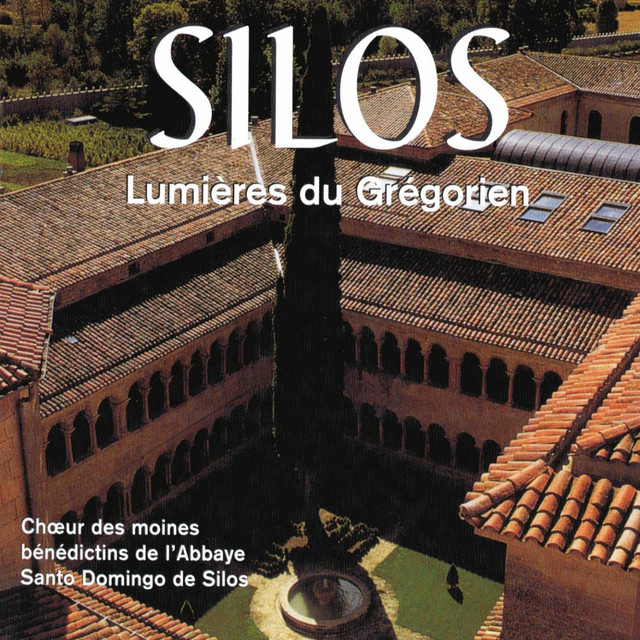
Chœur De Moines Bénedictins De l'Abbaye Santo Domingo De Silos

Dom André Saint-Cyr

Cherubika