Data may be outdated
Last updated: 9 months ago — Click refresh to get the latest statistics.
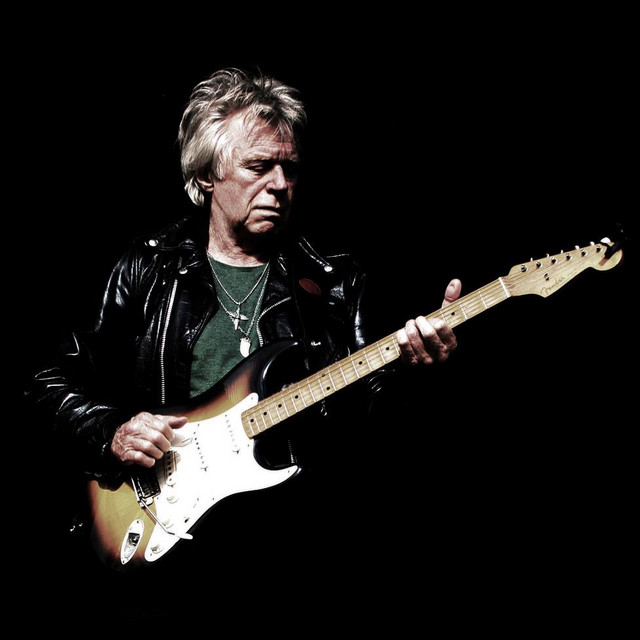
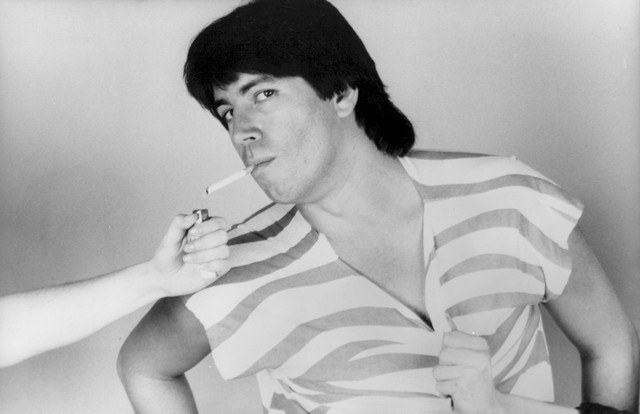
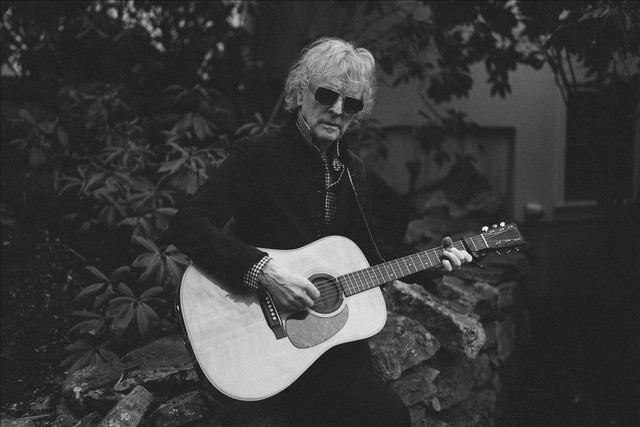
Ian Hunter established himself as one of the most inventive hard rock songwriters of the early 1970s, setting the stage for punk rock with his clever, cutting songs with <a href="spotify:artist:6ysQi6NI88X627t2srsWz6">Mott the Hoople</a>, then has continued on as a long-running solo artist who is still recording well into his 80s. He spent the first part of the '70s toiling away with <a href="spotify:artist:6ysQi6NI88X627t2srsWz6">Mott</a>, eventually finding fame once they received a <a href="spotify:artist:0oSGxfWSnnOXhD2fKuz2Gy">David Bowie</a>-assisted glam makeover with 1972's "All the Young Dudes." Hunter stuck with the band for two more years, racking up such hit singles as "All the Way from Memphis" and "Roll Away the Stone" before he embarked on a solo career; he retained a connection to <a href="spotify:artist:6ysQi6NI88X627t2srsWz6">Mott</a>'s crunching, witty rock & roll but followed his own idiosyncratic path. Hunter eked out some success on American rock radio, especially after he gave himself a slight new wave makeover at the dawn of the '80s, but many of his best-known songs would be discovered years later: "Once Bitten, Twice Shy," a U.K. hit for Hunter in 1975, turned into an American smash when covered by <a href="spotify:artist:6ZPbX2Lxd40e2UVkXpyxvI">Great White</a> in 1989, while "Cleveland Rocks" became the theme song to the sitcom The Drew Carey Show in 1995. These latter-day successes didn't necessarily boost Hunter's commercial fortunes. Rather, he just kept steadily working, writing and recording new albums and taking them out on tour into the 2010s, releasing Defiance in 2023, months before his 84th birthday -- his longevity an accomplishment in its own right.
Hunter was born in Owestry, Shropshire, but was raised in cities throughout England since his father worked in the British Intelligence agency called MI5 and had to move frequently. Eventually, the family returned to Shrewsbury, where the teenaged Hunter joined a band called Silence in the early '60s. Silence released an album, but it received no attention. In the years to follow, Hunter played in a handful of local bands and worked a variety of jobs.
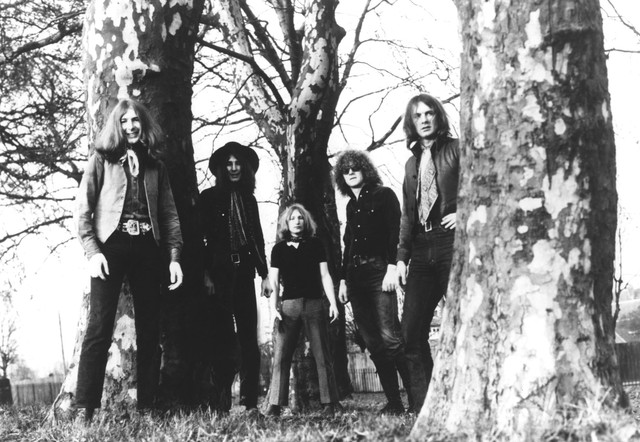
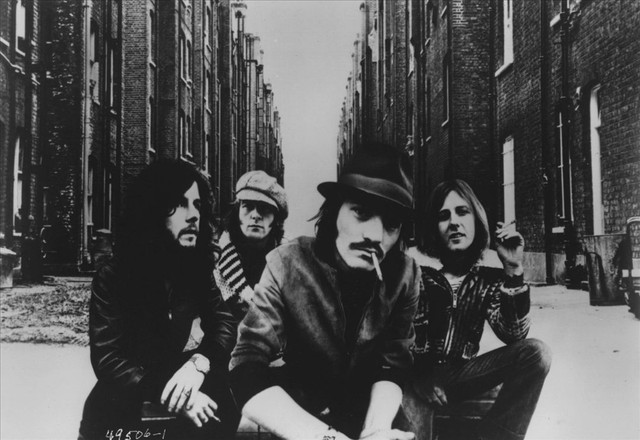
In 1968, Hunter began playing bass with Freddie "Fingers" Lee and the duo played around Germany. Shortly afterward, he became the vocalist for <a href="spotify:artist:6ysQi6NI88X627t2srsWz6">Mott the Hoople</a>. During the next six years, he sang and played piano and guitar with the band, becoming its lead songwriter within a few albums. Although few of their records sold, <a href="spotify:artist:6ysQi6NI88X627t2srsWz6">Mott the Hoople</a> were one of the most popular live bands in England. In 1972, <a href="spotify:artist:0oSGxfWSnnOXhD2fKuz2Gy">David Bowie</a> produced their breakthrough album, All the Young Dudes, which took the band into the British Top Ten and the American Top 40. For the next two years, the group had a consistent stream of hits in both the U.K. and the U.S.
Toward the end of 1973, the band began to fall apart, as founding member and lead guitarist <a href="spotify:artist:0ImSWynVXHcxCrWffjZ278">Mick Ralphs</a> left. Hunter carried on through another album, but he left the group in late 1974, taking along former <a href="spotify:artist:0oSGxfWSnnOXhD2fKuz2Gy">Bowie</a> guitarist <a href="spotify:artist:2jzjxYOe3G5aeucbMg0Smp">Mick Ronson</a>, who had just joined <a href="spotify:artist:6ysQi6NI88X627t2srsWz6">Mott</a>. Hunter published Diary of a Rock Star, an account of his years leading <a href="spotify:artist:6ysQi6NI88X627t2srsWz6">Mott the Hoople</a>, in June 1974.
Hunter moved to New York, where he and <a href="spotify:artist:2jzjxYOe3G5aeucbMg0Smp">Ronson</a> began working on his solo debut. Released in 1975, Ian Hunter spawned "Once Bitten, Twice Shy," a Top 20 U.K. hit. Following its release, Hunter and <a href="spotify:artist:2jzjxYOe3G5aeucbMg0Smp">Ronson</a> embarked on a tour. After its completion, the pair parted ways, although they would reunite later in the '80s. All-American Alien Boy, Hunter's second solo album, was recorded with a variety of all-star and session musicians, including members of <a href="spotify:artist:1dfeR4HaWDbWqFHLkxsg1d">Queen</a>. Released in the summer of 1976, All-American Alien Boy was a commercial failure. It was followed in 1977 by Overnight Angels, an album that saw Hunter moving closer to straightforward rock & roll; disappointed with the completed album, Hunter decided to leave it unreleased in America.
Following the mainstream approach of Overnight Angels, Hunter became involved with England's burgeoning punk rock movement, producing <a href="spotify:artist:1inWec2E2UgfzMAhwjgTXe">Generation X</a>'s second album, 1979's Beyond the Valley of the Dolls. For Hunter's next solo album, he reunited with <a href="spotify:artist:2jzjxYOe3G5aeucbMg0Smp">Mick Ronson</a>, who produced and arranged 1979's You're Never Alone with a Schizophrenic. The album was a hit, especially in America, where it peaked at number 35. Hunter and <a href="spotify:artist:2jzjxYOe3G5aeucbMg0Smp">Ronson</a> set out on another tour, which resulted in the 1980 double live album Ian Hunter Live/Welcome to the Club. In 1981, Hunter released Short Back N' Sides, which was produced by <a href="spotify:artist:3RGLhK1IP9jnYFH4BRFJBS">the Clash</a>'s <a href="spotify:artist:6QFIIkwi4R2erQsIp0TDSb">Mick Jones</a>.
Two years later, All of the Good Ones Are Taken came out. After its release, Hunter became a recluse, spending the next six years in silence; occasionally, he contributed a song to a movie soundtrack. In 1989, he resumed recording, releasing YUI Orta with <a href="spotify:artist:2jzjxYOe3G5aeucbMg0Smp">Ronson</a>. After its release, Hunter remained quiet during the '90s, appearing only on <a href="spotify:artist:2jzjxYOe3G5aeucbMg0Smp">Ronson</a>'s posthumous 1994 album Heaven and Hull, and at tribute concerts for <a href="spotify:artist:2jzjxYOe3G5aeucbMg0Smp">Ronson</a> in 1994 and <a href="spotify:artist:4M1FpEWs2PeYfJe7xxJfhH">Freddie Mercury</a> in 1992. Hunter returned to recording with Artful Dodger, which was released in Britain and Europe in the spring of 1997. After a <a href="spotify:search:label%3A%22Columbia%22">Columbia</a>/<a href="spotify:search:label%3A%22Legacy%22">Legacy</a> compilation titled Once Bitten Twice Shy offered a wealth of Hunter solo titles in the year 2000, much attention was paid to 2001's fine Rant. In 2002, Hunter performed a pair of semi-acoustic concerts in Oslo, Norway, which were recorded for later release on CD and home video; the resulting project, called Strings Attached, introduced some new songs, including "Twisted Steel," inspired by the events of September 11, 2001.
Shrunken Heads, a collection of all-new material, was released in 2007 on the <a href="spotify:search:label%3A%22Yep+Roc%22">Yep Roc</a> label, followed by Man Overboard in 2009 from <a href="spotify:search:label%3A%22New+West+Records%22">New West Records</a>. That same year, Hunter unexpectedly reunited with <a href="spotify:artist:6ysQi6NI88X627t2srsWz6">Mott the Hoople</a> for a series of concerts at the end of the year; Live at HMV Hammersmith Apollo 2009 documented these well-reviewed gigs. After a couple of quiet years, Hunter returned in the fall of 2012 with When I'm President, another critically acclaimed collection of rock & roll. Live in the UK 2010, a document from the Man Overboard tour, arrived in 2014, and in 2016 Hunter released another studio album, Fingers Crossed.
Hunter unexpectedly reunited with guitarist Ariel Bender and keyboardist <a href="spotify:artist:7zyMwBawm5wNhzlCx1Bopk">Morgan Fisher</a> to play several European concerts as <a href="spotify:artist:6ysQi6NI88X627t2srsWz6">Mott the Hoople</a> in 2018, a tour that went so well they planned to play several shows in the U.S. in 2019. At the last moment, those dates were scrapped due to Hunter's tinnitus. Hunter returned to his solo career in 2023 with Defiance, Part 1, a record featuring cameos from <a href="spotify:artist:6DbJi8AcN5ANdtvJcwBSw8">Ringo Starr</a> and <a href="spotify:artist:3OsHwkxpSIEqqmYoQxZTT5">Johnny Depp</a>. A year later, Hunter delivered Defiance, Pt. 2: Fiction, which had guest appearances by <a href="spotify:artist:0AD4odMWVQ2wUSlgxOB5Rl">Jeff Beck</a>, <a href="spotify:artist:64BpBvN4VY7JdhV9GaEbiV">Benmont Tench</a>, and <a href="spotify:artist:6bI8H2TnlKYGJSo52wcTP4">Taylor Hawkins</a>. ~ Stephen Thomas Erlewine, Rovi
Hunter was born in Owestry, Shropshire, but was raised in cities throughout England since his father worked in the British Intelligence agency called MI5 and had to move frequently. Eventually, the family returned to Shrewsbury, where the teenaged Hunter joined a band called Silence in the early '60s. Silence released an album, but it received no attention. In the years to follow, Hunter played in a handful of local bands and worked a variety of jobs.
In 1968, Hunter began playing bass with Freddie "Fingers" Lee and the duo played around Germany. Shortly afterward, he became the vocalist for <a href="spotify:artist:6ysQi6NI88X627t2srsWz6">Mott the Hoople</a>. During the next six years, he sang and played piano and guitar with the band, becoming its lead songwriter within a few albums. Although few of their records sold, <a href="spotify:artist:6ysQi6NI88X627t2srsWz6">Mott the Hoople</a> were one of the most popular live bands in England. In 1972, <a href="spotify:artist:0oSGxfWSnnOXhD2fKuz2Gy">David Bowie</a> produced their breakthrough album, All the Young Dudes, which took the band into the British Top Ten and the American Top 40. For the next two years, the group had a consistent stream of hits in both the U.K. and the U.S.
Toward the end of 1973, the band began to fall apart, as founding member and lead guitarist <a href="spotify:artist:0ImSWynVXHcxCrWffjZ278">Mick Ralphs</a> left. Hunter carried on through another album, but he left the group in late 1974, taking along former <a href="spotify:artist:0oSGxfWSnnOXhD2fKuz2Gy">Bowie</a> guitarist <a href="spotify:artist:2jzjxYOe3G5aeucbMg0Smp">Mick Ronson</a>, who had just joined <a href="spotify:artist:6ysQi6NI88X627t2srsWz6">Mott</a>. Hunter published Diary of a Rock Star, an account of his years leading <a href="spotify:artist:6ysQi6NI88X627t2srsWz6">Mott the Hoople</a>, in June 1974.
Hunter moved to New York, where he and <a href="spotify:artist:2jzjxYOe3G5aeucbMg0Smp">Ronson</a> began working on his solo debut. Released in 1975, Ian Hunter spawned "Once Bitten, Twice Shy," a Top 20 U.K. hit. Following its release, Hunter and <a href="spotify:artist:2jzjxYOe3G5aeucbMg0Smp">Ronson</a> embarked on a tour. After its completion, the pair parted ways, although they would reunite later in the '80s. All-American Alien Boy, Hunter's second solo album, was recorded with a variety of all-star and session musicians, including members of <a href="spotify:artist:1dfeR4HaWDbWqFHLkxsg1d">Queen</a>. Released in the summer of 1976, All-American Alien Boy was a commercial failure. It was followed in 1977 by Overnight Angels, an album that saw Hunter moving closer to straightforward rock & roll; disappointed with the completed album, Hunter decided to leave it unreleased in America.
Following the mainstream approach of Overnight Angels, Hunter became involved with England's burgeoning punk rock movement, producing <a href="spotify:artist:1inWec2E2UgfzMAhwjgTXe">Generation X</a>'s second album, 1979's Beyond the Valley of the Dolls. For Hunter's next solo album, he reunited with <a href="spotify:artist:2jzjxYOe3G5aeucbMg0Smp">Mick Ronson</a>, who produced and arranged 1979's You're Never Alone with a Schizophrenic. The album was a hit, especially in America, where it peaked at number 35. Hunter and <a href="spotify:artist:2jzjxYOe3G5aeucbMg0Smp">Ronson</a> set out on another tour, which resulted in the 1980 double live album Ian Hunter Live/Welcome to the Club. In 1981, Hunter released Short Back N' Sides, which was produced by <a href="spotify:artist:3RGLhK1IP9jnYFH4BRFJBS">the Clash</a>'s <a href="spotify:artist:6QFIIkwi4R2erQsIp0TDSb">Mick Jones</a>.
Two years later, All of the Good Ones Are Taken came out. After its release, Hunter became a recluse, spending the next six years in silence; occasionally, he contributed a song to a movie soundtrack. In 1989, he resumed recording, releasing YUI Orta with <a href="spotify:artist:2jzjxYOe3G5aeucbMg0Smp">Ronson</a>. After its release, Hunter remained quiet during the '90s, appearing only on <a href="spotify:artist:2jzjxYOe3G5aeucbMg0Smp">Ronson</a>'s posthumous 1994 album Heaven and Hull, and at tribute concerts for <a href="spotify:artist:2jzjxYOe3G5aeucbMg0Smp">Ronson</a> in 1994 and <a href="spotify:artist:4M1FpEWs2PeYfJe7xxJfhH">Freddie Mercury</a> in 1992. Hunter returned to recording with Artful Dodger, which was released in Britain and Europe in the spring of 1997. After a <a href="spotify:search:label%3A%22Columbia%22">Columbia</a>/<a href="spotify:search:label%3A%22Legacy%22">Legacy</a> compilation titled Once Bitten Twice Shy offered a wealth of Hunter solo titles in the year 2000, much attention was paid to 2001's fine Rant. In 2002, Hunter performed a pair of semi-acoustic concerts in Oslo, Norway, which were recorded for later release on CD and home video; the resulting project, called Strings Attached, introduced some new songs, including "Twisted Steel," inspired by the events of September 11, 2001.
Shrunken Heads, a collection of all-new material, was released in 2007 on the <a href="spotify:search:label%3A%22Yep+Roc%22">Yep Roc</a> label, followed by Man Overboard in 2009 from <a href="spotify:search:label%3A%22New+West+Records%22">New West Records</a>. That same year, Hunter unexpectedly reunited with <a href="spotify:artist:6ysQi6NI88X627t2srsWz6">Mott the Hoople</a> for a series of concerts at the end of the year; Live at HMV Hammersmith Apollo 2009 documented these well-reviewed gigs. After a couple of quiet years, Hunter returned in the fall of 2012 with When I'm President, another critically acclaimed collection of rock & roll. Live in the UK 2010, a document from the Man Overboard tour, arrived in 2014, and in 2016 Hunter released another studio album, Fingers Crossed.
Hunter unexpectedly reunited with guitarist Ariel Bender and keyboardist <a href="spotify:artist:7zyMwBawm5wNhzlCx1Bopk">Morgan Fisher</a> to play several European concerts as <a href="spotify:artist:6ysQi6NI88X627t2srsWz6">Mott the Hoople</a> in 2018, a tour that went so well they planned to play several shows in the U.S. in 2019. At the last moment, those dates were scrapped due to Hunter's tinnitus. Hunter returned to his solo career in 2023 with Defiance, Part 1, a record featuring cameos from <a href="spotify:artist:6DbJi8AcN5ANdtvJcwBSw8">Ringo Starr</a> and <a href="spotify:artist:3OsHwkxpSIEqqmYoQxZTT5">Johnny Depp</a>. A year later, Hunter delivered Defiance, Pt. 2: Fiction, which had guest appearances by <a href="spotify:artist:0AD4odMWVQ2wUSlgxOB5Rl">Jeff Beck</a>, <a href="spotify:artist:64BpBvN4VY7JdhV9GaEbiV">Benmont Tench</a>, and <a href="spotify:artist:6bI8H2TnlKYGJSo52wcTP4">Taylor Hawkins</a>. ~ Stephen Thomas Erlewine, Rovi
Monthly Listeners
61,483
Monthly Listeners History
Track the evolution of monthly listeners over the last 28 days.
Followers
60,480
Followers History
Track the evolution of followers over the last 28 days.
Top Cities



Related Artists