Data may be outdated
Last updated: 7 months ago — Click refresh to get the latest statistics.
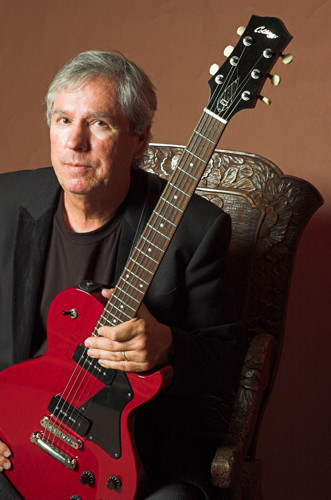
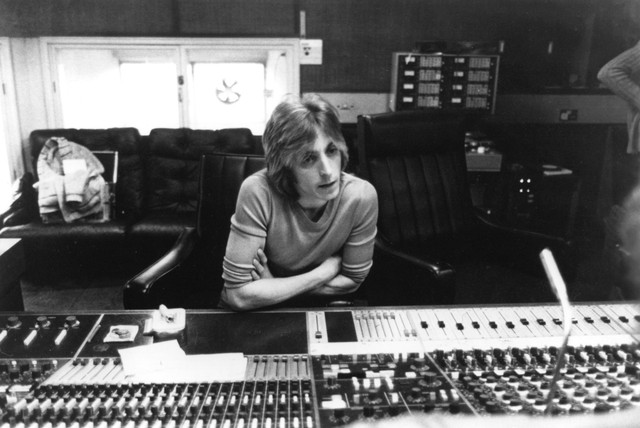
Guitarist, arranger, songwriter, producer, and perennial sideman Mick Ronson made his mark during glam rock's early-'70s heyday but worked consistently with frequent collaborators <a href="spotify:artist:0oSGxfWSnnOXhD2fKuz2Gy">David Bowie</a> and <a href="spotify:artist:1Ov9t7KbQF0oz9B4JsMfV2">Ian Hunter</a> until his death in 1993. From 1967-1968 he played with a hometown garage rock group, the Rats, in Hull. In 1969, he was discovered by fledgling folksinger and producer <a href="spotify:artist:5slSOLb4CcoPOgptg4tsxo">Mike Chapman</a>, who asked him to join his recording band. From there he went on to collaborate with <a href="spotify:artist:0oSGxfWSnnOXhD2fKuz2Gy">Bowie</a>, beginning with Space Oddity in 1969 and lasting through 1973's Pin-Ups. He arranged "Changes," among other songs on Hunky Dory (1972), and was <a href="spotify:artist:0oSGxfWSnnOXhD2fKuz2Gy">Bowie</a>'s flamboyant guitarist in <a href="spotify:artist:6np1kzep4TkKxsH7Afzuk0">the Spiders from Mars</a> during the Rise and Fall of Ziggy Stardust (1972) album and tours. It has remained a mystery as to how much of <a href="spotify:artist:0oSGxfWSnnOXhD2fKuz2Gy">Bowie</a>'s material Ronson wrote in exchange for "arrangement" credits, but his stamp is on some important records of the era: he co-produced <a href="spotify:artist:42TFhl7WlMRXiNqzSrnzPL">Lou Reed</a>'s Transformer (<a href="spotify:search:label%3A%22RCA%22">RCA</a>, 1972) with <a href="spotify:artist:0oSGxfWSnnOXhD2fKuz2Gy">Bowie</a> and briefly joined <a href="spotify:artist:6ysQi6NI88X627t2srsWz6">Mott the Hoople</a> after working as an arranger on All the Young Dudes (1972). As glam rock faded, Ronson continued to work with <a href="spotify:artist:4kz8Ax2USW4Xae9WSQHVec">Hunter</a> in the Hunter Ronson Band, and as a songwriter, guitarist, and producer on <a href="spotify:artist:4kz8Ax2USW4Xae9WSQHVec">Hunter</a>'s solo work.
He recorded two solo albums for <a href="spotify:search:label%3A%22Main+Man%22">Main Man</a>, Slaughter on 10th Avenue (1974) and Play Don't Worry (1975). His identifiable wah-wah sound straddled genres outside his beloved glam and hard rock, from Bob Dylan's Rolling Thunder Revue to <a href="spotify:artist:3iTsJGG39nMg9YiolUgLMQ">Morrissey</a>'s Your Arsenal (1992). Ronson consistently worked with divergent artists -- from <a href="spotify:artist:3ExrAwcOqgGjt9kFRwdM76">Roger McGuinn</a> and <a href="spotify:artist:7qZdnGoW781UFYTcMpDilR">David Johansen</a> to <a href="spotify:artist:3lPQ2Fk5JOwGWAF3ORFCqH">John Mellencamp</a> ("Jack and Diane"). He and <a href="spotify:artist:4kz8Ax2USW4Xae9WSQHVec">Hunter</a> recorded YUI Orta in 1989 for <a href="spotify:search:label%3A%22Mercury%22">Mercury</a>, and in 1990 Ronson was diagnosed with cancer. He was reunited with <a href="spotify:artist:0oSGxfWSnnOXhD2fKuz2Gy">Bowie</a> for Black Tie White Noise (1993) and that same year appeared at a <a href="spotify:artist:4M1FpEWs2PeYfJe7xxJfhH">Freddie Mercury</a> tribute concert with <a href="spotify:artist:4kz8Ax2USW4Xae9WSQHVec">Hunter</a> and <a href="spotify:artist:0oSGxfWSnnOXhD2fKuz2Gy">Bowie</a>. He made one final record with some help from his friends <a href="spotify:artist:4kz8Ax2USW4Xae9WSQHVec">Hunter</a>, <a href="spotify:artist:0oSGxfWSnnOXhD2fKuz2Gy">Bowie</a>, <a href="spotify:artist:2ozLlEZTdSV3pjHgWwZMsi">Chrissie Hynde</a>, and <a href="spotify:artist:3lPQ2Fk5JOwGWAF3ORFCqH">Mellencamp</a>, Heaven 'n Hull (<a href="spotify:search:label%3A%22Epic%22">Epic</a>), which was released posthumously in 1994. Just Like This, a two-disc collection of unreleased material, followed in 1999, and Showtime, a collection of live material, arrived the next year. ~ Denise Sullivan, Rovi
He recorded two solo albums for <a href="spotify:search:label%3A%22Main+Man%22">Main Man</a>, Slaughter on 10th Avenue (1974) and Play Don't Worry (1975). His identifiable wah-wah sound straddled genres outside his beloved glam and hard rock, from Bob Dylan's Rolling Thunder Revue to <a href="spotify:artist:3iTsJGG39nMg9YiolUgLMQ">Morrissey</a>'s Your Arsenal (1992). Ronson consistently worked with divergent artists -- from <a href="spotify:artist:3ExrAwcOqgGjt9kFRwdM76">Roger McGuinn</a> and <a href="spotify:artist:7qZdnGoW781UFYTcMpDilR">David Johansen</a> to <a href="spotify:artist:3lPQ2Fk5JOwGWAF3ORFCqH">John Mellencamp</a> ("Jack and Diane"). He and <a href="spotify:artist:4kz8Ax2USW4Xae9WSQHVec">Hunter</a> recorded YUI Orta in 1989 for <a href="spotify:search:label%3A%22Mercury%22">Mercury</a>, and in 1990 Ronson was diagnosed with cancer. He was reunited with <a href="spotify:artist:0oSGxfWSnnOXhD2fKuz2Gy">Bowie</a> for Black Tie White Noise (1993) and that same year appeared at a <a href="spotify:artist:4M1FpEWs2PeYfJe7xxJfhH">Freddie Mercury</a> tribute concert with <a href="spotify:artist:4kz8Ax2USW4Xae9WSQHVec">Hunter</a> and <a href="spotify:artist:0oSGxfWSnnOXhD2fKuz2Gy">Bowie</a>. He made one final record with some help from his friends <a href="spotify:artist:4kz8Ax2USW4Xae9WSQHVec">Hunter</a>, <a href="spotify:artist:0oSGxfWSnnOXhD2fKuz2Gy">Bowie</a>, <a href="spotify:artist:2ozLlEZTdSV3pjHgWwZMsi">Chrissie Hynde</a>, and <a href="spotify:artist:3lPQ2Fk5JOwGWAF3ORFCqH">Mellencamp</a>, Heaven 'n Hull (<a href="spotify:search:label%3A%22Epic%22">Epic</a>), which was released posthumously in 1994. Just Like This, a two-disc collection of unreleased material, followed in 1999, and Showtime, a collection of live material, arrived the next year. ~ Denise Sullivan, Rovi
Monthly Listeners
17,742
Monthly Listeners History
Track the evolution of monthly listeners over the last 28 days.
Followers
36,948
Followers History
Track the evolution of followers over the last 28 days.
Top Cities
619 listeners

295 listeners

239 listeners

235 listeners
208 listeners
Related Artists
Family


Heavy Metal Kids
Vinegar Joe