Data may be outdated
Last updated: 9 months ago — Click refresh to get the latest statistics.
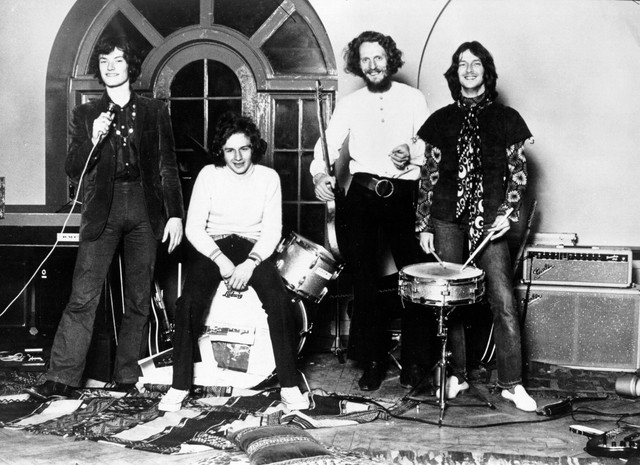
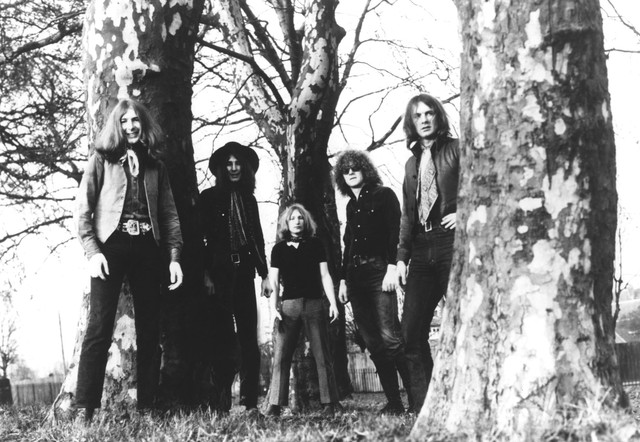
Mott the Hoople were one of the great also-rans in the history of rock & roll. Though Mott scored a number of album rock hits in the early '70s, the band never quite broke through into the mainstream. Nevertheless, their nasty fusion of heavy metal, glam rock, and <a href="spotify:artist:74ASZWbe4lXaubB36ztrGX">Bob Dylan</a>'s sneering hipster cynicism provided the groundwork for many British punk bands, most notably <a href="spotify:artist:3RGLhK1IP9jnYFH4BRFJBS">the Clash</a>. At the center of Mott the Hoople was lead vocalist/pianist <a href="spotify:artist:1Ov9t7KbQF0oz9B4JsMfV2">Ian Hunter</a>, a late addition to the band who developed into its focal point as his songwriting acumen grew. <a href="spotify:artist:1Ov9t7KbQF0oz9B4JsMfV2">Hunter</a> was able to subvert rock & roll conventions with his lyrics, and the band -- led by guitarist <a href="spotify:artist:0ImSWynVXHcxCrWffjZ278">Mick Ralphs</a> -- had a tough, muscular sound that kept the group firmly in hard rock territory, even when flirting with homosexual imagery and glammy makeup. However, their lack of success meant that they inevitably splintered apart in the '70s, with <a href="spotify:artist:0ImSWynVXHcxCrWffjZ278">Ralphs</a> forming <a href="spotify:artist:5AEG63ajney2BoDXi0Vb84">Bad Company</a> and <a href="spotify:artist:1Ov9t7KbQF0oz9B4JsMfV2">Hunter</a> launching a cult solo career.
<a href="spotify:artist:0ImSWynVXHcxCrWffjZ278">Mick Ralphs</a> (lead guitar, vocal), <a href="spotify:artist:6UIOGJ89ZLRAwM5rWeH4k2">Verden Allen</a> (organ), Overend Pete Watts (bass), and Dale "Buffin" Griffin (drums) formed Silence in 1968 and began playing around their hometown of Hereford, England. Early in 1969, the band added vocalist Stan Tippens and landed a record contract with <a href="spotify:search:label%3A%22Island%22">Island</a> (<a href="spotify:search:label%3A%22Atlantic%22">Atlantic</a> in the U.S.), heading to London to record with producer Guy Stevens, whose first move was to change the band's name to Mott the Hoople, after a Willard Manus novel. By the summer, Tippens was fired, later becoming the band's road manager, and was replaced by <a href="spotify:artist:1Ov9t7KbQF0oz9B4JsMfV2">Ian Hunter</a>. Their eponymous debut album was released in the fall of 1969 and became an underground hit, known for its fusion of Blonde on Blonde-era <a href="spotify:artist:74ASZWbe4lXaubB36ztrGX">Dylan</a> and heavy metal, its straight cover of <a href="spotify:artist:4ui9JwXE5MHylLzpsoiEhr">Sonny Bono</a>'s "Laugh at Me," and its pounding instrumental version of <a href="spotify:artist:1SQRv42e4PjEYfPhS0Tk9E">the Kinks</a>' "You Really Got Me."
Despite all of the attention Mott the Hoople received, it didn't sell well and neither did its poorly reviewed 1970 follow-up, Mad Shadows. The band returned in 1971 with the country-tinged Wildlife, which was its least popular record to date. Despite their lack of sales, Mott the Hoople had gained a cult following in Britain through their constant touring. At a concert at the Royal Albert Hall in July 1971, the band sparked a mini-riot that led the venue to ban rock concerts for a number of years. More than any of their previous releases, Brain Capers (1971) demonstrated the band's live power, but when it failed to sell, the group was prepared to disband.
Just as the band was about to split, <a href="spotify:artist:0oSGxfWSnnOXhD2fKuz2Gy">David Bowie</a> intervened and convinced the group to stay together. Riding at the height of his Ziggy Stardust popularity, <a href="spotify:artist:0oSGxfWSnnOXhD2fKuz2Gy">Bowie</a> agreed to produce Mott's next album and offered "Suffragette City" for the bandmembers to record. They refused the song, asking for "Drive-In Saturday" instead. They eventually settled for "All the Young Dudes," which became the group's breakthrough hit. An explicitly gay anthem recorded by a heterosexual band, "All the Young Dudes" became the anthem for the glam rock era, becoming a number three hit in the U.K. and a Top 40 hit in the U.S. in the summer of 1972. An album of the same name was released on <a href="spotify:search:label%3A%22Columbia+Records%22">Columbia Records</a> in the fall, and it became a hit in the U.K. and the U.S.
<a href="spotify:artist:6UIOGJ89ZLRAwM5rWeH4k2">Allen</a> left the band before the recording of the group's follow-up to All the Young Dudes, citing <a href="spotify:artist:1Ov9t7KbQF0oz9B4JsMfV2">Hunter</a>'s reluctance to record his songs. A concept album about a rock band struggling for success, Mott, released in the summer 1973, expanded the band's success, receiving good reviews and peaking at number seven in Britain and number 35 in America. "All the Way from Memphis" and "Roll Away the Stone" became Top Ten hits in the U.K., confirming the band's status as one of the leaders of the glam rock movement. In the summer of 1974, <a href="spotify:artist:1Ov9t7KbQF0oz9B4JsMfV2">Hunter</a> published Diary of a Rock Star to great acclaim in the U.K.
While the bandmembers were finally experiencing the success that they had desired, the group was beginning to fall apart. Frustrated with <a href="spotify:artist:6UIOGJ89ZLRAwM5rWeH4k2">Allen</a>'s departure, as well as the fact that his song "Can't Get Enough" was out of <a href="spotify:artist:1Ov9t7KbQF0oz9B4JsMfV2">Hunter</a>'s range, <a href="spotify:artist:0ImSWynVXHcxCrWffjZ278">Ralphs</a> left Mott in late 1973 to form <a href="spotify:artist:5AEG63ajney2BoDXi0Vb84">Bad Company</a> with <a href="spotify:artist:2gaWNB3YrlTc0KRlHNqhol">Paul Rodgers</a>. He was replaced by former <a href="spotify:artist:5YE3Wwk5wqQmFXM5qyaM6u">Spooky Tooth</a> guitarist <a href="spotify:artist:31nI4ijI4yXbNC7K2EXYa2">Luther Grosvenor</a>, who changed his name to Ariel Bender upon joining the band; keyboardist <a href="spotify:artist:7zyMwBawm5wNhzlCx1Bopk">Morgan Fisher</a> also joined the group. The new lineup toured in late 1973, and the concerts were documented on 1974's Mott the Hoople Live. The live record was released after The Hoople appeared in the spring, peaking at 11 in the U.K. and 28 in the U.S. on the strength of the singles "The Golden Age of Rock & Roll" and "Foxy Foxy." Former <a href="spotify:artist:0oSGxfWSnnOXhD2fKuz2Gy">Bowie</a> guitarist <a href="spotify:artist:2jzjxYOe3G5aeucbMg0Smp">Mick Ronson</a> replaced Bender in the fall of 1974 upon <a href="spotify:artist:1Ov9t7KbQF0oz9B4JsMfV2">Hunter</a>'s request. Within a few months, <a href="spotify:artist:1Ov9t7KbQF0oz9B4JsMfV2">Hunter</a> and <a href="spotify:artist:2jzjxYOe3G5aeucbMg0Smp">Ronson</a> left the band to begin working as a duo. The remaining members of Mott the Hoople added guitarist Ray Major and vocalist Nigel Benjamin, truncating their name to Mott. The new incarnation of the group released Drive On (1975) and Shouting and Pointing (1976) to little attention before adding <a href="spotify:artist:2lEf12yUZH2S6HlknvNZ0Y">John Fiddler</a> as their lead singer and changing their name to <a href="spotify:artist:79EQ2MmIK2wQakeotwFuNF">British Lions</a>. They split up two years later.
Though the allegiance between <a href="spotify:artist:1Ov9t7KbQF0oz9B4JsMfV2">Ian Hunter</a> and <a href="spotify:artist:2jzjxYOe3G5aeucbMg0Smp">Mick Ronson</a> was short-lived, it was well-received and the two would continue to sporadically work together until <a href="spotify:artist:2jzjxYOe3G5aeucbMg0Smp">Ronson</a>'s death in 1993. <a href="spotify:artist:1Ov9t7KbQF0oz9B4JsMfV2">Hunter</a> pursued a moderately successful solo career, highlighted by his eponymous 1975 album and 1979's You're Never Alone with a Schizophrenic. <a href="spotify:artist:1Ov9t7KbQF0oz9B4JsMfV2">Hunter</a>'s "Ships" was covered by <a href="spotify:artist:3alW3LYQS8K29z8C8NSLIX">Barry Manilow</a> in 1979, while <a href="spotify:artist:6ZPbX2Lxd40e2UVkXpyxvI">Great White</a> took his "Once Bitten, Twice Shy" into the Top Ten in the early '90s. ~ Stephen Thomas Erlewine, Rovi
<a href="spotify:artist:0ImSWynVXHcxCrWffjZ278">Mick Ralphs</a> (lead guitar, vocal), <a href="spotify:artist:6UIOGJ89ZLRAwM5rWeH4k2">Verden Allen</a> (organ), Overend Pete Watts (bass), and Dale "Buffin" Griffin (drums) formed Silence in 1968 and began playing around their hometown of Hereford, England. Early in 1969, the band added vocalist Stan Tippens and landed a record contract with <a href="spotify:search:label%3A%22Island%22">Island</a> (<a href="spotify:search:label%3A%22Atlantic%22">Atlantic</a> in the U.S.), heading to London to record with producer Guy Stevens, whose first move was to change the band's name to Mott the Hoople, after a Willard Manus novel. By the summer, Tippens was fired, later becoming the band's road manager, and was replaced by <a href="spotify:artist:1Ov9t7KbQF0oz9B4JsMfV2">Ian Hunter</a>. Their eponymous debut album was released in the fall of 1969 and became an underground hit, known for its fusion of Blonde on Blonde-era <a href="spotify:artist:74ASZWbe4lXaubB36ztrGX">Dylan</a> and heavy metal, its straight cover of <a href="spotify:artist:4ui9JwXE5MHylLzpsoiEhr">Sonny Bono</a>'s "Laugh at Me," and its pounding instrumental version of <a href="spotify:artist:1SQRv42e4PjEYfPhS0Tk9E">the Kinks</a>' "You Really Got Me."
Despite all of the attention Mott the Hoople received, it didn't sell well and neither did its poorly reviewed 1970 follow-up, Mad Shadows. The band returned in 1971 with the country-tinged Wildlife, which was its least popular record to date. Despite their lack of sales, Mott the Hoople had gained a cult following in Britain through their constant touring. At a concert at the Royal Albert Hall in July 1971, the band sparked a mini-riot that led the venue to ban rock concerts for a number of years. More than any of their previous releases, Brain Capers (1971) demonstrated the band's live power, but when it failed to sell, the group was prepared to disband.
Just as the band was about to split, <a href="spotify:artist:0oSGxfWSnnOXhD2fKuz2Gy">David Bowie</a> intervened and convinced the group to stay together. Riding at the height of his Ziggy Stardust popularity, <a href="spotify:artist:0oSGxfWSnnOXhD2fKuz2Gy">Bowie</a> agreed to produce Mott's next album and offered "Suffragette City" for the bandmembers to record. They refused the song, asking for "Drive-In Saturday" instead. They eventually settled for "All the Young Dudes," which became the group's breakthrough hit. An explicitly gay anthem recorded by a heterosexual band, "All the Young Dudes" became the anthem for the glam rock era, becoming a number three hit in the U.K. and a Top 40 hit in the U.S. in the summer of 1972. An album of the same name was released on <a href="spotify:search:label%3A%22Columbia+Records%22">Columbia Records</a> in the fall, and it became a hit in the U.K. and the U.S.
<a href="spotify:artist:6UIOGJ89ZLRAwM5rWeH4k2">Allen</a> left the band before the recording of the group's follow-up to All the Young Dudes, citing <a href="spotify:artist:1Ov9t7KbQF0oz9B4JsMfV2">Hunter</a>'s reluctance to record his songs. A concept album about a rock band struggling for success, Mott, released in the summer 1973, expanded the band's success, receiving good reviews and peaking at number seven in Britain and number 35 in America. "All the Way from Memphis" and "Roll Away the Stone" became Top Ten hits in the U.K., confirming the band's status as one of the leaders of the glam rock movement. In the summer of 1974, <a href="spotify:artist:1Ov9t7KbQF0oz9B4JsMfV2">Hunter</a> published Diary of a Rock Star to great acclaim in the U.K.
While the bandmembers were finally experiencing the success that they had desired, the group was beginning to fall apart. Frustrated with <a href="spotify:artist:6UIOGJ89ZLRAwM5rWeH4k2">Allen</a>'s departure, as well as the fact that his song "Can't Get Enough" was out of <a href="spotify:artist:1Ov9t7KbQF0oz9B4JsMfV2">Hunter</a>'s range, <a href="spotify:artist:0ImSWynVXHcxCrWffjZ278">Ralphs</a> left Mott in late 1973 to form <a href="spotify:artist:5AEG63ajney2BoDXi0Vb84">Bad Company</a> with <a href="spotify:artist:2gaWNB3YrlTc0KRlHNqhol">Paul Rodgers</a>. He was replaced by former <a href="spotify:artist:5YE3Wwk5wqQmFXM5qyaM6u">Spooky Tooth</a> guitarist <a href="spotify:artist:31nI4ijI4yXbNC7K2EXYa2">Luther Grosvenor</a>, who changed his name to Ariel Bender upon joining the band; keyboardist <a href="spotify:artist:7zyMwBawm5wNhzlCx1Bopk">Morgan Fisher</a> also joined the group. The new lineup toured in late 1973, and the concerts were documented on 1974's Mott the Hoople Live. The live record was released after The Hoople appeared in the spring, peaking at 11 in the U.K. and 28 in the U.S. on the strength of the singles "The Golden Age of Rock & Roll" and "Foxy Foxy." Former <a href="spotify:artist:0oSGxfWSnnOXhD2fKuz2Gy">Bowie</a> guitarist <a href="spotify:artist:2jzjxYOe3G5aeucbMg0Smp">Mick Ronson</a> replaced Bender in the fall of 1974 upon <a href="spotify:artist:1Ov9t7KbQF0oz9B4JsMfV2">Hunter</a>'s request. Within a few months, <a href="spotify:artist:1Ov9t7KbQF0oz9B4JsMfV2">Hunter</a> and <a href="spotify:artist:2jzjxYOe3G5aeucbMg0Smp">Ronson</a> left the band to begin working as a duo. The remaining members of Mott the Hoople added guitarist Ray Major and vocalist Nigel Benjamin, truncating their name to Mott. The new incarnation of the group released Drive On (1975) and Shouting and Pointing (1976) to little attention before adding <a href="spotify:artist:2lEf12yUZH2S6HlknvNZ0Y">John Fiddler</a> as their lead singer and changing their name to <a href="spotify:artist:79EQ2MmIK2wQakeotwFuNF">British Lions</a>. They split up two years later.
Though the allegiance between <a href="spotify:artist:1Ov9t7KbQF0oz9B4JsMfV2">Ian Hunter</a> and <a href="spotify:artist:2jzjxYOe3G5aeucbMg0Smp">Mick Ronson</a> was short-lived, it was well-received and the two would continue to sporadically work together until <a href="spotify:artist:2jzjxYOe3G5aeucbMg0Smp">Ronson</a>'s death in 1993. <a href="spotify:artist:1Ov9t7KbQF0oz9B4JsMfV2">Hunter</a> pursued a moderately successful solo career, highlighted by his eponymous 1975 album and 1979's You're Never Alone with a Schizophrenic. <a href="spotify:artist:1Ov9t7KbQF0oz9B4JsMfV2">Hunter</a>'s "Ships" was covered by <a href="spotify:artist:3alW3LYQS8K29z8C8NSLIX">Barry Manilow</a> in 1979, while <a href="spotify:artist:6ZPbX2Lxd40e2UVkXpyxvI">Great White</a> took his "Once Bitten, Twice Shy" into the Top Ten in the early '90s. ~ Stephen Thomas Erlewine, Rovi
Monthly Listeners
453,482
Monthly Listeners History
Track the evolution of monthly listeners over the last 28 days.
Followers
253,950
Followers History
Track the evolution of followers over the last 28 days.
Top Cities
16,504 listeners

5,658 listeners

5,429 listeners
5,008 listeners
4,143 listeners

Related Artists
Donovan
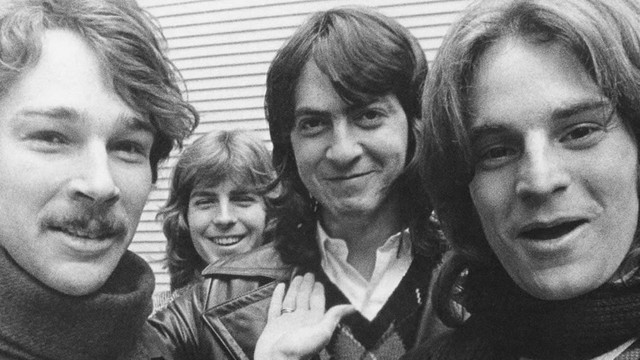
Big Star
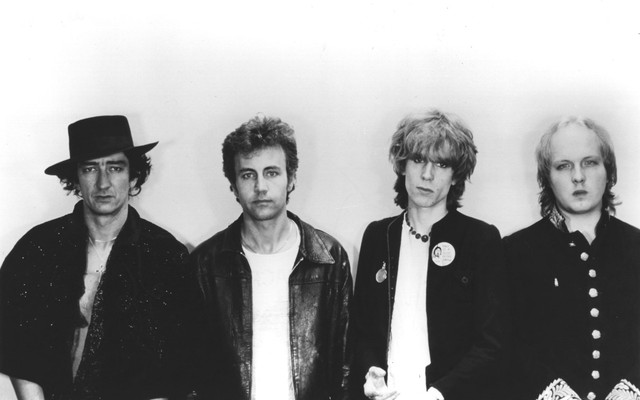
The Modern Lovers