Data may be outdated
Last updated: 9 months ago — Click refresh to get the latest statistics.
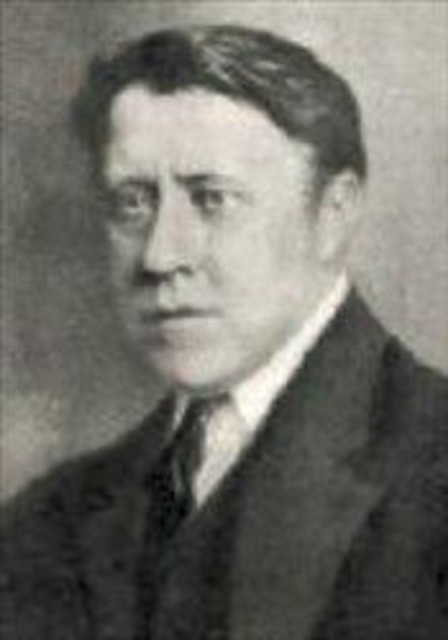
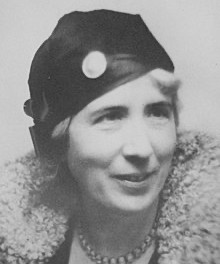
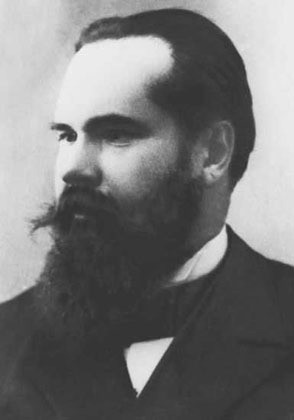
Jean Cras was a gifted composer largely known for his chamber works and opera Polyphème (1912-1918). He might well have achieved greater fame had he not maintained a highly successful lifelong career in the French navy. Indeed, Cras reached the rank of rear-admiral and was decorated several times in World War I, achieving particular distinction for his valor in the Adriatic campaign. Musically, he typically garnered far less notice. For one thing, his education was modest, though ultimately adequate: he received no formal advanced training in composition, though he studied privately with <a href="spotify:artist:3ceP0vCQkBmSKTvF6CsuOw">Henri Duparc</a>, who would become a lifelong friend and mentor. Cras remained a relatively obscure figure on the musical scene in France except for the final decade or so of his life. Stylistically, Cras was an Impressionist, but a freewheeling one, investing his music with occasional exotic influences inspired by his naval travels, and with Celtic and sacred elements. His later works divulged a more caustic expressive language, but without ever reaching much beyond the style of <a href="spotify:artist:5zyNXVd952fWOjkdGHCvPd">Bartók</a>. Cras was versatile, turning out works in most genres, including opera, orchestral, chamber, choral, and song.
Jean Cras was born into a musical family in Brest, France, on May 22, 1879. His father was a brilliant naval surgeon whose example led young Jean in 1896 to enroll at the naval academy. In 1900 he relocated to Paris where he studied for three months with his newfound friend <a href="spotify:artist:3ceP0vCQkBmSKTvF6CsuOw">Henri Duparc</a>.
Prior to World War I Cras was productive particularly in the realms of chamber, choral, and solo piano music. In 1921 Polyphème, not yet officially premiered, received first prize in the Concours musical de la Ville de Paris. It was premiered the following year by the Opéra-Comique in Paris with great success, and thereafter Cras was a much-in-demand composer in France. Cras now began turning more often to larger forms, as with the 1927 orchestral suite Journal de bord and the stage work Trois Noëls (1929), for vocal soloists, actors, chorus, piano, and orchestra. Cras' brilliant pianist daughter, Collette (wife of Polish émigré composer <a href="spotify:artist:07qMnUOUaZr6mRZitsANgW">Alexandre Tansman</a>), premiered Cras' 1931 Piano Concerto with great success. After his death in 1932 Cras was widely eulogized in France as one of the leading figures in French music. But his fame quickly evaporated and he was largely forgotten until the last decade or so of the 20th century.
Jean Cras was born into a musical family in Brest, France, on May 22, 1879. His father was a brilliant naval surgeon whose example led young Jean in 1896 to enroll at the naval academy. In 1900 he relocated to Paris where he studied for three months with his newfound friend <a href="spotify:artist:3ceP0vCQkBmSKTvF6CsuOw">Henri Duparc</a>.
Prior to World War I Cras was productive particularly in the realms of chamber, choral, and solo piano music. In 1921 Polyphème, not yet officially premiered, received first prize in the Concours musical de la Ville de Paris. It was premiered the following year by the Opéra-Comique in Paris with great success, and thereafter Cras was a much-in-demand composer in France. Cras now began turning more often to larger forms, as with the 1927 orchestral suite Journal de bord and the stage work Trois Noëls (1929), for vocal soloists, actors, chorus, piano, and orchestra. Cras' brilliant pianist daughter, Collette (wife of Polish émigré composer <a href="spotify:artist:07qMnUOUaZr6mRZitsANgW">Alexandre Tansman</a>), premiered Cras' 1931 Piano Concerto with great success. After his death in 1932 Cras was widely eulogized in France as one of the leading figures in French music. But his fame quickly evaporated and he was largely forgotten until the last decade or so of the 20th century.
Monthly Listeners
2,092
Monthly Listeners History
Track the evolution of monthly listeners over the last 28 days.
Followers
1,517
Followers History
Track the evolution of followers over the last 28 days.
Top Cities
40 listeners

35 listeners

24 listeners

19 listeners

18 listeners
Related Artists
Joseph Jongen



Yan Levionnois
Oxalys
Madeleine Dring

Mobius

Jean-Michel Damase
Simon Callaghan

Louis Durey

Jean Absil
Nieuw Sinfonietta Amsterdam
Frédéric Chatoux

Gabriel Dupont


Jacques de la Presle

Alexander Veprik

James Campbell

Christian Ellenwood
Helen Leach

Karol Beffa

André Caplet
Matthew Schellhorn