Artist
Vincent d'Indy
Data may be outdated
Last updated: 8 months ago — Click refresh to get the latest statistics.
Vincent d'Indy, the son of a French nobleman, was one of the leading figures in Parisian musical society during the closing years of the nineteenth century. His compositions, though not achieving lasting popularity, were characterized by their complexity and religious content. He composed in a variety of genres, including orchestral, chamber, piano, vocal, and opera. His legacy, however, rests also on his activities as an author and a teacher. He wrote two biographies, a book on his experiences in the Franco-Prussian War, numerous essays, and criticisms. His influence as a teacher can be heard in the works of many of his students, particularly those composers of opera, such as <a href="spotify:artist:1aTkvsOKP1Ips9nZQGFdNw">Madetoja</a> and Roussel. D'Indy was an uncompromising classicist until his death, a position that frequently brought conflict with contemporary composers of the period.
D'Indy's strong beliefs and tendency toward narrow-mindedness stem from his childhood under his paternal grandmother's care, his own mother having died in childbirth. He was frequently described "as stubborn to the point of fanaticism." His religious beliefs ran deep, as did his anti-Semitism.
He was considered a child prodigy, but did not begin formal music lessons until his early teenage years. He began piano lessons in 1864 from Diemer and, in 1865, began instruction in harmony, counterpoint, and orchestration from Levignac. In 1872, d'Indy began studying in private with his most influential teacher, <a href="spotify:artist:1C3sffOOvQNUwg4YIsvKqy">César Franck</a>. He later audited Franck's organ class at the Paris Conservatory and subsequently became a registered student there. Vincent d'Indy would go on to be one of Franck's most ardent followers, champion, and biographer. His musical education was further developed through playing percussion and keyboard and through conducting.
Franck was the composer with the greatest influence on d'Indy, but others, Wagner in particular, also influenced the young composer. D'Indy attended the premiere of <a href="spotify:artist:1C1x4MVkql8AiABuTw6DgE">Wagner</a>'s Bayreuth theater in the summer of 1876 and the second Bayreuth festival in 1882, for the premiere of <a href="spotify:artist:1C1x4MVkql8AiABuTw6DgE">Wagner</a>'s Parsifal. D'Indy also became acquainted with <a href="spotify:artist:1385hLNbrnbCJGokfH2ac2">Liszt</a> and <a href="spotify:artist:5wTAi7QkpP6kp8a54lmTOq">Brahms</a>. D'Indy was a great admirer of Beethoven; so much so that he wrote a biography of the composer that was published in 1911.
D'Indy began composing in the late 1860s and had his first work published in 1870. He began his first grand opera, Les burgraves in 1869, but never finished it. His orchestral trilogy, Wallenstein premiered in 1880 under his direction. He won the Prix de Paris in 1884 with the cantata Le chant de la cloche. Symphonie sur un theme montagnard français (1886) is his only work to survive obscurity. D'Indy composed six operas, of which Fervaal (1895), sometimes referred to as the French Parsifal, was the most successful. Most of the librettos for his operas were written by d'Indy himself.
Teaching occupied a great deal of d'Indy's time. In 1894, along with Bordes and <a href="spotify:artist:6emD64QGKpOHsYaiPuhWf1">Guilmant</a>, he founded the Schola Cantorum. Its original function as a society promoting performance of sacred music evolved into a school for the study and preservation of church music and French folk music. He taught composition at the school beginning in 1897, which resulted in his writings on composition Traite de composition (Paris, 1903-1933). From 1912 to 1929, d'Indy taught orchestration and conducting at the Paris Conservatory.
D'Indy ultimately became the victim of his conservatism and his inability to accept contemporary trends in music that were so prevalent in France during the latter nineteenth and early twentieth centuries. The modernists prevailed and his music was forced out of favor. D'Indy, however, remained true to his artistic ideals until his death.
D'Indy's strong beliefs and tendency toward narrow-mindedness stem from his childhood under his paternal grandmother's care, his own mother having died in childbirth. He was frequently described "as stubborn to the point of fanaticism." His religious beliefs ran deep, as did his anti-Semitism.
He was considered a child prodigy, but did not begin formal music lessons until his early teenage years. He began piano lessons in 1864 from Diemer and, in 1865, began instruction in harmony, counterpoint, and orchestration from Levignac. In 1872, d'Indy began studying in private with his most influential teacher, <a href="spotify:artist:1C3sffOOvQNUwg4YIsvKqy">César Franck</a>. He later audited Franck's organ class at the Paris Conservatory and subsequently became a registered student there. Vincent d'Indy would go on to be one of Franck's most ardent followers, champion, and biographer. His musical education was further developed through playing percussion and keyboard and through conducting.
Franck was the composer with the greatest influence on d'Indy, but others, Wagner in particular, also influenced the young composer. D'Indy attended the premiere of <a href="spotify:artist:1C1x4MVkql8AiABuTw6DgE">Wagner</a>'s Bayreuth theater in the summer of 1876 and the second Bayreuth festival in 1882, for the premiere of <a href="spotify:artist:1C1x4MVkql8AiABuTw6DgE">Wagner</a>'s Parsifal. D'Indy also became acquainted with <a href="spotify:artist:1385hLNbrnbCJGokfH2ac2">Liszt</a> and <a href="spotify:artist:5wTAi7QkpP6kp8a54lmTOq">Brahms</a>. D'Indy was a great admirer of Beethoven; so much so that he wrote a biography of the composer that was published in 1911.
D'Indy began composing in the late 1860s and had his first work published in 1870. He began his first grand opera, Les burgraves in 1869, but never finished it. His orchestral trilogy, Wallenstein premiered in 1880 under his direction. He won the Prix de Paris in 1884 with the cantata Le chant de la cloche. Symphonie sur un theme montagnard français (1886) is his only work to survive obscurity. D'Indy composed six operas, of which Fervaal (1895), sometimes referred to as the French Parsifal, was the most successful. Most of the librettos for his operas were written by d'Indy himself.
Teaching occupied a great deal of d'Indy's time. In 1894, along with Bordes and <a href="spotify:artist:6emD64QGKpOHsYaiPuhWf1">Guilmant</a>, he founded the Schola Cantorum. Its original function as a society promoting performance of sacred music evolved into a school for the study and preservation of church music and French folk music. He taught composition at the school beginning in 1897, which resulted in his writings on composition Traite de composition (Paris, 1903-1933). From 1912 to 1929, d'Indy taught orchestration and conducting at the Paris Conservatory.
D'Indy ultimately became the victim of his conservatism and his inability to accept contemporary trends in music that were so prevalent in France during the latter nineteenth and early twentieth centuries. The modernists prevailed and his music was forced out of favor. D'Indy, however, remained true to his artistic ideals until his death.
Monthly Listeners
6,287
Monthly Listeners History
Track the evolution of monthly listeners over the last 28 days.
Followers
2,731
Followers History
Track the evolution of followers over the last 28 days.
Top Cities
95 listeners

61 listeners

60 listeners

58 listeners

57 listeners

Related Artists
Christopher Ward

Jurgen Bruns
Joachim Raff
Simon Callaghan
Joseph Jongen
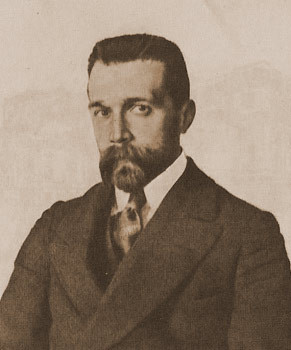
Nikolai Myaskovsky

Arthur Foote
Granville Bantock
Vitezslava Kaprálová


Einar Englund




Wu Han
Karl Weigl
Rafael Rodriguez Albert

Elfrida Andrée
Mieczysław Karłowicz

Julius Röntgen

Rome Symphony Orchestra
Hans Rott