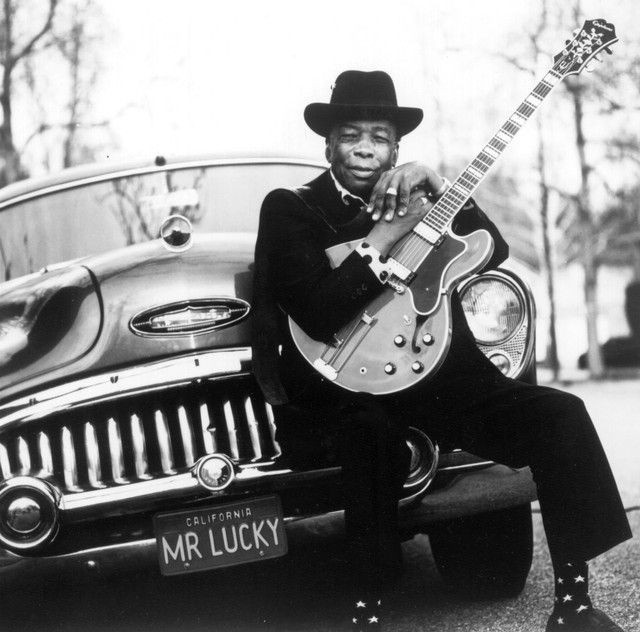
Artist
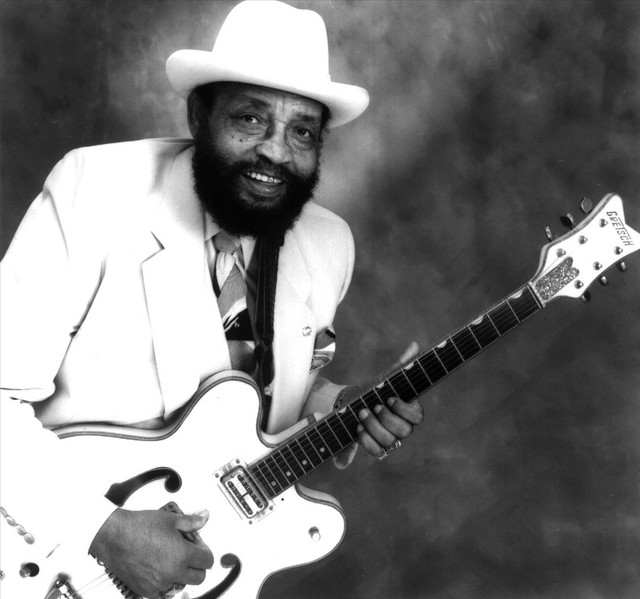
John Lee Hooker
Data may be outdated
Last updated: 1 month ago — Click refresh to get the latest statistics.
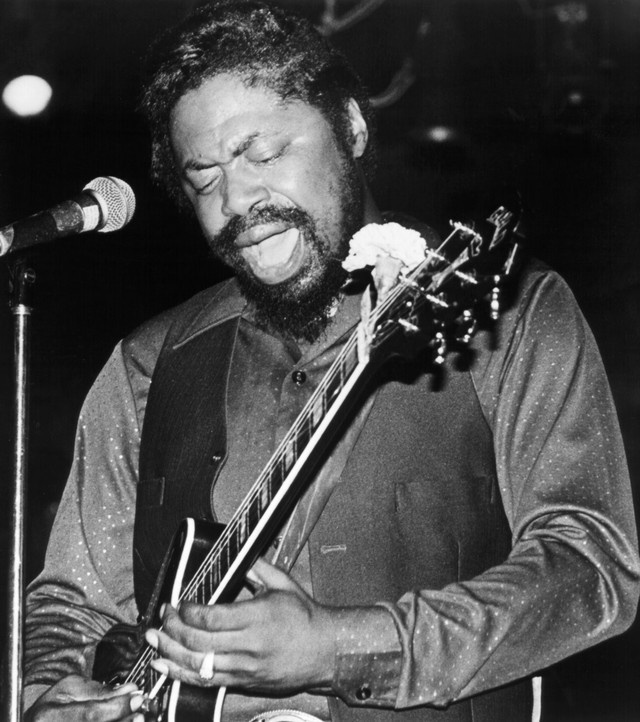
Hooker was born in Tutwiler, Mississippi in 1912. He was the youngest of 11 children born to Minnie Ramsey and husband William Hooker, a sharecropper and Baptist preacher. The children were all homeschooled and only permitted to listen to religious songs sung in church. In 1921, Hooker's parents separated. The following year, Minnie married Will Moore, a blues singer, who provided John Lee with an introduction to the guitar during his teens (and whom the great bluesman would later credit for the roots of his distinctive playing style). Some of Moore's blues peers, including <a href="spotify:artist:6EsuMifB8c5rm5P2DdjiLe">Blind Lemon Jefferson</a>, <a href="spotify:artist:7aExFIr0IHWO5aFjMrGwKw">Charley Patton</a>, and <a href="spotify:artist:49KZvkEWchga5D1uhNo1yd">Blind Blake</a> passed through and were house guests during their travels. These musicians influenced Hooker profoundly.
Hooker heard Memphis calling during his late teens. He moved there but couldn't gain much of a foothold on its blues scene. He relocated to Cincinnati for seven years before making the big move to Detroit, the Motor City, in 1942. Jobs were plentiful, but Hooker drifted away from day gigs in favor of playing his unique free-form brand of blues in bars. A burgeoning club scene along Hastings Street didn't hurt his chances any. Hooker became the house talent at hot spot Henry's Swing Club.
In 1948, the aspiring bluesman hooked up with entrepreneur <a href="spotify:artist:09Uy5usg0bKug2JkWKQqb0">Bernie Besman</a>, who helped him hammer out his solo debut sides, "Sally Mae" and its seminal flip, "Boogie Chillen." This was blues as primitive as anything then on the market; Hooker's dark, ruminative vocals were backed only by his own ringing, heavily amplified guitar and insistently pounding foot. Their efforts were quickly rewarded. Los Angeles-based <a href="spotify:search:label%3A%22Modern+Records%22">Modern Records</a> issued the sides and "Boogie Chillen" -- a colorful, unique travelog of Detroit's blues scene -- made an improbable jaunt to the very peak of the R&B charts.
<a href="spotify:search:label%3A%22Modern%22">Modern</a> subsequently released several more hits by Hooker including "Hobo Blues" b/w the raw "Hoogie Boogie" and "Crawling King Snake Blues." (All three were hits in 1949.) The unusual 1951 chart-topper "I'm in the Mood" found Hooker overdubbing his voice in an early attempt at multitracking.
Hooker never, ever let something as meaningless as a contract stop him for making recordings for other labels. His early catalog is stretched across a road map of companies so complex that it's nearly impossible to fully comprehend (a vast array of recording aliases doesn't make things any easier).
Along with <a href="spotify:search:label%3A%22Modern%22">Modern</a>, Hooker recorded for <a href="spotify:search:label%3A%22King%22">King</a> (as the geographically challenged <a href="spotify:artist:5VQhMvwJ2irNAJklgwpgOg">Texas Slim</a>), Regent (as Delta John, a far more accurate handle), <a href="spotify:search:label%3A%22Savoy%22">Savoy</a> (as the wonderfully surreal Birmingham Sam & His Magic Guitar), Danceland (as the downright delicious Little Pork Chops), Staff (as Johnny Williams), Sensation (for whom he scored a national hit in 1950 with "Huckle Up, Baby"), Gotham, Regal, <a href="spotify:search:label%3A%22Swing+Time%22">Swing Time</a>, <a href="spotify:search:label%3A%22Federal%22">Federal</a>, <a href="spotify:search:label%3A%22Gone%22">Gone</a> (as John Lee Booker), <a href="spotify:search:label%3A%22Chess%22">Chess</a>, <a href="spotify:search:label%3A%22Acorn%22">Acorn</a> (as the Boogie Man), Chance, DeLuxe (as <a href="spotify:artist:45rAZqRt5nUUMatQzk8qJu">Johnny Lee</a>), <a href="spotify:search:label%3A%22JVB%22">JVB</a>, Chart, and <a href="spotify:search:label%3A%22Specialty%22">Specialty</a> before finally settling down at <a href="spotify:search:label%3A%22Vee-Jay%22">Vee-Jay</a> in 1955 under his own name. Hooker became the point man for the growing Detroit blues scene during this incredibly prolific period, recruiting guitarist <a href="spotify:artist:5Cn9yGZ6iFTYN0bGwiP5PD">Eddie Kirkland</a> as his frequent duet partner while still recording for <a href="spotify:search:label%3A%22Modern%22">Modern</a>.
Once tied in with <a href="spotify:search:label%3A%22Vee-Jay%22">Vee-Jay</a>, the rough-and-tumble sound of Hooker's solo and duet waxings was adapted to a band format. Hooker had recorded with various combos before, but never with sidemen as versatile and sympathetic as guitarist <a href="spotify:artist:0jr3aWcRKkO3LqX09eWbot">Eddie Taylor</a> and harpist <a href="spotify:artist:41ZMMuFFLPTVPkUsSI5KlV">Jimmy Reed</a>, who backed him at his initial <a href="spotify:search:label%3A%22Vee-Jay%22">Vee-Jay</a> date that produced "Time Is Marching" and the superfluous sequel "Mambo Chillun."
<a href="spotify:artist:0jr3aWcRKkO3LqX09eWbot">Taylor</a> stuck around for a 1956 session that elicited two genuine Hooker classics, "Baby Lee" and "Dimples," and he was still deftly anchoring the rhythm section (Hooker's sense of timing was his and his alone, demanding big-eared sidemen) when the Boogie Man finally made it back to the R&B charts in 1958 with "I Love You Honey."
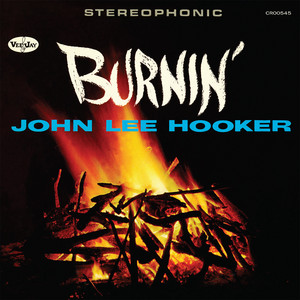
<a href="spotify:search:label%3A%22Vee-Jay%22">Vee-Jay</a> presented Hooker in many settings during the early '60s. His grinding, tough blues "No Shoes" proved a surprisingly sizable hit in 1960, while the storming "Boom Boom," from the album Burnin', was his top seller for the firm in 1962 (it even cracked the pop airwaves). An infectious R&B dance number, it benefited from the backing studio presence of <a href="spotify:search:label%3A%22Motown%22">Motown</a>'s first generation of <a href="spotify:artist:6R2mI9O7lWJxf5wvAmaRZy">the Funk Brothers</a>. But there were also acoustic outings aimed squarely at the blossoming folk-blues crowd, as well as some attempts at up-to-date R&B that featured highly intrusive female background vocals (allegedly by the Vandellas) and utterly unyielding structures that hemmed Hooker in unmercifully.
British blues bands such as <a href="spotify:artist:3ICflSq6ZgYAIrm2CTkfVP">the Animals</a> and <a href="spotify:artist:2lxX1ivRYp26soIavdG9bX">Yardbirds</a> idolized Hooker during the early '60s; <a href="spotify:artist:3miNucraVWk4hdVsIxn7id">Eric Burdon</a>'s boys cut a credible 1964 cover of "Boom Boom" that outsold Hooker's original on the American pop charts. Hooker visited Europe in 1962 under the auspices of the first American Folk Blues Festival, leaving behind the popular waxings "Let's Make It" and "Shake It Baby" for foreign consumption.
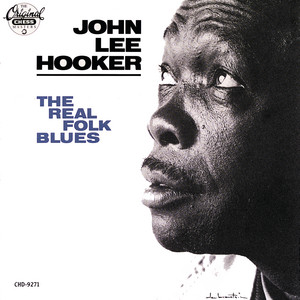
Back home, Hooker cranked out gems for <a href="spotify:search:label%3A%22Vee-Jay%22">Vee-Jay</a> through 1964 ("Big Legs, Tight Skirt," one of his last offerings for the label, was also one of his best), before undergoing another extended round of label-hopping (except this time, he was recording whole LPs instead of scattered 78s). In 1965 and 1966, several labels contracted recordings from Hooker including <a href="spotify:search:label%3A%22Verve-Folkways%22">Verve-Folkways</a> (... And Seven Nights), <a href="spotify:search:label%3A%22Impulse%21%22">Impulse!</a> (It Serve You Right to Suffer), <a href="spotify:search:label%3A%22Chess%22">Chess</a> (The Real Folk Blues), and <a href="spotify:search:label%3A%22Bluesway%22">Bluesway</a> (Urban Blues). His reputation among hip rock cognoscenti in the United States and abroad was growing too -- especially after he teamed up with blues-rockers <a href="spotify:artist:27a0GiCba9K9lnkKidroFU">Canned Heat</a> for the popular Hooker 'n Heat album in 1970.
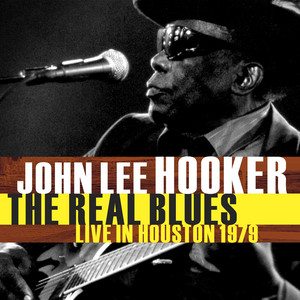
Eventually, though, the endless boogie formula grew stagnant. Much of Hooker's '70s output found him lying back while plodding rock or R&B rhythm sections assumed much of the workload. 1974's Free Beer & Chicken for ABC was a funky R&B album framed in blues; its personnel included <a href="spotify:artist:6eUXBkQXi2IVfgJgJLxBa1">Wah-Wah Watson</a>, <a href="spotify:artist:1E4UIKgZgGsuAZ4CFS0Cel">Howard Roberts</a>, <a href="spotify:artist:695OPTlwrZHc2tuxLpgvlq">Sugarcane Harris</a>, and <a href="spotify:artist:3pFCERyEiP5xeN2EsPXhjI">Joe Cocker</a>. In 1978, Hooker issued the double-live set The Cream for Tomato. Recorded at the legendary Keystone in Palo Alto the year before, it offered the bluesman, a killer Bay Area band, and guest Charlie Musslewhite on harmonica running through a steamy, riveting set.
In 1980, Hooker made a cameo appearance in The Blues Brothers.
He may have spent the majority of the '70s and '80s touring, but he wasn't through recording by a long shot. With the help of slide guitarist /producer <a href="spotify:artist:7kPinmrfhaLVSHjDxqAsAe">Roy Rogers</a>, Hooker recorded 1989's The Healer for <a href="spotify:search:label%3A%22Chameleon%22">Chameleon</a>. This album was the first to include a large cast of guests like <a href="spotify:artist:7yGQgQiiKpg2k00JXf8hJk">Carlos Santana</a>, <a href="spotify:artist:4KDyYWR7IpxZ7xrdYbKrqY">Bonnie Raitt</a>, <a href="spotify:artist:4NikxGoDm5LGVYAHj0Euoc">Musselwhite</a>, <a href="spotify:artist:6OWapcJm9xd55ci9CYbAuT">Los Lobos</a>, <a href="spotify:artist:6eMlKSBFAoXVJLoeHmwKEj">Robert Cray</a>, and <a href="spotify:artist:1avbhJvMxjF2VhG7BXXn60">George Thorogood</a>. The set peaked at 62 in the Top 200 and won Hooker a Grammy for his duet with Raitt on "I'm in the Mood."
Major labels were just beginning to take notice of the growing demand for blues records, and <a href="spotify:search:label%3A%22Pointblank%22">Pointblank</a> snapped up Hooker's contract and released four albums beginning with 1991's Mr. Lucky. It followed the same basic formula as its predecessor, but this time Hooker teamed with bluesmen <a href="spotify:artist:1uFixbBAduJkFAeRKznkvW">Albert Collins</a> and John Hammond, as well as <a href="spotify:artist:44NX2ffIYHr6D4n7RaZF7A">Van Morrison</a> and <a href="spotify:artist:08avsqaGIlK2x3i2Cu7rKH">Keith Richards</a>. It only reached number 101 on the Top 200, but peaked at number three on the blues album charts. 1993's Boom Boom altered the formula a bit by placing Hooker in front of a core band with guests including <a href="spotify:artist:6eMlKSBFAoXVJLoeHmwKEj">Cray</a>, <a href="spotify:artist:1uFixbBAduJkFAeRKznkvW">Collins</a>, and <a href="spotify:artist:471Ycbmda1lAuLMscQvxMR">Hammond</a>. It peaked at 15 on the blues album charts. 1995's Chill Out offered a smoking core band buoyed by guests who included <a href="spotify:artist:44NX2ffIYHr6D4n7RaZF7A">Morrison</a> and <a href="spotify:artist:6J3pUmw6KX1LqyLQkP0k9U">Booker T. Jones</a>. It peaked at three on the blues albums list. 1997's Don't Look Back, was produced by <a href="spotify:artist:44NX2ffIYHr6D4n7RaZF7A">Morrison</a>, who also played rhythm guitar and duetted on ten of the album's 11 tracks; there were also glorious readings of Hooker's hit "Blues Before Sunrise," <a href="spotify:artist:44NX2ffIYHr6D4n7RaZF7A">Morrison</a>'s "The Healing Game," Lowell Fulsom's "San Francisco Blues," and <a href="spotify:artist:776Uo845nYHJpNaStv1Ds4">Jimi Hendrix</a>'s "Red House." While it went to number three on the blues chart, it also placed inside the Top 200 in the U.S. and in the Top 100 in the U.K.
Hooker enjoyed the good life during the '90s as a semi-retired world-renowned blues icon. He spent much of his time in semi-retirement at his homes on the California coast. He cut an amusing TV commercial for Pepsi but didn't record again.
When Hooker died on June 21, 2001, his stature as an American cultural icon was all but set in stone. In 2017, to celebrate the then-mistaken centennial of Hooker's birth, his estate cooperated with <a href="spotify:search:label%3A%22Craft+Records%22">Craft Records</a> to create the commemorative box set King of the Boogie. It featured a career-spanning collection of his recordings spread over three discs, a fourth disc devoted to live recordings, and a fifth featuring duets.
The following year, <a href="spotify:search:label%3A%22Third+Man+Records%22">Third Man Records</a> released Detroit and Beyond, Vol. 1 and 2, a double-length overview of Hooker's time in the Motor City. In 2023, <a href="spotify:search:label%3A%22Craft+Recordings%22">Craft Recordings</a> offered a 60th anniversary reissue of Hooker's seminal 1962 album Burnin' that netted his first nationwide hit, "Boom Boom." ~ Bill Dahl & Thom Jurek
Monthly Listeners
1.4 million
Monthly Listeners History
Track the evolution of monthly listeners over the last 28 days.
Followers
956,445
Followers History
Track the evolution of followers over the last 28 days.
Total Streams
944.2 million
Total Streams History
Track the evolution of total streams over the last 28 days. This data is calculated from all tracks listed in the artist's discography.
Top Cities



Related Artists