Data may be outdated
Last updated: 4 weeks ago — Click refresh to get the latest statistics.
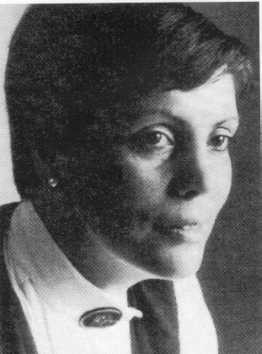
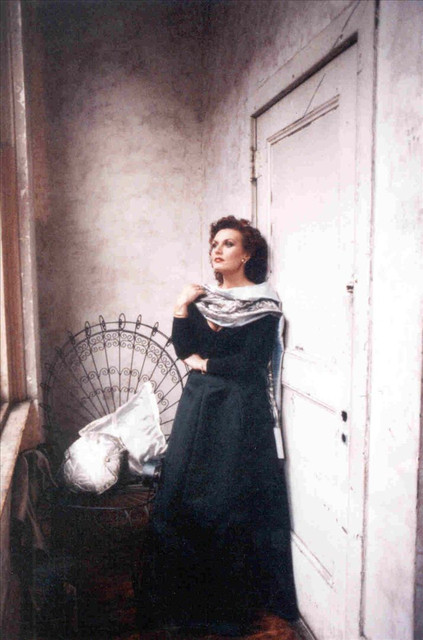
In 1941, Flagstad returned to Norway to be with her husband, which led to rumors that she was a Nazi sympathizer. However, the only appearances she made outside of Norway were in Switzerland. She never sang for Nazi officials at any time. Her husband, who had business dealings with the occupation forces as well as the resistance, was arrested after the war, and she was forced to overcome hard feelings held by many. Her first major appearances were in London singing Isolde and Brunhilde. She sang four seasons at the Royal Opera, Covent Garden, and then appeared in a fabled production of <a href="spotify:artist:3tMLo1k3iUo82coMLWXzxq">Purcell</a>'s Dido and Aeneas at the Mermaid Theater. She returned to the <a href="spotify:artist:14AbeD1op5phNiIVzzRVWr">Metropolitan Opera</a> in 1950 and during her final seasons there sang Brunhilde, Isolde, Fidelio, and the title role in <a href="spotify:artist:7vfydQ0nVBVgJ0ajs8EtRM">Gluck</a>'s Alceste, the role of her farewell. In 1949 and 1950, she appeared in Fidelio at the Salzburg Festival, her only appearances there.
In 1950, she sang the world premiere of the Four Last Songs by <a href="spotify:artist:6pAwHPeExeUbMd5w7Iny6D">Richard Strauss</a> in London under the direction of <a href="spotify:artist:4tvRZdoY4H9Wgcf0w1rZqs">Wilhelm Furtwängler</a>, who led many of her greatest performances and recordings. Throughout her career, she gave recital tours bringing to the public many fine songs by Scandinavian composers, especially <a href="spotify:artist:7jzR5qj8vFnSu5JHaXgFEr">Sibelius</a> and <a href="spotify:artist:5ihY290YPGc3aY2xTyx7Gy">Grieg</a>. Her concert repertoire ranged from the Beethoven Missa Solemnis and <a href="spotify:artist:0roWUeP7Ac4yK4VN6L2gF4">Rossini</a>'s Stabat mater to songs of <a href="spotify:artist:2p0UyoPfYfI76PCStuXfOP">Schubert</a>, <a href="spotify:artist:5wTAi7QkpP6kp8a54lmTOq">Brahms</a>, and <a href="spotify:artist:2ANtgfhQkKpsW6EYSDqldz">Mahler</a>. After her retirement from the opera stage, she continued to appear in recital and concert until 1957. Her last appearance in the United States came in a benefit concert for the Symphony of the Air. After her retirement, she continued to make recordings, including a highly acclaimed performance of Fricka in the first complete recording of <a href="spotify:artist:1C1x4MVkql8AiABuTw6DgE">Wagner</a>'s Das Rheingold, and in 1958 was named general manager of the new Norwegian National Opera.
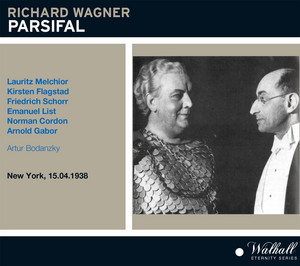
The voice of Kirsten Flagstad was a full dramatic soprano with great warmth. Unlike the voice of <a href="spotify:artist:6ljM6B2XmSU7BtG3tZLQ1K">Birgit Nilsson</a>, which was like a laser beam, Flagstad's voice enveloped the listener in a cushion of sound. She brought her characters to life primarily through vocal means; the overt theatricality of the later 20th century was not part of her dramatic arsenal nor was it seen in any of her colleagues. Her many appearances with <a href="spotify:artist:6c5WHLRKlc2EGkgNp1yqKo">Lauritz Melchior</a> at the <a href="spotify:artist:14AbeD1op5phNiIVzzRVWr">Metropolitan Opera</a> and at other houses in the 1930s made the music dramas of <a href="spotify:artist:1C1x4MVkql8AiABuTw6DgE">Wagner</a> the core of the repertoire at these houses.
Monthly Listeners
10,471
Monthly Listeners History
Track the evolution of monthly listeners over the last 28 days.
Followers
5,535
Followers History
Track the evolution of followers over the last 28 days.
Total Streams
7.0 million
Total Streams History
Track the evolution of total streams over the last 28 days. This data is calculated from all tracks listed in the artist's discography.
Top Cities


Related Artists
Waldemar Kmentt



Set Svanholm
Ira Malaniuk
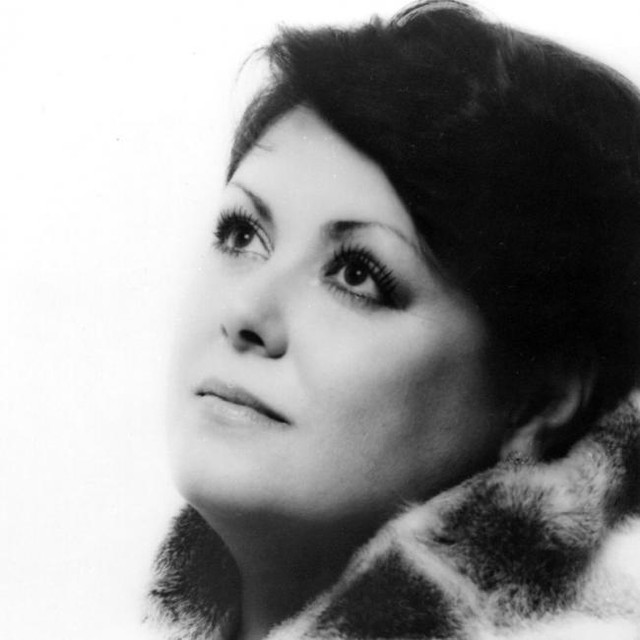

Josephine Veasey

Heinz Mende

Simon O'Neill