Data may be outdated
Last updated: 9 months ago — Click refresh to get the latest statistics.
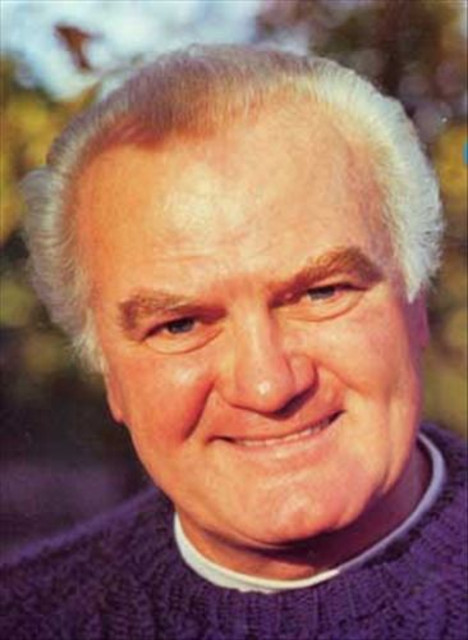
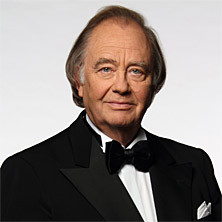
As the grandson of operetta composer Walter Kollo (1878 - 1940) and the son of Willi Kollo, likewise a composer of light music, René Kollo began his career as a pop singer and operetta tenor. He made the transition to concert and opera in 1965, at Brunswick, singing the title role in <a href="spotify:artist:7ie36YytMoKtPiL7tUvmoE">Stravinsky</a>'s Oedipus rex. In 1969, he attracted international attention at Bayreuth as the Steersman in <a href="spotify:artist:1C1x4MVkql8AiABuTw6DgE">Wagner</a>'s Der fliegende Holländer, and in 1970 debuted at La Scala as Matteo in <a href="spotify:artist:6pAwHPeExeUbMd5w7Iny6D">Richard Strauss</a>' Arabella.
Although not yet a "dramatic tenor" (and never a true Heldentenor despite his repertoire later on), the die had been cast. Kollo sang Lohengrin in 1971 -- also his American debut role at the Met in 1976 -- then Walther in Die Meistersinger in 1973, Parsifal in Wolfgang Wagner's new Bayreuth production in 1975, and a year later Siegfried in Patrice Chéreau's centennial staging of Der Ring at Bayreuth, conducted by <a href="spotify:artist:2prZJWfQMnIgwUKxKcBxH7">Pierre Boulez</a>. For his London debut, he switched from Siegfried to Siegmund in Die Walküre, later adding Tristan to his <a href="spotify:artist:1C1x4MVkql8AiABuTw6DgE">Wagner</a> repertoire in Jean-Pierre Ponnelle's scandalous Bayreuth production of 1981. At Geneva he performed Tannhäuser for the first time in 1986, and even sang in a complete production of <a href="spotify:artist:1C1x4MVkql8AiABuTw6DgE">Wagner</a>'s Rienzi, a five-act marathon that daunted bigger voices than Kollo's.
By no means, however, was <a href="spotify:artist:1C1x4MVkql8AiABuTw6DgE">Wagner</a> his only operatic specialty: He sang Paul in Korngold's Die tote Stadt for the Munich Radio in 1974, then Florestan in <a href="spotify:artist:2LmyJyCF5V1eQyvHgJNbTn">Bernstein</a>'s 1978 Fidelio at the Vienna Staatsoper for Unitel, which also preserved his Matteo in Arabella under <a href="spotify:artist:0dicUFoK5LIbqu6OoHu8VH">Solti</a>, and Bacchus in Strauss' Ariadne auf Naxos under Böhm. Kollo's repertory embraced Gherman in <a href="spotify:artist:3MKCzCnpzw3TjUYs2v7vDA">Tchaikovsky</a>'s Pique Dame, Canio in Pagliacci, Dmitri in Boris Godunov, the title role in <a href="spotify:artist:5fKj8IWs9IV1F2xerI6SGD">Pfitzner</a>'s Palestrina, and at age 51 Otello in Frankfurt for the first time. At Munich in 1991 he scored a personal triumph in <a href="spotify:artist:7MJ1pB5d6Vjmzep2zQlorn">Britten</a>'s Peter Grimes.
As a concert singer, Kollo recorded <a href="spotify:artist:2ANtgfhQkKpsW6EYSDqldz">Mahler</a>'s Eighth Symphony in Vienna with <a href="spotify:artist:0dicUFoK5LIbqu6OoHu8VH">Solti</a> and the Chicago Symphony (on tour); also Das Lied von der Erde with <a href="spotify:artist:2LmyJyCF5V1eQyvHgJNbTn">Bernstein</a> in Israel. He was the tenor soloist in <a href="spotify:artist:2LmyJyCF5V1eQyvHgJNbTn">Bernstein</a>'s Vienna recordings of the Beethoven Ninth and Missa solemnis as well as the Ninth in Berlin for Unitel with <a href="spotify:artist:5zCaQxjl110XTrm4LQ1CxY">Karajan</a> conducting. He became a regular in <a href="spotify:artist:5zCaQxjl110XTrm4LQ1CxY">Karajan</a>'s "repertory company" of the 1970s and early '80s.
Contributing to Kollo's success were his physical trimness and good looks, even in middle age, and his uncommon gifts as an actor, even after the voice had developed a widening vibrato and tonal rawness in the upper register. Though it was already evident before age 35, Kollo could minimize <a href="spotify:artist:1C1x4MVkql8AiABuTw6DgE">Wagnerian</a> wear-and-tear by lightening his voice in frequent operetta appearances (as the Chinese prince in Das Land des Lächelns, Wiener Blut, Gräfin Mariza, Csárdásfürstin, La belle Hélène, and of course Die Fledermaus); several of these are preserved on video.
In the final period, before retiring from the stage in June 2000, he was a member of the Deutsche Oper in Berlin, although he began staging operas at Darmstadt in 1986 (Parsifal), and Ulm in 1991 (d'Albert's Tiefland). For one unsuccessful season (1996 - 1997) he was director of Berlin's Metropol Theater, which specialized in operettas but had deteriorated between 1961 and the reunification of East and West. Today he calls the island of Majorca home, but claims it bores him except for the sun. Like <a href="spotify:artist:6kjCrVbejP0Aw6otiMaxNt">Giuseppe di Stefano</a> earlier on, he continues to sing light music within the current restrictions of a voice put to hard use for 30 years in the Heldentenor wars.
Although not yet a "dramatic tenor" (and never a true Heldentenor despite his repertoire later on), the die had been cast. Kollo sang Lohengrin in 1971 -- also his American debut role at the Met in 1976 -- then Walther in Die Meistersinger in 1973, Parsifal in Wolfgang Wagner's new Bayreuth production in 1975, and a year later Siegfried in Patrice Chéreau's centennial staging of Der Ring at Bayreuth, conducted by <a href="spotify:artist:2prZJWfQMnIgwUKxKcBxH7">Pierre Boulez</a>. For his London debut, he switched from Siegfried to Siegmund in Die Walküre, later adding Tristan to his <a href="spotify:artist:1C1x4MVkql8AiABuTw6DgE">Wagner</a> repertoire in Jean-Pierre Ponnelle's scandalous Bayreuth production of 1981. At Geneva he performed Tannhäuser for the first time in 1986, and even sang in a complete production of <a href="spotify:artist:1C1x4MVkql8AiABuTw6DgE">Wagner</a>'s Rienzi, a five-act marathon that daunted bigger voices than Kollo's.
By no means, however, was <a href="spotify:artist:1C1x4MVkql8AiABuTw6DgE">Wagner</a> his only operatic specialty: He sang Paul in Korngold's Die tote Stadt for the Munich Radio in 1974, then Florestan in <a href="spotify:artist:2LmyJyCF5V1eQyvHgJNbTn">Bernstein</a>'s 1978 Fidelio at the Vienna Staatsoper for Unitel, which also preserved his Matteo in Arabella under <a href="spotify:artist:0dicUFoK5LIbqu6OoHu8VH">Solti</a>, and Bacchus in Strauss' Ariadne auf Naxos under Böhm. Kollo's repertory embraced Gherman in <a href="spotify:artist:3MKCzCnpzw3TjUYs2v7vDA">Tchaikovsky</a>'s Pique Dame, Canio in Pagliacci, Dmitri in Boris Godunov, the title role in <a href="spotify:artist:5fKj8IWs9IV1F2xerI6SGD">Pfitzner</a>'s Palestrina, and at age 51 Otello in Frankfurt for the first time. At Munich in 1991 he scored a personal triumph in <a href="spotify:artist:7MJ1pB5d6Vjmzep2zQlorn">Britten</a>'s Peter Grimes.
As a concert singer, Kollo recorded <a href="spotify:artist:2ANtgfhQkKpsW6EYSDqldz">Mahler</a>'s Eighth Symphony in Vienna with <a href="spotify:artist:0dicUFoK5LIbqu6OoHu8VH">Solti</a> and the Chicago Symphony (on tour); also Das Lied von der Erde with <a href="spotify:artist:2LmyJyCF5V1eQyvHgJNbTn">Bernstein</a> in Israel. He was the tenor soloist in <a href="spotify:artist:2LmyJyCF5V1eQyvHgJNbTn">Bernstein</a>'s Vienna recordings of the Beethoven Ninth and Missa solemnis as well as the Ninth in Berlin for Unitel with <a href="spotify:artist:5zCaQxjl110XTrm4LQ1CxY">Karajan</a> conducting. He became a regular in <a href="spotify:artist:5zCaQxjl110XTrm4LQ1CxY">Karajan</a>'s "repertory company" of the 1970s and early '80s.
Contributing to Kollo's success were his physical trimness and good looks, even in middle age, and his uncommon gifts as an actor, even after the voice had developed a widening vibrato and tonal rawness in the upper register. Though it was already evident before age 35, Kollo could minimize <a href="spotify:artist:1C1x4MVkql8AiABuTw6DgE">Wagnerian</a> wear-and-tear by lightening his voice in frequent operetta appearances (as the Chinese prince in Das Land des Lächelns, Wiener Blut, Gräfin Mariza, Csárdásfürstin, La belle Hélène, and of course Die Fledermaus); several of these are preserved on video.
In the final period, before retiring from the stage in June 2000, he was a member of the Deutsche Oper in Berlin, although he began staging operas at Darmstadt in 1986 (Parsifal), and Ulm in 1991 (d'Albert's Tiefland). For one unsuccessful season (1996 - 1997) he was director of Berlin's Metropol Theater, which specialized in operettas but had deteriorated between 1961 and the reunification of East and West. Today he calls the island of Majorca home, but claims it bores him except for the sun. Like <a href="spotify:artist:6kjCrVbejP0Aw6otiMaxNt">Giuseppe di Stefano</a> earlier on, he continues to sing light music within the current restrictions of a voice put to hard use for 30 years in the Heldentenor wars.
Monthly Listeners
56,646
Monthly Listeners History
Track the evolution of monthly listeners over the last 28 days.
Followers
1,623
Followers History
Track the evolution of followers over the last 28 days.
Top Cities
2,488 listeners

1,526 listeners
1,348 listeners
1,249 listeners

1,017 listeners
Related Artists
Adolf Dallapozza



Robert Heger


Waldemar Kmentt