Data may be outdated
Last updated: 9 months ago — Click refresh to get the latest statistics.
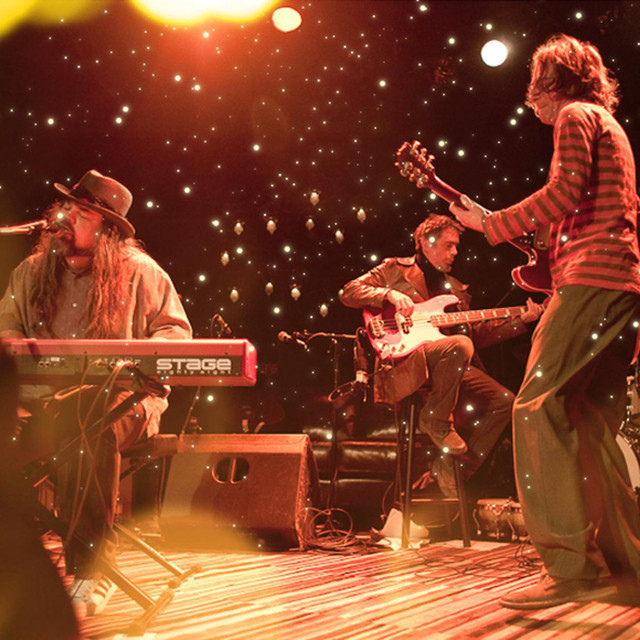
Quite a few side projects containing members of renowned Seattle-based rock bands appeared through the '90s. Most failed to expand past a small cult following comprised mainly of fans of their main bands (<a href="spotify:artist:0aYY5NNI8EKnvLckbACC8x">Brad</a>, <a href="spotify:artist:0W81KL0fosl16nfy3x7GxB">the Rockfords</a>, <a href="spotify:artist:6mIRZveOAidErFYZZFEe1M">Three Fish</a>, <a href="spotify:artist:0T55s7rECfLYpsNqEUfgN9">Tuatara</a>, etc.), but there were a few exceptions to rule, especially <a href="spotify:artist:0iHb0mCbqZTYeb4y9Pirrd">Temple of the Dog</a> and Mad Season. The latter outfit included members of <a href="spotify:artist:64tNsm6TnZe2zpcMVMOoHL">Alice in Chains</a> (vocalist <a href="spotify:artist:4j1D2HVigkZ77JDPO2EPha">Layne Staley</a>), <a href="spotify:artist:1w5Kfo2jwwIPruYS2UWh56">Pearl Jam</a> (guitarist <a href="spotify:artist:7njqqUBXHc5fpyXmUlfOUL">Mike McCready</a>), and <a href="spotify:artist:3Ukr3Ufjg8ygRJv7Ww887f">the Screaming Trees</a> (drummer <a href="spotify:artist:7FtiCfx9b5q8EydQoywAdC">Barrett Martin</a>), as well as the only non-Seattle based musician, bassist John Baker Saunders (who previously played with such blues artists as <a href="spotify:artist:3Dogy4uGWEG13OyOJmw3R9">Hubert Sumlin</a> and the Lamont Cranston Band, among others).
The band's roots go back to the summer of 1994, when <a href="spotify:artist:7njqqUBXHc5fpyXmUlfOUL">McCready</a> checked himself into a Minneapolis, MN, rehab center to battle a drinking/substance problem. It was there that <a href="spotify:artist:7njqqUBXHc5fpyXmUlfOUL">McCready</a> met local musician Saunders, and when he returned back to Seattle, called up <a href="spotify:artist:4j1D2HVigkZ77JDPO2EPha">Staley</a>, who was also at the time attempting to battle problems with substances. With <a href="spotify:artist:7FtiCfx9b5q8EydQoywAdC">Martin</a> rounding out the lineup, an undeniable chemistry between all four musicians was discovered at their very first jam session, resulting in bits of music that would eventually become fully realized songs ("Wake Up" and "River of Deceit"). Going by the name of the Gacy Bunch (which paid homage to both brutal serial killer John Wayne Gacy and the corny TV show The Brady Bunch), the quartet made its live debut on Sunday, October 16, 1994, at Seattle's Crocodile Cafe. Amazingly, the group had few songs written at the time of the show (<a href="spotify:artist:7FtiCfx9b5q8EydQoywAdC">Martin</a> later admitted that the group really had "only jams and beginnings of songs" prepared at the time), but the performance convinced the participants that a subsequent studio recording would be in cards.
Changing their name to Mad Season (an English expression for the time of year when hallucinogenic "psilocybin" mushrooms are in full bloom), the quartet set up shop at Seattle's Bad Animals recording studio, co-producing the subsequent sessions themselves along with <a href="spotify:artist:1w5Kfo2jwwIPruYS2UWh56">Pearl Jam</a>'s sound engineer, Brett Eliason. Mad Season gave fans a taste of their upcoming album by performing a pair of songs on <a href="spotify:artist:1w5Kfo2jwwIPruYS2UWh56">Pearl Jam</a>'s Self-Pollution Radio program on January 8, 1995, before the resulting ten-track album, Above, was officially issued in March. A mix of melancholy ballads and hard rock, the album (which also featured a few vocal contributions from <a href="spotify:artist:3Ukr3Ufjg8ygRJv7Ww887f">Screaming Trees</a> singer <a href="spotify:artist:1fpXM23IoNckJ7NDAm8YJQ">Mark Lanegan</a>) proved to be a gold-certified hit, just missing the U.S. Top 20 while its leadoff single, "River of Deceit," became a major rock radio hit.
Despite a smattering of supporting live dates and talk of further writing/recording, Mad Season would ultimately prove to be a one-off project. Later in 1995, a live home video of a Seattle performance Live at the Moore, was issued, as was a cover of <a href="spotify:artist:4x1nvY2FN8jxqAFA0DA02H">John Lennon</a>'s "I Don't Wanna Be a Soldier" for the Working Class Hero: A Tribute to John Lennon album. Reportedly, songs were penned for another Mad Season album, which ultimately went unrecorded. Mad Season then supposedly thought about replacing <a href="spotify:artist:4j1D2HVigkZ77JDPO2EPha">Staley</a> with <a href="spotify:artist:1fpXM23IoNckJ7NDAm8YJQ">Lanegan</a> (and changing their name to Disinformation), but no songs were recorded -- resulting in the musicians going their separate ways for good. Sadly, this proved to be the final word on Mad Season as both Saunders and <a href="spotify:artist:4j1D2HVigkZ77JDPO2EPha">Staley</a> would eventually die from drug overdoses. ~ Greg Prato, Rovi
The band's roots go back to the summer of 1994, when <a href="spotify:artist:7njqqUBXHc5fpyXmUlfOUL">McCready</a> checked himself into a Minneapolis, MN, rehab center to battle a drinking/substance problem. It was there that <a href="spotify:artist:7njqqUBXHc5fpyXmUlfOUL">McCready</a> met local musician Saunders, and when he returned back to Seattle, called up <a href="spotify:artist:4j1D2HVigkZ77JDPO2EPha">Staley</a>, who was also at the time attempting to battle problems with substances. With <a href="spotify:artist:7FtiCfx9b5q8EydQoywAdC">Martin</a> rounding out the lineup, an undeniable chemistry between all four musicians was discovered at their very first jam session, resulting in bits of music that would eventually become fully realized songs ("Wake Up" and "River of Deceit"). Going by the name of the Gacy Bunch (which paid homage to both brutal serial killer John Wayne Gacy and the corny TV show The Brady Bunch), the quartet made its live debut on Sunday, October 16, 1994, at Seattle's Crocodile Cafe. Amazingly, the group had few songs written at the time of the show (<a href="spotify:artist:7FtiCfx9b5q8EydQoywAdC">Martin</a> later admitted that the group really had "only jams and beginnings of songs" prepared at the time), but the performance convinced the participants that a subsequent studio recording would be in cards.
Changing their name to Mad Season (an English expression for the time of year when hallucinogenic "psilocybin" mushrooms are in full bloom), the quartet set up shop at Seattle's Bad Animals recording studio, co-producing the subsequent sessions themselves along with <a href="spotify:artist:1w5Kfo2jwwIPruYS2UWh56">Pearl Jam</a>'s sound engineer, Brett Eliason. Mad Season gave fans a taste of their upcoming album by performing a pair of songs on <a href="spotify:artist:1w5Kfo2jwwIPruYS2UWh56">Pearl Jam</a>'s Self-Pollution Radio program on January 8, 1995, before the resulting ten-track album, Above, was officially issued in March. A mix of melancholy ballads and hard rock, the album (which also featured a few vocal contributions from <a href="spotify:artist:3Ukr3Ufjg8ygRJv7Ww887f">Screaming Trees</a> singer <a href="spotify:artist:1fpXM23IoNckJ7NDAm8YJQ">Mark Lanegan</a>) proved to be a gold-certified hit, just missing the U.S. Top 20 while its leadoff single, "River of Deceit," became a major rock radio hit.
Despite a smattering of supporting live dates and talk of further writing/recording, Mad Season would ultimately prove to be a one-off project. Later in 1995, a live home video of a Seattle performance Live at the Moore, was issued, as was a cover of <a href="spotify:artist:4x1nvY2FN8jxqAFA0DA02H">John Lennon</a>'s "I Don't Wanna Be a Soldier" for the Working Class Hero: A Tribute to John Lennon album. Reportedly, songs were penned for another Mad Season album, which ultimately went unrecorded. Mad Season then supposedly thought about replacing <a href="spotify:artist:4j1D2HVigkZ77JDPO2EPha">Staley</a> with <a href="spotify:artist:1fpXM23IoNckJ7NDAm8YJQ">Lanegan</a> (and changing their name to Disinformation), but no songs were recorded -- resulting in the musicians going their separate ways for good. Sadly, this proved to be the final word on Mad Season as both Saunders and <a href="spotify:artist:4j1D2HVigkZ77JDPO2EPha">Staley</a> would eventually die from drug overdoses. ~ Greg Prato, Rovi
Monthly Listeners
667,188
Monthly Listeners History
Track the evolution of monthly listeners over the last 28 days.
Followers
708,808
Followers History
Track the evolution of followers over the last 28 days.
Top Cities

Related Artists
Days Of The New

Cracker
Toadies

Sponge