Data may be outdated
Last updated: 2 weeks ago — Click refresh to get the latest statistics.
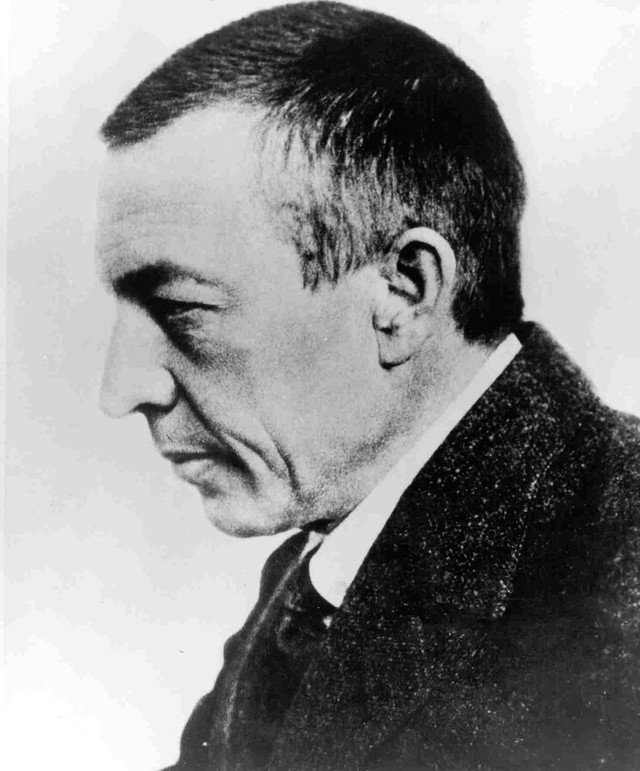
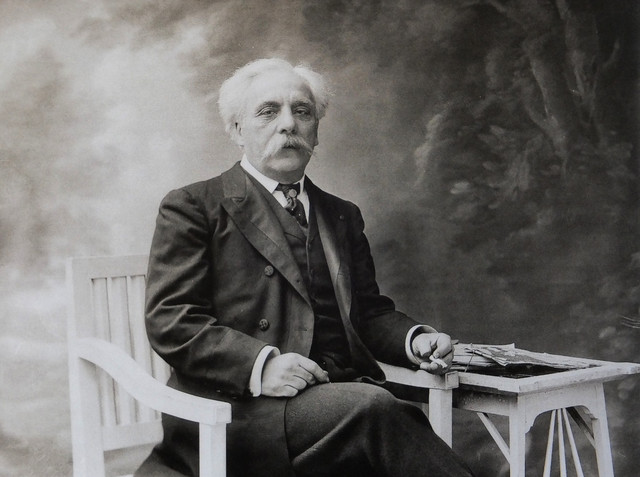
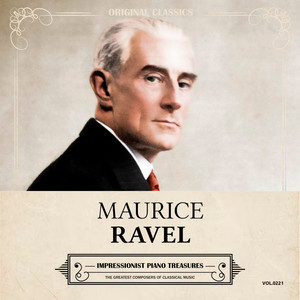
Ravel's mother was of Basque heritage, a fact that accounted for his lifelong fascination with Spanish music, and his father was a Swiss inventor and engineer, most likely the source of his commitment to precision and craftsmanship. At the age of 14, he entered the Paris Conservatory, where he was a student from 1889 to 1895 and from 1897 to 1903. His primary composition teacher was <a href="spotify:artist:2gClsBep1tt1rv1CN210SO">Gabriel Fauré</a>. A major disappointment of his life was his failure to win the Prix de Rome in spite of numerous attempts. The difficulty was transparently the conflict between the conservative administration of the Conservatory and Ravel's independent thinking, meaning his association with the French avant-garde (<a href="spotify:artist:1Uff91EOsvd99rtAupatMP">Debussy</a>), and his interest in non-French traditions (<a href="spotify:artist:1C1x4MVkql8AiABuTw6DgE">Wagner</a>, the Russian nationalists, Balinese gamelan). He had already established himself as a composer of prominence with works such as his String Quartet, and the piano pieces Pavane pour une infante défunte, Jeux d'eau, and the Sonatine, and his loss of the Prix de Rome in 1905 was considered such a scandal that the director of the Conservatory was forced to resign.
Ravel continued to express admiration for <a href="spotify:artist:1Uff91EOsvd99rtAupatMP">Debussy</a>'s music throughout his life, but as his own reputation grew stronger during the first decade of the century, a mutual professional jealousy cooled their personal relationship. Around the same time, he developed a friendship with <a href="spotify:artist:7ie36YytMoKtPiL7tUvmoE">Igor Stravinsky</a>. The two became familiar with each other's work during <a href="spotify:artist:7ie36YytMoKtPiL7tUvmoE">Stravinsky</a>'s time in Paris and worked collaboratively on arrangements for Sergey Diaghilev.
Between 1909 and 1912, Ravel composed Daphnis et Chloé for Diaghilev and Les Ballets Russes. It was the composer's largest and most ambitious work and is widely considered his masterpiece. He wrote a second ballet for Diaghilev, La Valse, which the impresario rejected, but which went on to become one of his most popular orchestral works. Following his service in the First World War as an ambulance driver and the death of his mother in 1917, his output was temporarily diminished. In 1925, the Monte Carlo Opera presented the premiere of another large work, the "lyric fantasy" L'enfant et les sortilèges, a collaboration with writer Colette.
American jazz and blues became increasingly intriguing to the composer. In 1928 he made a hugely successful tour of North America, where he met <a href="spotify:artist:1YuknfkSYTTbolRpwZBOv4">George Gershwin</a> and had the opportunity to broaden his exposure to jazz. Several of his most important late works, such as the Sonata for Violin and Piano No. 2 and the Piano Concerto in G show the influence of that interest.
Ironically, Ravel, who in his youth was rejected by some elements of the French musical establishment for being a modernist, in his later years was scorned by <a href="spotify:artist:459INk8vcC0ebEef82WjIK">Satie</a> and the members of Les Six as being old-fashioned, a symbol of the establishment. In 1932, an injury he sustained in an automobile accident started a physical decline that resulted in memory loss and an inability to communicate. He died in 1937, following brain surgery.
In spite of leaving one of the richest and most important bodies of work of any early 20th century composer, one that included virtually every genre except for symphony and liturgical music, Ravel is most often remembered for an arrangement of another composer's work, and for a piece he considered among his least significant. His orchestral arrangement of <a href="spotify:artist:284mnx33IWcymQEpMxyfHl">Mussorgsky</a>'s piano suite Pictures at an Exhibition has been wildly popular with concertgoers (and the royalties from it made Ravel a rich man). Boléro, a 15-minute Spanish dance in which a single theme is repeated in a variety of instrumental guises, has been ridiculed for its insistent repetitiveness, but it is also a popular favorite and one of the most familiar and frequently performed orchestral works of the 20th century.
Monthly Listeners
1.8 million
Monthly Listeners History
Track the evolution of monthly listeners over the last 28 days.
Followers
566,685
Followers History
Track the evolution of followers over the last 28 days.
Total Streams
1.5 billion
Total Streams History
Track the evolution of total streams over the last 28 days. This data is calculated from all tracks listed in the artist's discography.