Data may be outdated
Last updated: 9 months ago — Click refresh to get the latest statistics.
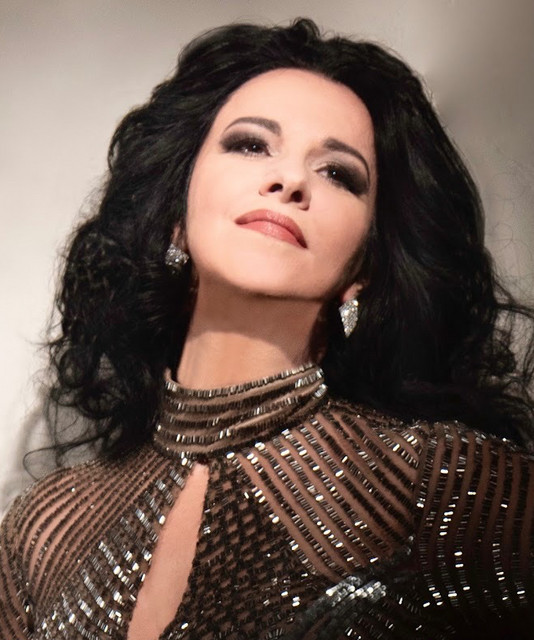
Among France's top sopranos, Natalie Dessay has remained a major force through several vocal changes. She began her career as a spectacular coloratura soprano, moved into bel canto and some dramatic roles after vocal surgery, and continued to make innovative recordings that touched on jazz and popular music after she retired from the stage.
Dessay was born Nathalie Dessaix in Lyon, France, on April 19, 1965, but grew up in Saint-Médard-en-Jalles near Bordeaux. As a girl, she was a fan of actress Natalie Wood and switched to the English spelling of her name as an homage; she later simplified the spelling of her last name as well. She flirted with careers as a ballet dancer or an actress, and she enrolled to study acting at the Bordeaux Conservatory, but a voice teacher heard her humming an operatic aria and suggested voice lessons. Dessay graduated with the school's first prize in voice, joining the choir of the Théâtre du Capitole in Toulouse, and entering and winning a prize at a contest sponsored by France Télécom that entitled her to a year of study at the Paris Opera. There, she appeared in a production of <a href="spotify:artist:4NJhFmfw43RLBLjQvxDuRS">Mozart</a>'s opera Il re pastore. In the early 1990s, Dessay made debuts at a succession of major houses, singing Blonchen in <a href="spotify:artist:4NJhFmfw43RLBLjQvxDuRS">Mozart</a>'s Die Entführung aus dem Serail at the Vienna State Opera in 1992, Fiakermilli in <a href="spotify:artist:6pAwHPeExeUbMd5w7Iny6D">Richard Strauss</a>' comedy Arabella at the Metropolitan Opera in New York in 1994, and Lakmé in <a href="spotify:artist:1M9AXZkNPdOd1IPEsQsXnT">Delibes</a>' opera of the same name at the Opéra-Comique in Paris, also in 1994.
A major star by the late 1990s, Dessay continued to appear at top venues and to add coloratura soprano roles to her repertory. She specialized in heroines of operas by <a href="spotify:artist:6AphpMkKDU4I3Z6XaGu1UV">Bellini</a> and <a href="spotify:artist:2jCGEMSZXMSOImpD8sqo56">Donizetti</a>, as well as singing Susanna in <a href="spotify:artist:4NJhFmfw43RLBLjQvxDuRS">Mozart</a>'s Le nozze di Figaro. She began to suffer from vocal problems during the 2001-2002 season, however, and was heard only intermittently between 2002 and 2005 as she underwent surgery to remove polyps on both vocal cords. When she returned, her voice was darker; she took on new roles such as Mélisande in <a href="spotify:artist:1Uff91EOsvd99rtAupatMP">Debussy</a>'s Pelleas et Mélisande, which she performed at an acclaimed production of that opera in 2009 at the Theater an der Wien in Vienna. She increasingly avoided the lighter roles of her earlier career and took on weighty parts, sometimes in Baroque operas like <a href="spotify:artist:1QL7yTHrdahRMpvNtn6rI2">Handel</a>'s Giulio Cesare, which she sang at the Palais Garnier in Paris under Baroque specialist conductor <a href="spotify:artist:4JUj55lGkJf3yhYqSJo1dH">Emmanuelle Haïm</a>. Dessay retired from the operatic stage after singing the lead role in a production of <a href="spotify:artist:1AoIc5YFH0aSFc4mKqBEeB">Massenet</a>'s Manon in Toulouse in 2013.
Dessay continued to add to what had become a flourishing recording career. In addition to numerous operatic recordings, Dessay has released various recital albums, beginning with Mozart: Concert Arias on the <a href="spotify:search:label%3A%22EMI%22">EMI</a> label in 1995. She later recorded for <a href="spotify:search:label%3A%22Erato%22">Erato</a>/<a href="spotify:search:label%3A%22Virgin+Classics%22">Virgin Classics</a> for many years, moving to <a href="spotify:search:label%3A%22Sony+Classical%22">Sony Classical</a> in 2017. Since her retirement from performing, her recordings have become more diverse, branching out into such genres as Brazilian music on the group release Rio Paris in 2014 and into jazz and the American Songbook on 2017's Pictures of America, an album based on songs that represented paintings by Edward Hopper. In 2021, Dessay released Natalie Dessay à l'Opéra, a compilation album of French operatic selections from the 19th and early 20th centuries.
Dessay was born Nathalie Dessaix in Lyon, France, on April 19, 1965, but grew up in Saint-Médard-en-Jalles near Bordeaux. As a girl, she was a fan of actress Natalie Wood and switched to the English spelling of her name as an homage; she later simplified the spelling of her last name as well. She flirted with careers as a ballet dancer or an actress, and she enrolled to study acting at the Bordeaux Conservatory, but a voice teacher heard her humming an operatic aria and suggested voice lessons. Dessay graduated with the school's first prize in voice, joining the choir of the Théâtre du Capitole in Toulouse, and entering and winning a prize at a contest sponsored by France Télécom that entitled her to a year of study at the Paris Opera. There, she appeared in a production of <a href="spotify:artist:4NJhFmfw43RLBLjQvxDuRS">Mozart</a>'s opera Il re pastore. In the early 1990s, Dessay made debuts at a succession of major houses, singing Blonchen in <a href="spotify:artist:4NJhFmfw43RLBLjQvxDuRS">Mozart</a>'s Die Entführung aus dem Serail at the Vienna State Opera in 1992, Fiakermilli in <a href="spotify:artist:6pAwHPeExeUbMd5w7Iny6D">Richard Strauss</a>' comedy Arabella at the Metropolitan Opera in New York in 1994, and Lakmé in <a href="spotify:artist:1M9AXZkNPdOd1IPEsQsXnT">Delibes</a>' opera of the same name at the Opéra-Comique in Paris, also in 1994.
A major star by the late 1990s, Dessay continued to appear at top venues and to add coloratura soprano roles to her repertory. She specialized in heroines of operas by <a href="spotify:artist:6AphpMkKDU4I3Z6XaGu1UV">Bellini</a> and <a href="spotify:artist:2jCGEMSZXMSOImpD8sqo56">Donizetti</a>, as well as singing Susanna in <a href="spotify:artist:4NJhFmfw43RLBLjQvxDuRS">Mozart</a>'s Le nozze di Figaro. She began to suffer from vocal problems during the 2001-2002 season, however, and was heard only intermittently between 2002 and 2005 as she underwent surgery to remove polyps on both vocal cords. When she returned, her voice was darker; she took on new roles such as Mélisande in <a href="spotify:artist:1Uff91EOsvd99rtAupatMP">Debussy</a>'s Pelleas et Mélisande, which she performed at an acclaimed production of that opera in 2009 at the Theater an der Wien in Vienna. She increasingly avoided the lighter roles of her earlier career and took on weighty parts, sometimes in Baroque operas like <a href="spotify:artist:1QL7yTHrdahRMpvNtn6rI2">Handel</a>'s Giulio Cesare, which she sang at the Palais Garnier in Paris under Baroque specialist conductor <a href="spotify:artist:4JUj55lGkJf3yhYqSJo1dH">Emmanuelle Haïm</a>. Dessay retired from the operatic stage after singing the lead role in a production of <a href="spotify:artist:1AoIc5YFH0aSFc4mKqBEeB">Massenet</a>'s Manon in Toulouse in 2013.
Dessay continued to add to what had become a flourishing recording career. In addition to numerous operatic recordings, Dessay has released various recital albums, beginning with Mozart: Concert Arias on the <a href="spotify:search:label%3A%22EMI%22">EMI</a> label in 1995. She later recorded for <a href="spotify:search:label%3A%22Erato%22">Erato</a>/<a href="spotify:search:label%3A%22Virgin+Classics%22">Virgin Classics</a> for many years, moving to <a href="spotify:search:label%3A%22Sony+Classical%22">Sony Classical</a> in 2017. Since her retirement from performing, her recordings have become more diverse, branching out into such genres as Brazilian music on the group release Rio Paris in 2014 and into jazz and the American Songbook on 2017's Pictures of America, an album based on songs that represented paintings by Edward Hopper. In 2021, Dessay released Natalie Dessay à l'Opéra, a compilation album of French operatic selections from the 19th and early 20th centuries.
Monthly Listeners
131,480
Monthly Listeners History
Track the evolution of monthly listeners over the last 28 days.
Followers
27,249
Followers History
Track the evolution of followers over the last 28 days.
Top Cities
2,962 listeners

1,737 listeners

1,555 listeners

1,528 listeners

1,158 listeners