Data may be outdated
Last updated: 1 month ago — Click refresh to get the latest statistics.
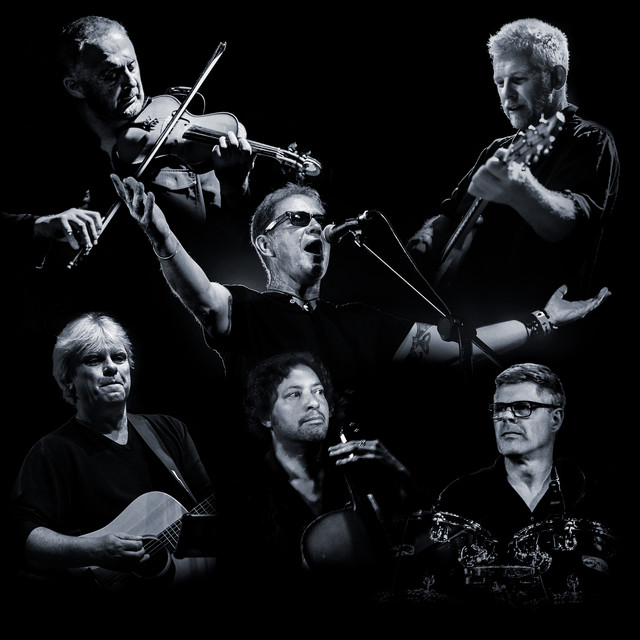
Oysterband's roots in the U.K. folk scene extend back to the mid-'70s. Bandmembers emerged from both the Whitstable Oyster Co. Ceilidh Band, which formed in 1975, and Fiddler's Dram, a group put together in 1973 by Dave Arbus, whose fiddle work has graced releases by <a href="spotify:artist:4GWyclc3byUj9NDMZAtMHy">East of Eden</a> and <a href="spotify:artist:67ea9eGLXYMsO2eYQRui3w">the Who</a>. Alan Prosser, Ian Telfer, and Chris Taylor were also in Fiddler's Dram, whose moment of fame arrived in 1979 with the British hit single "Day Trip to Bangor" -- released after they'd already split up. Bolstered by the addition of Ian Kearney, Fiddler's Dram reunited for one last album, with Kearney also becoming part of their alter ego, the roots-oriented Oyster Ceilidh Band, as they'd become by then. By 1980, with Fiddler's Dram no longer extant, the members put their energies into the newly renamed Oyster Band, gigging around England and self-releasing albums like 1982's English Rock 'n' Roll: The Early Years 1800–1850 and 1984's 20 Golden Tie-Slackeners on their own <a href="spotify:search:label%3A%22Pukka%22">Pukka</a> label. Their music at this point was an experimental and homespun take on traditional music, played with punk grit but replete with fiddle, mandolin, accordion, and harmonies.
It wasn't until a 1986 deal with then-upstart label <a href="spotify:search:label%3A%22Cooking+Vinyl%22">Cooking Vinyl</a> that their first commercial release arrived. Step Outside (produced by <a href="spotify:artist:5Q8ytF0BXZESzKpCHgeZdL">Clive Gregson</a>), with its electric treatment of the maypole song "Hal-An-Tow" and dark rockers like "Another Quiet Night in England," established them as a force on a fairly moribund English roots scene, and they capitalized on this success as they continued to release additional albums like 1987's Wide Blue Yonder and 1989's Ride. Their combination of traditional folk tunes and original material was mixed with a curious variety of covers that ranged from <a href="spotify:artist:0yNLKJebCb8Aueb54LYya3">New Order</a> to <a href="spotify:artist:3BqaUtuQmqIHg7B5Bc7fP7">Nick Lowe</a>. By the decade's end, Oysterband had become a well-seasoned touring outfit that now extended well beyond the U.K. and Europe and into Scandinavia, North America, and even India and North Africa.
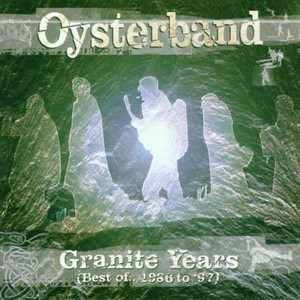
At the dawn of the '90s, Oysterband found unexpected success in their collaboration with English folk singer <a href="spotify:artist:1y2rqr1xpuz2ia93MQ9eEC">June Tabor</a>. Released in 1990 by <a href="spotify:search:label%3A%22Rykodisc%22">Rykodisc</a>, Freedom and Rain was an eclectic and spirited covers set on which the group backed <a href="spotify:artist:1y2rqr1xpuz2ia93MQ9eEC">Tabor</a>'s mellifluous vocals on songs by <a href="spotify:artist:5w75MoT8FfcGOMgjgrj1cz">Richard Thompson</a>, <a href="spotify:artist:2wzMOQwNT6ZvVB4amvhFAH">the Pogues</a>, <a href="spotify:artist:5yXAFDZNUNyO92l5WTImkO">Billy Bragg</a>, and many others. Buoyed by their newfound acclaim and a period of steady membership (founding member Kearney had left in 1988 amidst other reshuffling), Oysterband built up their reputation throughout the decade with highlights like 1993's Holy Bandits, 1995's politically oriented The Shouting End of Life, and 1997's Deep Dark Ocean, which, aside from a 2000 best-of collection called Granite Years, proved to be their last with longtime label <a href="spotify:search:label%3A%22Cooking+Vinyl%22">Cooking Vinyl</a>. After launching a new band-owned imprint, Running Man Records, they ended the decade with 1999's Here I Stand.
Following a couple of relatively quiet years, Oysterband returned in 2002 with Rise Above, a more streamlined set that included eight originals and two English traditional numbers and featured Irish piper James O'Grady, who became a temporary member during this period. In 2003, they received a Good Tradition Award at the BBC Folk Awards, where two years later they also were awarded Best Group. Meet You There arrived in 2007, followed by The Oxford Girl and Other Stories, the latter of which also marked the group's 30th anniversary.
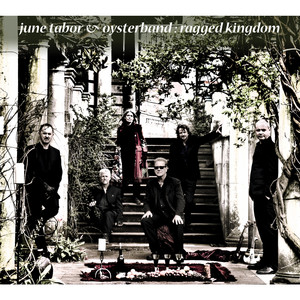
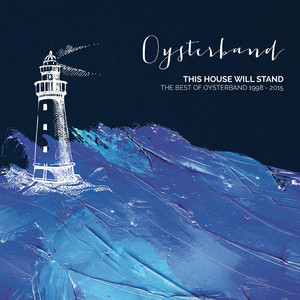
In 2011, the band reunited with <a href="spotify:artist:1y2rqr1xpuz2ia93MQ9eEC">June Tabor</a> for the riveting Ragged Kingdom, a sequel to their 1990 collaboration that garnered nearly as much attention. The release netted them three more BBC Folk Awards and they spent much of 2012 and 2013 touring with <a href="spotify:artist:1y2rqr1xpuz2ia93MQ9eEC">Tabor</a> in support of it, even appearing on BBC TV's Later... With Jools Holland. Following a 2015 album of new material, Diamonds on the Water, Oysterband offered up a second best-of collection called This House Will Stand, which covered their post-<a href="spotify:search:label%3A%22Cooking+Vinyl%22">Cooking Vinyl</a> years from 1998-2015. Members of the band collaborated with Irish folk-rock groups <a href="spotify:artist:62vRR5rCfn2XDWD8zzYX3I">McDermott's 2 Hours</a> and <a href="spotify:artist:1TrwMxRrrlk0hZxJkw4jUF">the Levellers</a> on 2019's fiery Besieged, an album that was credited to all three bands. That same year, Oysterband embarked on another major tour with <a href="spotify:artist:1y2rqr1xpuz2ia93MQ9eEC">June Tabor</a>. ~ Chris Nickson & Timothy Monger, Rovi
Monthly Listeners
21,088
Monthly Listeners History
Track the evolution of monthly listeners over the last 28 days.
Followers
12,168
Followers History
Track the evolution of followers over the last 28 days.
Total Streams
12.3 million
Total Streams History
Track the evolution of total streams over the last 28 days. This data is calculated from all tracks listed in the artist's discography.
Top Cities


Related Artists


McDermott's 2 Hours
Wolfstone
Donnie Munro
Merry Hell
Robin Laing

Ruth Notman

Steve Knightley

Megson



North Sea Gas

Ewan McLennan
The Poozies