Data may be outdated
Last updated: 8 months ago — Click refresh to get the latest statistics.
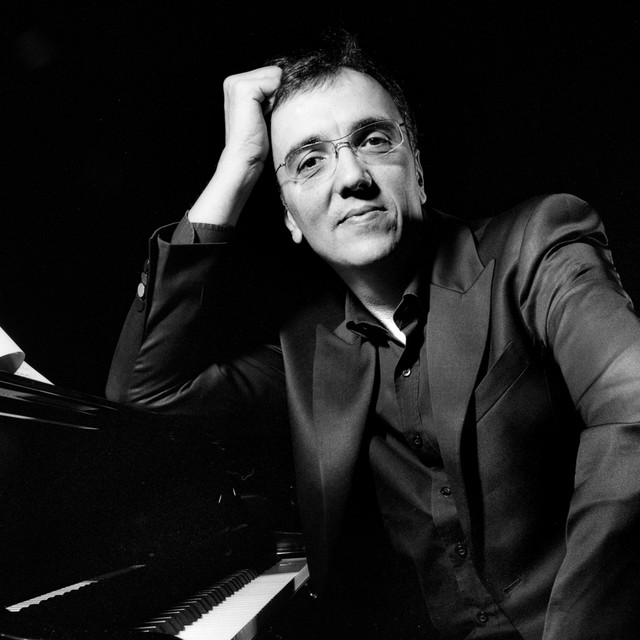
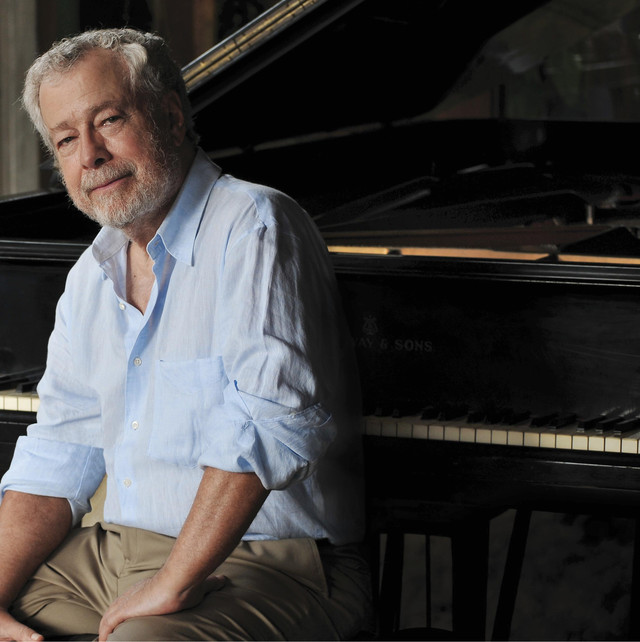
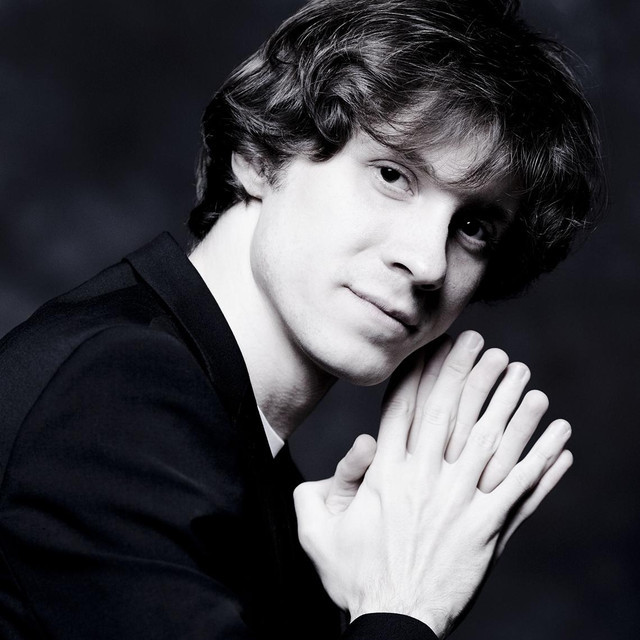
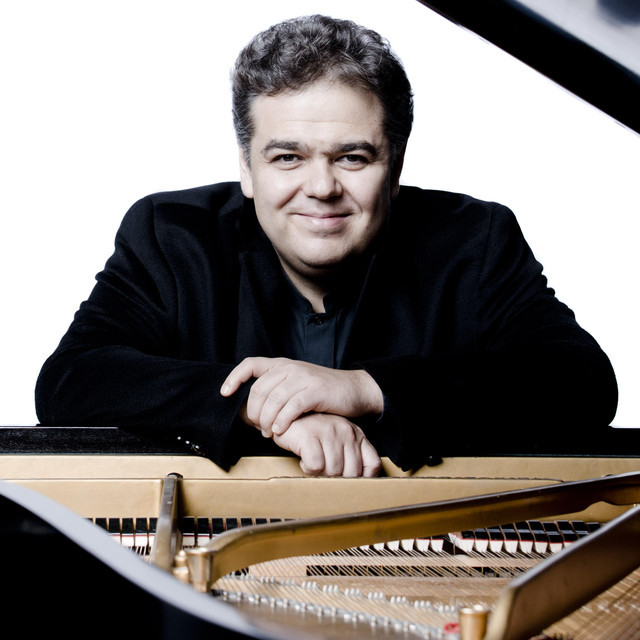
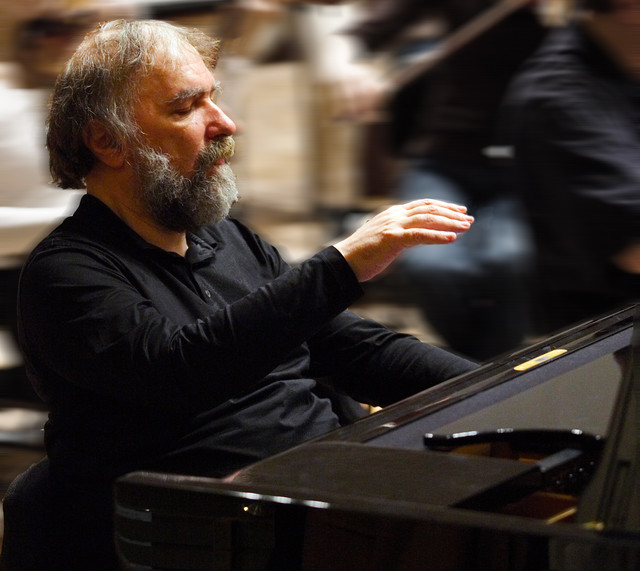
The interpretations of pianist Radu Lupu are particularly esteemed by connoisseurs. He was a top recording artist whose career extended from the 1970s to the 2000s.
Lupu was born on November 30, 1945, in Galați in far eastern Romania. His father was an attorney, and his mother was a linguist. Lupu was musical from early childhood and took up the piano at age six. At 12, he gave his debut recital, which featured some of his own compositions. For a time, Lupu considered a career as a composer, but he settled on the piano in his teens. From 1959 to 1961, Lupu attended the Bucharest Conservatory, studying with Florica Musicescu (also the teacher of <a href="spotify:artist:0Te2ZxgvPNpa87vUpbLunI">Dinu Lipatti</a>) and Cella Delavrancea. At 16, he earned a scholarship to the Moscow Conservatory. He studied there for seven years with Galina Eguiazarova, Heinrich Neuhaus, and Stanislav Neuhaus, and he also took lessons from <a href="spotify:artist:0mVpWDLWdc7t13qs29vnEv">Artur Schnabel</a>'s student Maria Curcio. Lupu said that he thought of himself as an autodidact, absorbing insights from conductors as well as pianists. In 1966, he won the first prize at the Van Cliburn Competition in Texas. That would have sufficed to launch Lupu on a high-flying international career, but he preferred to complete his studies in Moscow, which he did in 1969. That year, he won the Leeds Piano Competition in England, and in 1971, he made his recording debut on the <a href="spotify:search:label%3A%22Decca%22">Decca</a> label with an album of piano works by <a href="spotify:artist:2p0UyoPfYfI76PCStuXfOP">Schubert</a> and <a href="spotify:artist:5wTAi7QkpP6kp8a54lmTOq">Brahms</a>.
Lupu remained with <a href="spotify:search:label%3A%22Decca%22">Decca</a> until the 1990s, recording for other labels only at the end of his career. He was renowned for his sensitive treatments not only of <a href="spotify:artist:5wTAi7QkpP6kp8a54lmTOq">Brahms</a> and <a href="spotify:artist:2p0UyoPfYfI76PCStuXfOP">Schubert</a> but also of <a href="spotify:artist:2UqjDAXnDxejEyE0CzfUrZ">Schumann</a> and Beethoven, and he was an enthusiastic performer of <a href="spotify:artist:4NJhFmfw43RLBLjQvxDuRS">Mozart</a> and 20th century music. Lupu made his U.S. debut with the <a href="spotify:artist:0jJszR81GjA87jeRq0Jgwz">Cleveland Orchestra</a> under <a href="spotify:artist:78sEozQOEJxzXegUuqRSgH">Daniel Barenboim</a> in 1972; that performance was panned by Harold C. Schonberg of The New York Times, who later became one of Lupu's major supporters. Lupu's New York debut came with the <a href="spotify:artist:3gacryguGmpmCvgPGt2CBI">New York Philharmonic</a> in 1974. He subsequently appeared in most major U.S. and European cities. His recordings of <a href="spotify:artist:2p0UyoPfYfI76PCStuXfOP">Schubert</a> were especially prized, and one -- of the Piano Sonata in B flat major, D. 960, and Piano Sonata in A major, D. 664 -- earned a Grammy Award for Best Instrumental Soloist Performance in 1995. Lupu remained active into old age, cutting back on his recording schedule in the 2000s decade but continuing to perform. In 2016, he was named Commander of the Order of the British Empire. He retired completely in 2019 due to medical issues and died in Lausanne, Switzerland, on April 17, 2022. Lupu made more than 35 recordings. ~ James Manheim, Rovi
Lupu was born on November 30, 1945, in Galați in far eastern Romania. His father was an attorney, and his mother was a linguist. Lupu was musical from early childhood and took up the piano at age six. At 12, he gave his debut recital, which featured some of his own compositions. For a time, Lupu considered a career as a composer, but he settled on the piano in his teens. From 1959 to 1961, Lupu attended the Bucharest Conservatory, studying with Florica Musicescu (also the teacher of <a href="spotify:artist:0Te2ZxgvPNpa87vUpbLunI">Dinu Lipatti</a>) and Cella Delavrancea. At 16, he earned a scholarship to the Moscow Conservatory. He studied there for seven years with Galina Eguiazarova, Heinrich Neuhaus, and Stanislav Neuhaus, and he also took lessons from <a href="spotify:artist:0mVpWDLWdc7t13qs29vnEv">Artur Schnabel</a>'s student Maria Curcio. Lupu said that he thought of himself as an autodidact, absorbing insights from conductors as well as pianists. In 1966, he won the first prize at the Van Cliburn Competition in Texas. That would have sufficed to launch Lupu on a high-flying international career, but he preferred to complete his studies in Moscow, which he did in 1969. That year, he won the Leeds Piano Competition in England, and in 1971, he made his recording debut on the <a href="spotify:search:label%3A%22Decca%22">Decca</a> label with an album of piano works by <a href="spotify:artist:2p0UyoPfYfI76PCStuXfOP">Schubert</a> and <a href="spotify:artist:5wTAi7QkpP6kp8a54lmTOq">Brahms</a>.
Lupu remained with <a href="spotify:search:label%3A%22Decca%22">Decca</a> until the 1990s, recording for other labels only at the end of his career. He was renowned for his sensitive treatments not only of <a href="spotify:artist:5wTAi7QkpP6kp8a54lmTOq">Brahms</a> and <a href="spotify:artist:2p0UyoPfYfI76PCStuXfOP">Schubert</a> but also of <a href="spotify:artist:2UqjDAXnDxejEyE0CzfUrZ">Schumann</a> and Beethoven, and he was an enthusiastic performer of <a href="spotify:artist:4NJhFmfw43RLBLjQvxDuRS">Mozart</a> and 20th century music. Lupu made his U.S. debut with the <a href="spotify:artist:0jJszR81GjA87jeRq0Jgwz">Cleveland Orchestra</a> under <a href="spotify:artist:78sEozQOEJxzXegUuqRSgH">Daniel Barenboim</a> in 1972; that performance was panned by Harold C. Schonberg of The New York Times, who later became one of Lupu's major supporters. Lupu's New York debut came with the <a href="spotify:artist:3gacryguGmpmCvgPGt2CBI">New York Philharmonic</a> in 1974. He subsequently appeared in most major U.S. and European cities. His recordings of <a href="spotify:artist:2p0UyoPfYfI76PCStuXfOP">Schubert</a> were especially prized, and one -- of the Piano Sonata in B flat major, D. 960, and Piano Sonata in A major, D. 664 -- earned a Grammy Award for Best Instrumental Soloist Performance in 1995. Lupu remained active into old age, cutting back on his recording schedule in the 2000s decade but continuing to perform. In 2016, he was named Commander of the Order of the British Empire. He retired completely in 2019 due to medical issues and died in Lausanne, Switzerland, on April 17, 2022. Lupu made more than 35 recordings. ~ James Manheim, Rovi
Monthly Listeners
208,943
Monthly Listeners History
Track the evolution of monthly listeners over the last 28 days.
Followers
26,167
Followers History
Track the evolution of followers over the last 28 days.
Top Cities
4,085 listeners

2,536 listeners

2,535 listeners

2,527 listeners

2,193 listeners
Related Artists