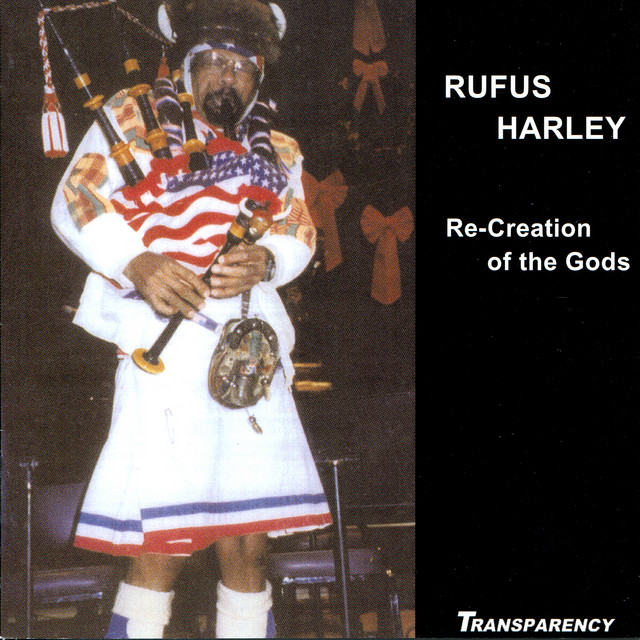
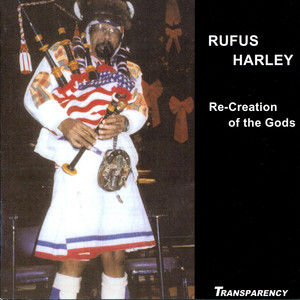
Rufus Harley was jazz's first bagpiper, singlehandedly transforming a droning, unwieldy instrument associated almost exclusively with Celtic traditions into a soulful and deeply spiritual element of the modern jazz lexicon. Born May 20, 1936, in Raleigh, NC, Harley spent the majority of his childhood in Philadelphia, where he studied saxophone and flute and at 18 made his professional debut behind bandleader Mickey Collins. Like much of his generation, his life was irrevocably altered by the November 22, 1963, assassination of President John F. Kennedy, but Harley was particularly moved by the Black Watch, the Scottish infantry bagpiper corps accompanying Kennedy's funeral procession, and sought to recreate their potently mournful sound via traditional woodwinds. Unsatisfied with the results, Harley finally acquired his own bagpipes at a New York City pawnshop, and in 1964 secured his first gigs at the West Philadelphia nightclub Squeaky's -- audiences were bemused but appreciative, and when a home demo recording found its way to Atlantic Records producer Joel Dorn, the label extended a contract offer. Harley's debut LP, Bagpipe Blues followed in 1966, immediately proving the viability of bagpipes in an improvisational setting; the record was a critical success, and in addition to moonlighting on dates headlined by fellow Atlantic acts <a href="spotify:artist:217b0uqAzsOOhGcnoANZqj">Sonny Stitt</a> (Deuces Wild) and <a href="spotify:artist:6ycoXr0Ayd89vFUT6BOiWo">Herbie Mann</a> (The Wailing Dervishes), Harley cut three more acclaimed albums for the label -- Scotch and Soul, Tribute to Courage, and Kings/Queens -- which steered his music away from its hard bop origins to the realm of psychedelia-inspired spiritual jazz. With his 1972 Ankh label masterpiece Re-Creation of the Gods, Harley embraced jazz-funk. Despite underground press accolades, the album proved too extreme for the jazz establishment and he did not headline another session for more than a quarter century. He nevertheless remained a staple of the Philadelphia club scene, and for many years headlined a regular Tuesday night gig at the city's 23rd St. Café. Harley also mounted several European tours, and as a self-proclaimed "international ambassador of freedom," he was famed among friends and fan for distributing miniature Liberty Bells, American flags, and copies of the U.S. Constitution during his travels abroad. After guesting on albums as diverse as <a href="spotify:artist:5hqB3Fxgin9YGYa0mIGf1G">Laurie Anderson</a>'s Big Science and <a href="spotify:artist:78xUyw6FkVZrRAtziFdtdu">the Roots</a>' Do You Want More?!!??!, Harley finally released his own comeback date, Brotherly Love, in 1998. Sustain followed in 2005. After a long battle with prostate cancer, he died in Philadelphia on August 1, 2006. ~ Jason Ankeny, Rovi