Data may be outdated
Last updated: 1 month ago — Click refresh to get the latest statistics.
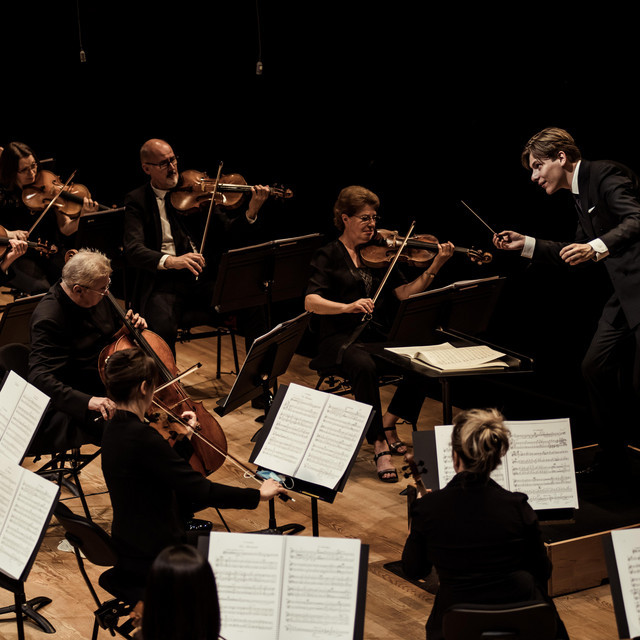
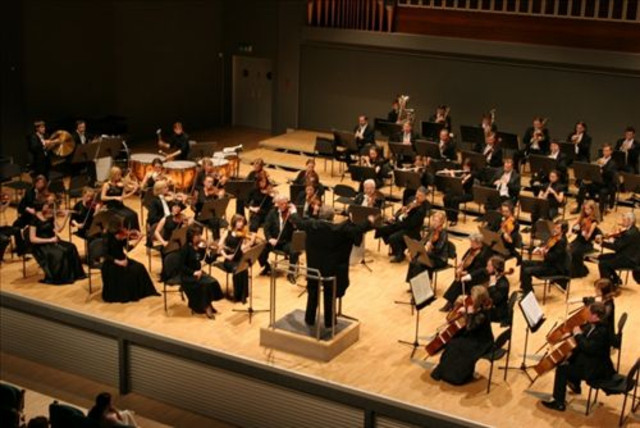
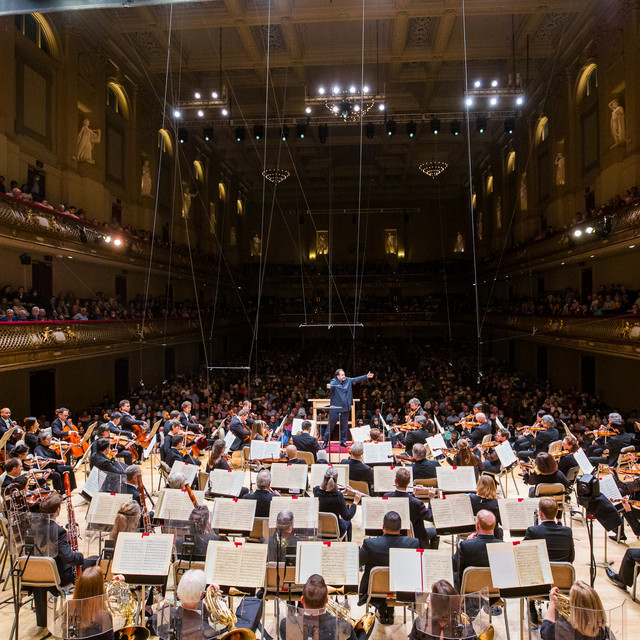
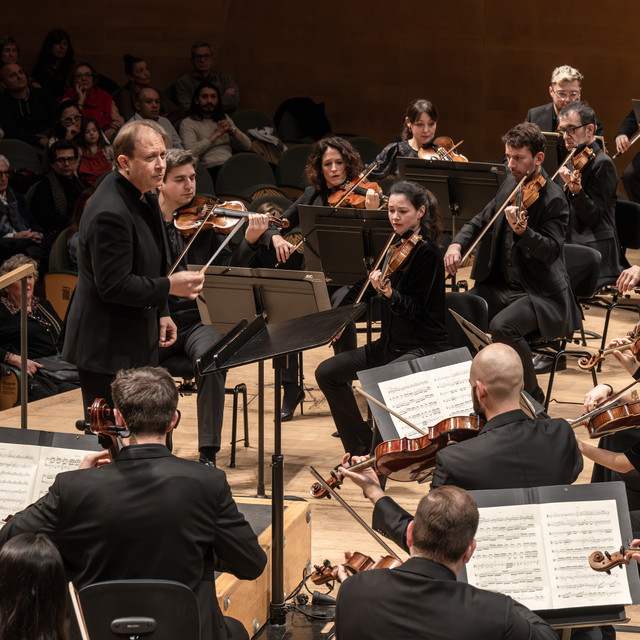
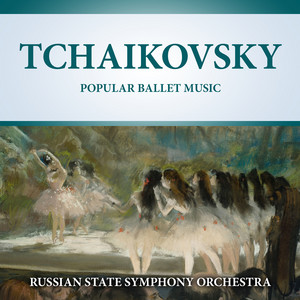
The Russian State Symphony Orchestra is also known as the State Academic Symphony Orchestra "Evgeny Svetlanov"; the term "Academic" in the name is honorific. It was founded as the <a href="spotify:artist:1DMt4oqEDfdHBeoH3BD0bk">USSR State Symphony Orchestra</a> in 1936, with <a href="spotify:artist:5ymQ4SAXlgKQUq1OFEjMWN">Alexander Gauk</a> as its first conductor; its direct ancestors were a pair of Soviet radio orchestras founded in the early 1930s. The group fulfilled its responsibilities as a national group with a tour of the Soviet Union the following year. <a href="spotify:artist:5ymQ4SAXlgKQUq1OFEjMWN">Gauk</a> remained in his post until 1941 and was succeeded by Nathan Rakhlin (1941-1945) and <a href="spotify:artist:7yGY7hDhbnpBPo5hqpLITB">Konstantin Ivanov</a> (1946-1965). The group often performs at the Great Hall of the Moscow Conservatory as well as other venues among Moscow's collection of magnificent concert halls. The orchestra made its first tour abroad during the "thaw" of the late '50s and early '60s, making its U.S. debut in 1960.
A turning point in the existence of the Russian State Symphony Orchestra came with the appointment as chief conductor of <a href="spotify:artist:1xfayCGnoPqO2Wh3Y27IgG">Evgeny Svetlanov</a> in 1965. <a href="spotify:artist:1xfayCGnoPqO2Wh3Y27IgG">Svetlanov</a> made an impact with a fiery recording of Stravinsky's Le Sacre du printemps and Petrouchka in 1966, marking quite a contrast from the group's earlier orientation toward conservative socialist-realist fare. That album remains in print, having been reissued in the West by <a href="spotify:search:label%3A%22Warner+Classics%22">Warner Classics</a> in 2007. <a href="spotify:artist:1xfayCGnoPqO2Wh3Y27IgG">Svetlanov</a> became an internationally celebrated conductor, amassing a large recording catalog (including, in the '90s, a massive 100-CD survey of Russian symphonic music) and often touring, especially after the fall of the Soviet Union. He was, in fact, fired in 2000 after charges that he was devoting too much energy to work abroad. <a href="spotify:artist:1xfayCGnoPqO2Wh3Y27IgG">Svetlanov</a> was succeeded by <a href="spotify:artist:5ieRNtQmVhIhCkQA4ZkK6L">Vassily Sinaisky</a> (2000-2003) and Mark Gorenstein (2002-2011). Conductors <a href="spotify:artist:56zD3vlVlbxtkfNPaznQoA">Vladimir Jurowski</a> (2011-2021) and <a href="spotify:artist:6H9eOWeGZkU9alBUYqNR7Q">Vasily Petrenko</a> (2021-2022) managed to combine their duties with posts abroad; <a href="spotify:artist:6H9eOWeGZkU9alBUYqNR7Q">Petrenko</a> departed after protesting the Russian invasion of Ukraine. The orchestra's artistic director as of late August 2024 was Philipp Chizhevsky (Chizhevskiy). The orchestra has continued to record prolifically, not only for the government-owned <a href="spotify:search:label%3A%22Melodiya%22">Melodiya</a> label in Russia but also for such Western labels as <a href="spotify:search:label%3A%22Delos%22">Delos</a>, <a href="spotify:search:label%3A%22Toccata+Classics%22">Toccata Classics</a>, and <a href="spotify:search:label%3A%22PentaTone%22">PentaTone</a>. In the 2020s, the group has not been heard abroad on new recordings, but in 2024, a 1995 recording of <a href="spotify:artist:0Kekt6CKSo0m5mivKcoH51">Rachmaninov</a>'s Piano Concerto No. 3, Op. 30, and Piano Concerto No. 4, Op. 40, with pianist <a href="spotify:artist:2bMfnyPOgNaeK8WNnXNXud">Nikolai Lugansky</a>, was reissued by the <a href="spotify:search:label%3A%22Fineline%22">Fineline</a> label. ~ James Manheim, Rovi
Monthly Listeners
1.0 million
Monthly Listeners History
Track the evolution of monthly listeners over the last 28 days.
Followers
19,290
Followers History
Track the evolution of followers over the last 28 days.
Total Streams
526.4 million
Total Streams History
Track the evolution of total streams over the last 28 days. This data is calculated from all tracks listed in the artist's discography.