Data may be outdated
Last updated: 1 month ago — Click refresh to get the latest statistics.
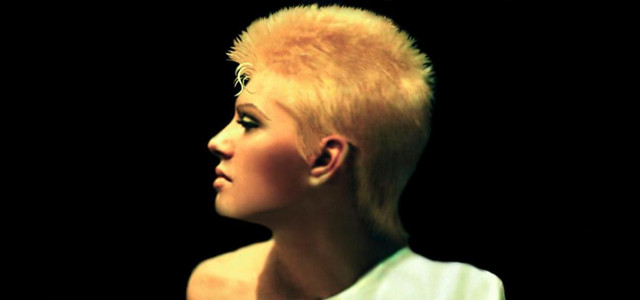
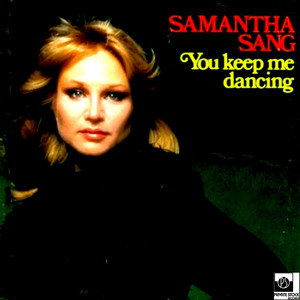
In 1969, hoping to expand her career beyond Australia, Sang relocated to England, where she caught the ear of <a href="spotify:artist:1LZEQNv7sE11VDY3SdxQeN">the Bee Gees</a>' <a href="spotify:artist:7Hd38PVp634oGEb9pIDs5d">Barry Gibb</a>. <a href="spotify:artist:7Hd38PVp634oGEb9pIDs5d">Gibb</a> introduced her to his manager, Robert Stigwood, who then signed Sang to a record deal and encouraged her to change her professional name to Samantha Sang. That same year, Sang released the <a href="spotify:artist:7Hd38PVp634oGEb9pIDs5d">Barry</a> and <a href="spotify:artist:6h4ALbc1G80KRRG7THwHic">Maurice Gibb</a>-penned single "Love of a Woman." She then followed up with the <a href="spotify:artist:5CzlICF8GCY0pRC82MKrhX">Labi Siffre</a>-penned "Nothing in the World Like Love," before her visa expired and she returned to Australia. By 1975, Sang had signed to <a href="spotify:search:label%3A%22Polydor%22">Polydor</a> and released the album Samantha Sang and Rocked the World. She then recorded the single "When Love Is Gone" for the 1977 cult film Bilitis and starred in the stage musical The Magic Show.
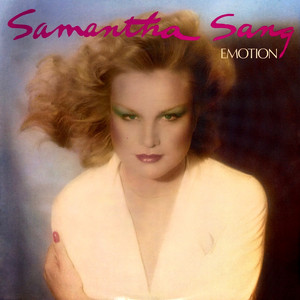
In 1978 Sang traveled to France, where she reconnected with <a href="spotify:artist:1LZEQNv7sE11VDY3SdxQeN">the Bee Gees</a> during the recording of the Saturday Night Fever soundtrack. It was during these sessions that <a href="spotify:artist:7Hd38PVp634oGEb9pIDs5d">Barry</a> and <a href="spotify:artist:4vZduJO8Uukqzx64de5JxV">Robin Gibb</a> wrote the song "Emotion" for Sang. Released in 1978 as a single and included as the title track on her album, "Emotion" became a worldwide hit single, reaching number three on the <a href="spotify:search:label%3A%22Billboard%22">Billboard</a> Hot 100. Several other <a href="spotify:artist:1LZEQNv7sE11VDY3SdxQeN">Bee Gees</a> songs were also featured on the album, including "Charade." In 1979, Sang returned with the album From Dance to Love. Aside from her solo work, over the years Sang has also performed backing vocals on recordings by such artists as David Wolfert, <a href="spotify:artist:0Lf3tvw0Rzwr38KDrShstn">Francis Lai</a>, <a href="spotify:artist:6yjU0SoX3vxPV7KoopXlWe">Carole Bayer Sager</a>, and <a href="spotify:artist:2ekjTXgjxbWwBX5lTAj4DU">Eric Carmen</a>. Although "Emotion" would remain her biggest success, Sang has a loyal fan base and continues to perform and record around the world. ~ Matt Collar, Rovi
Monthly Listeners
360,100
Monthly Listeners History
Track the evolution of monthly listeners over the last 28 days.
Followers
44,213
Followers History
Track the evolution of followers over the last 28 days.
Total Streams
109.2 million
Total Streams History
Track the evolution of total streams over the last 28 days. This data is calculated from all tracks listed in the artist's discography.