Data may be outdated
Last updated: 9 months ago — Click refresh to get the latest statistics.
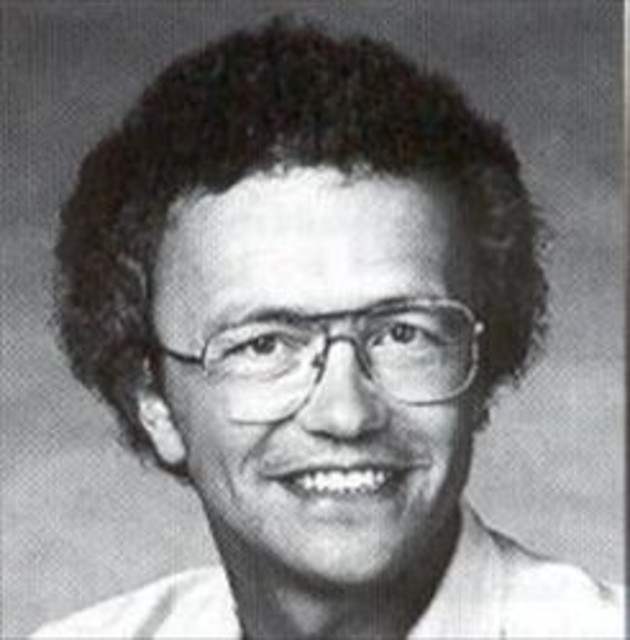
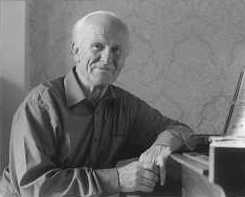
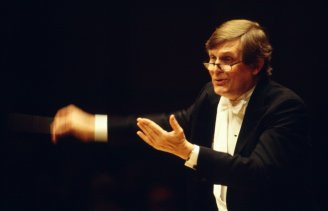
There are few conductors of choral music who achieved higher levels of recognition or acclaim than Sir David Willcocks. For over 30 years, as conductor of the <a href="spotify:artist:7aBHoHldT814X9KS3cXIoM">Bach Choir</a> and director of the Royal College of Music, he achieved a standard of performing and teaching second to none in the musical world.
Willcocks was a chorister at Westminster Abbey from ages 10 through 14, and later studied at Clifton College, before becoming an organ scholar at King's College, Cambridge in 1939. His studies were interrupted by the outbreak of World War II, during which he served in the British Infantry, winning the Military Cross in 1944. He returned to King's College in 1945 to complete his studies, and became a Fellow of King's College in 1947 and conductor of the Cambridge Philharmonic Society that same year, as well as conductor of the Salisbury Musical Society and organist at Salisbury Cathedral. In 1950, he took the post of organist at Worcester Cathedral, and became conductor of the Worcester Festival Choral Society and the City of Birmingham Choir, a position he kept for seven years.
By the end of the decade, he was the director of music at King's College Cambridge, the organist of Cambridge University, and conductor of the Cambridge University Music Society, posts that he held into the 1970s, when he accepted the post of director at the Royal College of Music. In 1960, he also became music director of the <a href="spotify:artist:7aBHoHldT814X9KS3cXIoM">Bach Choir</a>. Willcocks conducted in most European countries, as well as Japan and the United States, and edited several collections of choral music.
Willcocks made relatively few recordings since the end of the 1950s, principally with the <a href="spotify:artist:0f3PsS9IQ6whvNMFFKnpjl">King's College Choir</a> and the <a href="spotify:artist:7aBHoHldT814X9KS3cXIoM">Bach Choir</a>, the <a href="spotify:artist:2DO4p3CPDnInsJfg0jFfaF">English Chamber Orchestra</a>, the <a href="spotify:artist:77CaCn32H4mOMQA7UElzfF">Academy of St. Martin-in-the-Fields</a>, the Jacques Orchestra, the <a href="spotify:artist:09KZU0NsS7jRa5p0SflmGY">Philharmonia Orchestra</a>, and the <a href="spotify:artist:5yxyJsFanEAuwSM5kOuZKc">London Symphony Orchestra</a>. His repertory ranged from England's Tudor era -- especially the music of <a href="spotify:artist:0ZGj6vmZUz4vk80EfPLjxP">John Taverner</a> -- to such 20th century composers as <a href="spotify:artist:7wNkISK49lKeXuRaZcQVFe">Ralph Vaughan Williams</a>. In addition to such works as <a href="spotify:artist:656RXuyw7CE0dtjdPgjJV6">Haydn</a>'s The Creation and the Nelson Mass, masses by <a href="spotify:artist:0BS8IrFmvK1tXenMULjwem">Palestrina</a> and <a href="spotify:artist:5OZAfzSUnJzQ5PrW4ZYCc8">Charpentier</a>, and <a href="spotify:artist:0ZGj6vmZUz4vk80EfPLjxP">Taverner</a>'s The Western Wind, he conducted such modern music as <a href="spotify:artist:7MJ1pB5d6Vjmzep2zQlorn">Britten</a>'s War Requiem and Hymn to St. Cecilia, <a href="spotify:artist:7wNkISK49lKeXuRaZcQVFe">Vaughan Williams'</a> Mass in G, Hodie, and Sancta Civitas, and a relative handful of pure orchestral works, such as <a href="spotify:artist:7wNkISK49lKeXuRaZcQVFe">Vaughan Williams'</a> gorgeous Five Variants of Dives and Lazarus (of which he made the definitive recording). Willcocks' 1962 recording of <a href="spotify:artist:656RXuyw7CE0dtjdPgjJV6">Haydn</a>'s Mass No. 9 almost single-handedly began the restoration of the composer's choral music before the modern listening public. His crowning achievement, however, could be his recording of <a href="spotify:artist:1QL7yTHrdahRMpvNtn6rI2">Handel</a>'s Messiah, featuring a contingent of all male singers (with counter-tenor replacing the alto) with the <a href="spotify:artist:0f3PsS9IQ6whvNMFFKnpjl">King's College Choir</a> and the <a href="spotify:artist:77CaCn32H4mOMQA7UElzfF">Academy of St. Martin-in-the-Fields</a> for <a href="spotify:search:label%3A%22EMI%22">EMI</a>, a superbly paced, exquisitely textured recording.
Willcocks was a chorister at Westminster Abbey from ages 10 through 14, and later studied at Clifton College, before becoming an organ scholar at King's College, Cambridge in 1939. His studies were interrupted by the outbreak of World War II, during which he served in the British Infantry, winning the Military Cross in 1944. He returned to King's College in 1945 to complete his studies, and became a Fellow of King's College in 1947 and conductor of the Cambridge Philharmonic Society that same year, as well as conductor of the Salisbury Musical Society and organist at Salisbury Cathedral. In 1950, he took the post of organist at Worcester Cathedral, and became conductor of the Worcester Festival Choral Society and the City of Birmingham Choir, a position he kept for seven years.
By the end of the decade, he was the director of music at King's College Cambridge, the organist of Cambridge University, and conductor of the Cambridge University Music Society, posts that he held into the 1970s, when he accepted the post of director at the Royal College of Music. In 1960, he also became music director of the <a href="spotify:artist:7aBHoHldT814X9KS3cXIoM">Bach Choir</a>. Willcocks conducted in most European countries, as well as Japan and the United States, and edited several collections of choral music.
Willcocks made relatively few recordings since the end of the 1950s, principally with the <a href="spotify:artist:0f3PsS9IQ6whvNMFFKnpjl">King's College Choir</a> and the <a href="spotify:artist:7aBHoHldT814X9KS3cXIoM">Bach Choir</a>, the <a href="spotify:artist:2DO4p3CPDnInsJfg0jFfaF">English Chamber Orchestra</a>, the <a href="spotify:artist:77CaCn32H4mOMQA7UElzfF">Academy of St. Martin-in-the-Fields</a>, the Jacques Orchestra, the <a href="spotify:artist:09KZU0NsS7jRa5p0SflmGY">Philharmonia Orchestra</a>, and the <a href="spotify:artist:5yxyJsFanEAuwSM5kOuZKc">London Symphony Orchestra</a>. His repertory ranged from England's Tudor era -- especially the music of <a href="spotify:artist:0ZGj6vmZUz4vk80EfPLjxP">John Taverner</a> -- to such 20th century composers as <a href="spotify:artist:7wNkISK49lKeXuRaZcQVFe">Ralph Vaughan Williams</a>. In addition to such works as <a href="spotify:artist:656RXuyw7CE0dtjdPgjJV6">Haydn</a>'s The Creation and the Nelson Mass, masses by <a href="spotify:artist:0BS8IrFmvK1tXenMULjwem">Palestrina</a> and <a href="spotify:artist:5OZAfzSUnJzQ5PrW4ZYCc8">Charpentier</a>, and <a href="spotify:artist:0ZGj6vmZUz4vk80EfPLjxP">Taverner</a>'s The Western Wind, he conducted such modern music as <a href="spotify:artist:7MJ1pB5d6Vjmzep2zQlorn">Britten</a>'s War Requiem and Hymn to St. Cecilia, <a href="spotify:artist:7wNkISK49lKeXuRaZcQVFe">Vaughan Williams'</a> Mass in G, Hodie, and Sancta Civitas, and a relative handful of pure orchestral works, such as <a href="spotify:artist:7wNkISK49lKeXuRaZcQVFe">Vaughan Williams'</a> gorgeous Five Variants of Dives and Lazarus (of which he made the definitive recording). Willcocks' 1962 recording of <a href="spotify:artist:656RXuyw7CE0dtjdPgjJV6">Haydn</a>'s Mass No. 9 almost single-handedly began the restoration of the composer's choral music before the modern listening public. His crowning achievement, however, could be his recording of <a href="spotify:artist:1QL7yTHrdahRMpvNtn6rI2">Handel</a>'s Messiah, featuring a contingent of all male singers (with counter-tenor replacing the alto) with the <a href="spotify:artist:0f3PsS9IQ6whvNMFFKnpjl">King's College Choir</a> and the <a href="spotify:artist:77CaCn32H4mOMQA7UElzfF">Academy of St. Martin-in-the-Fields</a> for <a href="spotify:search:label%3A%22EMI%22">EMI</a>, a superbly paced, exquisitely textured recording.
Monthly Listeners
1.1 million
Monthly Listeners History
Track the evolution of monthly listeners over the last 28 days.
Followers
7,097
Followers History
Track the evolution of followers over the last 28 days.
Top Cities
60,680 listeners

12,609 listeners

12,194 listeners
10,687 listeners

8,757 listeners
Related Artists
St. Paul's Cathedral Choir


Benjamin Nicholas
Harold Darke


English Traditional
Robert Stringer


John Henry Hopkins