Data may be outdated
Last updated: 4 weeks ago — Click refresh to get the latest statistics.
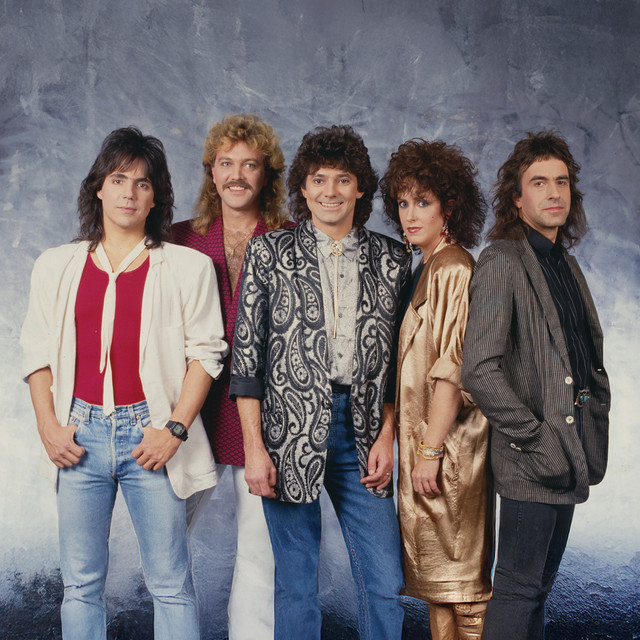
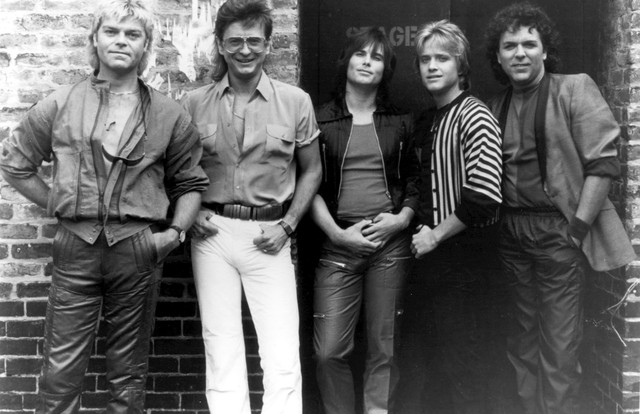
Starship was the remaining sextet of musicians that, with <a href="spotify:artist:6ihWIBKwmSga5Z7J4SHuAu">Paul Kantner</a>, had made up <a href="spotify:artist:3HC7NcxQx2Yk0fWoRKJ0xF">Jefferson Starship</a> until the rhythm guitarist/singer's exit from that band in June 1984. <a href="spotify:artist:6ihWIBKwmSga5Z7J4SHuAu">Kantner</a>, a founding member of <a href="spotify:artist:2qFr8w5sWUITRlzZ9kZotF">Jefferson Airplane</a>, the precursor to <a href="spotify:artist:3HC7NcxQx2Yk0fWoRKJ0xF">Jefferson Starship</a>, had also helped found <a href="spotify:artist:3HC7NcxQx2Yk0fWoRKJ0xF">Jefferson Starship</a> in 1974. Ten years later, <a href="spotify:artist:6ihWIBKwmSga5Z7J4SHuAu">Kantner</a> decried the band's tilt toward commercial rock and decided that it was time for the group to dissolve. His bandmates disagreed, and <a href="spotify:artist:6ihWIBKwmSga5Z7J4SHuAu">Kantner</a> sued over money and the ownership of the band's name in October 1984. The suit was settled in March 1985, resulting in a cash payment to <a href="spotify:artist:6ihWIBKwmSga5Z7J4SHuAu">Kantner</a> and the agreement that the name "<a href="spotify:artist:3HC7NcxQx2Yk0fWoRKJ0xF">Jefferson Starship</a>" would be retired, while the band would change its name to simply Starship (with that name owned by singer <a href="spotify:artist:3wNX7r7t4Vaahrx9XzyYIY">Grace Slick</a> and manager Bill Thompson).
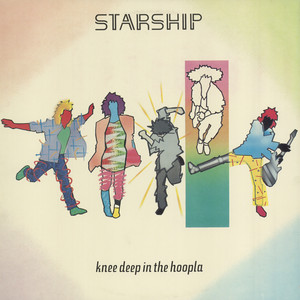
Thus, at its inception under its new moniker, Starship consisted of <a href="spotify:artist:3wNX7r7t4Vaahrx9XzyYIY">Slick</a> (born <a href="spotify:artist:3wNX7r7t4Vaahrx9XzyYIY">Grace Barnett Wing</a> in or near Chicago, IL, October 30, 1939), co-lead singer <a href="spotify:artist:4aDeYYDsnztVoK3k0DImlh">Mickey Thomas</a> (born in Cairo, GA, December 3, 1949), guitarist <a href="spotify:artist:5Fxwcku7ybQr4azQhK2418">Craig Chaquico</a> (born September 25, 1954), keyboardist <a href="spotify:artist:1F8wWco7cL1UNqTIGa3w9u">David Freiberg</a> (born in Boston, MA, August 24, 1938), bassist <a href="spotify:artist:473EeieFNtN9bfQPvPQD9B">Pete Sears</a> (born May 27, 1948), and drummer Donny Baldwin. <a href="spotify:artist:1F8wWco7cL1UNqTIGa3w9u">Freiberg</a>, however, then dropped out. The newly christened band, freed from <a href="spotify:artist:6ihWIBKwmSga5Z7J4SHuAu">Kantner</a>'s ties to their old sound, quickly entered the studio. The first product of their efforts was "We Built This City," written by Dennis Lambert, <a href="spotify:artist:3NS6XjRa7OyZv6KjfkH5qC">Martin Page</a>, <a href="spotify:artist:5lzPV4EKWYxEUk38UcFBVH">Bernie Taupin</a> (<a href="spotify:artist:3PhoLpVuITZKcymswpck5b">Elton John</a>'s lyricist), and <a href="spotify:artist:003kZCrZhoxCckVJ2jCiJC">Peter Wolf</a> (not the former singer of <a href="spotify:artist:69Mj3u4FTUrpyeGNSIaU6F">the J. Geils Band</a>), who co-produced the track and played keyboards on it. The song did two things that no <a href="spotify:artist:2qFr8w5sWUITRlzZ9kZotF">Jefferson Airplane</a> or <a href="spotify:artist:3HC7NcxQx2Yk0fWoRKJ0xF">Jefferson Starship</a> single ever had: it hit number one in November 1985 and it went gold, proving a strong calling card for the first Starship album, Knee Deep in the Hoopla, which reached the Top Ten and went platinum, a better showing than any <a href="spotify:artist:3HC7NcxQx2Yk0fWoRKJ0xF">Jefferson Starship</a> album since 1978. Starship followed with a second number one single, "Sara," written by <a href="spotify:artist:003kZCrZhoxCckVJ2jCiJC">Wolf</a> with his wife Ina and also featured on the album. A third single, "Tomorrow Doesn't Matter Tonight," made the Top 40.
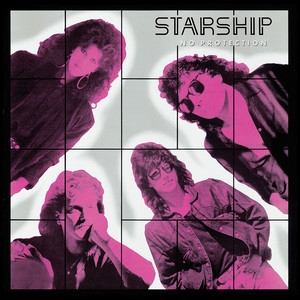
The record sales established Starship as a separate entity with a new audience. The group was reduced to a quartet with the departure of <a href="spotify:artist:473EeieFNtN9bfQPvPQD9B">Pete Sears</a> prior to their next recording, a song from the movie Mannequin. Released as a single in January 1987, "Nothing's Gonna Stop Us Now," written by <a href="spotify:artist:3A2jfQOLgo5rV4GYFHbEA2">Diane Warren</a> and <a href="spotify:artist:34E3csCxpXunPGEkOVVX2g">Albert Hammond</a>, became Starship's third number one hit in April and eventually was certified as their second gold 45. The second album, No Protection, released in July 1987, was prefaced by the single "It's Not Over ('Til It's Over)," which reached the Top Ten as the album peaked at number 12 and went gold.
At the start of 1988, <a href="spotify:artist:3wNX7r7t4Vaahrx9XzyYIY">Grace Slick</a> left Starship, reducing the band to the trio of <a href="spotify:artist:4aDeYYDsnztVoK3k0DImlh">Thomas</a>, <a href="spotify:artist:5Fxwcku7ybQr4azQhK2418">Chaquico</a>, and Baldwin. They added two new members, keyboard player <a href="spotify:artist:4HH8B4vTfVx3oB1ComeTwc">Mark Morgan</a> and bassist Brett Bloomfield, and in the summer of 1989 released their third album, Love Among the Cannibals, which boasted the Top 20 hit "It's Not Enough" but sold disappointingly. The band was set to tour from mid-August to the end of September, but on September 24, <a href="spotify:artist:4aDeYYDsnztVoK3k0DImlh">Thomas</a> was involved in a fight that left him severely beaten, suffering serious facial injuries that required surgery. Although no charges were filed, it eventually emerged that he had been beaten by Baldwin, who immediately left the band. While <a href="spotify:artist:4aDeYYDsnztVoK3k0DImlh">Thomas</a> recovered, <a href="spotify:artist:5Fxwcku7ybQr4azQhK2418">Chaquico</a> also departed in 1990. In the spring of 1991, the band's label, RCA, released Greatest Hits (Ten Years and Change 1979-1991), which featured one new track, "Good Heart," written by <a href="spotify:artist:3NS6XjRa7OyZv6KjfkH5qC">Martin Page</a> and performed by <a href="spotify:artist:4aDeYYDsnztVoK3k0DImlh">Thomas</a>, <a href="spotify:artist:3NS6XjRa7OyZv6KjfkH5qC">Page</a>, <a href="spotify:artist:003kZCrZhoxCckVJ2jCiJC">Wolf</a>, and guitarist <a href="spotify:artist:22U7IVDQEUTVy8GSHDDIHh">Peter Maunu</a>. Released as a single, it reached number 81. With that, Bill Thompson declared Starship to be inactive.
In 1992, <a href="spotify:artist:4aDeYYDsnztVoK3k0DImlh">Thomas</a> organized a band that began playing dates billed as "<a href="spotify:artist:4aDeYYDsnztVoK3k0DImlh">Mickey Thomas</a>' Starship" or "Starship Featuring <a href="spotify:artist:4aDeYYDsnztVoK3k0DImlh">Mickey Thomas</a>." Although <a href="spotify:artist:4aDeYYDsnztVoK3k0DImlh">Thomas</a> did not own the right to use the name "Starship," Thompson and <a href="spotify:artist:3wNX7r7t4Vaahrx9XzyYIY">Grace Slick</a>, the co-owners of the name, took no action to stop him, and he continued to perform using the name. In 2003, the Brilliant label issued an album credited simply to Starship called Greatest Hits on which a <a href="spotify:artist:4aDeYYDsnztVoK3k0DImlh">Thomas</a>-led band re-recorded Starship's biggest hits and some songs from <a href="spotify:artist:4aDeYYDsnztVoK3k0DImlh">Thomas</a>' tenure in <a href="spotify:artist:3HC7NcxQx2Yk0fWoRKJ0xF">Jefferson Starship</a> as well as "Fooled Around and Fell in Love," the hit <a href="spotify:artist:4aDeYYDsnztVoK3k0DImlh">Thomas</a> sang with the Elvin Bishop Group in 1976. Ten years later, <a href="spotify:artist:4aDeYYDsnztVoK3k0DImlh">Thomas</a> was back with another Starship album, 2013's Loveless Fascination, recorded and produced by Foreigner's Jeff Pilson. ~ William Ruhlmann, Rovi
Monthly Listeners
14.2 million
Monthly Listeners History
Track the evolution of monthly listeners over the last 28 days.
Followers
1.6 million
Followers History
Track the evolution of followers over the last 28 days.
Total Streams
2.3 billion
Total Streams History
Track the evolution of total streams over the last 28 days. This data is calculated from all tracks listed in the artist's discography.
Top Cities




Related Artists










Cutting Crew
a-ha
Phil Collins



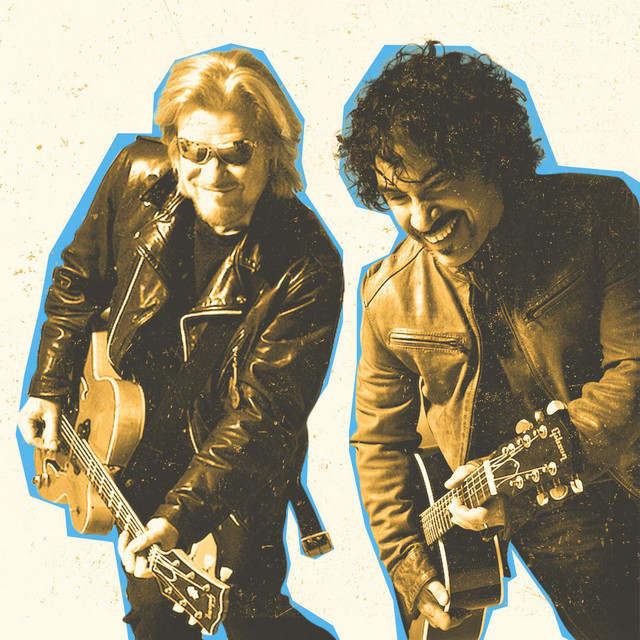
Daryl Hall & John Oates



Irene Cara



![Don’t Stop Believin’ (From "Two of a Kind") [Re-Recorded]](https://i.scdn.co/image/ab67616d0000b273232f33898618403d606f7f57)