Data may be outdated
Last updated: 3 weeks ago — Click refresh to get the latest statistics.
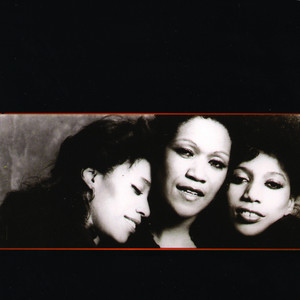
Ruth, <a href="spotify:artist:7eX5M9S4GTvI1shpCuDD6O">Anita</a>, <a href="spotify:artist:3ywBpweKQY8MosUnAuPAgc">Bonnie</a>, and <a href="spotify:artist:4FkLqg6EECxmLfBtLfpBSN">June Pointer</a> grew up in Oakland, California, daughters of a mother and reverend father who encouraged gospel singing and forbade blues and rock & roll. They developed their love for various forms of secular music through visits and slumber parties at the homes of friends, where they could listen to music and watch programs like American Bandstand and The Ed Sullivan Show. The sisters’ public performances were limited to church, but once they were older, <a href="spotify:artist:3ywBpweKQY8MosUnAuPAgc">Bonnie</a> and <a href="spotify:artist:4FkLqg6EECxmLfBtLfpBSN">June</a> formed a duo and were eventually joined by <a href="spotify:artist:7eX5M9S4GTvI1shpCuDD6O">Anita</a>; they provided background vocals for a number of artists, including <a href="spotify:artist:3wNX7r7t4Vaahrx9XzyYIY">Grace Slick</a>, <a href="spotify:artist:46njgd2Rq9tZc4ZjeQMgbh">Boz Scaggs</a>, and <a href="spotify:artist:5TGTpu4g8siFOIctZuQO7y">Sylvester</a>. While performing with <a href="spotify:artist:3QKktX309XIKJEYkoLJ3TB">Walter Bishop</a>, they caught the eyes and ears of the <a href="spotify:search:label%3A%22Atlantic%22">Atlantic</a> label, which released the Pointer Sisters' first two singles: 1971’s <a href="spotify:artist:0CXNdUUhv5Cw42dr0wWrjd">Honey Cone</a>-like “Don’t Try to Take the Fifth” and the following year’s “Destination No More Heartaches.” Neither song charted, but their abundant potential was obvious.
By the end of 1972, the group was a quartet that also featured Ruth. The Pointers left <a href="spotify:search:label%3A%22Atlantic%22">Atlantic</a> for <a href="spotify:search:label%3A%22Blue+Thumb%22">Blue Thumb</a>, where they released five eclectic albums: The Pointer Sisters (1973), That’s a Plenty (1974), Live at the Opera House (1974), Steppin’ (1975), and Having a Party (1977). Among the hit singles from these releases were the empowering “Yes We Can Can” (written by <a href="spotify:artist:63aP18bg2ABSOqSNQcAMNy">Allen Toussaint</a>), “How Long (Betcha Got a Chick on the Side)” (a <a href="spotify:artist:63aP18bg2ABSOqSNQcAMNy">Toussaint</a>-flavored song written by <a href="spotify:artist:3ywBpweKQY8MosUnAuPAgc">Bonnie</a> and <a href="spotify:artist:7eX5M9S4GTvI1shpCuDD6O">Anita</a> with David Rubinson), and “Going Down Slowly” (a grinding take on <a href="spotify:artist:63aP18bg2ABSOqSNQcAMNy">Toussaint</a>'s “Going Down”). The most successful song of all was “Fairtyale,” a <a href="spotify:artist:3ywBpweKQY8MosUnAuPAgc">Bonnie</a>- and <a href="spotify:artist:7eX5M9S4GTvI1shpCuDD6O">Anita</a>-penned departure into country music that peaked at number 13 on the Hot 100. This enabled the Pointers to perform at the Grand Ole Opry -- the first African-American vocal group to do so -- and the song also won the 1974 Grammy for Best Country Vocal Performance by a Duo or Group. It was covered by <a href="spotify:artist:43ZHCT0cAZBISjO8DG9PnE">Elvis Presley</a>. The same year Having a Party was issued, the popular children’s television program Sesame Street first aired a classic animated segment called Pinball Number Count, which featured vocals the Pointers recorded several years earlier.
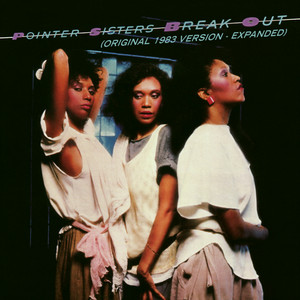
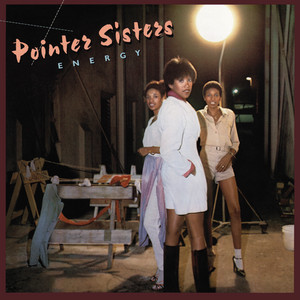
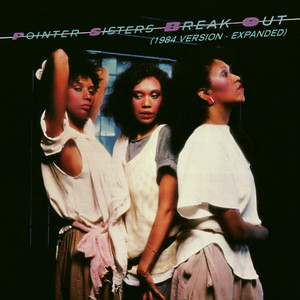
Between the release of Having a Party and the end of 1977, <a href="spotify:artist:4FkLqg6EECxmLfBtLfpBSN">June</a> and <a href="spotify:artist:3ywBpweKQY8MosUnAuPAgc">Bonnie</a> departed from the group, with the latter initiating a solo career. Ruth and <a href="spotify:artist:7eX5M9S4GTvI1shpCuDD6O">Anita</a> signed a deal with producer Richard Perry's <a href="spotify:search:label%3A%22Elektra%22">Elektra</a>-affiliated <a href="spotify:search:label%3A%22Planet%22">Planet</a> label, and <a href="spotify:artist:4FkLqg6EECxmLfBtLfpBSN">June</a> re-joined in time to record Energy (1978), which featured a cover of <a href="spotify:artist:5m8H6zSadhu1j9Yi04VLqD">Sly & the Family Stone</a>'s “Everybody Is a Star” and the <a href="spotify:artist:63aP18bg2ABSOqSNQcAMNy">Toussaint</a>-written “Happiness” (the group’s first single to hit the disco chart) but was otherwise rooted in rock, with interpretations of <a href="spotify:artist:6P7H3ai06vU1sGvdpBwDmE">Steely Dan</a>, <a href="spotify:artist:0reZZVbAPxgX1Rqj6XbWj3">Bob Welch</a>-era <a href="spotify:artist:08GQAI4eElDnROBrJRGE0X">Fleetwood Mac</a>, and <a href="spotify:artist:39T6qqI0jDtSWWioX8eGJz">the Doobie Brothers</a>, along with the second released recording -- following a version by <a href="spotify:artist:1coQ4GcxuazfjZ0MP9JnBF">Robert Gordon</a> -- of <a href="spotify:artist:3eqjTLE0HfPfh78zjh6TqT">Bruce Springsteen</a>'s “Fire,” a song intended for <a href="spotify:artist:43ZHCT0cAZBISjO8DG9PnE">Elvis Presley</a>. The Pointers took it to number two on the Hot 100 chart. The rest of the group’s years with Perry and <a href="spotify:search:label%3A%22Planet%22">Planet</a> were extremely successful, culminating with 1983’s Break Out, an album that went multi-platinum due to a string of four state-of-the-art dance-pop singles. “Automatic,” “Jump (For My Love),” a remix of 1982’s “I’m So Excited,” and “Neutron Dance” all peaked in the Hot 100’s Top Ten. The women won two additional Grammys.
During the latter half of the ‘80s and the early ‘90s, the Pointer Sisters released five more albums on <a href="spotify:search:label%3A%22RCA%22">RCA</a>, <a href="spotify:search:label%3A%22Motown%22">Motown</a>, and <a href="spotify:search:label%3A%22SBK%22">SBK</a>. 1985’s Contact, featuring the crossover hit “Dare Me,” was the group’s last album to go platinum. While they did not record any albums after 1993’s Only Sisters Can Do That, they continued to perform on an infrequent basis. Issa, Ruth’s daughter, provided backing vocals on the final album and joined as a full member when <a href="spotify:artist:4FkLqg6EECxmLfBtLfpBSN">June</a> left for health reasons. A victim of lung cancer, <a href="spotify:artist:4FkLqg6EECxmLfBtLfpBSN">June</a> passed away in 2006. The Pointer Sisters, however, continued performing throughout the rest of the decade. <a href="spotify:artist:7eX5M9S4GTvI1shpCuDD6O">Anita Pointer</a> died on December 31, 2022 at her home in Los Angeles at the age of 74. ~ Andy Kellman, Rovi
Monthly Listeners
5.0 million
Monthly Listeners History
Track the evolution of monthly listeners over the last 28 days.
Followers
1.2 million
Followers History
Track the evolution of followers over the last 28 days.
Total Streams
2.0 billion
Total Streams History
Track the evolution of total streams over the last 28 days. This data is calculated from all tracks listed in the artist's discography.
Top Cities




Related Artists

Irene Cara




















Kiki Dee