Data may be outdated
Last updated: 9 months ago — Click refresh to get the latest statistics.
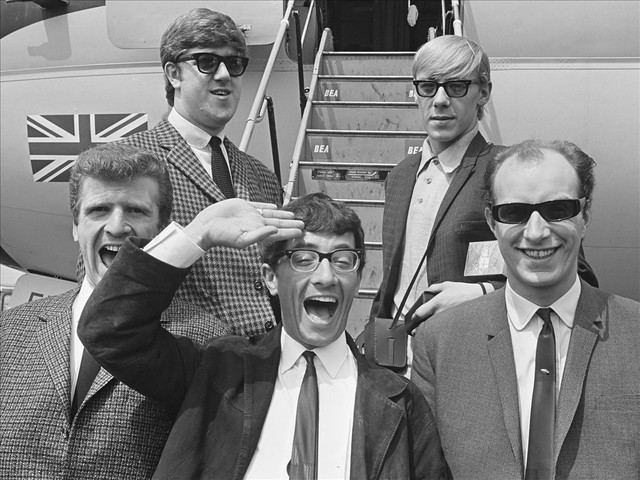
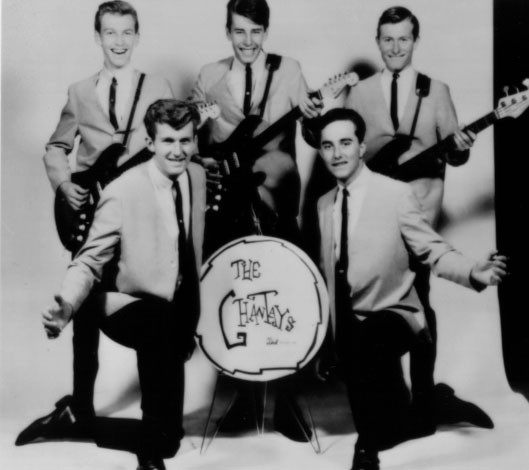
One of the U.K.'s most distinctive instrumental bands in the early-to-mid 1960s, the Tornados scored a worldwide hit with 1962's soaring space age ode "Telstar." The first song by a U.K. group to top the U.S. charts, its uniquely driven, clavioline-led sound was the perfect combination of the band's musicianship and <a href="spotify:artist:2qFfH4tRlRJtTqPoapoerO">Joe Meek</a>'s innovative production and recording techniques. As one of the house bands at <a href="spotify:artist:2qFfH4tRlRJtTqPoapoerO">Meek</a>'s studio and as the backing group for <a href="spotify:artist:7rtLZcKWGV4eaZsBwSKimf">Billy Fury</a>, the Tornados juggled those obligations with releasing their own music, earning Top Five EPs in the U.K. with 1962's The Sounds of the Tornados and Telstar and Top 20 U.K. singles in 1963's "Globetrotter," "Robot," and "Ice Cream Man." By that time, shifting pop music trends and multiple lineup changes -- more than two dozen members played in the group overall -- contributed to the Tornados ' waning popularity. However, they remained creative to the end, incorporating classical influences on 1966's "Pop Art Goes Mozart" and unwittingly releasing the first openly gay pop song with "Do You Come Here Often?," the B-side to their final single "Is That a Ship I Hear." The band's reputation, along with <a href="spotify:artist:2qFfH4tRlRJtTqPoapoerO">Meek</a>'s, grew in the decades to come, and collections such as 2002's Ridin' the Wind: The Anthology and 2023's Love & Fury: The Holloway Road Sessions 1962-1966 documented their special place in pop history.
The Tornados were formed as the second in-house band for <a href="spotify:artist:2qFfH4tRlRJtTqPoapoerO">Joe Meek</a>, England's first independent producer, engineer, and songwriter. <a href="spotify:artist:2qFfH4tRlRJtTqPoapoerO">Meek</a> was an inveterate tinkerer: Setting up a homemade studio in a three-story flat on Holloway Road in London, he designed compression units and microphone preamps that gave his productions a distinctively eerie yet raw sound and pioneered recording techniques like the close miking of instruments, distortion, and loud drums fortified by percussion from pocket combs, milk bottles, and stomped floorboards.
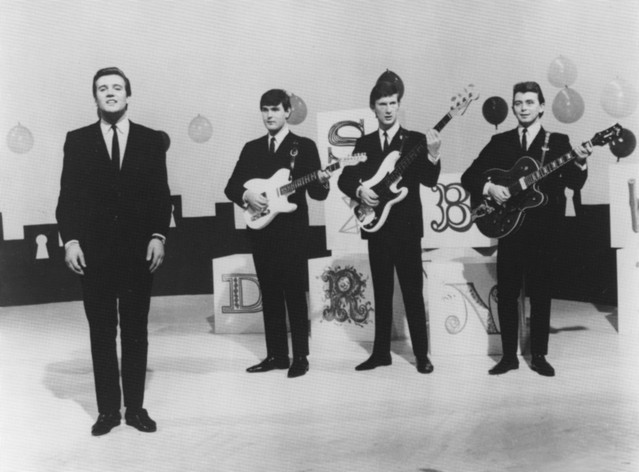
In late 1961, when the amount of recording at the studio became too much for <a href="spotify:artist:2qFfH4tRlRJtTqPoapoerO">Meek</a>'s existing house band <a href="spotify:artist:5MRVnZHeIvS4omPU5Nxh5h">the Outlaws</a>, the producer built another group around <a href="spotify:artist:52HYXSFgDARYgems1vx0sV">Heinz</a>, a German-born bassist who caught <a href="spotify:artist:2qFfH4tRlRJtTqPoapoerO">Meek</a>'s attention when he auditioned for <a href="spotify:artist:5MRVnZHeIvS4omPU5Nxh5h">the Outlaws</a>. Intended to rival preeminent U.K. instrumental rock band <a href="spotify:artist:03hfAxVdAWj7kxDnSG0fLD">the Shadows</a>, the Tornados' initial lineup featured <a href="spotify:artist:52HYXSFgDARYgems1vx0sV">Heinz</a>, drummer <a href="spotify:artist:4isnFjiFzDQ2jOxjuv5AJe">Clem Cattini</a>, lead guitarist Alan Caddy, and rhythm guitarist George Bellamy. This version of the band recorded with <a href="spotify:artist:7oht1HPKaMDnuALYWZHgtV">John Leyton</a> and other artists on <a href="spotify:artist:2qFfH4tRlRJtTqPoapoerO">Meek</a>'s roster, but the addition of keyboardist/pianist Norman Hale in early 1962 brought a completely different dimension to the Tornados' sound.
That February, the group became <a href="spotify:artist:7rtLZcKWGV4eaZsBwSKimf">Billy Fury</a>'s permanent live backing band, and released their own debut single that March. Appearing on Decca, "Love and Fury" was praised for its eerie, galloping style, but failed to chart. That wasn't a problem for the Tornados' next single. Featuring Roger LaVern on keyboards and named for a communications satellite, "Telstar" became the Tornados' -- and <a href="spotify:artist:2qFfH4tRlRJtTqPoapoerO">Meek</a>'s -- greatest success. A love letter to the space age, its soaring clavioline melody and its rumbling blast-off sound effects (which, allegedly, came from a backward recording of a flushing toilet) sounded like nothing else. "Telstar" was a worldwide hit, topping the U.K. Singles Chart and the Billboard Hot 100 in the U.S. (becoming the first chart-topping song by a U.K. group) and appearing in the Top Five in four other countries. It sold five million copies in its first year of release, and <a href="spotify:artist:2qFfH4tRlRJtTqPoapoerO">Meek</a> received the 1962 Ivor Novello Award for the year's Best-Selling A-Side.
However, the French composer Jean Ledrut claimed the song's melody came from his own work "La Marche d'Austerlitz" and sued <a href="spotify:artist:2qFfH4tRlRJtTqPoapoerO">Meek</a> for plagiarism. Because of the lawsuit, <a href="spotify:artist:2qFfH4tRlRJtTqPoapoerO">Meek</a> never saw any "Telstar" royalties while he was alive (the suit was resolved in his favor in 1967, three weeks after his death). Additionally, the Tornados' obligations as <a href="spotify:artist:7rtLZcKWGV4eaZsBwSKimf">Fury</a>'s backing band prevented them from promoting the single with shows in the U.S. In the U.K., the group followed "Telstar"'s success with the EPs The Sounds of the Tornados, which reached number two on the U.K. EPs Chart, and Telstar, which hit number four on that chart and paired their hit with three other songs. Meanwhile, The Original Telstar -- The Sounds of the Tornadoes collected the band's first three EPs for the Austalasian and North American markets (it peaked at 45 in the U.S.).
The Tornados kicked off 1963 with January's "Globetrotter," a Top Five U.K. hit; an EP featuring the song followed in February. That March's More Sounds from the Tornados EP included the band's version of <a href="spotify:artist:6unIK8JFrGemCge3NIUDKE">Percy Faith</a>'s hit instrumental "Theme from A Summer Place" and placed in the Top Ten of the U.K. EPs Chart. That month, they also supported <a href="spotify:artist:7rtLZcKWGV4eaZsBwSKimf">Fury</a> on the number two EP Billy Fury & the Tornados. Later, "Robot" and "Ice Cream Man" became Top 20 singles in the U.K., while the band's live set with <a href="spotify:artist:7rtLZcKWGV4eaZsBwSKimf">Fury</a>, We Want Billy!, peaked at 14 on the U.K. EPs Chart. The Tornados returned to the U.S. charts with the North American release "Ridin' the Wind," which reached 63 on the Billboard Hot 100 Singles chart.
By the middle of 1963, <a href="spotify:artist:52HYXSFgDARYgems1vx0sV">Heinz</a> had departed the group to pursue a solo career with <a href="spotify:artist:2qFfH4tRlRJtTqPoapoerO">Meek</a>. With Brian Gregg holding down the Tornados' low end, the band embraced further changes with July's Tornado Rock EP. A response to the rising popularity of the Mersey Sound and beat groups, it was the band's first release with vocals and hit number seven on the U.K. EPs Chart. August saw the release of Away From It All, the group's first full-length to be released in the U.K. A more straightforward-sounding set than "Telstar," the album included pieces written by the Tornados along with covers and <a href="spotify:artist:2qFfH4tRlRJtTqPoapoerO">Meek</a> compositions. The band also appeared in the film Just for Fun with <a href="spotify:artist:5MX2l6ewjOaeWn1lYNhzlO">Bobby Vee</a>, <a href="spotify:artist:4r7JUeiYy24L7BuzCq9EjR">the Crickets</a>, and other artists, and contributed "All the Stars in the Sky" to the soundtrack. The Tornados closed out the year with "Dragonfly," the first single to feature bassist Ray Randall and rhythm guitarist Bryan Irwin; it reached 41 on the U.K. charts.
The Tornados' lineup continued to change in 1964. LaVern departed for a solo career and was replaced by keyboardist Jimmy O'Brien for the band's next single, July's "Hot Pot." One of several songs the band made with field recordings captured by <a href="spotify:artist:4QJpMVEZA1B0MkdW0jDMX4">David Attenborough</a>, "Hot Pot" was a Top 40 hit in Australia but failed to chart in the U.K. By the time they released "Monte Carlo," Caddy had left, with Stuart Taylor becoming lead guitarist. The single, along with the subsequent "Exodus," appeared in the lower regions of the Australian charts. For their first single of 1965, "Granada," the band moved from Decca to <a href="spotify:search:label%3A%22Columbia%22">Columbia</a>. It was the last single to feature the Tornados' lone remaining founding member <a href="spotify:artist:4isnFjiFzDQ2jOxjuv5AJe">Cattini</a>, who went onto a successful career as a session drummer for <a href="spotify:artist:1SQRv42e4PjEYfPhS0Tk9E">the Kinks</a>, <a href="spotify:artist:1T0wRBO0CK0vK8ouUMqEl5">Tom Jones</a>, and other artists, and also played with <a href="spotify:artist:08avsqaGIlK2x3i2Cu7rKH">Cliff Richards</a>.
When O'Brien and Taylor also left, <a href="spotify:artist:2qFfH4tRlRJtTqPoapoerO">Meek</a> rebooted the Tornados with keyboardist Dave Watts, drummer Pete Adams, saxophonist Roger Warwick, former <a href="spotify:artist:0pddPSz4LB8mViXFSVQbEY">Flee-Rekkers</a> member Dave Cameron on lead guitar, and Randall and Irwin remaining on bass and rhythm guitar respectively. This lineup sought to recapture the "Telstar" magic with May 1965's "Early Bird," another tribute to a satellite (in this case, Intelsat I). This incarnation of the Tornados also recorded September's "Stingray," a version of the theme song to the aquatic-themed science fiction show of the same name. Neither single charted, and more lineup changes ensued, with drummer John Davies, bassist Roger Holder, lead guitarist Pete Holder, and lead guitarist Robb Gayle (formerly of Robb Gayle & the Whirlwinds and the Saxons) joining Watts. The group returned to backing <a href="spotify:artist:7rtLZcKWGV4eaZsBwSKimf">Fury</a> and issued a pair of 1966 singles that ranked among their most creative work: "Pop-Art Goes Mozart" arranged sections of The Marriage of Figaro, while "Is That a Ship I Hear" was more notable for its B-side: Appearing a year before same-sex relationships were decriminalized in the U.K., "Do You Come Here Often?" is widely recognized as the first openly gay record, though the Tornados didn't understand its subtext when they recorded it.
The Tornados soldiered on for a time following <a href="spotify:artist:2qFfH4tRlRJtTqPoapoerO">Meek</a>'s 1967 death, playing a series of shows in Israel in 1968 before disbanding. In 1972, a version of the group reformed, with drummer Jon Werrell and lead guitarist Tony Cowell joining original members <a href="spotify:artist:52HYXSFgDARYgems1vx0sV">Heinz</a> and Hale. Billed as the New Tornados, they played '60s nostalgia concerts with artists like fellow <a href="spotify:artist:2qFfH4tRlRJtTqPoapoerO">Meek</a> collaborator <a href="spotify:artist:00ByTA04jKtjHCSCEjKFID">Screaming Lord Sutch</a>. In 1975, <a href="spotify:artist:52HYXSFgDARYgems1vx0sV">Heinz</a>, <a href="spotify:artist:4isnFjiFzDQ2jOxjuv5AJe">Cattini</a>, LaVern, and Bellamy reunited as the Original Tornados, releasing a version of "Telstar" (<a href="spotify:artist:7rtLZcKWGV4eaZsBwSKimf">Fury</a> also issued a '70s remake of "Telstar" with Fury's Tornados, which didn't feature any members of the band that recorded with <a href="spotify:artist:2qFfH4tRlRJtTqPoapoerO">Meek</a>). In 1996, Randall, Irwin, and Taylor formed Ray Randall's Tornados, who recorded a three-song CD in honor of <a href="spotify:artist:2qFfH4tRlRJtTqPoapoerO">Meek</a>. During this time, numerous compilations of the band's work appeared, particularly as <a href="spotify:artist:2qFfH4tRlRJtTqPoapoerO">Meek</a>'s reputation as an innovator grew in the '80, '90s, and 2000s. In 2020, <a href="spotify:search:label%3A%22Cherry+Red%22">Cherry Red</a> purchased the massive collection of unedited sessions <a href="spotify:artist:2qFfH4tRlRJtTqPoapoerO">Meek</a> left behind, also known as the Tea Chest Tapes. In November 2023, the label released Love & Fury: The Holloway Road Sessions 1962-1966, which gathered remastered versions of the Tornados' demos, backing tracks, alternate versions, and other rarities found within the archive. ~ Heather Phares, Rovi
The Tornados were formed as the second in-house band for <a href="spotify:artist:2qFfH4tRlRJtTqPoapoerO">Joe Meek</a>, England's first independent producer, engineer, and songwriter. <a href="spotify:artist:2qFfH4tRlRJtTqPoapoerO">Meek</a> was an inveterate tinkerer: Setting up a homemade studio in a three-story flat on Holloway Road in London, he designed compression units and microphone preamps that gave his productions a distinctively eerie yet raw sound and pioneered recording techniques like the close miking of instruments, distortion, and loud drums fortified by percussion from pocket combs, milk bottles, and stomped floorboards.
In late 1961, when the amount of recording at the studio became too much for <a href="spotify:artist:2qFfH4tRlRJtTqPoapoerO">Meek</a>'s existing house band <a href="spotify:artist:5MRVnZHeIvS4omPU5Nxh5h">the Outlaws</a>, the producer built another group around <a href="spotify:artist:52HYXSFgDARYgems1vx0sV">Heinz</a>, a German-born bassist who caught <a href="spotify:artist:2qFfH4tRlRJtTqPoapoerO">Meek</a>'s attention when he auditioned for <a href="spotify:artist:5MRVnZHeIvS4omPU5Nxh5h">the Outlaws</a>. Intended to rival preeminent U.K. instrumental rock band <a href="spotify:artist:03hfAxVdAWj7kxDnSG0fLD">the Shadows</a>, the Tornados' initial lineup featured <a href="spotify:artist:52HYXSFgDARYgems1vx0sV">Heinz</a>, drummer <a href="spotify:artist:4isnFjiFzDQ2jOxjuv5AJe">Clem Cattini</a>, lead guitarist Alan Caddy, and rhythm guitarist George Bellamy. This version of the band recorded with <a href="spotify:artist:7oht1HPKaMDnuALYWZHgtV">John Leyton</a> and other artists on <a href="spotify:artist:2qFfH4tRlRJtTqPoapoerO">Meek</a>'s roster, but the addition of keyboardist/pianist Norman Hale in early 1962 brought a completely different dimension to the Tornados' sound.
That February, the group became <a href="spotify:artist:7rtLZcKWGV4eaZsBwSKimf">Billy Fury</a>'s permanent live backing band, and released their own debut single that March. Appearing on Decca, "Love and Fury" was praised for its eerie, galloping style, but failed to chart. That wasn't a problem for the Tornados' next single. Featuring Roger LaVern on keyboards and named for a communications satellite, "Telstar" became the Tornados' -- and <a href="spotify:artist:2qFfH4tRlRJtTqPoapoerO">Meek</a>'s -- greatest success. A love letter to the space age, its soaring clavioline melody and its rumbling blast-off sound effects (which, allegedly, came from a backward recording of a flushing toilet) sounded like nothing else. "Telstar" was a worldwide hit, topping the U.K. Singles Chart and the Billboard Hot 100 in the U.S. (becoming the first chart-topping song by a U.K. group) and appearing in the Top Five in four other countries. It sold five million copies in its first year of release, and <a href="spotify:artist:2qFfH4tRlRJtTqPoapoerO">Meek</a> received the 1962 Ivor Novello Award for the year's Best-Selling A-Side.
However, the French composer Jean Ledrut claimed the song's melody came from his own work "La Marche d'Austerlitz" and sued <a href="spotify:artist:2qFfH4tRlRJtTqPoapoerO">Meek</a> for plagiarism. Because of the lawsuit, <a href="spotify:artist:2qFfH4tRlRJtTqPoapoerO">Meek</a> never saw any "Telstar" royalties while he was alive (the suit was resolved in his favor in 1967, three weeks after his death). Additionally, the Tornados' obligations as <a href="spotify:artist:7rtLZcKWGV4eaZsBwSKimf">Fury</a>'s backing band prevented them from promoting the single with shows in the U.S. In the U.K., the group followed "Telstar"'s success with the EPs The Sounds of the Tornados, which reached number two on the U.K. EPs Chart, and Telstar, which hit number four on that chart and paired their hit with three other songs. Meanwhile, The Original Telstar -- The Sounds of the Tornadoes collected the band's first three EPs for the Austalasian and North American markets (it peaked at 45 in the U.S.).
The Tornados kicked off 1963 with January's "Globetrotter," a Top Five U.K. hit; an EP featuring the song followed in February. That March's More Sounds from the Tornados EP included the band's version of <a href="spotify:artist:6unIK8JFrGemCge3NIUDKE">Percy Faith</a>'s hit instrumental "Theme from A Summer Place" and placed in the Top Ten of the U.K. EPs Chart. That month, they also supported <a href="spotify:artist:7rtLZcKWGV4eaZsBwSKimf">Fury</a> on the number two EP Billy Fury & the Tornados. Later, "Robot" and "Ice Cream Man" became Top 20 singles in the U.K., while the band's live set with <a href="spotify:artist:7rtLZcKWGV4eaZsBwSKimf">Fury</a>, We Want Billy!, peaked at 14 on the U.K. EPs Chart. The Tornados returned to the U.S. charts with the North American release "Ridin' the Wind," which reached 63 on the Billboard Hot 100 Singles chart.
By the middle of 1963, <a href="spotify:artist:52HYXSFgDARYgems1vx0sV">Heinz</a> had departed the group to pursue a solo career with <a href="spotify:artist:2qFfH4tRlRJtTqPoapoerO">Meek</a>. With Brian Gregg holding down the Tornados' low end, the band embraced further changes with July's Tornado Rock EP. A response to the rising popularity of the Mersey Sound and beat groups, it was the band's first release with vocals and hit number seven on the U.K. EPs Chart. August saw the release of Away From It All, the group's first full-length to be released in the U.K. A more straightforward-sounding set than "Telstar," the album included pieces written by the Tornados along with covers and <a href="spotify:artist:2qFfH4tRlRJtTqPoapoerO">Meek</a> compositions. The band also appeared in the film Just for Fun with <a href="spotify:artist:5MX2l6ewjOaeWn1lYNhzlO">Bobby Vee</a>, <a href="spotify:artist:4r7JUeiYy24L7BuzCq9EjR">the Crickets</a>, and other artists, and contributed "All the Stars in the Sky" to the soundtrack. The Tornados closed out the year with "Dragonfly," the first single to feature bassist Ray Randall and rhythm guitarist Bryan Irwin; it reached 41 on the U.K. charts.
The Tornados' lineup continued to change in 1964. LaVern departed for a solo career and was replaced by keyboardist Jimmy O'Brien for the band's next single, July's "Hot Pot." One of several songs the band made with field recordings captured by <a href="spotify:artist:4QJpMVEZA1B0MkdW0jDMX4">David Attenborough</a>, "Hot Pot" was a Top 40 hit in Australia but failed to chart in the U.K. By the time they released "Monte Carlo," Caddy had left, with Stuart Taylor becoming lead guitarist. The single, along with the subsequent "Exodus," appeared in the lower regions of the Australian charts. For their first single of 1965, "Granada," the band moved from Decca to <a href="spotify:search:label%3A%22Columbia%22">Columbia</a>. It was the last single to feature the Tornados' lone remaining founding member <a href="spotify:artist:4isnFjiFzDQ2jOxjuv5AJe">Cattini</a>, who went onto a successful career as a session drummer for <a href="spotify:artist:1SQRv42e4PjEYfPhS0Tk9E">the Kinks</a>, <a href="spotify:artist:1T0wRBO0CK0vK8ouUMqEl5">Tom Jones</a>, and other artists, and also played with <a href="spotify:artist:08avsqaGIlK2x3i2Cu7rKH">Cliff Richards</a>.
When O'Brien and Taylor also left, <a href="spotify:artist:2qFfH4tRlRJtTqPoapoerO">Meek</a> rebooted the Tornados with keyboardist Dave Watts, drummer Pete Adams, saxophonist Roger Warwick, former <a href="spotify:artist:0pddPSz4LB8mViXFSVQbEY">Flee-Rekkers</a> member Dave Cameron on lead guitar, and Randall and Irwin remaining on bass and rhythm guitar respectively. This lineup sought to recapture the "Telstar" magic with May 1965's "Early Bird," another tribute to a satellite (in this case, Intelsat I). This incarnation of the Tornados also recorded September's "Stingray," a version of the theme song to the aquatic-themed science fiction show of the same name. Neither single charted, and more lineup changes ensued, with drummer John Davies, bassist Roger Holder, lead guitarist Pete Holder, and lead guitarist Robb Gayle (formerly of Robb Gayle & the Whirlwinds and the Saxons) joining Watts. The group returned to backing <a href="spotify:artist:7rtLZcKWGV4eaZsBwSKimf">Fury</a> and issued a pair of 1966 singles that ranked among their most creative work: "Pop-Art Goes Mozart" arranged sections of The Marriage of Figaro, while "Is That a Ship I Hear" was more notable for its B-side: Appearing a year before same-sex relationships were decriminalized in the U.K., "Do You Come Here Often?" is widely recognized as the first openly gay record, though the Tornados didn't understand its subtext when they recorded it.
The Tornados soldiered on for a time following <a href="spotify:artist:2qFfH4tRlRJtTqPoapoerO">Meek</a>'s 1967 death, playing a series of shows in Israel in 1968 before disbanding. In 1972, a version of the group reformed, with drummer Jon Werrell and lead guitarist Tony Cowell joining original members <a href="spotify:artist:52HYXSFgDARYgems1vx0sV">Heinz</a> and Hale. Billed as the New Tornados, they played '60s nostalgia concerts with artists like fellow <a href="spotify:artist:2qFfH4tRlRJtTqPoapoerO">Meek</a> collaborator <a href="spotify:artist:00ByTA04jKtjHCSCEjKFID">Screaming Lord Sutch</a>. In 1975, <a href="spotify:artist:52HYXSFgDARYgems1vx0sV">Heinz</a>, <a href="spotify:artist:4isnFjiFzDQ2jOxjuv5AJe">Cattini</a>, LaVern, and Bellamy reunited as the Original Tornados, releasing a version of "Telstar" (<a href="spotify:artist:7rtLZcKWGV4eaZsBwSKimf">Fury</a> also issued a '70s remake of "Telstar" with Fury's Tornados, which didn't feature any members of the band that recorded with <a href="spotify:artist:2qFfH4tRlRJtTqPoapoerO">Meek</a>). In 1996, Randall, Irwin, and Taylor formed Ray Randall's Tornados, who recorded a three-song CD in honor of <a href="spotify:artist:2qFfH4tRlRJtTqPoapoerO">Meek</a>. During this time, numerous compilations of the band's work appeared, particularly as <a href="spotify:artist:2qFfH4tRlRJtTqPoapoerO">Meek</a>'s reputation as an innovator grew in the '80, '90s, and 2000s. In 2020, <a href="spotify:search:label%3A%22Cherry+Red%22">Cherry Red</a> purchased the massive collection of unedited sessions <a href="spotify:artist:2qFfH4tRlRJtTqPoapoerO">Meek</a> left behind, also known as the Tea Chest Tapes. In November 2023, the label released Love & Fury: The Holloway Road Sessions 1962-1966, which gathered remastered versions of the Tornados' demos, backing tracks, alternate versions, and other rarities found within the archive. ~ Heather Phares, Rovi
Monthly Listeners
55,395
Monthly Listeners History
Track the evolution of monthly listeners over the last 28 days.
Followers
25,658
Followers History
Track the evolution of followers over the last 28 days.
Top Cities
2,144 listeners

856 listeners
852 listeners
682 listeners
655 listeners
Related Artists