Data may be outdated
Last updated: 9 months ago — Click refresh to get the latest statistics.
Thurston Dart was at the center of the early music revival in England during the 1950s and 1960s, revolutionizing the performance and perceptions of Baroque and early Classical-era music. Dart's scholarly demeanor prevented him from ever achieving the kind of fame that his collaborator and colleague <a href="spotify:artist:6NUhQz7eAEsZvjEHTKHux9">Neville Marriner</a> did, and chronic ill-health brought an end to his career just at the time audiences were beginning to take Baroque music more seriously and kept him from becoming the kind of household name that <a href="spotify:artist:6NUhQz7eAEsZvjEHTKHux9">Marriner</a>, <a href="spotify:artist:0vBafEFOLXtq5mZuhMgsyL">Christopher Hogwood</a>, or <a href="spotify:artist:0AeOzXbHJu8q2xqILEOLEO">Nikolaus Harnoncourt</a> became later in the decade.
Dart was born in Kingston and educated at Hampton Grammar School. He was a chorister at the Chapel Royal in Hampton Court. In 1938 and 1939, he studied at the Royal College of Music and later earned a bachelor of science degree at University College, Exeter. During World War II, Dart served as an officer in operational research in the Royal Air Force. During his wartime service, he chanced to meet <a href="spotify:artist:6NUhQz7eAEsZvjEHTKHux9">Marriner</a>, a young violinist whose music studies had also been interrupted. After the war, Dart continued his studies in Brussels with Charles van den Boren, and in 1947 he became an assistant lecturer in music at Cambridge. During the late '40s, he served as editor of the Galpin Society Journal and was involved in several other scholarly musical projects, including serving on the editorial committee of the Purcell Society and on the library committee of the English Folk Dance and Song Society.
Dart began giving recitals on the harpsichord, organ, and clavichord during the late '40s and made frequent appearance on radio discussing Baroque-era music. In 1950, he made his first recordings and also recorded with the Jacobean Ensemble, an early music performing group whose members included <a href="spotify:artist:6NUhQz7eAEsZvjEHTKHux9">Marriner</a>. Dart also performed with the Boyd Neel Orchestra. On Neel's departure, Dart to took over the job of conducting the group, which was renamed Philomusica of London. He was made a full lecturer at Cambridge in 1952 and granted a fellowship at Jesus College, Cambridge, that same year.
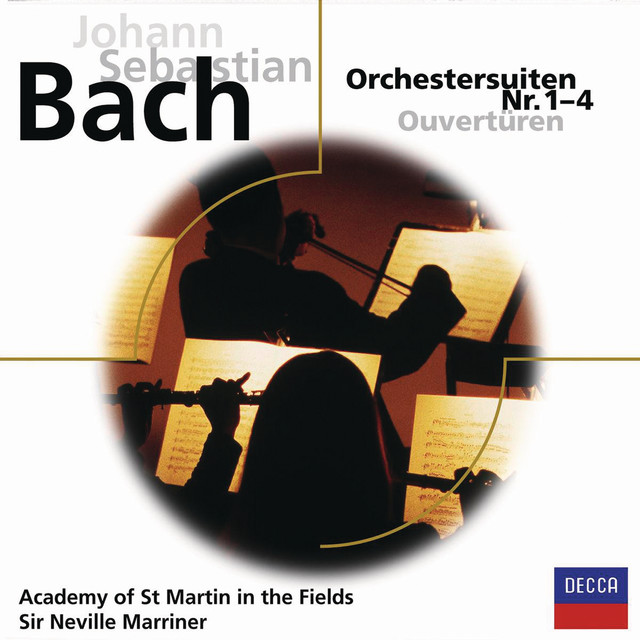
During his association with the Jacobean Ensemble and his four years conducting Philomusica of London, Dart made recordings of <a href="spotify:artist:5aIqB5nVVvmFsvSdExz408">Bach</a>'s Brandenburg Concertos and the Orchestral Suites, as well as the Double Violin Concerto, the Flute Concerto, and the Harpsichord Concertos, <a href="spotify:artist:1mhwtKvBm1ncoOrUtnQUgk">John Dowland</a>'s Lachrymae, <a href="spotify:artist:1QL7yTHrdahRMpvNtn6rI2">Handel</a>'s Water Music, the best-known serenades of <a href="spotify:artist:4NJhFmfw43RLBLjQvxDuRS">Mozart</a>, various works of <a href="spotify:artist:0ebni9QrrWMvEgH40nOWZQ">J.C. Bach</a>, and concerti grossi by <a href="spotify:artist:0mFblCBw0GcoY7zY1P8tzE">Scarlatti</a>, <a href="spotify:artist:5dmMpIyAVaH6b9FLFgWPrF">Corelli</a>, and <a href="spotify:artist:4Vn6axeFKEaPRH1sI7JVKj">Geminiani</a>. In 1954, he published The Interpretation of Music, an important study text. Much of his work involved the scores of <a href="spotify:artist:5aIqB5nVVvmFsvSdExz408">J.S. Bach</a>, most notably the Brandenburg Concertos and the Orchestral Suites, whose interpretation he revised in a radically new fashion for the recording by the <a href="spotify:artist:77CaCn32H4mOMQA7UElzfF">Academy of St. Martin-in-the-Fields</a> released during the early '70s. Dart wrote numerous articles on the interpretation of keyboard works by <a href="spotify:artist:5aIqB5nVVvmFsvSdExz408">Bach</a>, <a href="spotify:artist:1QL7yTHrdahRMpvNtn6rI2">Handel</a>, and <a href="spotify:artist:4ptEL1DS7eDXjcYlIgbPzU">Purcell</a>, and made many recordings of those pieces. He supervised the revisions in the performing editions of the vocal music of <a href="spotify:artist:2j7yGPnVrdIHjHwtyLPJ2z">William Byrd</a> and <a href="spotify:artist:4kVLtXuKJTE7SgYd2sQtaL">François Couperin</a>, and was also renowned for his collection of antique instruments, manuscripts, and early printed editions of Baroque scores that greatly aided his scholarly activities.
Dart's academic tenure at Cambridge during the early '60s was marred by intra-faculty disputes and ended in 1964 when he accepted the King Edward Professorship of Music at the University of London. As his health declined, he withdrew from the conductor's podium, and later ceased his keyboard recitals as well. He continued his scholarly activities, however, until shortly before his death and saw his work embodied in the performances and recordings of the <a href="spotify:artist:77CaCn32H4mOMQA7UElzfF">Academy of St. Martin-in-the-Fields</a>.
Dart was born in Kingston and educated at Hampton Grammar School. He was a chorister at the Chapel Royal in Hampton Court. In 1938 and 1939, he studied at the Royal College of Music and later earned a bachelor of science degree at University College, Exeter. During World War II, Dart served as an officer in operational research in the Royal Air Force. During his wartime service, he chanced to meet <a href="spotify:artist:6NUhQz7eAEsZvjEHTKHux9">Marriner</a>, a young violinist whose music studies had also been interrupted. After the war, Dart continued his studies in Brussels with Charles van den Boren, and in 1947 he became an assistant lecturer in music at Cambridge. During the late '40s, he served as editor of the Galpin Society Journal and was involved in several other scholarly musical projects, including serving on the editorial committee of the Purcell Society and on the library committee of the English Folk Dance and Song Society.
Dart began giving recitals on the harpsichord, organ, and clavichord during the late '40s and made frequent appearance on radio discussing Baroque-era music. In 1950, he made his first recordings and also recorded with the Jacobean Ensemble, an early music performing group whose members included <a href="spotify:artist:6NUhQz7eAEsZvjEHTKHux9">Marriner</a>. Dart also performed with the Boyd Neel Orchestra. On Neel's departure, Dart to took over the job of conducting the group, which was renamed Philomusica of London. He was made a full lecturer at Cambridge in 1952 and granted a fellowship at Jesus College, Cambridge, that same year.
During his association with the Jacobean Ensemble and his four years conducting Philomusica of London, Dart made recordings of <a href="spotify:artist:5aIqB5nVVvmFsvSdExz408">Bach</a>'s Brandenburg Concertos and the Orchestral Suites, as well as the Double Violin Concerto, the Flute Concerto, and the Harpsichord Concertos, <a href="spotify:artist:1mhwtKvBm1ncoOrUtnQUgk">John Dowland</a>'s Lachrymae, <a href="spotify:artist:1QL7yTHrdahRMpvNtn6rI2">Handel</a>'s Water Music, the best-known serenades of <a href="spotify:artist:4NJhFmfw43RLBLjQvxDuRS">Mozart</a>, various works of <a href="spotify:artist:0ebni9QrrWMvEgH40nOWZQ">J.C. Bach</a>, and concerti grossi by <a href="spotify:artist:0mFblCBw0GcoY7zY1P8tzE">Scarlatti</a>, <a href="spotify:artist:5dmMpIyAVaH6b9FLFgWPrF">Corelli</a>, and <a href="spotify:artist:4Vn6axeFKEaPRH1sI7JVKj">Geminiani</a>. In 1954, he published The Interpretation of Music, an important study text. Much of his work involved the scores of <a href="spotify:artist:5aIqB5nVVvmFsvSdExz408">J.S. Bach</a>, most notably the Brandenburg Concertos and the Orchestral Suites, whose interpretation he revised in a radically new fashion for the recording by the <a href="spotify:artist:77CaCn32H4mOMQA7UElzfF">Academy of St. Martin-in-the-Fields</a> released during the early '70s. Dart wrote numerous articles on the interpretation of keyboard works by <a href="spotify:artist:5aIqB5nVVvmFsvSdExz408">Bach</a>, <a href="spotify:artist:1QL7yTHrdahRMpvNtn6rI2">Handel</a>, and <a href="spotify:artist:4ptEL1DS7eDXjcYlIgbPzU">Purcell</a>, and made many recordings of those pieces. He supervised the revisions in the performing editions of the vocal music of <a href="spotify:artist:2j7yGPnVrdIHjHwtyLPJ2z">William Byrd</a> and <a href="spotify:artist:4kVLtXuKJTE7SgYd2sQtaL">François Couperin</a>, and was also renowned for his collection of antique instruments, manuscripts, and early printed editions of Baroque scores that greatly aided his scholarly activities.
Dart's academic tenure at Cambridge during the early '60s was marred by intra-faculty disputes and ended in 1964 when he accepted the King Edward Professorship of Music at the University of London. As his health declined, he withdrew from the conductor's podium, and later ceased his keyboard recitals as well. He continued his scholarly activities, however, until shortly before his death and saw his work embodied in the performances and recordings of the <a href="spotify:artist:77CaCn32H4mOMQA7UElzfF">Academy of St. Martin-in-the-Fields</a>.
Monthly Listeners
11,673
Monthly Listeners History
Track the evolution of monthly listeners over the last 28 days.
Followers
346
Followers History
Track the evolution of followers over the last 28 days.
Top Cities
184 listeners

154 listeners

138 listeners

120 listeners
117 listeners

Related Artists

Karl Ristenpart
Maria Teresa Garatti
Christoph Förster
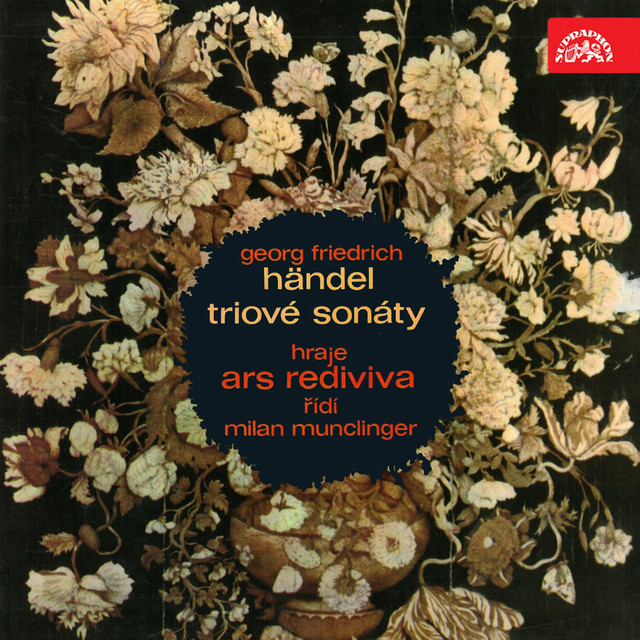
Milan Munclinger

Giuseppe Sammartini
Louis Auriacombe
Pina Carmirelli
Johann Wilhelm Hertel
Orchestre De Chambre De Toulouse

Franz Ignaz Beck

Paolo Ghidoni
Frederick the Great




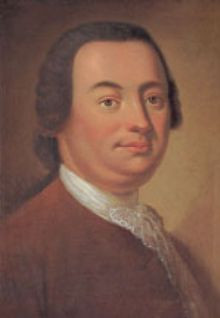
Johann Christoph Friedrich Bach

Alan Cuckston