Data may be outdated
Last updated: 7 months ago — Click refresh to get the latest statistics.
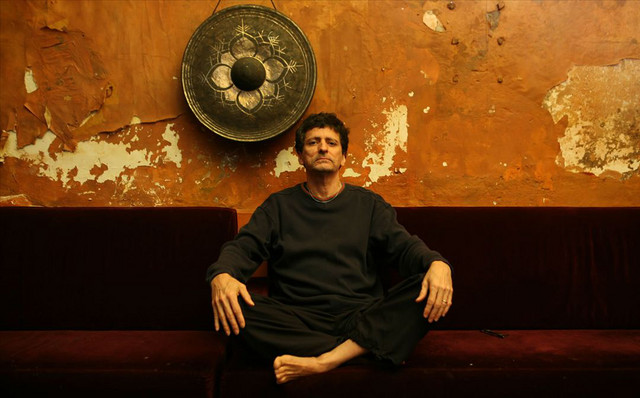
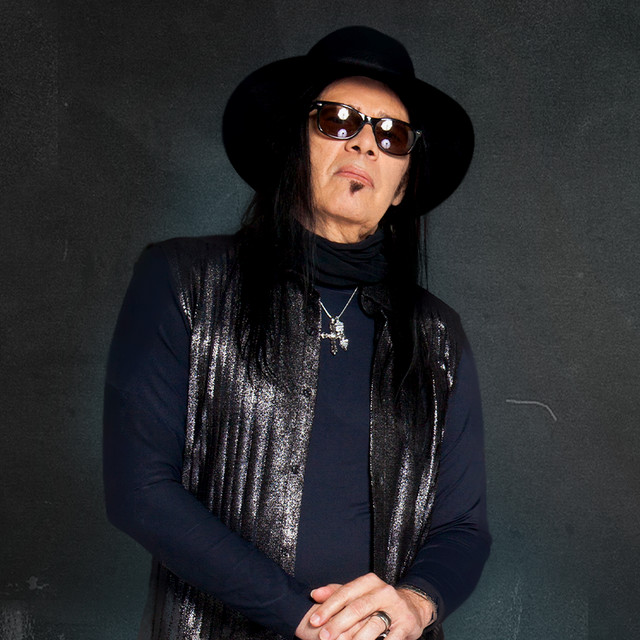
Vinicius Cantuária is a New York-based guitarist, songwriter, vocalist, drummer, and percussionist from Brazil. An intensely restless solo artist, his recordings often combine samba, bossa, jazz, and rock. He founded the rock band <a href="spotify:artist:7uueezfy8NlCLWlJAOQPnk">O Têrço</a> in 1969, and they released six albums including 1978's Mudança de Tempo. He played sessions with <a href="spotify:artist:7HGNYPmbDrMkylWqeFCOIQ">Caetano Veloso</a>, <a href="spotify:artist:1b8kpp4DUwt1hWaxTiWQhD">Gal Costa</a>, <a href="spotify:artist:7JoWcJHDOG58JYTe6d400S">Zé Ramalho</a>, and <a href="spotify:artist:6cHQUDAPGKRE2NbVjBlOcz">Erasmo Carlos</a>, before releasing his eponymous solo debut in 1982. Nu Brasil followed in 1986. 1991's Rio Negro and 1996's Tucuma won notice from jazz and rock critics. Cantuária co-wrote and played on <a href="spotify:artist:2914JagOufmP5BY9qLDxtF">Arto Lindsay</a>'s The Subtle Body in 1996. 2004's funky jazz-samba set Horse & Fish was followed by globally acclaimed titles Silva (2005), Cymbals (2007), and Samba Carioca (2010). 2011's Lágrimas Mexicanas was a duo with <a href="spotify:artist:3SONlwqLIP2GtaMh9pLYe5">Bill Frisell</a>. 2015's Vinicius Canta Antonio Carlos Jobim was followed by 2021's Surpresa, a collaboration with American songwriter <a href="spotify:artist:1SE144wEx5NYxXBKH5mOqy">Jesse Harris</a>, and he recorded 2022's Naus with MPB star <a href="spotify:artist:7LunbFWIm3RPQpywjOSSd8">Zeca Baleiro</a>. In 2024, Cantuária issued Psychedelic Rio, showcasing his new trio with bassist Paolo Andriolo and drummer <a href="spotify:artist:0tJKusVcJw4xuMQslqsd2b">Roberto Rossi</a>.
Cantuária was born in Manaus in Amazonas in 1951. His family moved to Rio de Janeiro when he was eight. He began guitar and percussion studies at ten and became a professional musician at 16. Cantuária formed the rock band <a href="spotify:artist:7uueezfy8NlCLWlJAOQPnk">O Têrço</a> in 1969; he played drums and sang. O Têrço, their debut LP, appeared in 1970, followed by Têrço in 1973. The charting album included a horn section with jazzman Paulo Moura Hepteto on alto saxophone. The band's greatest success, however, was 1978's Mudança de Tempo; it went to the Top 40 on Brazil's rock charts. The last <a href="spotify:artist:7uueezfy8NlCLWlJAOQPnk">O Têrço</a> album to include Cantuária was 1983's Som Mais Puro, on which he appeared as a guest vocalist and guitarist.
<a href="spotify:artist:7uueezfy8NlCLWlJAOQPnk">O Têrço</a> was just one of the musician's outlets. He made a good part of his living as a session musician, playing on albums by the rock band Bixo Da Seda, <a href="spotify:artist:1b8kpp4DUwt1hWaxTiWQhD">Gal Costa</a>, and <a href="spotify:artist:7JoWcJHDOG58JYTe6d400S">Zé Ramalho</a>. In 1979 he joined <a href="spotify:artist:7HGNYPmbDrMkylWqeFCOIQ">Caetano Veloso</a> as a drummer, playing on the 1979 classic Cinema Transcendental. He also assisted guitarist Sergio Hinds, his former bandmate, on his first self-titled solo album. Cantuária spent the next several years working in the studio with <a href="spotify:artist:6cHQUDAPGKRE2NbVjBlOcz">Erasmo Carlos</a>, <a href="spotify:artist:1b8kpp4DUwt1hWaxTiWQhD">Gal Costa</a>, <a href="spotify:artist:7HGNYPmbDrMkylWqeFCOIQ">Veloso</a> (whose touring band he also played in), Lucia Turnbull, and <a href="spotify:artist:4ofHy9bcqR6gBvOBIvCyC0">Fernanda</a>.
In late 1981, the guitarist signed to <a href="spotify:search:label%3A%22BMG+Ariola%22">BMG Ariola</a> and in 1982 issued his debut album. Cantuária wrote or co-wrote each of the set's 11 songs, and <a href="spotify:artist:7HGNYPmbDrMkylWqeFCOIQ">Veloso</a> added a guest vocal to "Chegou No Vento."
The guitarist made an about face in 1983 on the polished MPB production Gávea de Manhã. Making full use of a backing chorus, horns, synths, and more, it revealed a musical sophistication not heard from the artist before. He left <a href="spotify:search:label%3A%22BMG%22">BMG</a> for <a href="spotify:search:label%3A%22EMI%22">EMI</a>, where he released three albums saturated in the MPB new wave: Sutis Diferenças (1984), Siga-Me (1985) (with <a href="spotify:artist:7HGNYPmbDrMkylWqeFCOIQ">Veloso</a> making another guest appearance on "Banda Nova"), and 1986's slick rock- and pop-oriented Nu Brasil (<a href="spotify:artist:0A1oy7PC7fdzURgaLaWkL1">Lulu Santos</a> appeared as a guest on "Quero Que Vá Tudo Pro Inferno"). Produced by <a href="spotify:artist:4zanHFwOXpPRKMMk3qUuHu">Celso Fonseca</a>, who also played a number of instruments on the set, the band included <a href="spotify:artist:7q1dPac1mIOp9NZX12ApbW">Leo Gandelman</a> and Paulinho Braga. 1991's Rio Negro appeared on the Brazilian Chorus Estudio label. Songwriter and good friend <a href="spotify:artist:6tOsSffQQIXmK8TqsDck8t">Chico Buarque</a> guested on "Ludo Real," co-composed with the guitarist.
In 1994, Cantuária emigrated to New York City. He fell in with the vibrant downtown scene and began working on recordings by other artists almost immediately. He got particularly close to <a href="spotify:artist:2914JagOufmP5BY9qLDxtF">Arto Lindsay</a>, who was born in Brazil. <a href="spotify:artist:2914JagOufmP5BY9qLDxtF">Lindsay</a> introduced him to everybody. In 1995 he guested on <a href="spotify:artist:1tcgfoMTT1szjUeaikxRjA">Ryuichio Sakamoto</a>'s Smoochy, and on <a href="spotify:artist:2914JagOufmP5BY9qLDxtF">Lindsay</a>'s first solo album, The Subtle Body, co-writing four songs and playing guitar and percussion in a studio band that included <a href="spotify:artist:3SONlwqLIP2GtaMh9pLYe5">Bill Frisell</a>, <a href="spotify:artist:7jAeRfT8LYCxydM2Y1Egvn">Marc Ribot</a>, Yuka Honda, <a href="spotify:artist:6P6IXsZWyS49AUbhGCvvLK">Nana Vasconcelos</a>, <a href="spotify:artist:2y9NOhiVDG6jZEMDwGUZhz">Cyro Baptista</a>, and many others.
Cantuária released Sol Na Cara on Gramavision in 1996. Co-produced with <a href="spotify:artist:2914JagOufmP5BY9qLDxtF">Lindsay</a>, the set featured appearances by <a href="spotify:artist:1tcgfoMTT1szjUeaikxRjA">Sakamoto</a> and others. In 1999 the guitarist issued the first album in an unlinked trilogy that would establish his name in North America. Tucumã appeared on <a href="spotify:search:label%3A%22Verve%22">Verve</a> in 1999. Co-produced with Hans Wendl and Soli (Antonio Lima), the star-studded cast included <a href="spotify:artist:3SONlwqLIP2GtaMh9pLYe5">Frisell</a>, <a href="spotify:artist:2914JagOufmP5BY9qLDxtF">Lindsay</a>, <a href="spotify:artist:6P6IXsZWyS49AUbhGCvvLK">Vasconcelos</a>, <a href="spotify:artist:0sQXx1Ji0yvldYg6cuEAOW">Joey Baron</a>, <a href="spotify:artist:4fnXO89NQseAxkF5QtoDU0">Erik Friedlander</a>, <a href="spotify:artist:0mChXKL4LlV2jiSBTn97j3">Michael Leonhart</a>, and <a href="spotify:artist:5JUYSPkis2Mk6HUbmMqk1m">Sean Lennon</a>. That year, Cantuária also played on a number of excellent Brazilian recordings including <a href="spotify:artist:6P6IXsZWyS49AUbhGCvvLK">Vasconcelos</a>' Contaminação, <a href="spotify:artist:0jOs0wnXCu1bGGP7kh5uIu">Tim Maia</a>'s Soul Tim, and <a href="spotify:artist:5YekZn3GGnPIURNA6RG124">Ana Torroja</a>'s Pasajes de un Sueño.
In addition to studio work with <a href="spotify:artist:20vuBdFblWUo2FCOvUzusB">David Byrne</a>, <a href="spotify:artist:2914JagOufmP5BY9qLDxtF">Lindsay</a>, <a href="spotify:artist:5JUYSPkis2Mk6HUbmMqk1m">Lennon</a>, <a href="spotify:artist:5hqB3Fxgin9YGYa0mIGf1G">Laurie Anderson</a>, and <a href="spotify:artist:51qUDJb5AtQX6jIL4VJx6M">Angélique Kidjo</a>, Vinicius worked bandstands and in 2001 released the Lee Townsend-produced Vinicius. In addition to many of the same players from Tucumã, Townsend and mixing engineer Tucker Martine recruited violinist <a href="spotify:artist:5etpJzeeCBoFC8P5l2tkjd">Jenny Scheinman</a>, pianist <a href="spotify:artist:2vI9KFm0fwSfPrpEgOeIbq">Brad Mehldau</a>, bassist <a href="spotify:artist:3AT9157jK9F2gMSViMdRUH">Marc Johnson</a>, and <a href="spotify:artist:7HGNYPmbDrMkylWqeFCOIQ">Veloso</a> to fill out the studio cast. That year the guitarist also contributed to <a href="spotify:artist:3G6aMsYTQkix5YQrtuj9hu">Los Super Seven</a>'s album Canto. In 2002 he joined <a href="spotify:artist:5I0EPnV9gwrZYTbScjnaOk">Marcos Valle</a>'s studio band on Vento Sul.
In 2003, Cantuária played with <a href="spotify:artist:3SONlwqLIP2GtaMh9pLYe5">Frisell</a> on the latter's acclaimed The Intercontinentals. He also recorded Horse & Fish for the U.K.'s <a href="spotify:search:label%3A%22Hannibal+Records%22">Hannibal Records</a>; it was issued in the U.S. in 2004 by <a href="spotify:search:label%3A%22Rykodisc%22">Rykodisc</a> and, after they went defunct, reissued by <a href="spotify:search:label%3A%22Bar%2FNone%22">Bar/None</a>. Wildly experimental, the guitarist wove together mutant samba, experimental MPB, jazz, funk, and rock with a sextet that included <a href="spotify:artist:0mChXKL4LlV2jiSBTn97j3">Leonhart</a> on both trumpet and synthesizer. The second and final album Cantuária cut on <a href="spotify:search:label%3A%22Hannibal%22">Hannibal</a> was Silva. <a href="spotify:artist:0mChXKL4LlV2jiSBTn97j3">Leonhart</a> returned and the guitarist enlisted a string quartet, two percussionists, a keyboardist, and a bassist for the mellow bossa, folk, and jazz set. In addition to a slew of co-written originals, Cantuária sang in English on three tracks and covered <a href="spotify:artist:3pO5VjZ4wOHCMBXOvbMISG">Antonio Carlos Jobim</a> and <a href="spotify:artist:5HlnN6xF2MD87KhGRmCRTd">Vinicius de Moraes</a>' "Felicidade."
Horse & Fish and Silva paved the way musically and aesthetically for 2007's Cymbals, inarguably one of the guitarist's finest outings. Dark samba, flamenco, and Latin tinges complement bossa, post-bop, and MPB performed by an almost exclusively American cast including <a href="spotify:artist:5etpJzeeCBoFC8P5l2tkjd">Scheinman</a>, <a href="spotify:artist:7jAeRfT8LYCxydM2Y1Egvn">Ribot</a>, <a href="spotify:artist:4fnXO89NQseAxkF5QtoDU0">Friedlander</a>, <a href="spotify:artist:2vI9KFm0fwSfPrpEgOeIbq">Mehldau</a>, <a href="spotify:artist:0mChXKL4LlV2jiSBTn97j3">Leonhart</a>, and saxophonist <a href="spotify:artist:35fZivtiaWTLzphTDaWnrf">David Binney</a>. The only other Brazilian to appear was percussionist Marivaldo Dos Santos. Interestingly, despite the considerable firepower, Cymbals is a striking showcase for Cantuária's canny singing. That year, he also guested on <a href="spotify:artist:7HGNYPmbDrMkylWqeFCOIQ">Veloso</a>'s album Bicho, as well as recordings by <a href="spotify:artist:30zCgFx32RHel1qUOr7xuL">Leoni</a> and <a href="spotify:artist:4YLYZekv7ProJ491935AHU">Dadi</a>.
While he toured and joined others on various New York City bandstands, Cantuária was writing and experimenting in his Brooklyn studio. He released Samba Carioca on the Paris-based <a href="spotify:search:label%3A%22Na%C3%AFve%22">Naïve</a> label with a cast that included icon <a href="spotify:artist:17wDxPR2GcU3r1dpCoCiUi">João Donato</a> in addition to <a href="spotify:artist:2vI9KFm0fwSfPrpEgOeIbq">Mehldau</a> and <a href="spotify:artist:5I0EPnV9gwrZYTbScjnaOk">Valle</a> on pianos, <a href="spotify:artist:3SONlwqLIP2GtaMh9pLYe5">Frisell</a>, <a href="spotify:artist:4YLYZekv7ProJ491935AHU">Dadi</a>, and the bandleader on guitars, and Liminha and Luis Alves on bass, flugelhornist Jessé Sado, and drummer <a href="spotify:artist:51t7MZd7LXOkPwgSfjMm56">Paulo Braga</a>.
In January 2011, Lagrimas Mexicanas, a duo album by Cantuária
and <a href="spotify:artist:3SONlwqLIP2GtaMh9pLYe5">Frisell</a>, was issued on <a href="spotify:search:label%3A%22Na%C3%AFve%22">Naïve</a>. It drew rave reviews all over the world. Its haunted melodies, spectral rhythms, improvisations, and carefully detailed sonics resonated with jazz, indie rock, and blues fans. His last album on <a href="spotify:search:label%3A%22Na%C3%AFve%22">Naïve</a> was 2013's Indio de Apartamento. Recorded in New York City and Rio, its cast included <a href="spotify:artist:1tcgfoMTT1szjUeaikxRjA">Sakamoto</a> and <a href="spotify:artist:2Kx7MNY7cI1ENniW7vT30N">Norah Jones</a> on pianos, himself, <a href="spotify:artist:3SONlwqLIP2GtaMh9pLYe5">Frisell</a> and <a href="spotify:artist:4YLYZekv7ProJ491935AHU">Dadi</a> on guitars, Liminha on bass, himself and <a href="spotify:artist:4HIXm4z9ioPkIgCjK7EQlZ">Mario Laginha</a> on keys, and <a href="spotify:artist:1SE144wEx5NYxXBKH5mOqy">Jesse Harris</a> on vocals. Musically, it drew on the same spacious source inspirations of Lagrimas Mexicanas, but at the same time it was more tuneful and accessible. In 2013, Cantuária issued a pair of duo albums. First up, he re-teamed with <a href="spotify:artist:3SONlwqLIP2GtaMh9pLYe5">Frisell</a> on the digital-only El Camino on Vantage Music (a showcase for Cantuária's gorgeous singing). He recorded RSVC with guitarist Ricardo Silvera.
Given Cantuária's reverence for the roots of bossa nova, his 2015 release, Vinicius Canta Antonio Carlos Jobim would seem logical. In actuality, it was profound. Again performed by a crack band that included five guitarists -- Frisell, Fonseca, and Silvera among them -- <a href="spotify:artist:1tcgfoMTT1szjUeaikxRjA">Sakamoto</a>'s piano, duets with Joyce Moreno ("Só Dango Samba"), and <a href="spotify:artist:2P1puQXmG48EVLBrHbum1J">Melody Gardot</a> ("Insensatez"), it drew some of his best reviews to date. Following tours of North America, Europe, and Brazil, Cantuária teamed with singer-songwriter <a href="spotify:artist:1SE144wEx5NYxXBKH5mOqy">Jesse Harris</a> to record Surpresa. The songs were rendered as duets, there was a new version of "Rio Negro," and <a href="spotify:artist:2P1puQXmG48EVLBrHbum1J">Gardot</a> sang on the co-composed title track. The following year, Cantuária teamed with MPB singer-songwriter <a href="spotify:artist:7LunbFWIm3RPQpywjOSSd8">Zeca Baleiro</a> on the poignant collection of elegant yet earthy pop songs Naus on <a href="spotify:search:label%3A%22Sarava+Discos%22">Sarava Discos</a>; it received airplay in France, Switzerland, and Norway.
2024's Psychedelic Rio marked the debut of Cantuária's power trio with Italians Paolo Andriolo (bass) and <a href="spotify:artist:0tJKusVcJw4xuMQslqsd2b">Roberto Rossi</a> (percussion and drums). Andriolo had met the guitarist some years before at a music festival and ultimately approached him about starting a band. A year later he introduced Cantuária to <a href="spotify:artist:0tJKusVcJw4xuMQslqsd2b">Rossi</a>. The trio jammed often and ultimately released a program with covers of bossa, samba, and Cantuária's songs using a spooky, bluesy, spacious approach to 21st century psych. ~ Thom Jurek, Rovi
Cantuária was born in Manaus in Amazonas in 1951. His family moved to Rio de Janeiro when he was eight. He began guitar and percussion studies at ten and became a professional musician at 16. Cantuária formed the rock band <a href="spotify:artist:7uueezfy8NlCLWlJAOQPnk">O Têrço</a> in 1969; he played drums and sang. O Têrço, their debut LP, appeared in 1970, followed by Têrço in 1973. The charting album included a horn section with jazzman Paulo Moura Hepteto on alto saxophone. The band's greatest success, however, was 1978's Mudança de Tempo; it went to the Top 40 on Brazil's rock charts. The last <a href="spotify:artist:7uueezfy8NlCLWlJAOQPnk">O Têrço</a> album to include Cantuária was 1983's Som Mais Puro, on which he appeared as a guest vocalist and guitarist.
<a href="spotify:artist:7uueezfy8NlCLWlJAOQPnk">O Têrço</a> was just one of the musician's outlets. He made a good part of his living as a session musician, playing on albums by the rock band Bixo Da Seda, <a href="spotify:artist:1b8kpp4DUwt1hWaxTiWQhD">Gal Costa</a>, and <a href="spotify:artist:7JoWcJHDOG58JYTe6d400S">Zé Ramalho</a>. In 1979 he joined <a href="spotify:artist:7HGNYPmbDrMkylWqeFCOIQ">Caetano Veloso</a> as a drummer, playing on the 1979 classic Cinema Transcendental. He also assisted guitarist Sergio Hinds, his former bandmate, on his first self-titled solo album. Cantuária spent the next several years working in the studio with <a href="spotify:artist:6cHQUDAPGKRE2NbVjBlOcz">Erasmo Carlos</a>, <a href="spotify:artist:1b8kpp4DUwt1hWaxTiWQhD">Gal Costa</a>, <a href="spotify:artist:7HGNYPmbDrMkylWqeFCOIQ">Veloso</a> (whose touring band he also played in), Lucia Turnbull, and <a href="spotify:artist:4ofHy9bcqR6gBvOBIvCyC0">Fernanda</a>.
In late 1981, the guitarist signed to <a href="spotify:search:label%3A%22BMG+Ariola%22">BMG Ariola</a> and in 1982 issued his debut album. Cantuária wrote or co-wrote each of the set's 11 songs, and <a href="spotify:artist:7HGNYPmbDrMkylWqeFCOIQ">Veloso</a> added a guest vocal to "Chegou No Vento."
The guitarist made an about face in 1983 on the polished MPB production Gávea de Manhã. Making full use of a backing chorus, horns, synths, and more, it revealed a musical sophistication not heard from the artist before. He left <a href="spotify:search:label%3A%22BMG%22">BMG</a> for <a href="spotify:search:label%3A%22EMI%22">EMI</a>, where he released three albums saturated in the MPB new wave: Sutis Diferenças (1984), Siga-Me (1985) (with <a href="spotify:artist:7HGNYPmbDrMkylWqeFCOIQ">Veloso</a> making another guest appearance on "Banda Nova"), and 1986's slick rock- and pop-oriented Nu Brasil (<a href="spotify:artist:0A1oy7PC7fdzURgaLaWkL1">Lulu Santos</a> appeared as a guest on "Quero Que Vá Tudo Pro Inferno"). Produced by <a href="spotify:artist:4zanHFwOXpPRKMMk3qUuHu">Celso Fonseca</a>, who also played a number of instruments on the set, the band included <a href="spotify:artist:7q1dPac1mIOp9NZX12ApbW">Leo Gandelman</a> and Paulinho Braga. 1991's Rio Negro appeared on the Brazilian Chorus Estudio label. Songwriter and good friend <a href="spotify:artist:6tOsSffQQIXmK8TqsDck8t">Chico Buarque</a> guested on "Ludo Real," co-composed with the guitarist.
In 1994, Cantuária emigrated to New York City. He fell in with the vibrant downtown scene and began working on recordings by other artists almost immediately. He got particularly close to <a href="spotify:artist:2914JagOufmP5BY9qLDxtF">Arto Lindsay</a>, who was born in Brazil. <a href="spotify:artist:2914JagOufmP5BY9qLDxtF">Lindsay</a> introduced him to everybody. In 1995 he guested on <a href="spotify:artist:1tcgfoMTT1szjUeaikxRjA">Ryuichio Sakamoto</a>'s Smoochy, and on <a href="spotify:artist:2914JagOufmP5BY9qLDxtF">Lindsay</a>'s first solo album, The Subtle Body, co-writing four songs and playing guitar and percussion in a studio band that included <a href="spotify:artist:3SONlwqLIP2GtaMh9pLYe5">Bill Frisell</a>, <a href="spotify:artist:7jAeRfT8LYCxydM2Y1Egvn">Marc Ribot</a>, Yuka Honda, <a href="spotify:artist:6P6IXsZWyS49AUbhGCvvLK">Nana Vasconcelos</a>, <a href="spotify:artist:2y9NOhiVDG6jZEMDwGUZhz">Cyro Baptista</a>, and many others.
Cantuária released Sol Na Cara on Gramavision in 1996. Co-produced with <a href="spotify:artist:2914JagOufmP5BY9qLDxtF">Lindsay</a>, the set featured appearances by <a href="spotify:artist:1tcgfoMTT1szjUeaikxRjA">Sakamoto</a> and others. In 1999 the guitarist issued the first album in an unlinked trilogy that would establish his name in North America. Tucumã appeared on <a href="spotify:search:label%3A%22Verve%22">Verve</a> in 1999. Co-produced with Hans Wendl and Soli (Antonio Lima), the star-studded cast included <a href="spotify:artist:3SONlwqLIP2GtaMh9pLYe5">Frisell</a>, <a href="spotify:artist:2914JagOufmP5BY9qLDxtF">Lindsay</a>, <a href="spotify:artist:6P6IXsZWyS49AUbhGCvvLK">Vasconcelos</a>, <a href="spotify:artist:0sQXx1Ji0yvldYg6cuEAOW">Joey Baron</a>, <a href="spotify:artist:4fnXO89NQseAxkF5QtoDU0">Erik Friedlander</a>, <a href="spotify:artist:0mChXKL4LlV2jiSBTn97j3">Michael Leonhart</a>, and <a href="spotify:artist:5JUYSPkis2Mk6HUbmMqk1m">Sean Lennon</a>. That year, Cantuária also played on a number of excellent Brazilian recordings including <a href="spotify:artist:6P6IXsZWyS49AUbhGCvvLK">Vasconcelos</a>' Contaminação, <a href="spotify:artist:0jOs0wnXCu1bGGP7kh5uIu">Tim Maia</a>'s Soul Tim, and <a href="spotify:artist:5YekZn3GGnPIURNA6RG124">Ana Torroja</a>'s Pasajes de un Sueño.
In addition to studio work with <a href="spotify:artist:20vuBdFblWUo2FCOvUzusB">David Byrne</a>, <a href="spotify:artist:2914JagOufmP5BY9qLDxtF">Lindsay</a>, <a href="spotify:artist:5JUYSPkis2Mk6HUbmMqk1m">Lennon</a>, <a href="spotify:artist:5hqB3Fxgin9YGYa0mIGf1G">Laurie Anderson</a>, and <a href="spotify:artist:51qUDJb5AtQX6jIL4VJx6M">Angélique Kidjo</a>, Vinicius worked bandstands and in 2001 released the Lee Townsend-produced Vinicius. In addition to many of the same players from Tucumã, Townsend and mixing engineer Tucker Martine recruited violinist <a href="spotify:artist:5etpJzeeCBoFC8P5l2tkjd">Jenny Scheinman</a>, pianist <a href="spotify:artist:2vI9KFm0fwSfPrpEgOeIbq">Brad Mehldau</a>, bassist <a href="spotify:artist:3AT9157jK9F2gMSViMdRUH">Marc Johnson</a>, and <a href="spotify:artist:7HGNYPmbDrMkylWqeFCOIQ">Veloso</a> to fill out the studio cast. That year the guitarist also contributed to <a href="spotify:artist:3G6aMsYTQkix5YQrtuj9hu">Los Super Seven</a>'s album Canto. In 2002 he joined <a href="spotify:artist:5I0EPnV9gwrZYTbScjnaOk">Marcos Valle</a>'s studio band on Vento Sul.
In 2003, Cantuária played with <a href="spotify:artist:3SONlwqLIP2GtaMh9pLYe5">Frisell</a> on the latter's acclaimed The Intercontinentals. He also recorded Horse & Fish for the U.K.'s <a href="spotify:search:label%3A%22Hannibal+Records%22">Hannibal Records</a>; it was issued in the U.S. in 2004 by <a href="spotify:search:label%3A%22Rykodisc%22">Rykodisc</a> and, after they went defunct, reissued by <a href="spotify:search:label%3A%22Bar%2FNone%22">Bar/None</a>. Wildly experimental, the guitarist wove together mutant samba, experimental MPB, jazz, funk, and rock with a sextet that included <a href="spotify:artist:0mChXKL4LlV2jiSBTn97j3">Leonhart</a> on both trumpet and synthesizer. The second and final album Cantuária cut on <a href="spotify:search:label%3A%22Hannibal%22">Hannibal</a> was Silva. <a href="spotify:artist:0mChXKL4LlV2jiSBTn97j3">Leonhart</a> returned and the guitarist enlisted a string quartet, two percussionists, a keyboardist, and a bassist for the mellow bossa, folk, and jazz set. In addition to a slew of co-written originals, Cantuária sang in English on three tracks and covered <a href="spotify:artist:3pO5VjZ4wOHCMBXOvbMISG">Antonio Carlos Jobim</a> and <a href="spotify:artist:5HlnN6xF2MD87KhGRmCRTd">Vinicius de Moraes</a>' "Felicidade."
Horse & Fish and Silva paved the way musically and aesthetically for 2007's Cymbals, inarguably one of the guitarist's finest outings. Dark samba, flamenco, and Latin tinges complement bossa, post-bop, and MPB performed by an almost exclusively American cast including <a href="spotify:artist:5etpJzeeCBoFC8P5l2tkjd">Scheinman</a>, <a href="spotify:artist:7jAeRfT8LYCxydM2Y1Egvn">Ribot</a>, <a href="spotify:artist:4fnXO89NQseAxkF5QtoDU0">Friedlander</a>, <a href="spotify:artist:2vI9KFm0fwSfPrpEgOeIbq">Mehldau</a>, <a href="spotify:artist:0mChXKL4LlV2jiSBTn97j3">Leonhart</a>, and saxophonist <a href="spotify:artist:35fZivtiaWTLzphTDaWnrf">David Binney</a>. The only other Brazilian to appear was percussionist Marivaldo Dos Santos. Interestingly, despite the considerable firepower, Cymbals is a striking showcase for Cantuária's canny singing. That year, he also guested on <a href="spotify:artist:7HGNYPmbDrMkylWqeFCOIQ">Veloso</a>'s album Bicho, as well as recordings by <a href="spotify:artist:30zCgFx32RHel1qUOr7xuL">Leoni</a> and <a href="spotify:artist:4YLYZekv7ProJ491935AHU">Dadi</a>.
While he toured and joined others on various New York City bandstands, Cantuária was writing and experimenting in his Brooklyn studio. He released Samba Carioca on the Paris-based <a href="spotify:search:label%3A%22Na%C3%AFve%22">Naïve</a> label with a cast that included icon <a href="spotify:artist:17wDxPR2GcU3r1dpCoCiUi">João Donato</a> in addition to <a href="spotify:artist:2vI9KFm0fwSfPrpEgOeIbq">Mehldau</a> and <a href="spotify:artist:5I0EPnV9gwrZYTbScjnaOk">Valle</a> on pianos, <a href="spotify:artist:3SONlwqLIP2GtaMh9pLYe5">Frisell</a>, <a href="spotify:artist:4YLYZekv7ProJ491935AHU">Dadi</a>, and the bandleader on guitars, and Liminha and Luis Alves on bass, flugelhornist Jessé Sado, and drummer <a href="spotify:artist:51t7MZd7LXOkPwgSfjMm56">Paulo Braga</a>.
In January 2011, Lagrimas Mexicanas, a duo album by Cantuária
and <a href="spotify:artist:3SONlwqLIP2GtaMh9pLYe5">Frisell</a>, was issued on <a href="spotify:search:label%3A%22Na%C3%AFve%22">Naïve</a>. It drew rave reviews all over the world. Its haunted melodies, spectral rhythms, improvisations, and carefully detailed sonics resonated with jazz, indie rock, and blues fans. His last album on <a href="spotify:search:label%3A%22Na%C3%AFve%22">Naïve</a> was 2013's Indio de Apartamento. Recorded in New York City and Rio, its cast included <a href="spotify:artist:1tcgfoMTT1szjUeaikxRjA">Sakamoto</a> and <a href="spotify:artist:2Kx7MNY7cI1ENniW7vT30N">Norah Jones</a> on pianos, himself, <a href="spotify:artist:3SONlwqLIP2GtaMh9pLYe5">Frisell</a> and <a href="spotify:artist:4YLYZekv7ProJ491935AHU">Dadi</a> on guitars, Liminha on bass, himself and <a href="spotify:artist:4HIXm4z9ioPkIgCjK7EQlZ">Mario Laginha</a> on keys, and <a href="spotify:artist:1SE144wEx5NYxXBKH5mOqy">Jesse Harris</a> on vocals. Musically, it drew on the same spacious source inspirations of Lagrimas Mexicanas, but at the same time it was more tuneful and accessible. In 2013, Cantuária issued a pair of duo albums. First up, he re-teamed with <a href="spotify:artist:3SONlwqLIP2GtaMh9pLYe5">Frisell</a> on the digital-only El Camino on Vantage Music (a showcase for Cantuária's gorgeous singing). He recorded RSVC with guitarist Ricardo Silvera.
Given Cantuária's reverence for the roots of bossa nova, his 2015 release, Vinicius Canta Antonio Carlos Jobim would seem logical. In actuality, it was profound. Again performed by a crack band that included five guitarists -- Frisell, Fonseca, and Silvera among them -- <a href="spotify:artist:1tcgfoMTT1szjUeaikxRjA">Sakamoto</a>'s piano, duets with Joyce Moreno ("Só Dango Samba"), and <a href="spotify:artist:2P1puQXmG48EVLBrHbum1J">Melody Gardot</a> ("Insensatez"), it drew some of his best reviews to date. Following tours of North America, Europe, and Brazil, Cantuária teamed with singer-songwriter <a href="spotify:artist:1SE144wEx5NYxXBKH5mOqy">Jesse Harris</a> to record Surpresa. The songs were rendered as duets, there was a new version of "Rio Negro," and <a href="spotify:artist:2P1puQXmG48EVLBrHbum1J">Gardot</a> sang on the co-composed title track. The following year, Cantuária teamed with MPB singer-songwriter <a href="spotify:artist:7LunbFWIm3RPQpywjOSSd8">Zeca Baleiro</a> on the poignant collection of elegant yet earthy pop songs Naus on <a href="spotify:search:label%3A%22Sarava+Discos%22">Sarava Discos</a>; it received airplay in France, Switzerland, and Norway.
2024's Psychedelic Rio marked the debut of Cantuária's power trio with Italians Paolo Andriolo (bass) and <a href="spotify:artist:0tJKusVcJw4xuMQslqsd2b">Roberto Rossi</a> (percussion and drums). Andriolo had met the guitarist some years before at a music festival and ultimately approached him about starting a band. A year later he introduced Cantuária to <a href="spotify:artist:0tJKusVcJw4xuMQslqsd2b">Rossi</a>. The trio jammed often and ultimately released a program with covers of bossa, samba, and Cantuária's songs using a spooky, bluesy, spacious approach to 21st century psych. ~ Thom Jurek, Rovi
Monthly Listeners
218,329
Monthly Listeners History
Track the evolution of monthly listeners over the last 28 days.
Followers
17,478
Followers History
Track the evolution of followers over the last 28 days.
Top Cities
32,540 listeners

18,377 listeners
12,998 listeners
7,098 listeners
6,846 listeners
Related Artists














Orlando Morais