Data may be outdated
Last updated: 9 months ago — Click refresh to get the latest statistics.
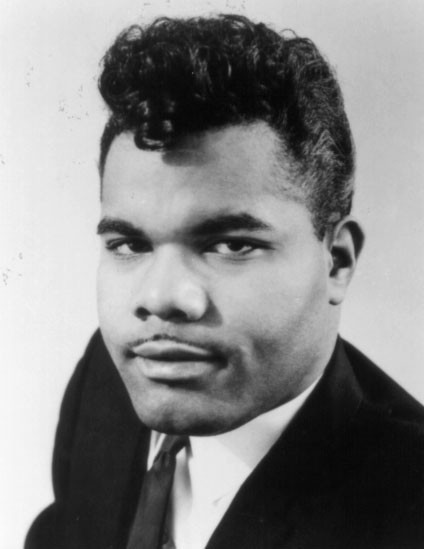
Walter Jackson was '60s Chicago soul at its sweetest and, occasionally, most mainstream. In the mid-'60s, he had a brace of solid R&B hits -- "Suddenly I'm All Alone," "It's an Uphill Climb (To the Bottom)," "Speak Her Name," "Welcome Home," "A Corner in the Sun" -- without ever rising higher than the lower reaches of the Top 100. Recording for the <a href="spotify:search:label%3A%22OKeh%22">OKeh</a> stable, which was home to the top Chi-Town soul talent, he benefited for a time from the production services of local masters Carl Davis and <a href="spotify:artist:2AV6XDIs32ofIJhkkDevjm">Curtis Mayfield</a>, who handled <a href="spotify:artist:1b1N51wmSK0ckxFAMPSSHO">the Impressions</a>, <a href="spotify:artist:7onp6ew3LGoQImTt1I78gt">Major Lance</a>, <a href="spotify:artist:52uMkSFt2RVO6XxTEt5VeW">Gene Chandler</a>, and others. His sides employed similar punchy brass and strings, but in a smoother, more urbane fashion; Jackson was also comfortable with occasional outings into pure supper-club pop with nary a trace of R&B.
Jackson had already recorded for <a href="spotify:search:label%3A%22Columbia%22">Columbia</a> (and unsuccessfully auditioned for <a href="spotify:search:label%3A%22Motown%22">Motown</a>) when <a href="spotify:search:label%3A%22OKeh%22">OKeh</a> A&R director Davis saw him at a Detroit piano bar in 1962. Stricken with polio as a young boy, Jackson had never let his disability get in the way of his musical ambitions, performing on crutches. Impressed with his commanding voice, Carl Davis thought of Walter as a <a href="spotify:artist:7v4imS0moSyGdXyLgVTIV7">Nat King Cole</a> type of singer, and procured material for Jackson from <a href="spotify:artist:2AV6XDIs32ofIJhkkDevjm">Mayfield</a>, <a href="spotify:artist:0bShb58TO0fM5jOjXhB1WT">Van McCoy</a>, <a href="spotify:artist:4J9k7L7BrJ7NMWAcvgox1B">Chip Taylor</a>, and other top-notch songwriters.
Despite the obvious pop crossover potential of Jackson's recordings, he remained obscure to white listeners. During the latter part of his stay with <a href="spotify:search:label%3A%22OKeh%22">OKeh</a>, he was reassigned from Davis' stable to producer Ted Cooper. Jackson had a few hits with Cooper, but there was little success after the late '60s, although he recorded for a few more labels before dying of a cerebral hemorrhage in 1983. ~ Richie Unterberger, Rovi
Jackson had already recorded for <a href="spotify:search:label%3A%22Columbia%22">Columbia</a> (and unsuccessfully auditioned for <a href="spotify:search:label%3A%22Motown%22">Motown</a>) when <a href="spotify:search:label%3A%22OKeh%22">OKeh</a> A&R director Davis saw him at a Detroit piano bar in 1962. Stricken with polio as a young boy, Jackson had never let his disability get in the way of his musical ambitions, performing on crutches. Impressed with his commanding voice, Carl Davis thought of Walter as a <a href="spotify:artist:7v4imS0moSyGdXyLgVTIV7">Nat King Cole</a> type of singer, and procured material for Jackson from <a href="spotify:artist:2AV6XDIs32ofIJhkkDevjm">Mayfield</a>, <a href="spotify:artist:0bShb58TO0fM5jOjXhB1WT">Van McCoy</a>, <a href="spotify:artist:4J9k7L7BrJ7NMWAcvgox1B">Chip Taylor</a>, and other top-notch songwriters.
Despite the obvious pop crossover potential of Jackson's recordings, he remained obscure to white listeners. During the latter part of his stay with <a href="spotify:search:label%3A%22OKeh%22">OKeh</a>, he was reassigned from Davis' stable to producer Ted Cooper. Jackson had a few hits with Cooper, but there was little success after the late '60s, although he recorded for a few more labels before dying of a cerebral hemorrhage in 1983. ~ Richie Unterberger, Rovi
Monthly Listeners
7,178
Monthly Listeners History
Track the evolution of monthly listeners over the last 28 days.
Followers
7,722
Followers History
Track the evolution of followers over the last 28 days.
Top Cities
538 listeners

214 listeners

87 listeners
86 listeners
77 listeners
Related Artists