Data may be outdated
Last updated: 7 months ago — Click refresh to get the latest statistics.
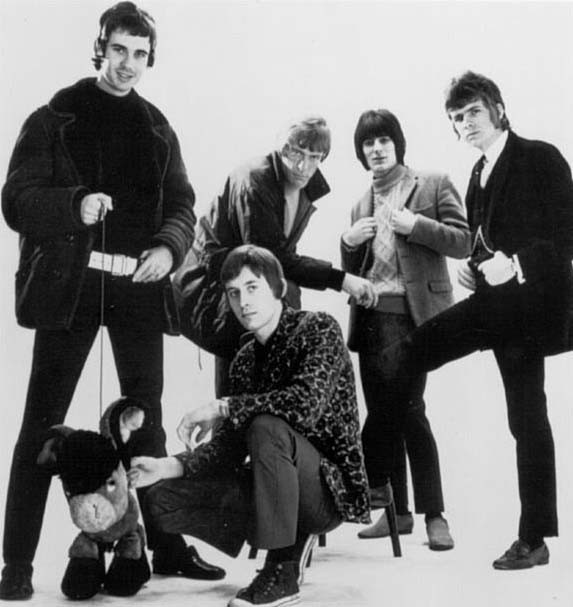
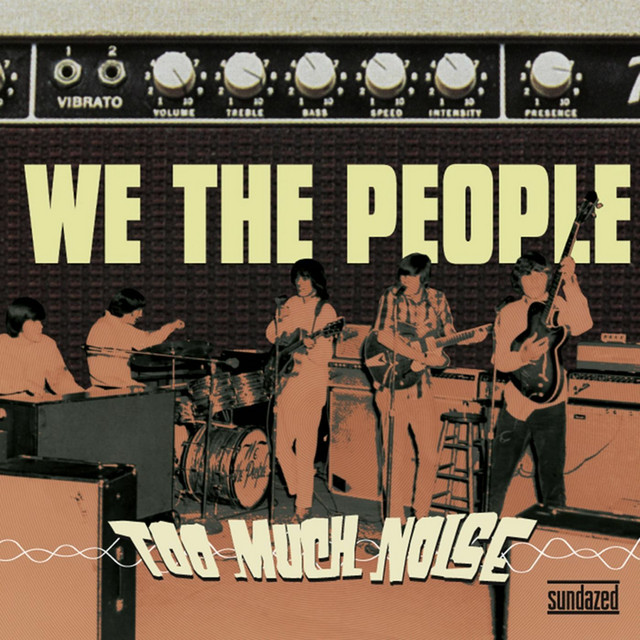
One of the most versatile mid-'60s garage groups -- indeed, they were for the most part too accomplished and pop-savvy to truly merit the garage band tag -- We the People had some big hits in Florida, but never broke out nationally, despite releases on the <a href="spotify:search:label%3A%22RCA%22">RCA</a> and <a href="spotify:search:label%3A%22Challenge%22">Challenge</a> labels. Veterans of Orlando garage combos the Trademarks, the Offbeets, and the Nonchalants all found their way into We the People, who made their first single for the local Hotline label, "My Brother the Man," in early 1966. "My Brother the Man" was a smoking, almost-crazed, hard garage-punk number that reflected the path the band would continue to follow on their early <a href="spotify:search:label%3A%22Challenge%22">Challenge</a> singles "Mirror of Your Mind" and "You Burn Me Up and Down."
Grinding guitar chords, organ, aggressive vocals, and crazed guitar distortion (particularly on the swooping noises and feedback that introduce "You Burn Me Up and Down") were their initial trademarks. Yet at the same time they could throw in gentler and more lyrically and melodically subtle originals, like the beautiful, tremolo-laden ballad "(You Are) The Color of Love," on the B-Side of "Mirror of Your Mind." Unusual for a garage band, they boasted two prolific and talented songwriters in <a href="spotify:artist:1OQ0uK2Zc4jxT83tWyEjU4">Tommy Talton</a> and Wayne Proctor. <a href="spotify:artist:3v8gAm6fGdslVOhYLjUaMq">Proctor</a> was the more interesting of the pair, penning one of the great raga rock tunes (the gutsy "In the Past," covered by the <a href="spotify:artist:0BNTrhhkZLsbcWAidMz98A">Chocolate Watch Band</a>), the Baroque-psychedelic "St. John's Shop," and "(You Are) The Color of Love." All had uncommonly elusive, vague but evocative lyrics for a young regional band of the time; <a href="spotify:artist:3v8gAm6fGdslVOhYLjUaMq">Proctor</a> even wrote a love song to a nun ("Love Wears Black [None]"), although that wasn't issued for more than 30 years.
We the People had a good share of chart success in Florida, but suffered a major setback when <a href="spotify:artist:3v8gAm6fGdslVOhYLjUaMq">Proctor</a> left the band in early 1967. The music recorded after his departure had its moments: the nasty "When I Arrive" made its way onto a Pebbles compilation, and "The Day She Dies," although written by <a href="spotify:artist:1OQ0uK2Zc4jxT83tWyEjU4">Talton</a>, recalled <a href="spotify:artist:3v8gAm6fGdslVOhYLjUaMq">Proctor</a>'s work with its harmonic pop, melodic base, and odd lyrical slant. Some of the last numbers they cut in the studio were derivative soul-rock tunes, though, and <a href="spotify:artist:1OQ0uK2Zc4jxT83tWyEjU4">Talton</a>'s departure at the end of the '60s, as well as the expiration of their recording deal, sealed the death of the group, although they continued for a bit longer. As part of the Southern rock group Cowboy, <a href="spotify:artist:1OQ0uK2Zc4jxT83tWyEjU4">Talton</a> was the only We the People member with a visible music career after the '60s. He died on December 28, 2023, at the age of 74. ~ Richie Unterberger, Rovi
Grinding guitar chords, organ, aggressive vocals, and crazed guitar distortion (particularly on the swooping noises and feedback that introduce "You Burn Me Up and Down") were their initial trademarks. Yet at the same time they could throw in gentler and more lyrically and melodically subtle originals, like the beautiful, tremolo-laden ballad "(You Are) The Color of Love," on the B-Side of "Mirror of Your Mind." Unusual for a garage band, they boasted two prolific and talented songwriters in <a href="spotify:artist:1OQ0uK2Zc4jxT83tWyEjU4">Tommy Talton</a> and Wayne Proctor. <a href="spotify:artist:3v8gAm6fGdslVOhYLjUaMq">Proctor</a> was the more interesting of the pair, penning one of the great raga rock tunes (the gutsy "In the Past," covered by the <a href="spotify:artist:0BNTrhhkZLsbcWAidMz98A">Chocolate Watch Band</a>), the Baroque-psychedelic "St. John's Shop," and "(You Are) The Color of Love." All had uncommonly elusive, vague but evocative lyrics for a young regional band of the time; <a href="spotify:artist:3v8gAm6fGdslVOhYLjUaMq">Proctor</a> even wrote a love song to a nun ("Love Wears Black [None]"), although that wasn't issued for more than 30 years.
We the People had a good share of chart success in Florida, but suffered a major setback when <a href="spotify:artist:3v8gAm6fGdslVOhYLjUaMq">Proctor</a> left the band in early 1967. The music recorded after his departure had its moments: the nasty "When I Arrive" made its way onto a Pebbles compilation, and "The Day She Dies," although written by <a href="spotify:artist:1OQ0uK2Zc4jxT83tWyEjU4">Talton</a>, recalled <a href="spotify:artist:3v8gAm6fGdslVOhYLjUaMq">Proctor</a>'s work with its harmonic pop, melodic base, and odd lyrical slant. Some of the last numbers they cut in the studio were derivative soul-rock tunes, though, and <a href="spotify:artist:1OQ0uK2Zc4jxT83tWyEjU4">Talton</a>'s departure at the end of the '60s, as well as the expiration of their recording deal, sealed the death of the group, although they continued for a bit longer. As part of the Southern rock group Cowboy, <a href="spotify:artist:1OQ0uK2Zc4jxT83tWyEjU4">Talton</a> was the only We the People member with a visible music career after the '60s. He died on December 28, 2023, at the age of 74. ~ Richie Unterberger, Rovi
Monthly Listeners
8,486
Monthly Listeners History
Track the evolution of monthly listeners over the last 28 days.
Followers
8,035
Followers History
Track the evolution of followers over the last 28 days.
Top Cities
196 listeners

180 listeners
133 listeners
130 listeners
103 listeners