Genre
ragtime
Top Ragtime Artists
Showing 25 of 2,873 artists






About Ragtime
Ragtime is a distinctly American piano-driven music that pulsates with a sly, gleaming syncopation. Born in the last decade of the 19th century and flowering through the early 20th, ragtime grew from a meeting of marching precision and African American rhythmic vigor. Its cradle was the Midwest and its sidewalks, saloons, and parlors of cities like St. Louis and Sedalia, Missouri, where pianists and composers gathered to fuse the martial energy of band music with a livelier, “ragged” sense of time. By the turn of the century, ragtime had become a national phenomenon and a bridge between the 19th-century parlor tune and the improvisatory freedom that would soon define jazz.
Musically, ragtime is built on a steady left-hand pulse—often a march-like bass note or a bass-chord pattern—while the right hand weaves syncopated, off-beat melodies against that regular beat. The term ragtime itself refers to this “ragged” or displaced emphasis. Pieces frequently adhere to compact forms—two, four, or eight-bar phrases arranged in a repeating structure (AABB, for example)—and they showcase a pianist’s ability to balance crisp, almost editorial phrasing with a breath of improvisatory feel. The effect is both aristocratic and gleeful: a music that sounds breathed, conversational, and jaunty all at once.
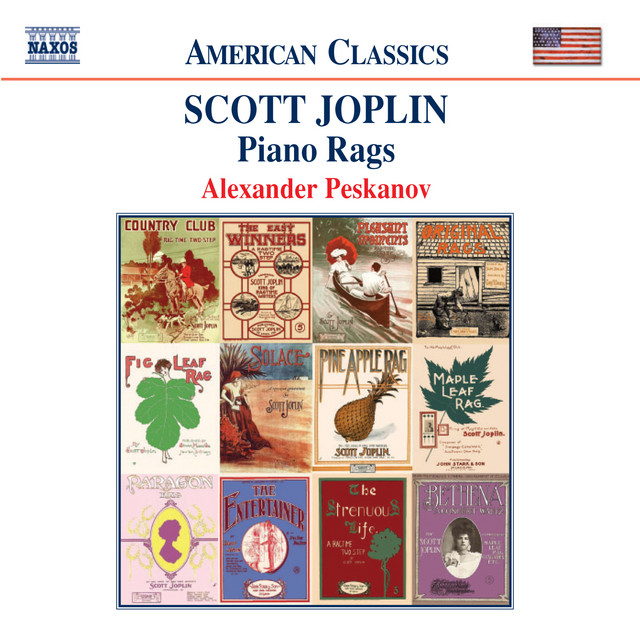
If you’re exploring ragtime’s canon, you’ll want to meet its principal ambassador, Scott Joplin. His Maple Leaf Rag (published 1899) became the blueprint for the style—precise, elegant, and irresistibly catchy. The Entertainer (1902) remains one of ragtime’s most enduring pieces, a tune that has traveled through concert halls, film soundtracks, and piano recitals with a wink of Americana. Beyond Joplin, the ragtime tradition was carried forward by composers such as James P. Johnson (a pivotal figure in the transition toward stride piano, which fed into early jazz) and later by players like Eubie Blake, who helped keep ragtime alive on stages and in Broadway revues (notably with Shuffle Along in 1921). These figures anchor ragtime as both a historical style and a living lineage that fed into jazz, film scores, and modern piano repertoire.
Ragtime’s popularity was strongest in the United States, especially in the late 19th and early 20th centuries. Yet its influence quickly crossed oceans. Europe encountered ragtime through sheet music and touring pianists, with a wave of interest in the early 1900s that helped seed later European fascination with American popular piano styles. In the late 20th century, a revival—sparked by the use of The Entertainer in film and renewed scholarly attention—brought ragtime to new audiences worldwide, where it is studied by conservatory players, jazz enthusiasts, and curious listeners who relish its precise craft and infectious rhythm.
Today ragtime is beloved for its historical bite and its musical wit. It’s not merely a historical curiosity; it’s a gateway to understanding how rhythm, form, and improvisation could meet in a single, sparkling piano voice. For enthusiasts, ragtime remains a canonical doorway into American popular music’s most elegant, roguish, and enduring moments.
Musically, ragtime is built on a steady left-hand pulse—often a march-like bass note or a bass-chord pattern—while the right hand weaves syncopated, off-beat melodies against that regular beat. The term ragtime itself refers to this “ragged” or displaced emphasis. Pieces frequently adhere to compact forms—two, four, or eight-bar phrases arranged in a repeating structure (AABB, for example)—and they showcase a pianist’s ability to balance crisp, almost editorial phrasing with a breath of improvisatory feel. The effect is both aristocratic and gleeful: a music that sounds breathed, conversational, and jaunty all at once.
If you’re exploring ragtime’s canon, you’ll want to meet its principal ambassador, Scott Joplin. His Maple Leaf Rag (published 1899) became the blueprint for the style—precise, elegant, and irresistibly catchy. The Entertainer (1902) remains one of ragtime’s most enduring pieces, a tune that has traveled through concert halls, film soundtracks, and piano recitals with a wink of Americana. Beyond Joplin, the ragtime tradition was carried forward by composers such as James P. Johnson (a pivotal figure in the transition toward stride piano, which fed into early jazz) and later by players like Eubie Blake, who helped keep ragtime alive on stages and in Broadway revues (notably with Shuffle Along in 1921). These figures anchor ragtime as both a historical style and a living lineage that fed into jazz, film scores, and modern piano repertoire.
Ragtime’s popularity was strongest in the United States, especially in the late 19th and early 20th centuries. Yet its influence quickly crossed oceans. Europe encountered ragtime through sheet music and touring pianists, with a wave of interest in the early 1900s that helped seed later European fascination with American popular piano styles. In the late 20th century, a revival—sparked by the use of The Entertainer in film and renewed scholarly attention—brought ragtime to new audiences worldwide, where it is studied by conservatory players, jazz enthusiasts, and curious listeners who relish its precise craft and infectious rhythm.
Today ragtime is beloved for its historical bite and its musical wit. It’s not merely a historical curiosity; it’s a gateway to understanding how rhythm, form, and improvisation could meet in a single, sparkling piano voice. For enthusiasts, ragtime remains a canonical doorway into American popular music’s most elegant, roguish, and enduring moments.