Data may be outdated
Last updated: 8 months ago — Click refresh to get the latest statistics.
Shelly Manne made and played on thousands of recordings (but is best-known as a good-humored bandleader who never hogged the spotlight). While he is most often associated with West Coast jazz, his versatility placed him in many other contexts including swing, bebop, avant-garde, and later, fusion. He worked as a sideman for hundreds of peers and played on hundreds of film and TV soundtracks and scores. His debut, Here's That Manne, appeared in 1952. Between 1954 and 1962, he cut numerous titles on <a href="spotify:search:label%3A%22Contemporary%22">Contemporary</a>, including The West Coast Sound and the iconic, four-volume At the Black Hawk in 1959 (as well as studio dates with <a href="spotify:artist:1pBuKaLHJlIlqYxQQaflve">Benny Goodman</a> and <a href="spotify:artist:47odibUtrN3lnWx0p0pk2P">Ornette Coleman</a>). He led a trio with <a href="spotify:artist:4jXfFzeP66Zy67HM2mvIIF">Bill Evans</a> and spent the remainder of the decade on <a href="spotify:search:label%3A%22Capitol%22">Capitol</a> (Manne, That's Gershwin, 1965) and <a href="spotify:search:label%3A%22Atlantic%22">Atlantic</a> (Boss Sounds, 1967). He returned to <a href="spotify:search:label%3A%22Contemporary%22">Contemporary</a> for 1969's Outside and led dates for <a href="spotify:search:label%3A%22Mainstream%22">Mainstream</a> (Mannekind, 1972), <a href="spotify:search:label%3A%22Flying+Dutchman%22">Flying Dutchman</a> (Hot Coles, 1275), <a href="spotify:search:label%3A%22Discovery%22">Discovery</a> (Rex: Shelly Manne Plays Richard Rogers, 1976), and <a href="spotify:search:label%3A%22Galaxy%22">Galaxy</a> (Essence, 1977). He served as <a href="spotify:artist:7x83XhcMbOTl1UdYsPTuZM">Tom Waits</a>' studio drummer on Small Change and Foreign Affairs and released 1984's The Shelly Manne Trio in Zurich as his final leader date.
Though symbiotically associated with the West Coast, and "cool" jazz scenes, Sheldon Manne was born in New York City in 1920. Originally a saxophonist, Manne switched to drums when he was 18, following in the footsteps of his uncles and his father Max. He was influenced by swing drummer <a href="spotify:artist:5iCN8xlg1r3uXDW5yLFHmJ">Jo Jones</a> and was tutored by Broadway percussionist Billy Gladstone. Manne got work almost immediately with the Bobby Byrne Orchestra in 1940 and <a href="spotify:artist:5WuO1eeXQHAeMTKuXacaUw">Joe Marsala</a>'s band (making his recording debut in 1941). He also briefly served in the big bands of <a href="spotify:artist:3O3YxmRcu66P4nUvaCNpQa">Will Bradley</a>, <a href="spotify:artist:31DffUzogcRBJT3Andaqtt">Raymond Scott</a>, and <a href="spotify:artist:1NcsSDCxHOZrAfYVtrahND">Les Brown</a> and played drums on <a href="spotify:artist:0JM134st8VY7Ld9T2wQiH0">Coleman Hawkins</a>' classic "The Man I Love" session of 1943.
Manne worked on and off with <a href="spotify:artist:27hSR8e34ZM5vj5fUFixyb">Stan Kenton</a> (1946-1952), toured with <a href="spotify:artist:1MrfEFvDJwmXQJADGBSEPV">Jazz at the Philharmonic</a> (1948-1949), and gigged with <a href="spotify:artist:2KSxJY1WxGGVYSmoM0N54P">Woody Herman</a> (1949). After leaving <a href="spotify:artist:27hSR8e34ZM5vj5fUFixyb">Kenton</a>, Manne moved to Los Angeles where he became the most in-demand of all jazz drummers, playing on recordings by <a href="spotify:artist:3rxeQlsv0Sc2nyYaZ5W71T">Chet Baker</a>, <a href="spotify:artist:4jK47OKHQf5e4UotaquJQ5">Jack Montrose</a>, <a href="spotify:artist:0FMucZsEnCxs5pqBjHjIc8">Stan Getz</a>, <a href="spotify:artist:6NLW1QaFwxrhGeuBehGXUj">Pete Rugolo</a>, <a href="spotify:artist:4RncsrNJ1GDGsFBIxI76L6">Jimmy Giuffre</a>, <a href="spotify:artist:2LQeYKxQ99Y844Y2fxCGQn">Teddy Charles</a>, <a href="spotify:artist:27hSR8e34ZM5vj5fUFixyb">Stan Kenton</a>, <a href="spotify:artist:7hxJ7osu5ELi0SVSvgUjQN">Shorty Rogers</a>, and many more. He served as <a href="spotify:artist:6pVkGhtBvjj1P52yn0tNLG">Barney Kessel</a>'s drummer from 1954-1960 and played on recordings by <a href="spotify:artist:2I6nP70ltmOHi6xjJUXHMe">Lena Horne</a> and <a href="spotify:artist:602DnpaSXJB4b9DZrvxbDc">Peggy Lee</a>.
He began his recording career as a bandleader with 1952's Here's That Manne and in 1953 assembled Shelly Manne & His Men to cut a pair of eponymous LPs for Les Koenig's <a href="spotify:search:label%3A%22Contemporary%22">Contemporary</a> label. The ever-evolving band issued a long string of recordings on <a href="spotify:search:label%3A%22Contemporary%22">Contemporary</a> the label (1955-1962) including the classic, four-volume At the Black Hawk series (a fifth volume was released posthumously in 1991). Among Manne's sidemen were <a href="spotify:artist:77Lgj7SbQICEreDtK3uh2D">Stu Williamson</a>, <a href="spotify:artist:3wM3S0CxD0Do7IWKvJ0WRG">Conte Candoli</a>, <a href="spotify:artist:6cKTYu4WjPM4YjYdgZhfEr">Charlie Mariano</a>, <a href="spotify:artist:3H9ax2xPjWhD150wCDZ5SV">Herb Geller</a>, <a href="spotify:artist:0Ouo7BAL9KvlpA8YcR7JFI">Bill Holman</a>, <a href="spotify:artist:4RncsrNJ1GDGsFBIxI76L6">Jimmy Giuffre</a>, and many, many others.
Manne had the good fortune to lead the recording date Modern Jazz Performances of Songs from My Fair Lady (with pianist <a href="spotify:artist:2tfWguHr2nj4e8KXLKciVq">André Previn</a> and bassist <a href="spotify:artist:3H6A2KqJF5TLVBKnYwIa73">Leroy Vinnegar</a>. The drummer's open musical mind resulted in fairly free pieces on The Three and the Two (trios with <a href="spotify:artist:7hxJ7osu5ELi0SVSvgUjQN">Shorty Rogers</a> and <a href="spotify:artist:4RncsrNJ1GDGsFBIxI76L6">Jimmy Giuffre</a> that did not have a piano or bass, along with duets with <a href="spotify:artist:6NVwMiEWAjCHnKWPx9h8WO">Russ Freeman</a>), and, in 1959, played on sessions by traditionalist <a href="spotify:artist:1pBuKaLHJlIlqYxQQaflve">Benny Goodman</a> and vanguardist <a href="spotify:artist:47odibUtrN3lnWx0p0pk2P">Ornette Coleman</a>. In sum, he was nearly ubiquitous during the '50s.
Manne appeared on many film and television soundtracks and even acted in The Man with the Golden Arm. He worked with <a href="spotify:artist:2EExdpjU4SK3xnJHO5paJf">Henry Mancini</a> very closely; Manne's seamless combinations of jazz, pop, and classical music worked well in his scores. Some of the scores he played include Breakfast at Tiffany's (1961), Hatari! (1962), and The Pink Panther (1963). He collaborated with <a href="spotify:artist:2EExdpjU4SK3xnJHO5paJf">Mancini</a> for television as well, orchestrating the Peter Gunn series (1958-1961) and Mr. Lucky (1959-1960). Besides <a href="spotify:artist:2EExdpjU4SK3xnJHO5paJf">Mancini</a>, Manne performed on movie soundtracks and TV shows featuring music by <a href="spotify:artist:7sXdMnZeR5MsLKToZKpR2c">Elmer Bernstein</a>, <a href="spotify:artist:6NLW1QaFwxrhGeuBehGXUj">Rugolo</a>, <a href="spotify:artist:3dRfiJ2650SZu6GbydcHNb">John Williams</a>, and on the film soundtrack for <a href="spotify:artist:2LmyJyCF5V1eQyvHgJNbTn">Leonard Bernstein</a>'s West Side Story in 1961. That year, Manne wrote and recorded the score for The Proper Time.
In 1960, the drummer founded the popular jazz club Shelly's Manne Hole and ran it until 1974. In 1962 he played on seminal recordings by <a href="spotify:artist:0AP9ck0QA9iqnCWJ16G7qj">Jack Sheldon</a> (Out), <a href="spotify:artist:602DnpaSXJB4b9DZrvxbDc">Peggy Lee</a> (Bewitching-Lee), <a href="spotify:artist:6pVkGhtBvjj1P52yn0tNLG">Barney Kessel</a> (Let's Cook!), and <a href="spotify:artist:3GpMtIOC5ZLvMBMI7IxPvA">Art Pepper</a> (The Artistry of Pepper). He also released 2-3-4 on <a href="spotify:search:label%3A%22Impulse%22">Impulse</a> with a cast that included <a href="spotify:artist:0BhFfJmScFj7OzqVaDqnSv">Hank Jones</a>, <a href="spotify:artist:0JM134st8VY7Ld9T2wQiH0">Coleman Hawkins</a>, <a href="spotify:artist:1XIWgvZmYKuuAWtti6IXvE">George Duvivier</a>, and <a href="spotify:artist:1kKQPQk0JVGYaQ40VhJ5DQ">Eddie Costa</a>, and he released Empathy on <a href="spotify:artist:2cGwlqi3k18jFpUyTrsR84">Verve</a>, leading a trio with pianist <a href="spotify:artist:4jXfFzeP66Zy67HM2mvIIF">Bill Evans</a> and bassist <a href="spotify:artist:6Pn0HmQtvxJNbBVILMTGK8">Monty Budwig</a>. In 1964 he released My Fair Lady with the Un-Original Cast. Arranged by <a href="spotify:artist:3dRfiJ2650SZu6GbydcHNb">Williams</a>, the quintet was backed by orchestral horns and strings and fronted by vocalists <a href="spotify:artist:5O996HwuG2b83Wa7obBtgE">Irene Kral</a> and <a href="spotify:artist:0AP9ck0QA9iqnCWJ16G7qj">Sheldon</a>.
Manne kept his music open to freer sounds. He worked with
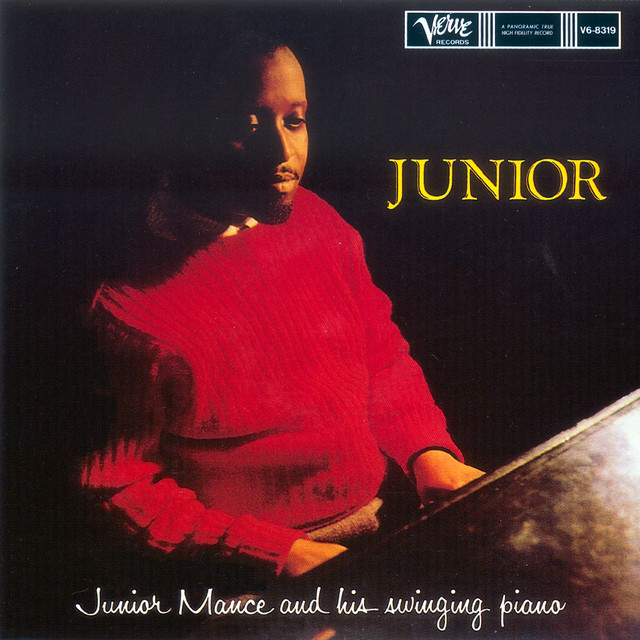
<a href="spotify:artist:1KTUh4AYegM2fSdac5xqPb">Junior Mance</a>, <a href="spotify:artist:1E4UIKgZgGsuAZ4CFS0Cel">Howard Roberts</a>, and <a href="spotify:artist:39iHRO9MH9To3gjW7wqaW1">Lalo Schifrin</a>. In 1966, Shelly Manne & His Men issued the charting Boss Sounds on <a href="spotify:search:label%3A%22Atlantic%22">Atlantic</a>, and in 1967 he played on albums by <a href="spotify:artist:6ra4GIOgCZQZMOaUECftGN">Frank Zappa</a> (Lumpy Gravy), <a href="spotify:artist:2nQKUeZeleLGNsJj6WLUXN">Oliver Nelson</a> (Sound Pieces), <a href="spotify:artist:4jXfFzeP66Zy67HM2mvIIF">Evans</a> (A Simple Matter of Conviction), <a href="spotify:artist:3Qh7r2c4JWTmRLH3swU9dC">Leontyne Price</a> and <a href="spotify:artist:2tfWguHr2nj4e8KXLKciVq">Previn</a> (Right as the Rain), and released Jazz Gunn and Daktari (his original music for the TV series). For the remainder of the decade, Manne was almost too busy. In 1968, in addition to backing composer/pianist <a href="spotify:artist:1EtE0iSY6iFlN9L9c53ETy">Michel Legrand</a> at Shelly's Manne Hole, he appeared on <a href="spotify:artist:2UuKUaomk3bZ0nHM3Y3FdW">Bud Shank</a>'s iconic Plays the Music and Arrangements of Michel LeGrand: Windmills of Your Mind.
In 1971, Manne released Alive in London, showcasing a very electric quintet with pianist <a href="spotify:artist:2v3b18j2dOeJth2eidRMnU">Mike Wofford</a>, bassist <a href="spotify:artist:2Ui7OT9J7U6GJnh4XRv29A">Roland Haynes</a>, trumpeter Gary Barone, and tenor saxophonist John Gross. In 1972, he played on saxophonist <a href="spotify:artist:6HkwRgGXuqTufwpEh2dwGK">John Klemmer</a>'s pre-fusion album Constant Throb. After playing on <a href="spotify:artist:3dRfiJ2650SZu6GbydcHNb">Williams</a>' score and soundtrack for Earthquake in 1974, he played on two seminal sessions by <a href="spotify:artist:2nQKUeZeleLGNsJj6WLUXN">Nelson</a>: 1975's jazz-funk Skull Session and Stolen Moments. Manne joined the L.A. 4 for 1975's The L.A. Four Scores! and <a href="spotify:artist:217b0uqAzsOOhGcnoANZqj">Sonny Stitt</a> on Dumpy Mama. The following year, he played on more than ten albums including <a href="spotify:artist:3GpMtIOC5ZLvMBMI7IxPvA">Pepper</a>'s The Living Legend, <a href="spotify:artist:4L9xEztn5PKQIO5WnI5W3u">Art Farmer</a>'s On the Road, and the eponymous offering The Three with <a href="spotify:artist:4H2b90USTVSstPktwUsDZE">Joe Sample</a> and <a href="spotify:artist:0SvD7DL5CQTbcrMtns1US8">Ray Brown</a>.
Manne also appeared on <a href="spotify:artist:7x83XhcMbOTl1UdYsPTuZM">Tom Waits</a>' Small Change and the following year's Foreign Affairs, and rejoined the L.A. 4 on Pavane pour une Infante Defunte and Going Home.
From 1976-1978, Manne played in Lew Tabakin's band on several albums. He also played on trio recordings by <a href="spotify:artist:17YFYixTwkosluOZZJWhjb">Claude Bolling</a> (California Suite), <a href="spotify:artist:53TjTwCEnkdeTkNUO0qivk">Victor Feldman</a> (Together Again), and
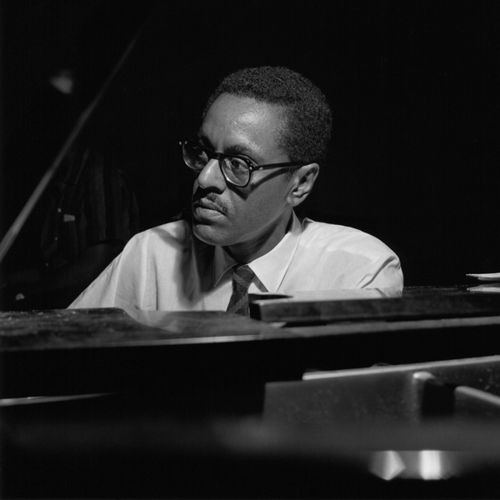
<a href="spotify:artist:6BvSJSt6l7QJO2GHvtwFOK">Hampton Hawes</a> (At the Piano). Further, Manne re-teamed with <a href="spotify:artist:0BhFfJmScFj7OzqVaDqnSv">Jones</a> and <a href="spotify:artist:1XIWgvZmYKuuAWtti6IXvE">Duvuvier</a> for Easy to Love. In 1979, Manne released French Concert featuring <a href="spotify:artist:4YNvbaOaqp5pzC5US5t48k">Lee Konitz</a> and The Manne We Love, his final album by Shelly Manne & His Men, though they also appeared on the co-billed A Sophisticated Lady with vocalist <a href="spotify:artist:2mPL4g4v9DS55zi6QctLbP">Teresa Brewer</a>; it was released on <a href="spotify:search:label%3A%22Columbia%22">Columbia</a> in 1981.
On September 9, 1984, two weeks before dying of a sudden heart attack, Manne was honored by the City of Los Angeles in conjunction with the Hollywood Arts Council; they declared September 9 "Shelly Manne Day."
In 1991, <a href="spotify:search:label%3A%22Contemporary+Records%22">Contemporary Records</a> released a fifth volume of At the Blackhawk. On Record Store Day in April 2024, <a href="spotify:search:label%3A%22Reel+to+Real%22">Reel to Real</a> released the previously unissued Jazz from the Pacific Northwest by Shelly Manne & His Men, chronicling three archived live performances: one show at the very first Monterey Jazz Festival in 1958, and two shows at Seattle's Penthouse club in 1966. ~ Thom Jurek, Rovi
Though symbiotically associated with the West Coast, and "cool" jazz scenes, Sheldon Manne was born in New York City in 1920. Originally a saxophonist, Manne switched to drums when he was 18, following in the footsteps of his uncles and his father Max. He was influenced by swing drummer <a href="spotify:artist:5iCN8xlg1r3uXDW5yLFHmJ">Jo Jones</a> and was tutored by Broadway percussionist Billy Gladstone. Manne got work almost immediately with the Bobby Byrne Orchestra in 1940 and <a href="spotify:artist:5WuO1eeXQHAeMTKuXacaUw">Joe Marsala</a>'s band (making his recording debut in 1941). He also briefly served in the big bands of <a href="spotify:artist:3O3YxmRcu66P4nUvaCNpQa">Will Bradley</a>, <a href="spotify:artist:31DffUzogcRBJT3Andaqtt">Raymond Scott</a>, and <a href="spotify:artist:1NcsSDCxHOZrAfYVtrahND">Les Brown</a> and played drums on <a href="spotify:artist:0JM134st8VY7Ld9T2wQiH0">Coleman Hawkins</a>' classic "The Man I Love" session of 1943.
Manne worked on and off with <a href="spotify:artist:27hSR8e34ZM5vj5fUFixyb">Stan Kenton</a> (1946-1952), toured with <a href="spotify:artist:1MrfEFvDJwmXQJADGBSEPV">Jazz at the Philharmonic</a> (1948-1949), and gigged with <a href="spotify:artist:2KSxJY1WxGGVYSmoM0N54P">Woody Herman</a> (1949). After leaving <a href="spotify:artist:27hSR8e34ZM5vj5fUFixyb">Kenton</a>, Manne moved to Los Angeles where he became the most in-demand of all jazz drummers, playing on recordings by <a href="spotify:artist:3rxeQlsv0Sc2nyYaZ5W71T">Chet Baker</a>, <a href="spotify:artist:4jK47OKHQf5e4UotaquJQ5">Jack Montrose</a>, <a href="spotify:artist:0FMucZsEnCxs5pqBjHjIc8">Stan Getz</a>, <a href="spotify:artist:6NLW1QaFwxrhGeuBehGXUj">Pete Rugolo</a>, <a href="spotify:artist:4RncsrNJ1GDGsFBIxI76L6">Jimmy Giuffre</a>, <a href="spotify:artist:2LQeYKxQ99Y844Y2fxCGQn">Teddy Charles</a>, <a href="spotify:artist:27hSR8e34ZM5vj5fUFixyb">Stan Kenton</a>, <a href="spotify:artist:7hxJ7osu5ELi0SVSvgUjQN">Shorty Rogers</a>, and many more. He served as <a href="spotify:artist:6pVkGhtBvjj1P52yn0tNLG">Barney Kessel</a>'s drummer from 1954-1960 and played on recordings by <a href="spotify:artist:2I6nP70ltmOHi6xjJUXHMe">Lena Horne</a> and <a href="spotify:artist:602DnpaSXJB4b9DZrvxbDc">Peggy Lee</a>.
He began his recording career as a bandleader with 1952's Here's That Manne and in 1953 assembled Shelly Manne & His Men to cut a pair of eponymous LPs for Les Koenig's <a href="spotify:search:label%3A%22Contemporary%22">Contemporary</a> label. The ever-evolving band issued a long string of recordings on <a href="spotify:search:label%3A%22Contemporary%22">Contemporary</a> the label (1955-1962) including the classic, four-volume At the Black Hawk series (a fifth volume was released posthumously in 1991). Among Manne's sidemen were <a href="spotify:artist:77Lgj7SbQICEreDtK3uh2D">Stu Williamson</a>, <a href="spotify:artist:3wM3S0CxD0Do7IWKvJ0WRG">Conte Candoli</a>, <a href="spotify:artist:6cKTYu4WjPM4YjYdgZhfEr">Charlie Mariano</a>, <a href="spotify:artist:3H9ax2xPjWhD150wCDZ5SV">Herb Geller</a>, <a href="spotify:artist:0Ouo7BAL9KvlpA8YcR7JFI">Bill Holman</a>, <a href="spotify:artist:4RncsrNJ1GDGsFBIxI76L6">Jimmy Giuffre</a>, and many, many others.
Manne had the good fortune to lead the recording date Modern Jazz Performances of Songs from My Fair Lady (with pianist <a href="spotify:artist:2tfWguHr2nj4e8KXLKciVq">André Previn</a> and bassist <a href="spotify:artist:3H6A2KqJF5TLVBKnYwIa73">Leroy Vinnegar</a>. The drummer's open musical mind resulted in fairly free pieces on The Three and the Two (trios with <a href="spotify:artist:7hxJ7osu5ELi0SVSvgUjQN">Shorty Rogers</a> and <a href="spotify:artist:4RncsrNJ1GDGsFBIxI76L6">Jimmy Giuffre</a> that did not have a piano or bass, along with duets with <a href="spotify:artist:6NVwMiEWAjCHnKWPx9h8WO">Russ Freeman</a>), and, in 1959, played on sessions by traditionalist <a href="spotify:artist:1pBuKaLHJlIlqYxQQaflve">Benny Goodman</a> and vanguardist <a href="spotify:artist:47odibUtrN3lnWx0p0pk2P">Ornette Coleman</a>. In sum, he was nearly ubiquitous during the '50s.
Manne appeared on many film and television soundtracks and even acted in The Man with the Golden Arm. He worked with <a href="spotify:artist:2EExdpjU4SK3xnJHO5paJf">Henry Mancini</a> very closely; Manne's seamless combinations of jazz, pop, and classical music worked well in his scores. Some of the scores he played include Breakfast at Tiffany's (1961), Hatari! (1962), and The Pink Panther (1963). He collaborated with <a href="spotify:artist:2EExdpjU4SK3xnJHO5paJf">Mancini</a> for television as well, orchestrating the Peter Gunn series (1958-1961) and Mr. Lucky (1959-1960). Besides <a href="spotify:artist:2EExdpjU4SK3xnJHO5paJf">Mancini</a>, Manne performed on movie soundtracks and TV shows featuring music by <a href="spotify:artist:7sXdMnZeR5MsLKToZKpR2c">Elmer Bernstein</a>, <a href="spotify:artist:6NLW1QaFwxrhGeuBehGXUj">Rugolo</a>, <a href="spotify:artist:3dRfiJ2650SZu6GbydcHNb">John Williams</a>, and on the film soundtrack for <a href="spotify:artist:2LmyJyCF5V1eQyvHgJNbTn">Leonard Bernstein</a>'s West Side Story in 1961. That year, Manne wrote and recorded the score for The Proper Time.
In 1960, the drummer founded the popular jazz club Shelly's Manne Hole and ran it until 1974. In 1962 he played on seminal recordings by <a href="spotify:artist:0AP9ck0QA9iqnCWJ16G7qj">Jack Sheldon</a> (Out), <a href="spotify:artist:602DnpaSXJB4b9DZrvxbDc">Peggy Lee</a> (Bewitching-Lee), <a href="spotify:artist:6pVkGhtBvjj1P52yn0tNLG">Barney Kessel</a> (Let's Cook!), and <a href="spotify:artist:3GpMtIOC5ZLvMBMI7IxPvA">Art Pepper</a> (The Artistry of Pepper). He also released 2-3-4 on <a href="spotify:search:label%3A%22Impulse%22">Impulse</a> with a cast that included <a href="spotify:artist:0BhFfJmScFj7OzqVaDqnSv">Hank Jones</a>, <a href="spotify:artist:0JM134st8VY7Ld9T2wQiH0">Coleman Hawkins</a>, <a href="spotify:artist:1XIWgvZmYKuuAWtti6IXvE">George Duvivier</a>, and <a href="spotify:artist:1kKQPQk0JVGYaQ40VhJ5DQ">Eddie Costa</a>, and he released Empathy on <a href="spotify:artist:2cGwlqi3k18jFpUyTrsR84">Verve</a>, leading a trio with pianist <a href="spotify:artist:4jXfFzeP66Zy67HM2mvIIF">Bill Evans</a> and bassist <a href="spotify:artist:6Pn0HmQtvxJNbBVILMTGK8">Monty Budwig</a>. In 1964 he released My Fair Lady with the Un-Original Cast. Arranged by <a href="spotify:artist:3dRfiJ2650SZu6GbydcHNb">Williams</a>, the quintet was backed by orchestral horns and strings and fronted by vocalists <a href="spotify:artist:5O996HwuG2b83Wa7obBtgE">Irene Kral</a> and <a href="spotify:artist:0AP9ck0QA9iqnCWJ16G7qj">Sheldon</a>.
Manne kept his music open to freer sounds. He worked with
<a href="spotify:artist:1KTUh4AYegM2fSdac5xqPb">Junior Mance</a>, <a href="spotify:artist:1E4UIKgZgGsuAZ4CFS0Cel">Howard Roberts</a>, and <a href="spotify:artist:39iHRO9MH9To3gjW7wqaW1">Lalo Schifrin</a>. In 1966, Shelly Manne & His Men issued the charting Boss Sounds on <a href="spotify:search:label%3A%22Atlantic%22">Atlantic</a>, and in 1967 he played on albums by <a href="spotify:artist:6ra4GIOgCZQZMOaUECftGN">Frank Zappa</a> (Lumpy Gravy), <a href="spotify:artist:2nQKUeZeleLGNsJj6WLUXN">Oliver Nelson</a> (Sound Pieces), <a href="spotify:artist:4jXfFzeP66Zy67HM2mvIIF">Evans</a> (A Simple Matter of Conviction), <a href="spotify:artist:3Qh7r2c4JWTmRLH3swU9dC">Leontyne Price</a> and <a href="spotify:artist:2tfWguHr2nj4e8KXLKciVq">Previn</a> (Right as the Rain), and released Jazz Gunn and Daktari (his original music for the TV series). For the remainder of the decade, Manne was almost too busy. In 1968, in addition to backing composer/pianist <a href="spotify:artist:1EtE0iSY6iFlN9L9c53ETy">Michel Legrand</a> at Shelly's Manne Hole, he appeared on <a href="spotify:artist:2UuKUaomk3bZ0nHM3Y3FdW">Bud Shank</a>'s iconic Plays the Music and Arrangements of Michel LeGrand: Windmills of Your Mind.
In 1971, Manne released Alive in London, showcasing a very electric quintet with pianist <a href="spotify:artist:2v3b18j2dOeJth2eidRMnU">Mike Wofford</a>, bassist <a href="spotify:artist:2Ui7OT9J7U6GJnh4XRv29A">Roland Haynes</a>, trumpeter Gary Barone, and tenor saxophonist John Gross. In 1972, he played on saxophonist <a href="spotify:artist:6HkwRgGXuqTufwpEh2dwGK">John Klemmer</a>'s pre-fusion album Constant Throb. After playing on <a href="spotify:artist:3dRfiJ2650SZu6GbydcHNb">Williams</a>' score and soundtrack for Earthquake in 1974, he played on two seminal sessions by <a href="spotify:artist:2nQKUeZeleLGNsJj6WLUXN">Nelson</a>: 1975's jazz-funk Skull Session and Stolen Moments. Manne joined the L.A. 4 for 1975's The L.A. Four Scores! and <a href="spotify:artist:217b0uqAzsOOhGcnoANZqj">Sonny Stitt</a> on Dumpy Mama. The following year, he played on more than ten albums including <a href="spotify:artist:3GpMtIOC5ZLvMBMI7IxPvA">Pepper</a>'s The Living Legend, <a href="spotify:artist:4L9xEztn5PKQIO5WnI5W3u">Art Farmer</a>'s On the Road, and the eponymous offering The Three with <a href="spotify:artist:4H2b90USTVSstPktwUsDZE">Joe Sample</a> and <a href="spotify:artist:0SvD7DL5CQTbcrMtns1US8">Ray Brown</a>.
Manne also appeared on <a href="spotify:artist:7x83XhcMbOTl1UdYsPTuZM">Tom Waits</a>' Small Change and the following year's Foreign Affairs, and rejoined the L.A. 4 on Pavane pour une Infante Defunte and Going Home.
From 1976-1978, Manne played in Lew Tabakin's band on several albums. He also played on trio recordings by <a href="spotify:artist:17YFYixTwkosluOZZJWhjb">Claude Bolling</a> (California Suite), <a href="spotify:artist:53TjTwCEnkdeTkNUO0qivk">Victor Feldman</a> (Together Again), and
<a href="spotify:artist:6BvSJSt6l7QJO2GHvtwFOK">Hampton Hawes</a> (At the Piano). Further, Manne re-teamed with <a href="spotify:artist:0BhFfJmScFj7OzqVaDqnSv">Jones</a> and <a href="spotify:artist:1XIWgvZmYKuuAWtti6IXvE">Duvuvier</a> for Easy to Love. In 1979, Manne released French Concert featuring <a href="spotify:artist:4YNvbaOaqp5pzC5US5t48k">Lee Konitz</a> and The Manne We Love, his final album by Shelly Manne & His Men, though they also appeared on the co-billed A Sophisticated Lady with vocalist <a href="spotify:artist:2mPL4g4v9DS55zi6QctLbP">Teresa Brewer</a>; it was released on <a href="spotify:search:label%3A%22Columbia%22">Columbia</a> in 1981.
On September 9, 1984, two weeks before dying of a sudden heart attack, Manne was honored by the City of Los Angeles in conjunction with the Hollywood Arts Council; they declared September 9 "Shelly Manne Day."
In 1991, <a href="spotify:search:label%3A%22Contemporary+Records%22">Contemporary Records</a> released a fifth volume of At the Blackhawk. On Record Store Day in April 2024, <a href="spotify:search:label%3A%22Reel+to+Real%22">Reel to Real</a> released the previously unissued Jazz from the Pacific Northwest by Shelly Manne & His Men, chronicling three archived live performances: one show at the very first Monterey Jazz Festival in 1958, and two shows at Seattle's Penthouse club in 1966. ~ Thom Jurek, Rovi
Monthly Listeners
130,925
Monthly Listeners History
Track the evolution of monthly listeners over the last 28 days.
Followers
8,212
Followers History
Track the evolution of followers over the last 28 days.
Top Cities
2,022 listeners

1,662 listeners
1,576 listeners
1,378 listeners

1,255 listeners