Data may be outdated
Last updated: 9 months ago — Click refresh to get the latest statistics.
Founder of Berlin's <a href="spotify:search:label%3A%22Digital+Hardcore+Recordings%22">Digital Hardcore Recordings</a>, Alec Empire created some of the most musically diverse works of the 1990s, recording both as himself and with the trio <a href="spotify:artist:1EMlPfrse4I1I1hA3iwhk9">Atari Teenage Riot</a>. Empire was often identified with (and pigeonholed because of) his <a href="spotify:artist:1EMlPfrse4I1I1hA3iwhk9">ATR</a> productions -- lo-fi breakbeats played at the speed of thrash that simultaneously embraced the energy of punk, the uncompromising ferocity of industrial music, the attitude of hip-hop, and the futurism of techno. On his solo albums, however, Empire ranged through isolationist ambient, electro, breakbeat, hard techno, ragga-jungle, and even twisted lounge music. As such, he gained fans in several fields while recording for the German experimental/electronic label <a href="spotify:search:label%3A%22Mille+Plateaux%22">Mille Plateaux</a>. Still, his first American exposure came when <a href="spotify:artist:03r4iKL2g2442PT9n2UKsx">the Beastie Boys</a>' <a href="spotify:search:label%3A%22Grand+Royal+Records%22">Grand Royal Records</a> signed <a href="spotify:artist:1EMlPfrse4I1I1hA3iwhk9">Atari Teenage Riot</a> in 1996.
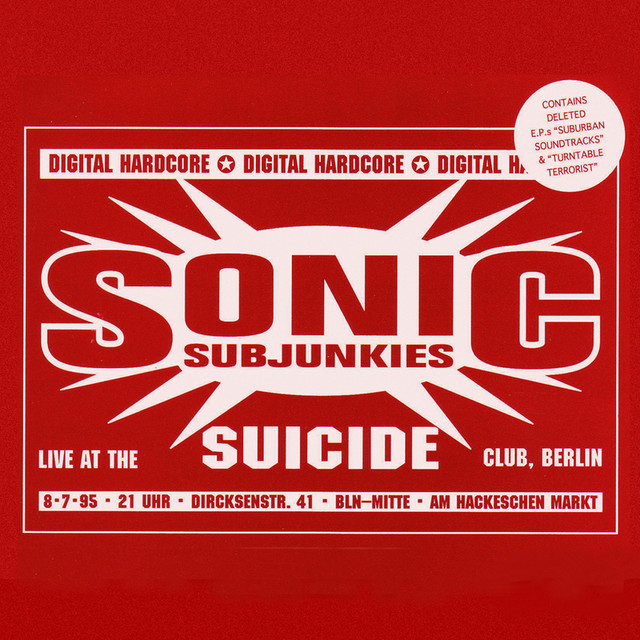
Born on May 2, 1972, in West Berlin, Alec Empire was initially influenced by rap and the breakdancing scene. Later he began listening to early punk and played in several bands during the late '80s. By the turn of the decade, Empire became fascinated by the sound of acid and techno, though he detested the drug culture inherent at raves. He began recording EPs for <a href="spotify:search:label%3A%22Force+Inc.%22">Force Inc.</a> -- as well as their subsidiary, <a href="spotify:search:label%3A%22Mille+Plateaux%22">Mille Plateaux</a> -- and formed <a href="spotify:artist:1EMlPfrse4I1I1hA3iwhk9">Atari Teenage Riot</a> in 1992 with Carl Crack and <a href="spotify:artist:56M1ls3RwB3XSPjWGG1FXy">Hanin Elias</a>. A slightly more rock-oriented project, <a href="spotify:artist:1EMlPfrse4I1I1hA3iwhk9">ATR</a> nevertheless focused on the extreme: their political themes and screamed vocals were inspired by punk, but the music concentrated on acid synth and distorted breakbeats. After an <a href="spotify:artist:1EMlPfrse4I1I1hA3iwhk9">Atari Teenage Riot</a> deal with British <a href="spotify:search:label%3A%22Phonogram%22">Phonogram</a> collapsed, Empire used the cash in hand from the <a href="spotify:search:label%3A%22Phonogram%22">Phonogram</a> contract to found <a href="spotify:search:label%3A%22Digital+Hardcore+Recordings%22">Digital Hardcore Recordings</a> in 1994, releasing EPs that year by himself as well as <a href="spotify:artist:0j6rtPpOJntNlv3iad0Xcq">EC8OR</a>, DJ Bleed, and <a href="spotify:artist:0f5hf5BD7WmJ3zfo0ksu1K">Sonic Subjunkies</a>. <a href="spotify:artist:1EMlPfrse4I1I1hA3iwhk9">ATR</a> and Empire also recorded for <a href="spotify:search:label%3A%22Riot+Beats%22">Riot Beats</a>, a short-lived <a href="spotify:search:label%3A%22Force+Inc.%22">Force Inc.</a> sublabel that shared (and slightly predated) the <a href="spotify:search:label%3A%22Digital+Hardcore%22">Digital Hardcore</a> aesthetic.
In 1994, <a href="spotify:search:label%3A%22Mille+Plateaux%22">Mille Plateaux</a> released Alec Empire's debut solo album, Generation Star Wars. The album's initial pressing included controversial cover art featuring a stormtrooper with a swastika on his helmet. Empire has always maintained a strictly anti-fascist and anti-Nazi stance, and the artwork was intended as social commentary, but it was nevertheless banned due to German law, and replaced by a black cover with text. Two more <a href="spotify:search:label%3A%22Mille+Plateaux%22">Mille Plateaux</a> albums appeared in 1995: the compilation Limited Editions 1990-94 and Low on Ice (The Iceland Sessions). That same year, <a href="spotify:artist:1EMlPfrse4I1I1hA3iwhk9">Atari Teenage Riot</a> recorded 1995, the first album to be released on <a href="spotify:search:label%3A%22Digital+Hardcore%22">Digital Hardcore</a>. After two 1996 LPs, Hypermodern Jazz 2000.5 and ambient/musique concrète album Les Etoiles des Filles Mortes, Empire issued his first album for <a href="spotify:search:label%3A%22Digital+Hardcore%22">Digital Hardcore</a>, The Destroyer. Harder and more intense than anything he'd produced before, the album was instrumental in establishing the breakcore genre, along with recordings by <a href="spotify:artist:2aCNPIQRgOF7YKEM1L0ZAE">Panacea</a>, DJ Scud, Christoph Fringelli, and <a href="spotify:search:label%3A%22Digital+Hardcore%22">Digital Hardcore</a> artists such as <a href="spotify:artist:4ZrzdbajcxLidPJDPZomzz">Christoph De Babalon</a> and <a href="spotify:artist:5TVfuZVGf8ALAdPhiskKnN">Patric Catani</a>.
Soon after, the <a href="spotify:search:label%3A%22DHR%22">DHR</a> collective -- including <a href="spotify:artist:1EMlPfrse4I1I1hA3iwhk9">ATR</a> and <a href="spotify:artist:0j6rtPpOJntNlv3iad0Xcq">EC8OR</a> -- toured the States at the invitation of <a href="spotify:search:label%3A%22Grand+Royal+Records%22">Grand Royal Records</a>, the label operated by <a href="spotify:artist:03r4iKL2g2442PT9n2UKsx">the Beastie Boys</a>. <a href="spotify:search:label%3A%22Grand+Royal%22">Grand Royal</a> began releasing 7" singles by Empire, <a href="spotify:artist:1EMlPfrse4I1I1hA3iwhk9">ATR</a>, <a href="spotify:artist:2mx5jUXuSFUX5KNN8ikgLk">Shizuo</a>, and <a href="spotify:artist:0j6rtPpOJntNlv3iad0Xcq">EC8OR</a> at the end of 1996. <a href="spotify:artist:1EMlPfrse4I1I1hA3iwhk9">Atari Teenage Riot</a> released their American debut, Burn, Berlin, Burn (a compilation of tracks from previous <a href="spotify:search:label%3A%22DHR%22">DHR</a> releases), and Empire remixed songs by <a href="spotify:artist:7w29UYBi0qsHi5RTcv3lmA">Björk</a>, <a href="spotify:artist:2te8VJxgUxcElC8Uq6eJs6">Cibo Matto</a>, <a href="spotify:artist:66UBlnqgUCqDlalQXK8Nby">Buffalo Daughter</a>, and many others. Squeeze the Trigger, a compilation of Empire's releases on <a href="spotify:search:label%3A%22Riot+Beats%22">Riot Beats</a>, also appeared on <a href="spotify:search:label%3A%22DHR%22">DHR</a> in 1997. A box set titled The Geist of Alec Empire, gathering tracks from Empire's <a href="spotify:search:label%3A%22Mille+Plateaux%22">Mille Plateaux</a> releases and compilations, was issued by his self-formed <a href="spotify:search:label%3A%22Geist+Records%22">Geist Records</a>, which later reissued the albums individually. Empire collaborated with <a href="spotify:artist:0wnipczytUzHtDCCoCWV6L">Techno Animal</a> (Kevin Martin and <a href="spotify:artist:3jxpqvEsYc7vrbihTd2F5A">Justin Broadrick</a>) on an album of dark, abstract hip-hop, credited to <a href="spotify:artist:2HpvUeOQIYMcqr5bkuCzgL">the Curse of the Golden Vampire</a>. The self-titled album appeared in 1998.
Empire's solo album Miss Black America, which alternated digital hardcore tracks with more abstract pieces, appeared in late 1998. <a href="spotify:artist:1EMlPfrse4I1I1hA3iwhk9">ATR</a>'s 60 Second Wipe Out, their first to feature fourth member <a href="spotify:artist:6FWlPE8JNKRl3ncODbKaWe">Nic Endo</a>, appeared in 1999. That same year, Empire released We Punk Einheit!, a chiptune album composed on a Game Boy and credited to Nintendo Teenage Robots. Also, <a href="spotify:artist:0FEx2DeyIuHKZN5zQX6XOs">Khan</a>'s El Turco Loco label issued Alec Empire Vs. Elvis Presley, a bootleg album of digital hardcore remixes of <a href="spotify:artist:43ZHCT0cAZBISjO8DG9PnE">Presley</a> tunes. The album was Empire's final release in the frenetic breakcore style he was best known for. Due to the death of Crack in September of 2001, <a href="spotify:artist:1EMlPfrse4I1I1hA3iwhk9">ATR</a> broke up, but Empire and <a href="spotify:artist:6FWlPE8JNKRl3ncODbKaWe">Endo</a> continued to work together. Empire's double album Intelligence & Sacrifice appeared in 2002, and ranged from brutal electro-punk (co-produced with <a href="spotify:artist:6FWlPE8JNKRl3ncODbKaWe">Endo</a>) to sci-fi-inspired ambient and electro. This was followed by a series of live albums (including a noise album with <a href="spotify:artist:5UezsklPScipW64XJm7qql">Merzbow</a> recorded at legendary N.Y.C. punk club CBGB) before the guitar-heavy Futurist appeared in 2005.
Empire and <a href="spotify:artist:6FWlPE8JNKRl3ncODbKaWe">Endo</a> created a new label called <a href="spotify:search:label%3A%22Eat+Your+Heart+Out%22">Eat Your Heart Out</a> in 2007. The label released Empire's new wave-influenced The Golden Foretaste of Heaven that year, and digitally reissued many items from the <a href="spotify:search:label%3A%22DHR%22">DHR</a> catalog in 2008. Bass Terror, a double album of hardcore tracks from Empire's <a href="spotify:search:label%3A%22Force+Inc.%22">Force Inc.</a> days, also appeared. Shivers, continuing in the dark new wave direction of his previous album, was released in 2009.
<a href="spotify:artist:1EMlPfrse4I1I1hA3iwhk9">ATR</a> announced their reunion in early 2010. <a href="spotify:artist:56M1ls3RwB3XSPjWGG1FXy">Elias</a> did not participate in the reunion, and American MC <a href="spotify:artist:6cCrC4AW0bnxd93D5mGGPa">CX Kidtronik</a> replaced the deceased Crack. The band played numerous concerts and festivals in Europe, Asia, and North America throughout 2010 and 2011, and studio album Is This Hyperreal? was co-released by a reactivated <a href="spotify:search:label%3A%22DHR%22">DHR</a> and <a href="spotify:artist:77AiFEVeAVj2ORpC85QVJs">Steve Aoki</a>'s <a href="spotify:search:label%3A%22Dim+Mak%22">Dim Mak</a>. <a href="spotify:artist:6cCrC4AW0bnxd93D5mGGPa">Kidtronik</a> was replaced by MC <a href="spotify:artist:1LCEvCoTvNz4j1x7RNDImj">Rowdy Superstar</a>, and <a href="spotify:artist:1EMlPfrse4I1I1hA3iwhk9">ATR</a>'s Reset appeared in 2014. While this lineup of <a href="spotify:artist:1EMlPfrse4I1I1hA3iwhk9">ATR</a> remained active, Empire recorded the soundtrack to the dystopian film Volt, released by <a href="spotify:search:label%3A%22Dependent+Records%22">Dependent Records</a> in 2017. ~ John Bush & Paul Simpson, Rovi
Born on May 2, 1972, in West Berlin, Alec Empire was initially influenced by rap and the breakdancing scene. Later he began listening to early punk and played in several bands during the late '80s. By the turn of the decade, Empire became fascinated by the sound of acid and techno, though he detested the drug culture inherent at raves. He began recording EPs for <a href="spotify:search:label%3A%22Force+Inc.%22">Force Inc.</a> -- as well as their subsidiary, <a href="spotify:search:label%3A%22Mille+Plateaux%22">Mille Plateaux</a> -- and formed <a href="spotify:artist:1EMlPfrse4I1I1hA3iwhk9">Atari Teenage Riot</a> in 1992 with Carl Crack and <a href="spotify:artist:56M1ls3RwB3XSPjWGG1FXy">Hanin Elias</a>. A slightly more rock-oriented project, <a href="spotify:artist:1EMlPfrse4I1I1hA3iwhk9">ATR</a> nevertheless focused on the extreme: their political themes and screamed vocals were inspired by punk, but the music concentrated on acid synth and distorted breakbeats. After an <a href="spotify:artist:1EMlPfrse4I1I1hA3iwhk9">Atari Teenage Riot</a> deal with British <a href="spotify:search:label%3A%22Phonogram%22">Phonogram</a> collapsed, Empire used the cash in hand from the <a href="spotify:search:label%3A%22Phonogram%22">Phonogram</a> contract to found <a href="spotify:search:label%3A%22Digital+Hardcore+Recordings%22">Digital Hardcore Recordings</a> in 1994, releasing EPs that year by himself as well as <a href="spotify:artist:0j6rtPpOJntNlv3iad0Xcq">EC8OR</a>, DJ Bleed, and <a href="spotify:artist:0f5hf5BD7WmJ3zfo0ksu1K">Sonic Subjunkies</a>. <a href="spotify:artist:1EMlPfrse4I1I1hA3iwhk9">ATR</a> and Empire also recorded for <a href="spotify:search:label%3A%22Riot+Beats%22">Riot Beats</a>, a short-lived <a href="spotify:search:label%3A%22Force+Inc.%22">Force Inc.</a> sublabel that shared (and slightly predated) the <a href="spotify:search:label%3A%22Digital+Hardcore%22">Digital Hardcore</a> aesthetic.
In 1994, <a href="spotify:search:label%3A%22Mille+Plateaux%22">Mille Plateaux</a> released Alec Empire's debut solo album, Generation Star Wars. The album's initial pressing included controversial cover art featuring a stormtrooper with a swastika on his helmet. Empire has always maintained a strictly anti-fascist and anti-Nazi stance, and the artwork was intended as social commentary, but it was nevertheless banned due to German law, and replaced by a black cover with text. Two more <a href="spotify:search:label%3A%22Mille+Plateaux%22">Mille Plateaux</a> albums appeared in 1995: the compilation Limited Editions 1990-94 and Low on Ice (The Iceland Sessions). That same year, <a href="spotify:artist:1EMlPfrse4I1I1hA3iwhk9">Atari Teenage Riot</a> recorded 1995, the first album to be released on <a href="spotify:search:label%3A%22Digital+Hardcore%22">Digital Hardcore</a>. After two 1996 LPs, Hypermodern Jazz 2000.5 and ambient/musique concrète album Les Etoiles des Filles Mortes, Empire issued his first album for <a href="spotify:search:label%3A%22Digital+Hardcore%22">Digital Hardcore</a>, The Destroyer. Harder and more intense than anything he'd produced before, the album was instrumental in establishing the breakcore genre, along with recordings by <a href="spotify:artist:2aCNPIQRgOF7YKEM1L0ZAE">Panacea</a>, DJ Scud, Christoph Fringelli, and <a href="spotify:search:label%3A%22Digital+Hardcore%22">Digital Hardcore</a> artists such as <a href="spotify:artist:4ZrzdbajcxLidPJDPZomzz">Christoph De Babalon</a> and <a href="spotify:artist:5TVfuZVGf8ALAdPhiskKnN">Patric Catani</a>.
Soon after, the <a href="spotify:search:label%3A%22DHR%22">DHR</a> collective -- including <a href="spotify:artist:1EMlPfrse4I1I1hA3iwhk9">ATR</a> and <a href="spotify:artist:0j6rtPpOJntNlv3iad0Xcq">EC8OR</a> -- toured the States at the invitation of <a href="spotify:search:label%3A%22Grand+Royal+Records%22">Grand Royal Records</a>, the label operated by <a href="spotify:artist:03r4iKL2g2442PT9n2UKsx">the Beastie Boys</a>. <a href="spotify:search:label%3A%22Grand+Royal%22">Grand Royal</a> began releasing 7" singles by Empire, <a href="spotify:artist:1EMlPfrse4I1I1hA3iwhk9">ATR</a>, <a href="spotify:artist:2mx5jUXuSFUX5KNN8ikgLk">Shizuo</a>, and <a href="spotify:artist:0j6rtPpOJntNlv3iad0Xcq">EC8OR</a> at the end of 1996. <a href="spotify:artist:1EMlPfrse4I1I1hA3iwhk9">Atari Teenage Riot</a> released their American debut, Burn, Berlin, Burn (a compilation of tracks from previous <a href="spotify:search:label%3A%22DHR%22">DHR</a> releases), and Empire remixed songs by <a href="spotify:artist:7w29UYBi0qsHi5RTcv3lmA">Björk</a>, <a href="spotify:artist:2te8VJxgUxcElC8Uq6eJs6">Cibo Matto</a>, <a href="spotify:artist:66UBlnqgUCqDlalQXK8Nby">Buffalo Daughter</a>, and many others. Squeeze the Trigger, a compilation of Empire's releases on <a href="spotify:search:label%3A%22Riot+Beats%22">Riot Beats</a>, also appeared on <a href="spotify:search:label%3A%22DHR%22">DHR</a> in 1997. A box set titled The Geist of Alec Empire, gathering tracks from Empire's <a href="spotify:search:label%3A%22Mille+Plateaux%22">Mille Plateaux</a> releases and compilations, was issued by his self-formed <a href="spotify:search:label%3A%22Geist+Records%22">Geist Records</a>, which later reissued the albums individually. Empire collaborated with <a href="spotify:artist:0wnipczytUzHtDCCoCWV6L">Techno Animal</a> (Kevin Martin and <a href="spotify:artist:3jxpqvEsYc7vrbihTd2F5A">Justin Broadrick</a>) on an album of dark, abstract hip-hop, credited to <a href="spotify:artist:2HpvUeOQIYMcqr5bkuCzgL">the Curse of the Golden Vampire</a>. The self-titled album appeared in 1998.
Empire's solo album Miss Black America, which alternated digital hardcore tracks with more abstract pieces, appeared in late 1998. <a href="spotify:artist:1EMlPfrse4I1I1hA3iwhk9">ATR</a>'s 60 Second Wipe Out, their first to feature fourth member <a href="spotify:artist:6FWlPE8JNKRl3ncODbKaWe">Nic Endo</a>, appeared in 1999. That same year, Empire released We Punk Einheit!, a chiptune album composed on a Game Boy and credited to Nintendo Teenage Robots. Also, <a href="spotify:artist:0FEx2DeyIuHKZN5zQX6XOs">Khan</a>'s El Turco Loco label issued Alec Empire Vs. Elvis Presley, a bootleg album of digital hardcore remixes of <a href="spotify:artist:43ZHCT0cAZBISjO8DG9PnE">Presley</a> tunes. The album was Empire's final release in the frenetic breakcore style he was best known for. Due to the death of Crack in September of 2001, <a href="spotify:artist:1EMlPfrse4I1I1hA3iwhk9">ATR</a> broke up, but Empire and <a href="spotify:artist:6FWlPE8JNKRl3ncODbKaWe">Endo</a> continued to work together. Empire's double album Intelligence & Sacrifice appeared in 2002, and ranged from brutal electro-punk (co-produced with <a href="spotify:artist:6FWlPE8JNKRl3ncODbKaWe">Endo</a>) to sci-fi-inspired ambient and electro. This was followed by a series of live albums (including a noise album with <a href="spotify:artist:5UezsklPScipW64XJm7qql">Merzbow</a> recorded at legendary N.Y.C. punk club CBGB) before the guitar-heavy Futurist appeared in 2005.
Empire and <a href="spotify:artist:6FWlPE8JNKRl3ncODbKaWe">Endo</a> created a new label called <a href="spotify:search:label%3A%22Eat+Your+Heart+Out%22">Eat Your Heart Out</a> in 2007. The label released Empire's new wave-influenced The Golden Foretaste of Heaven that year, and digitally reissued many items from the <a href="spotify:search:label%3A%22DHR%22">DHR</a> catalog in 2008. Bass Terror, a double album of hardcore tracks from Empire's <a href="spotify:search:label%3A%22Force+Inc.%22">Force Inc.</a> days, also appeared. Shivers, continuing in the dark new wave direction of his previous album, was released in 2009.
<a href="spotify:artist:1EMlPfrse4I1I1hA3iwhk9">ATR</a> announced their reunion in early 2010. <a href="spotify:artist:56M1ls3RwB3XSPjWGG1FXy">Elias</a> did not participate in the reunion, and American MC <a href="spotify:artist:6cCrC4AW0bnxd93D5mGGPa">CX Kidtronik</a> replaced the deceased Crack. The band played numerous concerts and festivals in Europe, Asia, and North America throughout 2010 and 2011, and studio album Is This Hyperreal? was co-released by a reactivated <a href="spotify:search:label%3A%22DHR%22">DHR</a> and <a href="spotify:artist:77AiFEVeAVj2ORpC85QVJs">Steve Aoki</a>'s <a href="spotify:search:label%3A%22Dim+Mak%22">Dim Mak</a>. <a href="spotify:artist:6cCrC4AW0bnxd93D5mGGPa">Kidtronik</a> was replaced by MC <a href="spotify:artist:1LCEvCoTvNz4j1x7RNDImj">Rowdy Superstar</a>, and <a href="spotify:artist:1EMlPfrse4I1I1hA3iwhk9">ATR</a>'s Reset appeared in 2014. While this lineup of <a href="spotify:artist:1EMlPfrse4I1I1hA3iwhk9">ATR</a> remained active, Empire recorded the soundtrack to the dystopian film Volt, released by <a href="spotify:search:label%3A%22Dependent+Records%22">Dependent Records</a> in 2017. ~ John Bush & Paul Simpson, Rovi
Monthly Listeners
15,644
Monthly Listeners History
Track the evolution of monthly listeners over the last 28 days.
Followers
21,913
Followers History
Track the evolution of followers over the last 28 days.
Top Cities
322 listeners

194 listeners
184 listeners

159 listeners

156 listeners
Related Artists


Killout Trash


Techno Animal



Midori



Imminent Starvation


Hanin Elias
2nd Gen