Data may be outdated
Last updated: 7 months ago — Click refresh to get the latest statistics.
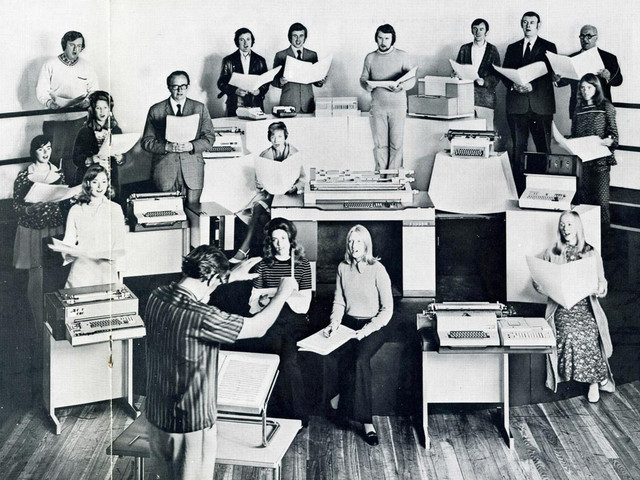
Among the best-known London choral groups for many years, the Ambrosian Singers was particularly notable for its work in opera and was sometimes known as the Ambrosian Opera Chorus or Ambrosian Light Opera Chorus. The group emerged from the early music movement in Britain after World War II, but it expanded greatly in both size and repertory. The Ambrosian Singers had a large recording catalog that included several well-loved holiday releases. The group disbanded in 2009, but the choir's music has continued to appear in reissues.
The Ambrosian Singers were founded in 1951 by musicologist and violist Denis Stevens, who had been involved since 1949 in developing Renaissance and early Baroque music programs for the BBC, and tenor <a href="spotify:artist:5knBhewxB0lqE772RtBDT5">John McCarthy</a>. Their intent was to make available a small professional choir that would give authentic performances of medieval and Renaissance choral polyphony and, eventually, to make recordings of music in this tradition. This was something to which the large British university and cathedral choirs of the time were unsuited. The group was soon hired to provide music for a BBC radio series, The History of Western Music. This allowed the singers to stretch their wings in repertory other than early music and broaden the group's aims. Stevens departed in 1955 for a career in academia, but a group of members organized themselves under <a href="spotify:artist:5knBhewxB0lqE772RtBDT5">McCarthy</a>'s leadership, performing under various names. While <a href="spotify:artist:5knBhewxB0lqE772RtBDT5">McCarthy</a> served as choral director for the <a href="spotify:artist:5yxyJsFanEAuwSM5kOuZKc">London Symphony Orchestra</a> in the early '60s, they were called the London Symphony Orchestra Chorus, but this group was essentially the Ambrosian Singers.
The Ambrosian Singers' recording career dates back to the '50s; they made an early appearance backing countertenor <a href="spotify:artist:1A4CqshmD4SFeTbu1mJ8Q7">Alfred Deller</a> on his 1957 recording of <a href="spotify:artist:5iAhVgz6P8Nylxijb0C65v">Monteverdi</a>'s Il Ballo delle Ingrate and Lamento d'Arianna on the <a href="spotify:search:label%3A%22Vanguard+Classics%22">Vanguard Classics</a> label. Both opera and film music were heavily represented in the group's catalog; in the latter field, they appeared on both original film soundtracks, such as that by composer <a href="spotify:artist:4P70aqttdpJ9vuYFDmf7f6">Vangelis</a> for Chariots of Fire (1981), and new recordings of older soundtrack music. The Ambrosian Singers were also featured as the primary artists on choral releases of their own, including an album of Beethoven's late choral music with <a href="spotify:artist:2v1lHgfpG4joXW7kDdDI78">Michael Tilson Thomas</a> conducting the <a href="spotify:artist:5yxyJsFanEAuwSM5kOuZKc">London Symphony Orchestra</a>; that album appeared in 1975 on the <a href="spotify:search:label%3A%22CBS%22">CBS</a> label and was reissued in 1988.
The Ambrosian Singers were a frequent presence in major British opera performances and recordings for many years. They released several Christmas recordings of their own and also backed a diverse set of pop stars ranging from <a href="spotify:artist:5RdqZVi36tpDPYNPw8jJbO">Julie Andrews</a> to <a href="spotify:artist:7Fo8TAyGJr4VmhE68QamMf">Talk Talk</a> to <a href="spotify:artist:2f9ZiYA2ic1r1voObUimdd">Grace Jones</a>. A unique feature of the Ambrosian Singers was that the group generally did not have a fixed membership; instead, there were some 700 singers who could be called upon for projects as needed. Many of the most famous British opera and art song performers, including soprano <a href="spotify:artist:6YD144QzOwK6dRoUZtZJvp">Heather Harper</a>, mezzo-soprano <a href="spotify:artist:4ThA3BeHNucwqI7wKyKS8h">Janet Baker</a>, and tenor <a href="spotify:artist:1ZHJoS53NtBHIT7ZgwUlFx">Robert Tear</a>, passed through the group at one time or another. <a href="spotify:artist:5knBhewxB0lqE772RtBDT5">McCarthy</a> remained the group's director, and the Ambrosian Singers slowed their activities as his health deteriorated; they disbanded completely after his death in 2009. However, Ambrosian Singers material continued to appear on recordings into the 2020s; by 2024, the group had appeared on more than 500 releases, including a 2024 album devoted to <a href="spotify:artist:6NUhQz7eAEsZvjEHTKHux9">Neville Marriner</a>, The Distinguished Conductor. ~ James Manheim, Rovi
The Ambrosian Singers were founded in 1951 by musicologist and violist Denis Stevens, who had been involved since 1949 in developing Renaissance and early Baroque music programs for the BBC, and tenor <a href="spotify:artist:5knBhewxB0lqE772RtBDT5">John McCarthy</a>. Their intent was to make available a small professional choir that would give authentic performances of medieval and Renaissance choral polyphony and, eventually, to make recordings of music in this tradition. This was something to which the large British university and cathedral choirs of the time were unsuited. The group was soon hired to provide music for a BBC radio series, The History of Western Music. This allowed the singers to stretch their wings in repertory other than early music and broaden the group's aims. Stevens departed in 1955 for a career in academia, but a group of members organized themselves under <a href="spotify:artist:5knBhewxB0lqE772RtBDT5">McCarthy</a>'s leadership, performing under various names. While <a href="spotify:artist:5knBhewxB0lqE772RtBDT5">McCarthy</a> served as choral director for the <a href="spotify:artist:5yxyJsFanEAuwSM5kOuZKc">London Symphony Orchestra</a> in the early '60s, they were called the London Symphony Orchestra Chorus, but this group was essentially the Ambrosian Singers.
The Ambrosian Singers' recording career dates back to the '50s; they made an early appearance backing countertenor <a href="spotify:artist:1A4CqshmD4SFeTbu1mJ8Q7">Alfred Deller</a> on his 1957 recording of <a href="spotify:artist:5iAhVgz6P8Nylxijb0C65v">Monteverdi</a>'s Il Ballo delle Ingrate and Lamento d'Arianna on the <a href="spotify:search:label%3A%22Vanguard+Classics%22">Vanguard Classics</a> label. Both opera and film music were heavily represented in the group's catalog; in the latter field, they appeared on both original film soundtracks, such as that by composer <a href="spotify:artist:4P70aqttdpJ9vuYFDmf7f6">Vangelis</a> for Chariots of Fire (1981), and new recordings of older soundtrack music. The Ambrosian Singers were also featured as the primary artists on choral releases of their own, including an album of Beethoven's late choral music with <a href="spotify:artist:2v1lHgfpG4joXW7kDdDI78">Michael Tilson Thomas</a> conducting the <a href="spotify:artist:5yxyJsFanEAuwSM5kOuZKc">London Symphony Orchestra</a>; that album appeared in 1975 on the <a href="spotify:search:label%3A%22CBS%22">CBS</a> label and was reissued in 1988.
The Ambrosian Singers were a frequent presence in major British opera performances and recordings for many years. They released several Christmas recordings of their own and also backed a diverse set of pop stars ranging from <a href="spotify:artist:5RdqZVi36tpDPYNPw8jJbO">Julie Andrews</a> to <a href="spotify:artist:7Fo8TAyGJr4VmhE68QamMf">Talk Talk</a> to <a href="spotify:artist:2f9ZiYA2ic1r1voObUimdd">Grace Jones</a>. A unique feature of the Ambrosian Singers was that the group generally did not have a fixed membership; instead, there were some 700 singers who could be called upon for projects as needed. Many of the most famous British opera and art song performers, including soprano <a href="spotify:artist:6YD144QzOwK6dRoUZtZJvp">Heather Harper</a>, mezzo-soprano <a href="spotify:artist:4ThA3BeHNucwqI7wKyKS8h">Janet Baker</a>, and tenor <a href="spotify:artist:1ZHJoS53NtBHIT7ZgwUlFx">Robert Tear</a>, passed through the group at one time or another. <a href="spotify:artist:5knBhewxB0lqE772RtBDT5">McCarthy</a> remained the group's director, and the Ambrosian Singers slowed their activities as his health deteriorated; they disbanded completely after his death in 2009. However, Ambrosian Singers material continued to appear on recordings into the 2020s; by 2024, the group had appeared on more than 500 releases, including a 2024 album devoted to <a href="spotify:artist:6NUhQz7eAEsZvjEHTKHux9">Neville Marriner</a>, The Distinguished Conductor. ~ James Manheim, Rovi
Monthly Listeners
72,934
Monthly Listeners History
Track the evolution of monthly listeners over the last 28 days.
Followers
899
Followers History
Track the evolution of followers over the last 28 days.
Top Cities
2,045 listeners

959 listeners

806 listeners
754 listeners

714 listeners

Related Artists

Robert de Cormier
Robert Shaw Chorale

Barry Rose
New York Choral Society
Tecwyn Evans

Robert Arnold


Philip Brunelle
Donald Pearson
Pietro Yon
Robert Page

Côrdydd


The St. Olaf Orchestra
Michael George

Temple University Concert Choir
Britt Marie Aruhn


Ulf Lundmark
London Brass