Data may be outdated
Last updated: 9 months ago — Click refresh to get the latest statistics.
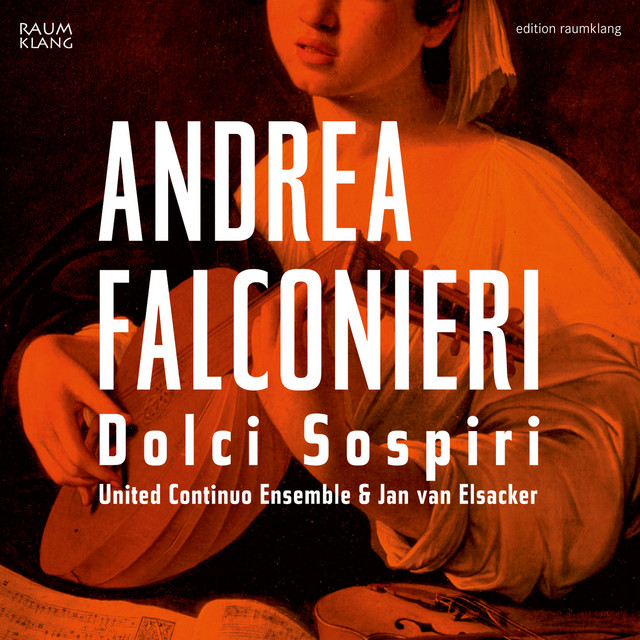
Andrea Falconieri was an Italian lutenist and composer of the Renaissance period. His secular songs and instrumental works are known for their lyrical melodies and distinct forms. He was born around 1585 in Naples, but little is known about his early life. As a child he was cared for by the Duke of Parma, and he studied music with the court lutenist <a href="spotify:artist:5iGDC8apxFlC03gF7oIlsl">Santino Garsi</a>. In 1604 Falconieri began working as a performer in Parma, and in 1610 he was appointed <a href="spotify:artist:5iGDC8apxFlC03gF7oIlsl">Garsi</a>'s former position as the official court lutenist. It was also around this time when Falconieri began composing his first works for lute. He left Parma in 1614 and traveled to Florence, where he held a temporary position at the royal court. He became interested in publishing his works and in 1616 he published Primo Libro di Villanellas, dedicated to Cardinal Carlo de Medici. For the next few years, he maintained communications with royalty in both Rome and Florence, and while the documentation is unclear, it's likely that he lived and worked in both places. By 1619 he had published another seven volumes of his compositions which consisted of songs and motets. The following year he got married and lived with his wife in Modena until the summer of 1622, when he departed without his wife to Spain. For seven years Falconieri traveled around Spain and France, and it's likely that he was also refining his skills on the chitarrone, as it became his primary instrument following this nomadic period. After his performance at the wedding of the Duke of Parma, and Princess Margherita de Medici in 1628, he returned to Parma and supported himself by teaching and playing the chitarrone. Four years later he accepted a teaching position at the Santa Brigida convent in Genoa. However, he left the position in 1637 after the head nun denounced him for teaching and performing music that was too distracting to the other nuns. He traveled to Naples where he worked as a lutenist at the royal chapel beginning in 1639. He visited his wife in Modena three years later, and in 1647 he was promoted to the position of maestro di cappella. Falconieri served in this position until the plague epidemic of Naples took his life in 1656. ~ RJ Lambert, Rovi
Monthly Listeners
26,553
Monthly Listeners History
Track the evolution of monthly listeners over the last 28 days.
Followers
1,774
Followers History
Track the evolution of followers over the last 28 days.
Top Cities
639 listeners

386 listeners
352 listeners

335 listeners

331 listeners

Related Artists
Tarquinio Merula
Giovanni Paolo Foscarini
Giovanni Girolamo Kapsberger
Antoine Boësset
Maurizio Cazzati

Santiago De Murcia



Nicola Matteis

James Oswald


Friederike Heumann
Eduardo Egüez

Fahmi Alqhai
Juan Cabanilles


Sophie Watillon

Arnaud Marzorati

Pierre Attaingnant
Jean-François Novelli
Serge Goubioud
Francesco Corbetta
Antonio Martín y Coll

Thor-Harald Johnsen